Artwork
Classical Ruins in a Landscape: frontispiece
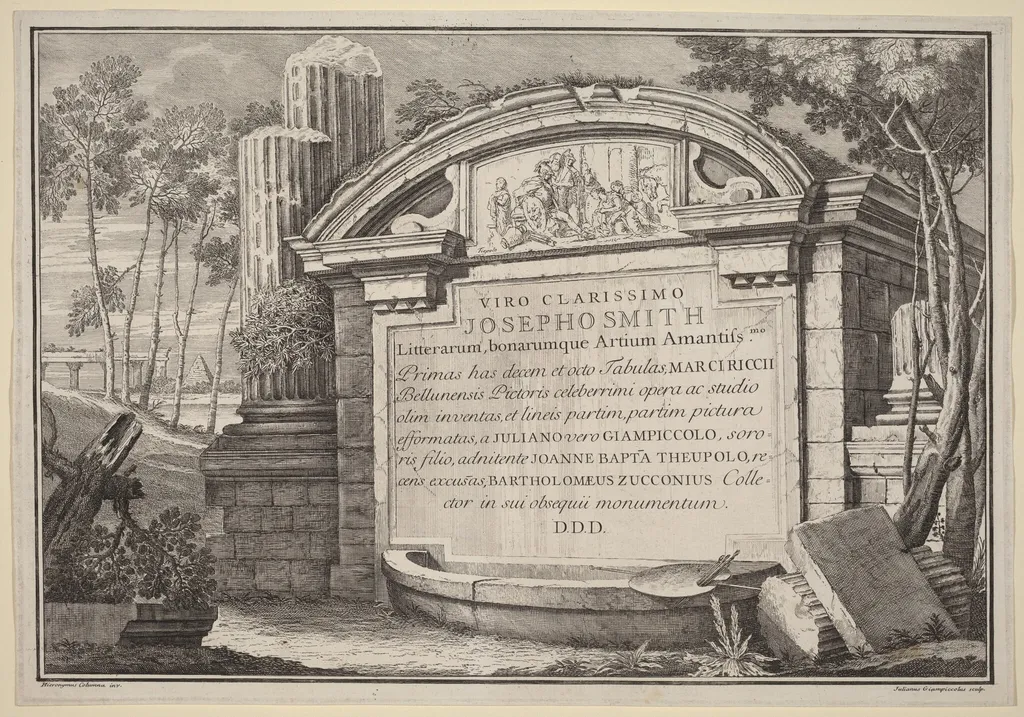
Classical Ruins in a Landscape: frontispiece is an ink print by the Baroque artist Giovanni Battista Tiepolo. It dates from 1728 and is held in the collection of the National Gallery of Art.
About this work
Overview
Giovanni Battista Tiepolo’s 1728 etching, titled Classical Ruins in a Landscape: frontispiece, presents an imagined ancient ruin set within a natural scene.
Giovanni Battista Tiepolo’s 1728 etching, titled Classical Ruins in a Landscape: frontispiece, presents an imagined ancient ruin set within a natural scene. A stone arch frames a dilapidated temple, its broken columns opening onto a distant waterfall, while trees and rocky terrain occupy the foreground. A small Latin plaque on the arch bears a dedication, and a carved vignette above it shows figures in classical dress.
Subject & Meaning
The composition juxtaposes the decay of classical architecture with the vitality of the surrounding landscape, suggesting a meditation on the passage of time and the persistence of nature over human constructs. The inclusion of a patron’s name on the plaque links the work to contemporary patronage, while the depicted classical figures evoke the antiquarian interests of the period.
Technique & Style
Executed as an etching, Tiepolo employed a fine incised line to render atmospheric depth and delicate textures, characteristic of Rococo’s decorative sensibility. The tonal gradations achieved through varied acid biting convey the play of light across stone and foliage, while the compositional balance reflects the era’s preference for elegant, harmonious scenes.
History & Provenance
Created in 1728, the print forms part of Tiepolo’s broader engagement with landscape subjects during his prolific Venetian career. The dedication to Joseph Smith, likely a patron or collector, indicates the work’s original circulation among elite circles. The artist’s signature appears in the lower corners, confirming authorship and aiding later attributions.
Context
In the early eighteenth century, Venetian artists increasingly explored printed media to disseminate their designs beyond frescoes and canvases. Tiepolo’s foray into etching aligns with this trend, allowing his decorative motifs and atmospheric landscapes to reach a wider audience while reflecting the period’s fascination with antiquity and the picturesque.
Own this work as a print
Artist & collection

Artist
Giovanni Battista Tiepolo, also known as Giambattista Tiepolo, was an Italian painter and printmaker from the Republic of Venice who painted in the Rococo style, considered an important member of the 18th-century Venetian school.





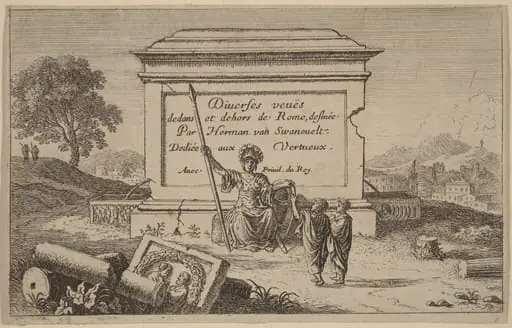 Title Page
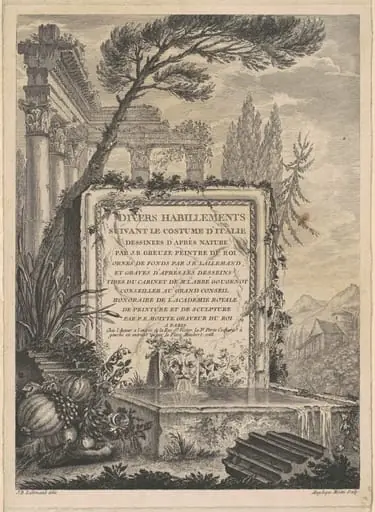 Architectural Fantasy of Roman Ruins with an Inscription Plaque
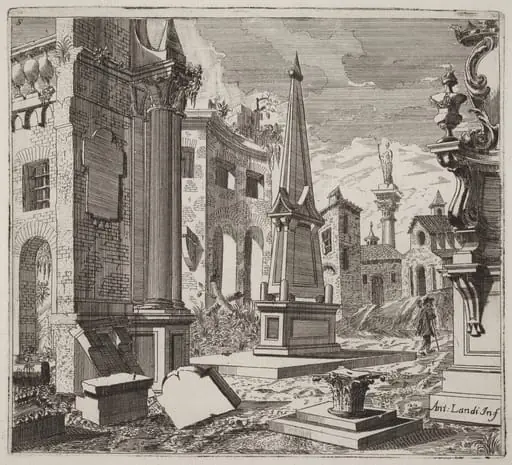 Fantastic Townscape with Ruins
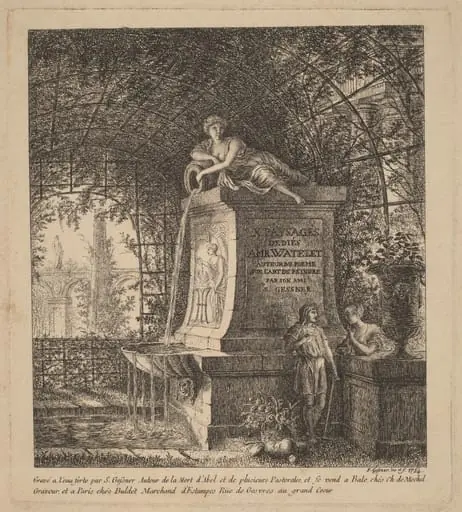 Fountain in a Summerhouse
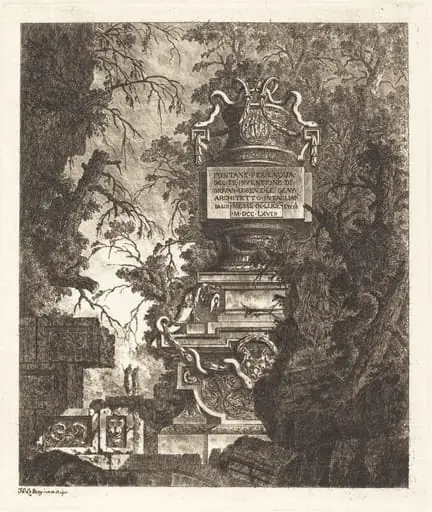 Frontispiece for "Fountains"
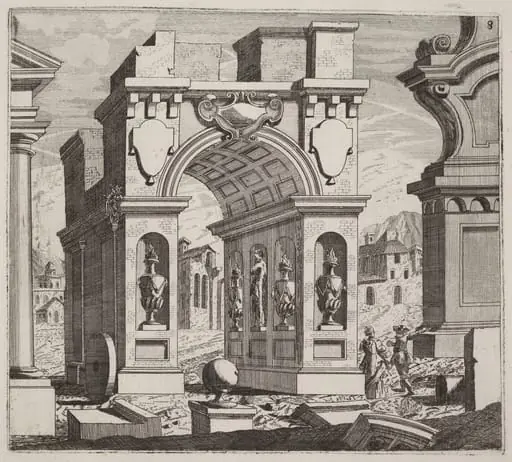 Architectural Fantasy with a Triumphal Arch
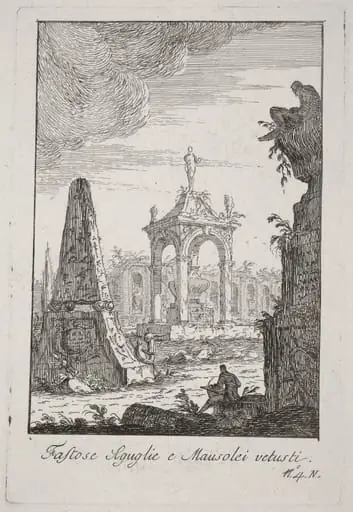 Fastose Aguglie e Mausolei vetusti
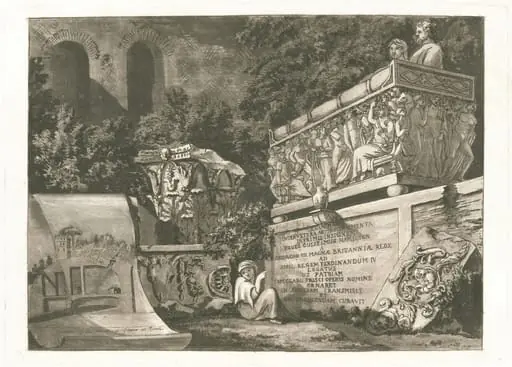 Title Page
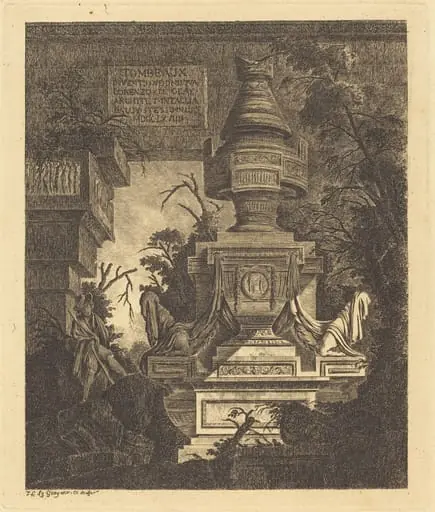 Frontispiece for "Views of Tombs"
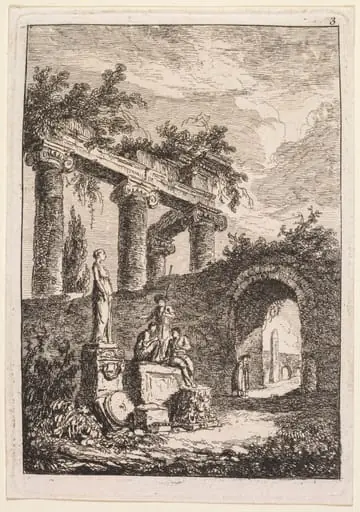 The Statue in Front of Ruins