Artwork
Christ on the Way to Calvary
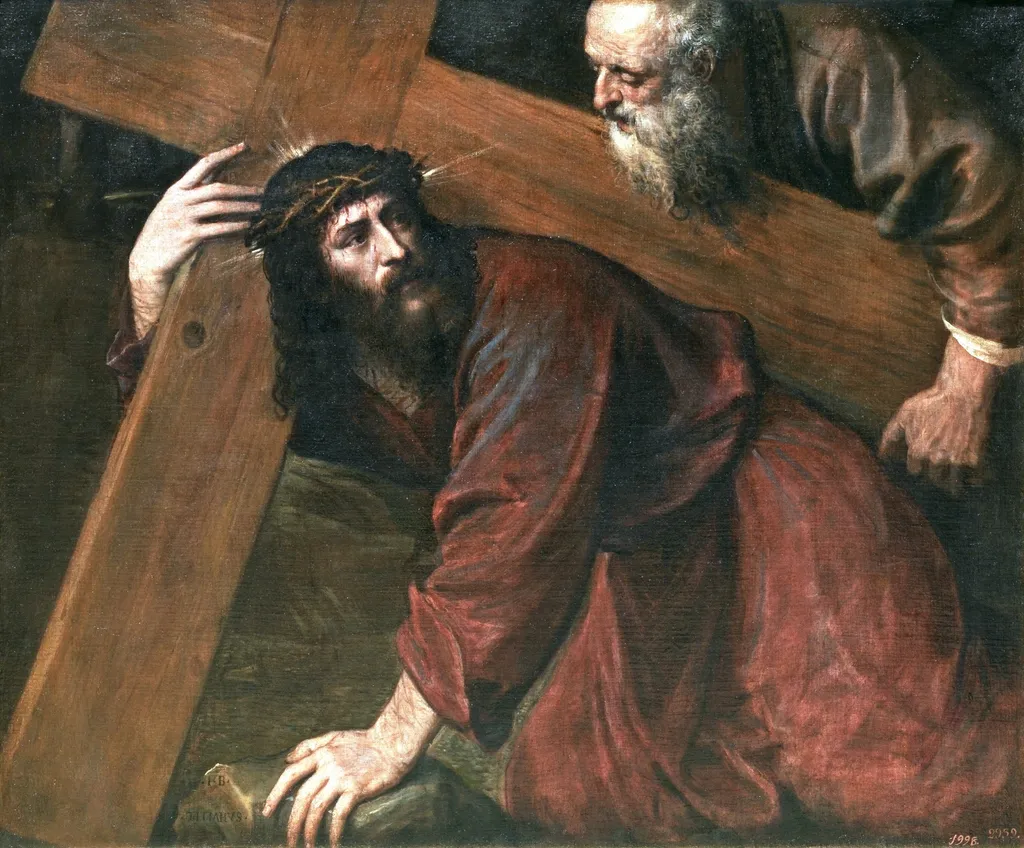
Christ on the Way to Calvary is an oil painting by the Mannerist artist Titian. It dates from 1560 and is held in the collection of the Museo del Prado.
About this work
Subject & Meaning
The inclusion of Simon of Cyrene highlights the human assistance rendered during this journey, a standard element in the iconography of this subject.
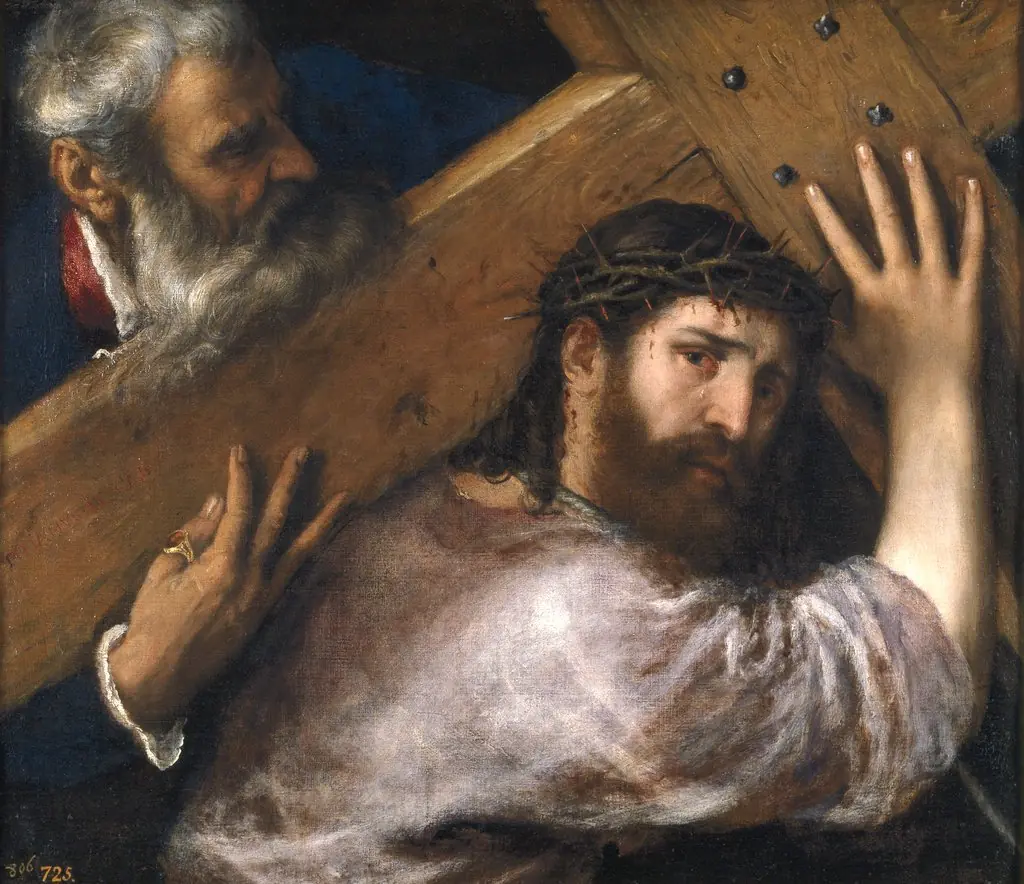
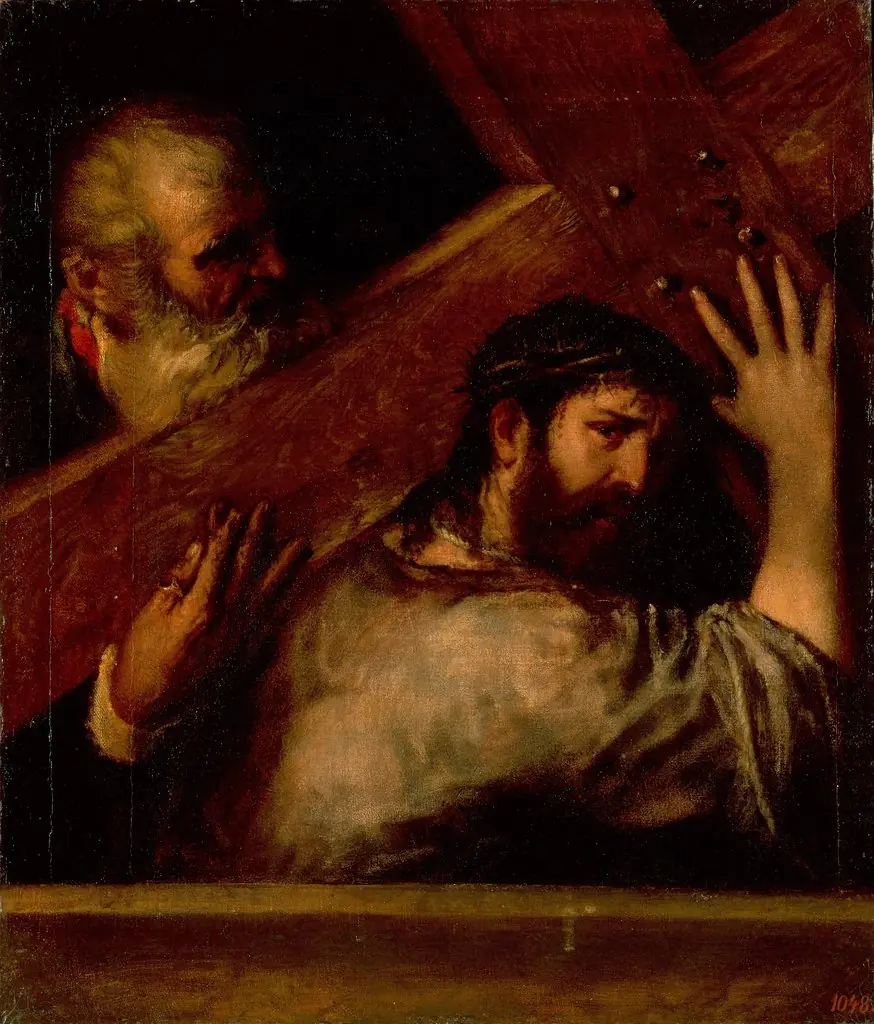
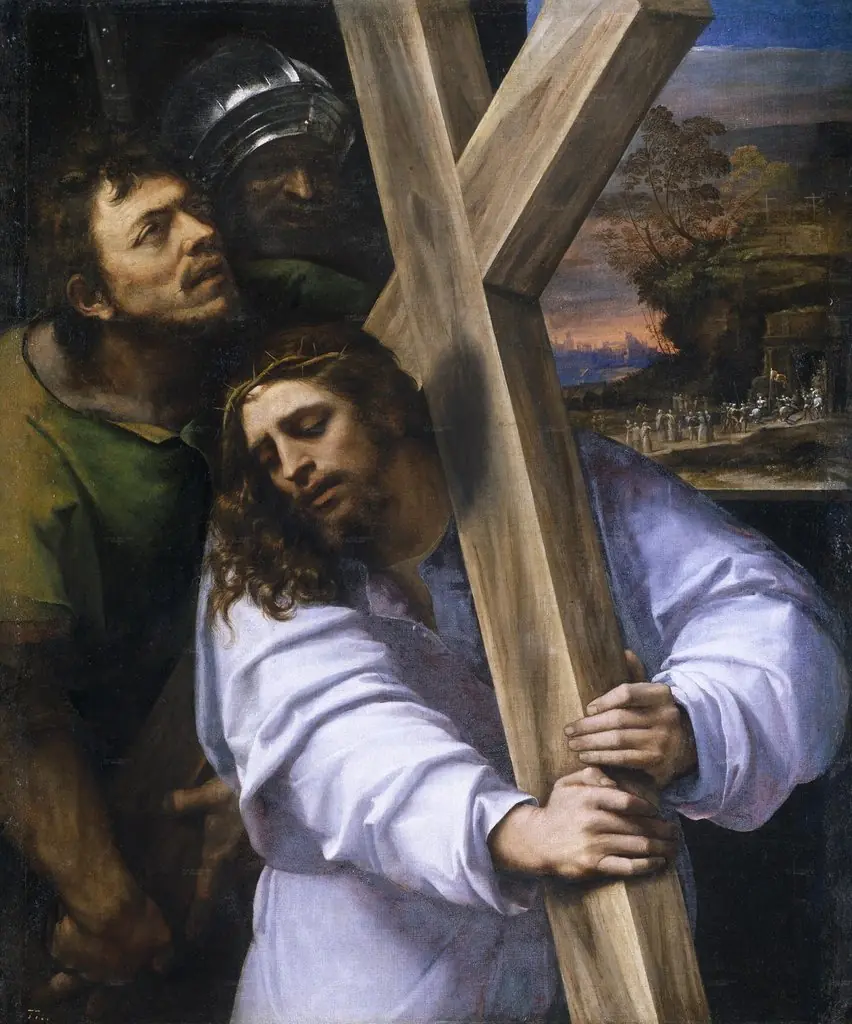
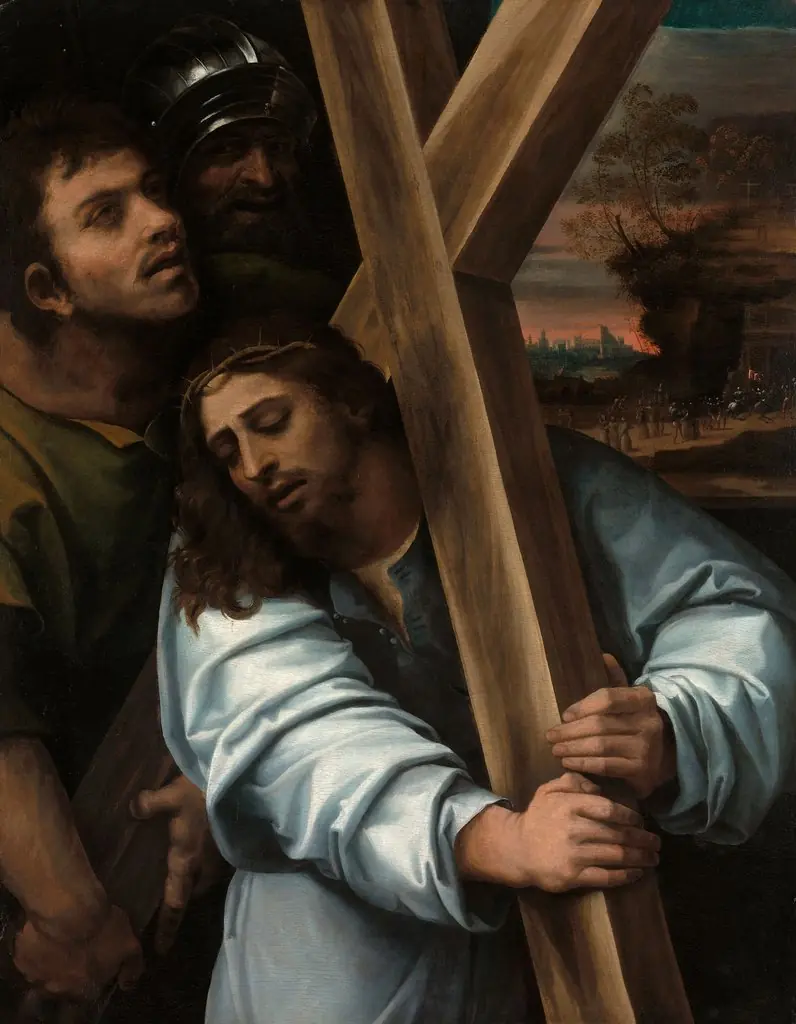
Titian's 1560 oil painting depicts the biblical episode of Christ carrying the cross to Calvary. The composition focuses on Jesus Christ burdened by the instrument of his execution, accompanied by Simon of Cyrene, who assists him. This religious work visualizes the specific moment of the Passion known as the Way of the Cross, emphasizing the physical weight of the cross and the narrative of suffering preceding the crucifixion.
The inclusion of Simon of Cyrene highlights the human assistance rendered during this journey, a standard element in the iconography of this subject.
Technique & Style
Titian executed Christ on the Way to Calvary in 1560 using oil paint applied to a canvas support. The work measures 98 cm in height and 116 cm in width. As a religious painting, the piece depicts Jesus Christ carrying the cross alongside Simon of Cyrene.
The artist's handling of the oil medium on canvas defines the formal qualities of this late Renaissance composition.
History & Provenance
Christ on the Way to Calvary is an oil painting on canvas created by the Italian master Titian. The work was completed in 1560 and depicts the biblical scene of Jesus Christ carrying the cross, accompanied by Simon of Cyrene. Classified as a religious genre piece, the painting measures 98 cm in height and 116 cm in width.
It is currently held in the collection of the Museo del Prado, where it remains a significant example of the artist's late period.
The painting is housed in the Museo del Prado in Madrid, where it holds inventory number P00968. It has been part of the museum's collection since its acquisition, forming a central piece in exhibitions focused on Titian's late religious works and Spanish Baroque contexts.
Context
Titian's late masterpiece was created in 1560 for a Venetian confraternity and entered the Prado's collection in 1827. Art historians view it as a pivotal expression of Counter-Reformation spirituality, emphasizing Christ's humanity amid his Passion journey. The painting's dramatic composition and emotional intensity have been extensively analyzed in scholarship on Venetian Renaissance art, establishing it as a cornerstone for understanding Titian's final religious works.
Its significance is contextualized within the broader trajectory of Titian's career and the evolution of devotional imagery in 16th-century Italy.
Overview
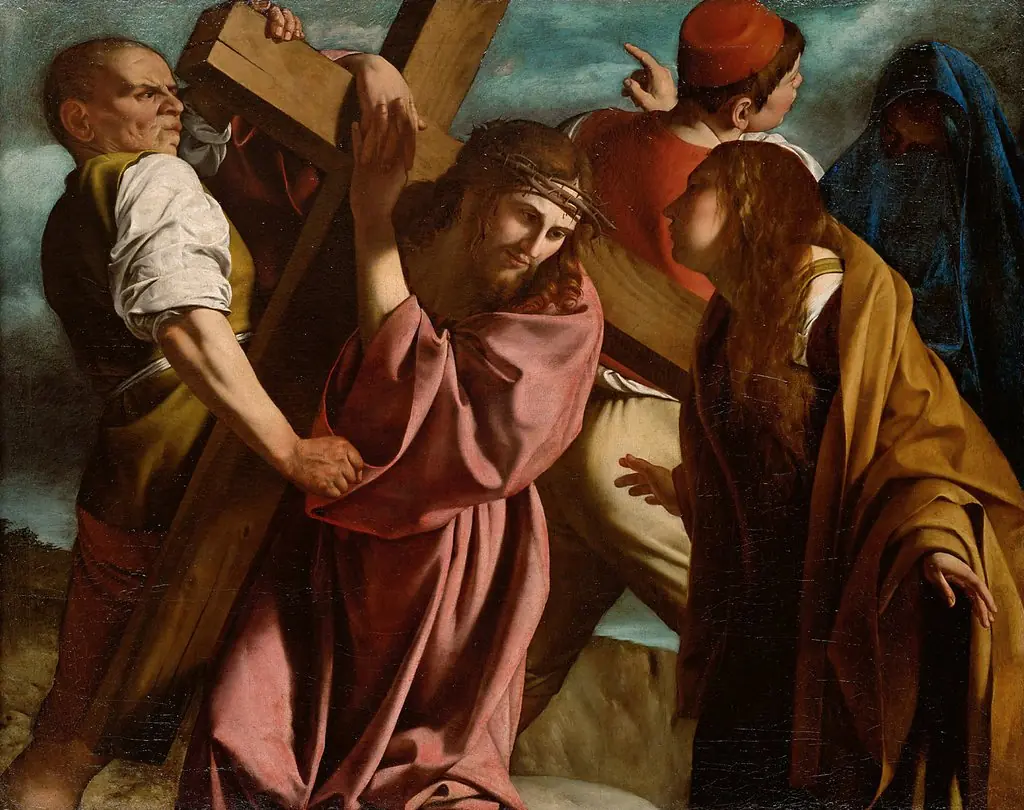
Created around 1560, this oil on canvas by Titian illustrates the biblical episode of Christ bearing the cross. The composition centers on a gaunt figure in a red robe, his head bowed and hand pressed to his forehead, while a secondary figure in brown assists with the massive wooden cross. The scene unfolds against a deep, shadowed background, emphasizing the weight of the moment.
Own this work as a print
Artist & collection
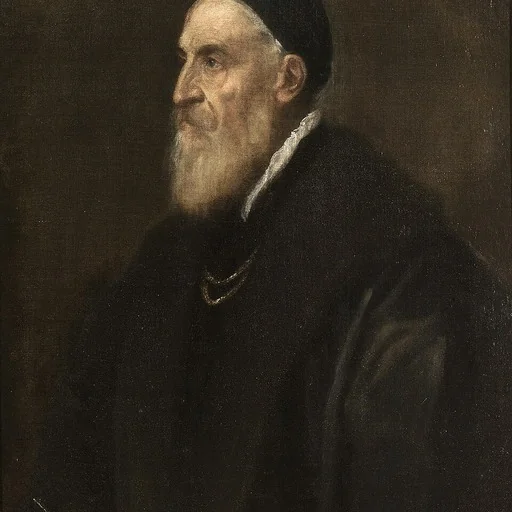
Artist
Tiziano Vecellio (Italian:; c. 1488/1490 – 27 August 1576), Latinized as Titianus, hence known in English as Titian ( TISH-ən), was an Italian Renaissance painter. The most important artist of Renaissance Venetian…