Artwork
Girl with a Platter of Fruit
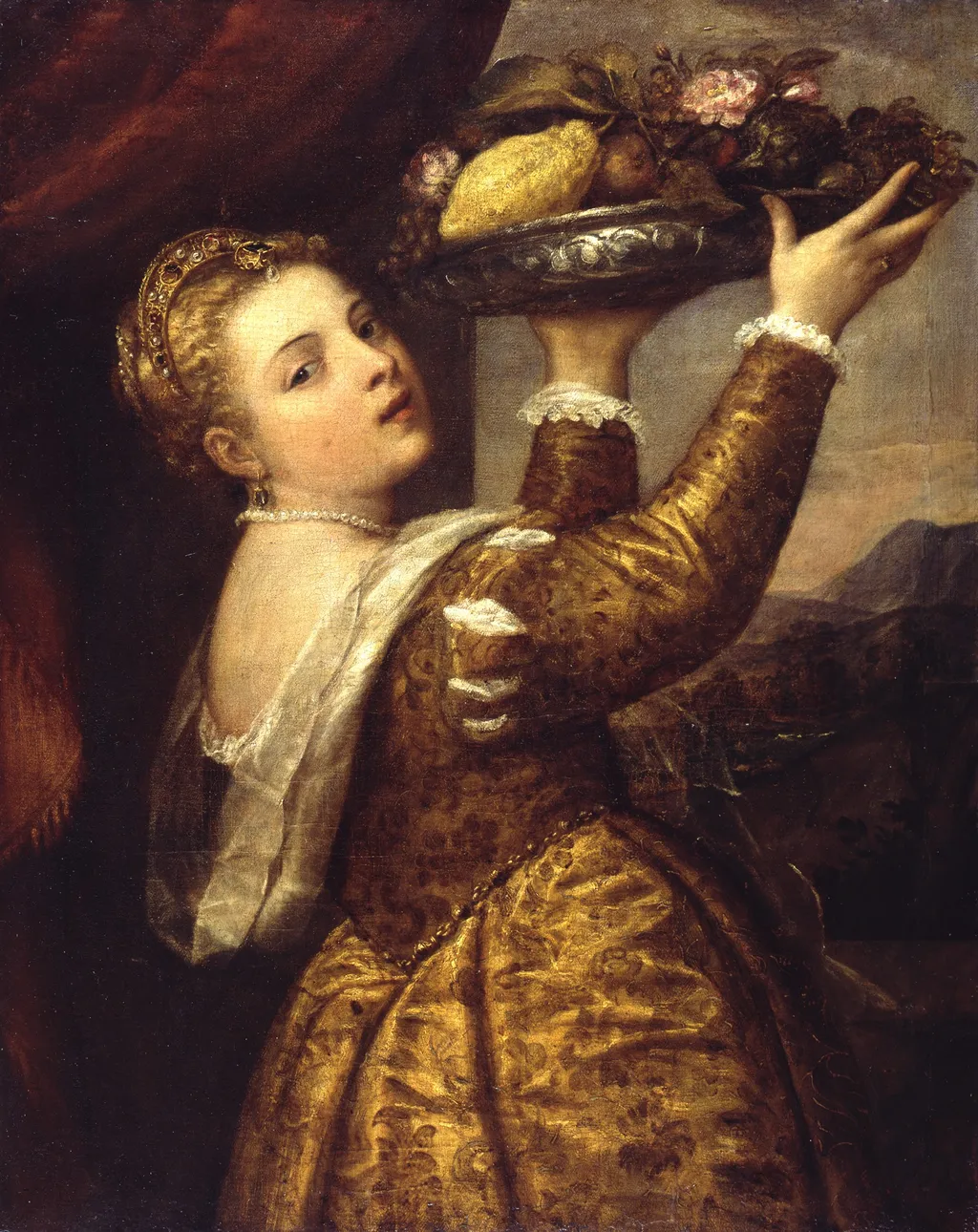
Girl with a Platter of Fruit is an oil painting by the High Renaissance artist Titian. It dates from 1555 and is held in the collection of the Gemäldegalerie Berlin.
About this work
Subject & Meaning
The arrangement includes lemons, apples, and roses, attributes that traditionally symbolize wealth, beauty, and fertility.
The painting depicts a young woman in contemporary dress turning to gaze over her shoulder while holding a silver platter of fruit and flowers high above her head. The arrangement includes lemons, apples, and roses, attributes that traditionally symbolize wealth, beauty, and fertility. Art historical interpretation has oscillated between identifying the subject as a specific portrait of the artist's daughter, Lavinia, potentially celebrating her marriage and dowry, or viewing her as an idealized mythological figure.
In the latter reading, the work represents Pomona, the Roman goddess of fruitfulness, or an allegory of autumnal harvest. The combination of luxurious attire, pearl jewelry, and the specific iconography of the fruit-laden charger serves to emphasize themes of abundance, maturity, and completed development.
Technique & Style
The painting Girl with a Platter of Fruit is executed in oil on canvas, a support typical of Venetian oil paintings from the mid-16th century. The work measures 106.2 by 84.8 centimeters and belongs to the genre of portraiture within the Venetian school. The surface shows careful rendering of fabric, metal, and fruit, with fine detail in the sitter’s face and pearl ornaments, while edges such as the gold-embroidered garment blur slightly.
The canvas bears a later 4.2 cm strip added to repair a partial cut on the right side. These formal and technical characteristics reflect Titian’s mature handling of light, texture, and compositional balance.
History & Provenance
Girl with a Platter of Fruit is an oil painting by Titian created around 1555–1558 in Venice. It entered the Gemäldegalerie Berlin collection in 1832 after being purchased in Florence from Abbate Celotti. A similar work was recorded in the collection of Emperor Rudolf II in Prague.
The Berlin painting was later noted by Gronau as a replica from Titian’s workshop that belonged to the Earl of Malmesbury. The work is documented in multiple sources including the Berlin State Museums and contemporary literature.
Girl with a Platter of Fruit is held in the Gemäldegalerie Berlin, inventory number not specified in the sources. The work entered the collection in 1832 after being purchased in Florence from Abate Celotti and was previously noted in Emperor Rodolphus II's collection in Prague. A replica from the artist's workshop later appeared in the Earl of Malmesbury's collection. The painting has been exhibited in Berlin since its acquisition and remains on display in the Gemäldegalerie.
Exhibition history is limited to its ongoing display in Berlin; no specific temporary exhibitions are recorded in the provided sources.
Context
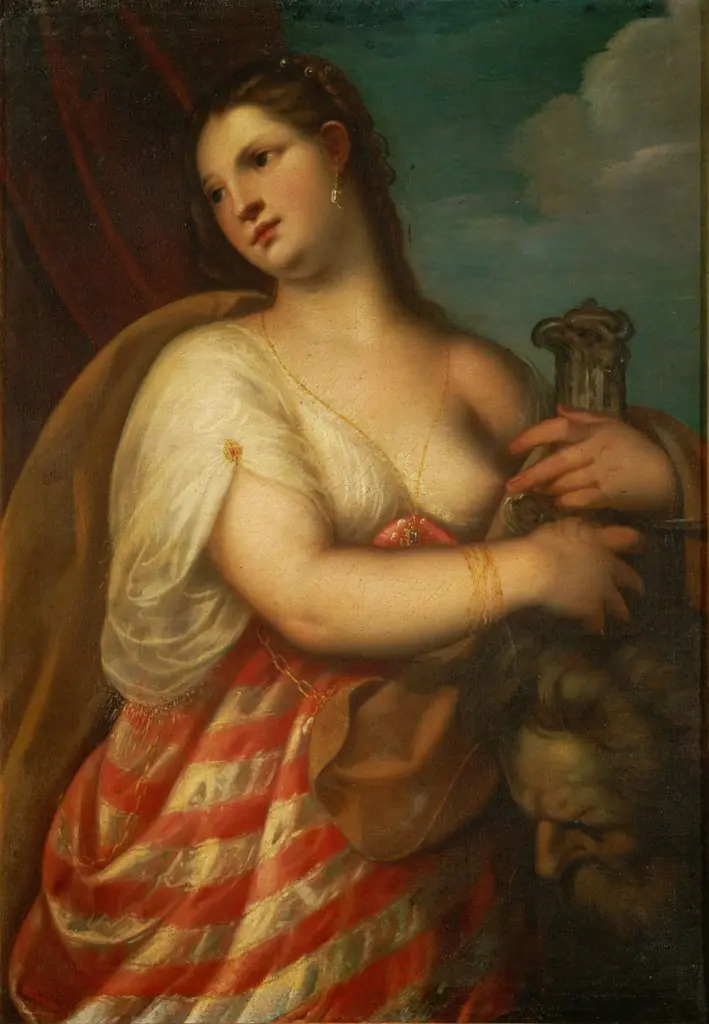
Girl with a Platter of Fruit belongs to the mature Venetian school production of Titian and is generally dated to around 1555, with some sources extending the range to 1555–1558. The painting is held in the Gemäldegalerie in Berlin and is considered the prototype of a composition Titian and his workshop repeated in several later variants, including the Salome with the Head of the Baptist in the Museo del Prado, a version in the former George Encil collection in Montreal, and one in the collection of Mrs. Abbott in London. The Berlin canvas is also linked to an entry in the inventories of Emperor Rudolf II's collection in Prague, where a Titian Pomona is recorded, a connection pursued by Erwin Panofsky in 1969.
Scholarly interpretations have long identified the sitter as Titian's daughter Lavinia, painted the year after her marriage to Cornelio Sarcinelli di Serravalle, with the fruit and roses read as attributes of fertility and prosperity. Alternative readings treat the figure as an allegorical Pomona, goddess of autumn fruitfulness, comparable to Titian's Florentine Flora. The work is discussed in Georg Gronau's 1904 monograph and Christopher Ricketts's 1910 study.
Legacy
The painting has generated an enduring scholarly and collecting legacy. Multiple versions of the composition exist, including a workshop replica once in the collection of the Earl of Malmesbury and a variant sold through Sotheby's from the George Encil collection, indicating sustained market interest in Titian's design. The Berlin picture is regarded as the prototype, with later variants such as the Salome in the Museo del Prado and a Pomona dated 1562–1563 in Montreal deriving from it.
The work also entered the imperial collection of Rudolf II in Prague, where it appeared in inventories of 1619 and 1621 before being seized by the Swedes and recorded in Queen Christina of Sweden's 1656 inventory. Erwin Panofsky proposed identifying that imperial picture with the Berlin canvas, cementing its place in the art-historical literature on Titian's late style.
The painting continues to be cited as a touchstone for Titian's Venetian manner, and its imagery of fruit-bearing women links it to broader discussions of allegorical figures such as Pomona and Flora.
Overview
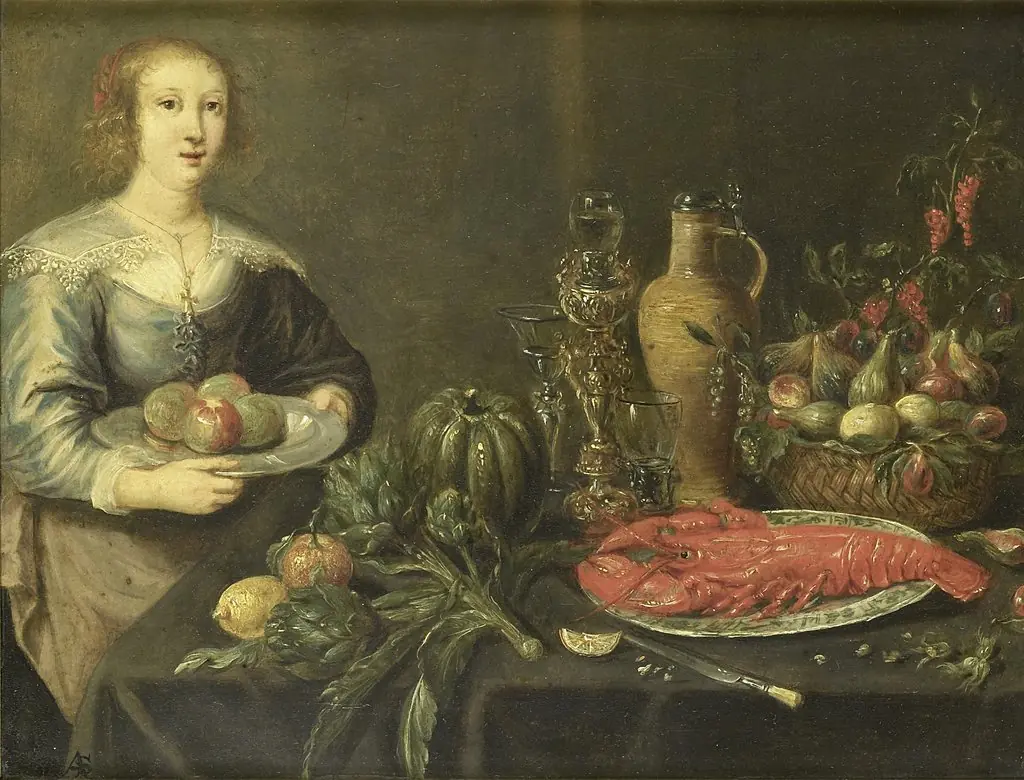
‘Girl with a Platter of Fruit’, an oil painting executed by the Venetian artist Titian between roughly 1555 and 1558, is part of the Gemäldegalerie’s holdings in Berlin. The work portrays a youthful female figure holding a shallow dish laden with assorted fruit, set against a deep, muted background that isolates the subject.
Own this work as a print
Artist & collection

Artist
Tiziano Vecellio (Italian:; c. 1488/1490 – 27 August 1576), Latinized as Titianus, hence known in English as Titian ( TISH-ən), was an Italian Renaissance painter. The most important artist of Renaissance Venetian…