Artwork
Woman Holding an Apple
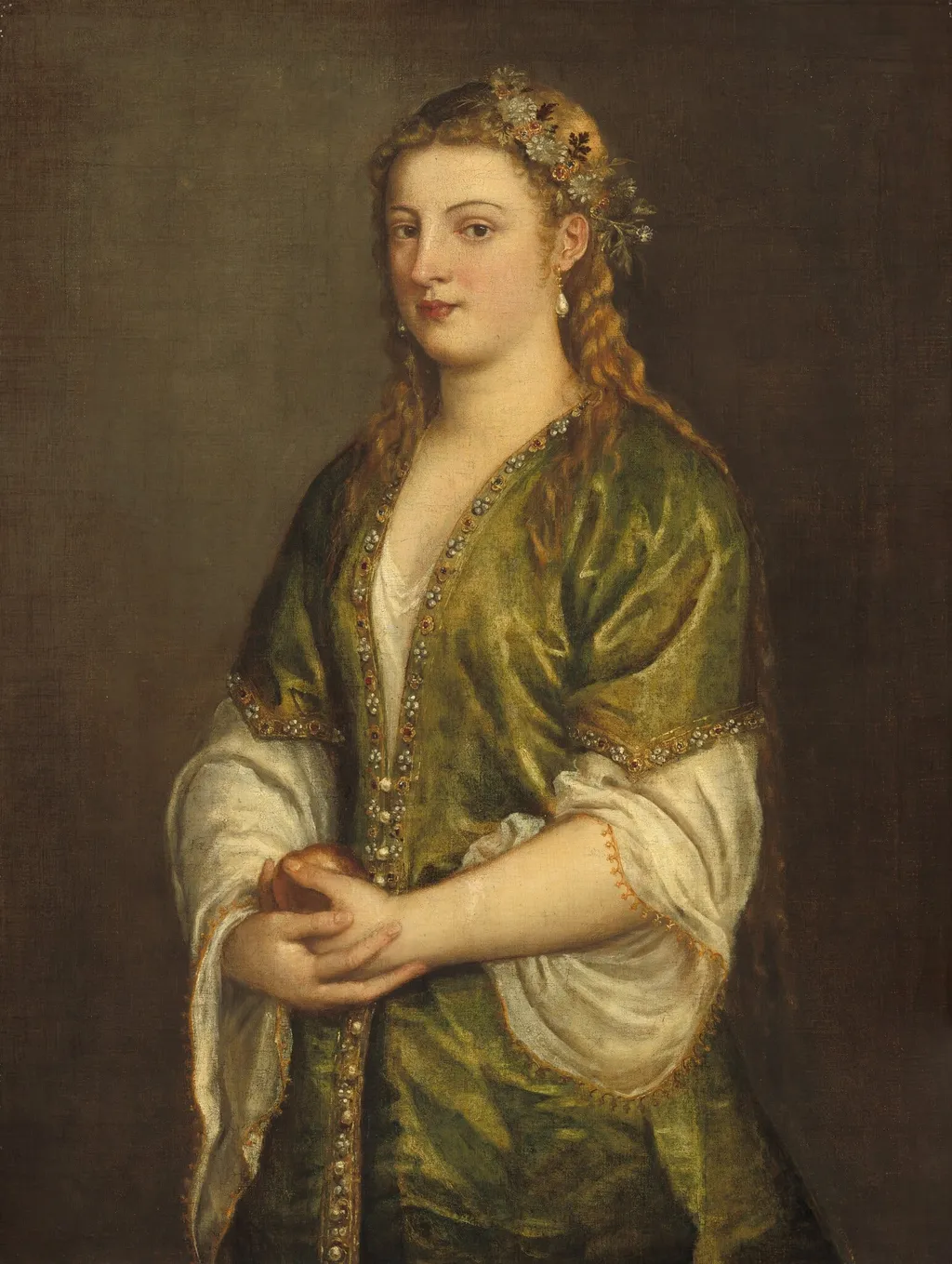
Woman Holding an Apple is an oil painting by the Renaissance artist Titian. It dates from 1550 and is held in the collection of the National Gallery of Art.
About this work
Subject & Meaning
A tentative 1940s identification with the Italian noblewoman Giulia di Gonzaga-Colonna is no longer accepted and cannot be sustained historically.
The painting depicts an unidentified woman shown at three-quarter length, turned to the left and gazing outward, with long blonde hair, fair skin, a green robe trimmed with jewels over a white dress with a gold border, and a garland of flowers on her head. She holds an apple in her hands, the central attribute that gives the work its title. Early provenance records describe the sitter as a "Venetian woman" and later as a "woman holding an apple in her hands, and with a garland of flowers on her head," though one early inventory identified the fruit as a pomegranate.
A tentative 1940s identification with the Italian noblewoman Giulia di Gonzaga-Colonna is no longer accepted and cannot be sustained historically. The work may therefore not be a portrait of a specific individual in the conventional sense, but rather an idealised image of female beauty, possibly modelled by Titian's daughter Lavinia, who is known to have posed for several of his pictures. The apple functions as the principal symbolic attribute of the composition.
Technique & Style
The painting is executed in oil on canvas, a medium that allowed Titian to exploit the luminous quality and subtle blending of tones characteristic of Venetian practice in the mid-sixteenth century. The support is a single piece of tightly woven linen, prepared with a chalk and glue ground to receive the paint layers. Titian’s handling is fluid, with loose, expressive brushwork in the modeling of the figure’s form and drapery, particularly evident in the delicate transitions of light across the face and the jewelled border of the green robe.
The composition is anchored by the subject’s three-quarter-length pose, turned slightly left and engaging the viewer directly. The apple is rendered with careful attention to its volume and reflective surface, while the surrounding costume, white undergarment with gold borders beneath a green outer robe, employs a restrained palette to focus attention on the figure. Stylistically, the work belongs to Titian’s mature Venetian manner, combining naturalistic detail with an idealized conception of beauty, consistent with his portraits of the 1550s.
History & Provenance
Created by Titian around 1550–1555, the oil-on-canvas painting likely entered the collection of Michel Particelli d'Hémery by 1650, where it was described as a Venetian woman holding a pomegranate. Upon his death, it passed to his son-in-law, Louis Phélypeaux de La Vrillière, who described the subject as holding an apple with a floral garland. The work subsequently descended through the Wilbraham family at Delamere House, appearing in inventories from 1829 through 1914 under the ownership of George Wilbraham, his son George Fortescue Wilbraham, and grandson Major Hugh Edward Wilbraham.
Duveen Brothers purchased the painting in January 1929 and sold it to the Samuel H. Kress Foundation in 1938. It was gifted to the National Gallery of Art in Washington, D.C., in 1939. While early 20th-century speculation identified the sitter as Giulia di Gonzaga-Colonna or Titian's daughter Lavinia, modern scholarship regards the figure as an idealized representation rather than a specific historical portrait.
The painting is housed in the National Gallery of Art in Washington D C where it is listed as part of the Samuel H Kress Collection Its recorded provenance begins with an inventory of Michel Particelli d H mery in 1650 passed through several French owners before being sold to Duveen Brothers in January 1929 acquired by the Kress Foundation in 1938 and gifted to the gallery in 1939 The work has appeared in public view since at least 1940 when it was featured in a The Art News article on Renaissance portraits and again in Duveen Brothers 1941 catalog and subsequent Kress Collection publications
Context
Within Titian's mature portrait practice of the 1550s, the painting has prompted sustained scholarly discussion concerning both its sitter and its status as a portrait. Earlier twentieth-century criticism, including a 1940 notice in The Art News and Duveen Brothers' 1941 catalogue, tentatively identified the subject as Giulia di Gonzaga-Colonna, Duchess of Traeetto. That attribution is no longer accepted, as it cannot be sustained by any historical source, and the work may instead represent an idealised image of female beauty rather than a specific individual.
Lavinia, Titian's daughter, has been proposed as the model on the basis of her documented appearances in his other paintings of the period. The provenance, traceable through the collection of Michel Particelli d'Hémery in Paris by 1650, situates the canvas within the early circulation of Venetian portraiture among European aristocratic collectors, while its eventual acquisition by the Samuel H. Kress Foundation in 1938 and gift to the National Gallery of Art in 1939 placed it within the canon of Venetian-school portraiture in American public collections.
Overview
Titian's "Woman Holding an Apple," also known as "Portrait of a Lady," is an oil painting on canvas created between approximately 1550 and 1555. This work by the Venetian master depicts a solitary female figure presenting an apple. It is currently part of the collection at the National Gallery of Art in Washington, D.C., serving as an example of High Renaissance portraiture.
Own this work as a print
Artist & collection

Artist
Tiziano Vecellio (Italian:; c. 1488/1490 – 27 August 1576), Latinized as Titianus, hence known in English as Titian ( TISH-ən), was an Italian Renaissance painter. The most important artist of Renaissance Venetian…




- Irene di Spilimbergo
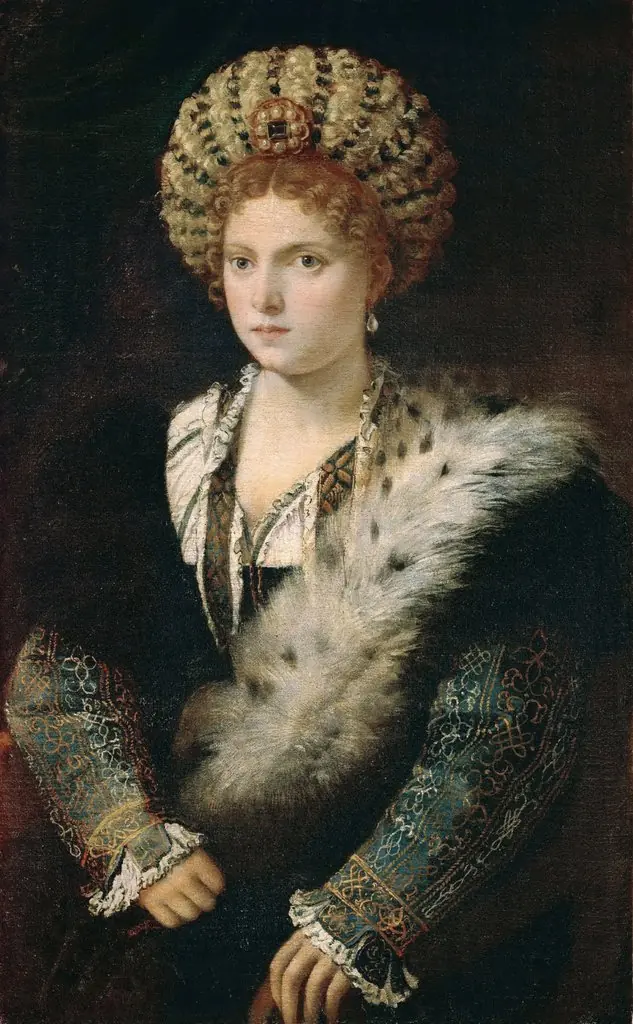 Portrait of Isabella d'Este
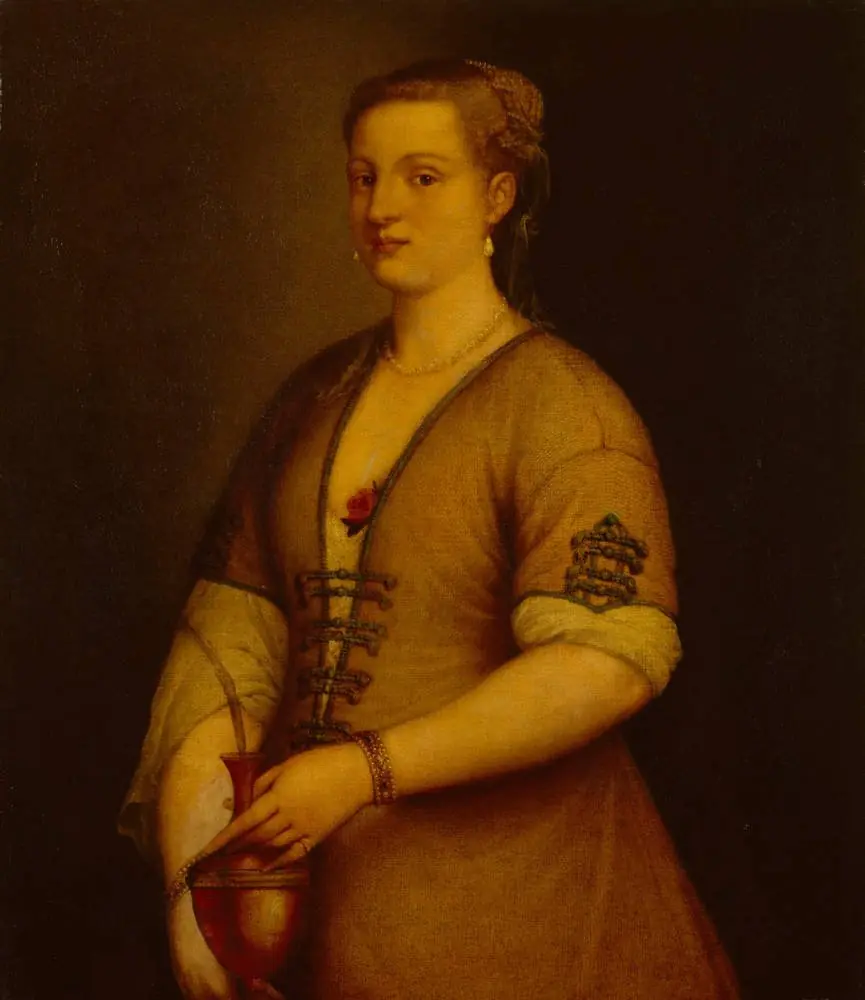 Portrait of a Lady with a Vase
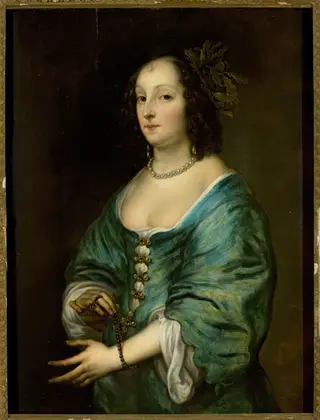 Portrait of Anthony van Dyck's wife Mary Ruthven
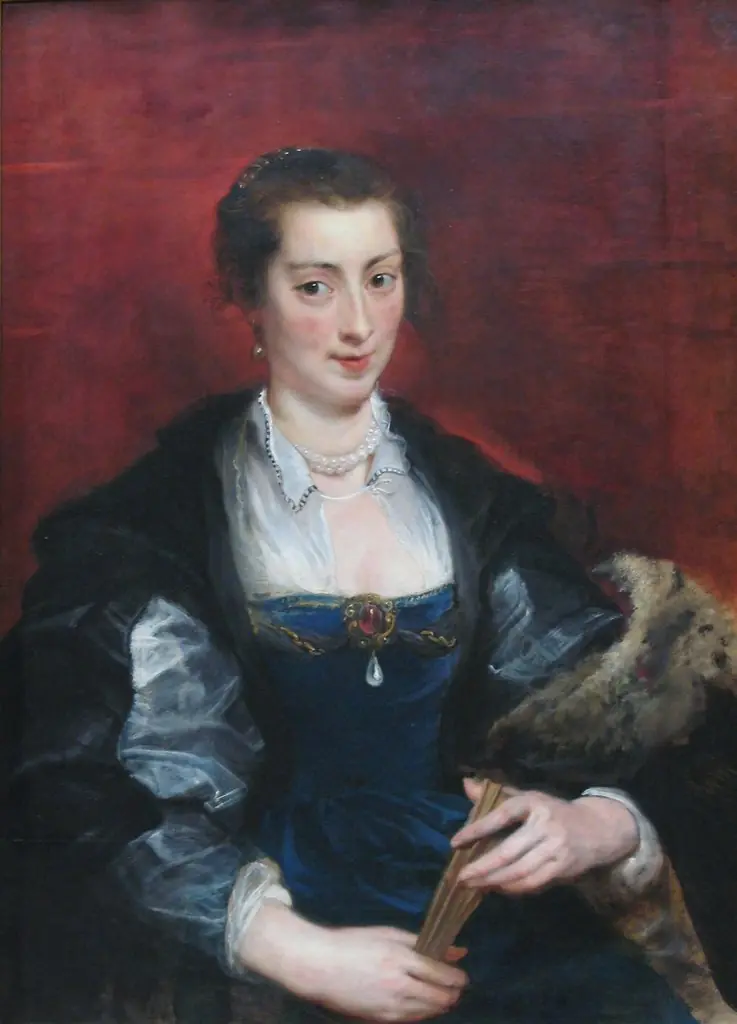 Portrait of a woman, traditionally identified as Isabella Brant
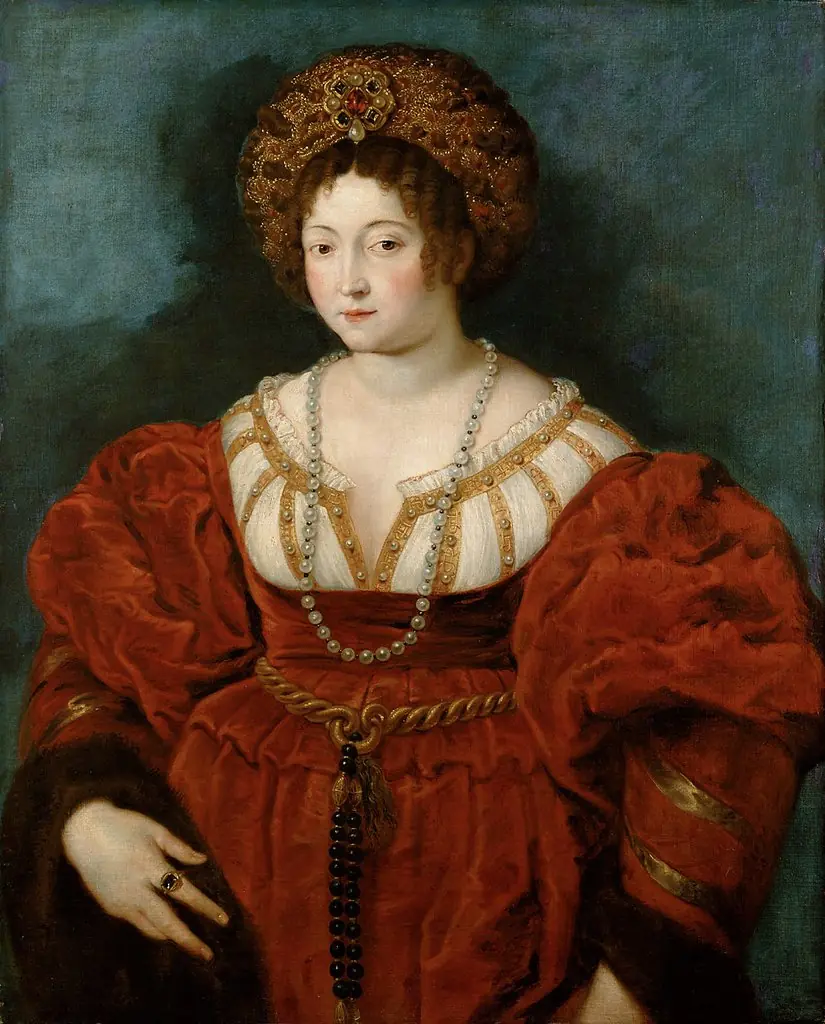 Isabella d'Este
 Emilia di Spilimbergo
 Portrait of a Woman
 Portrait of Caterina Cornaro
 Portrait of a Young Woman
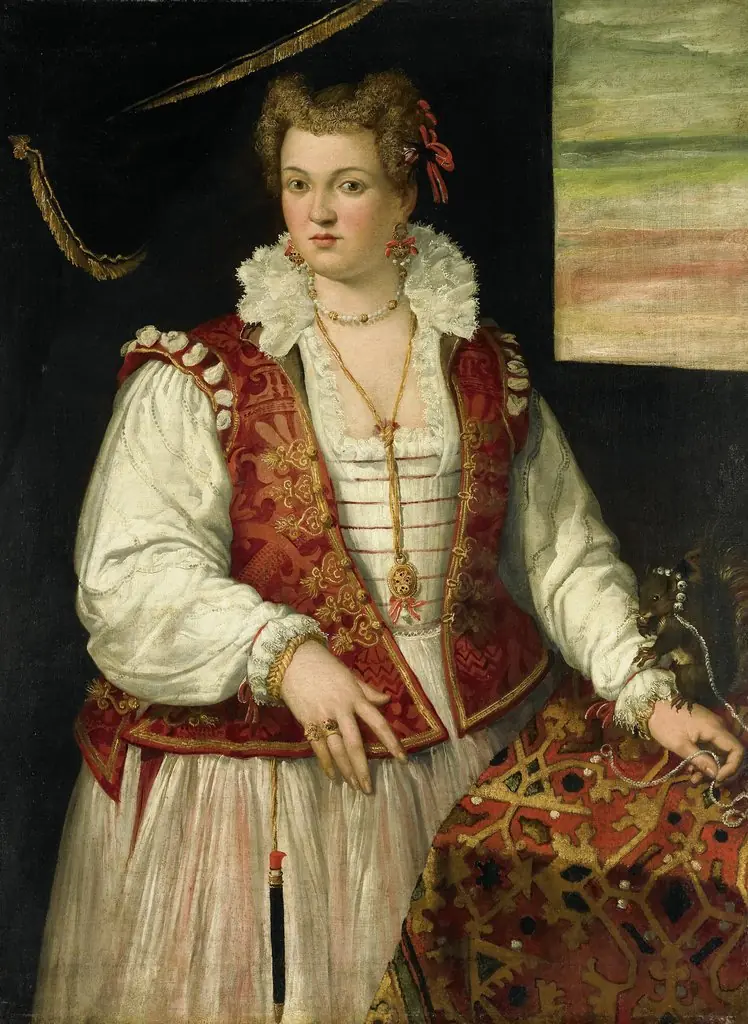 Portrait of a Woman with a Squirrel
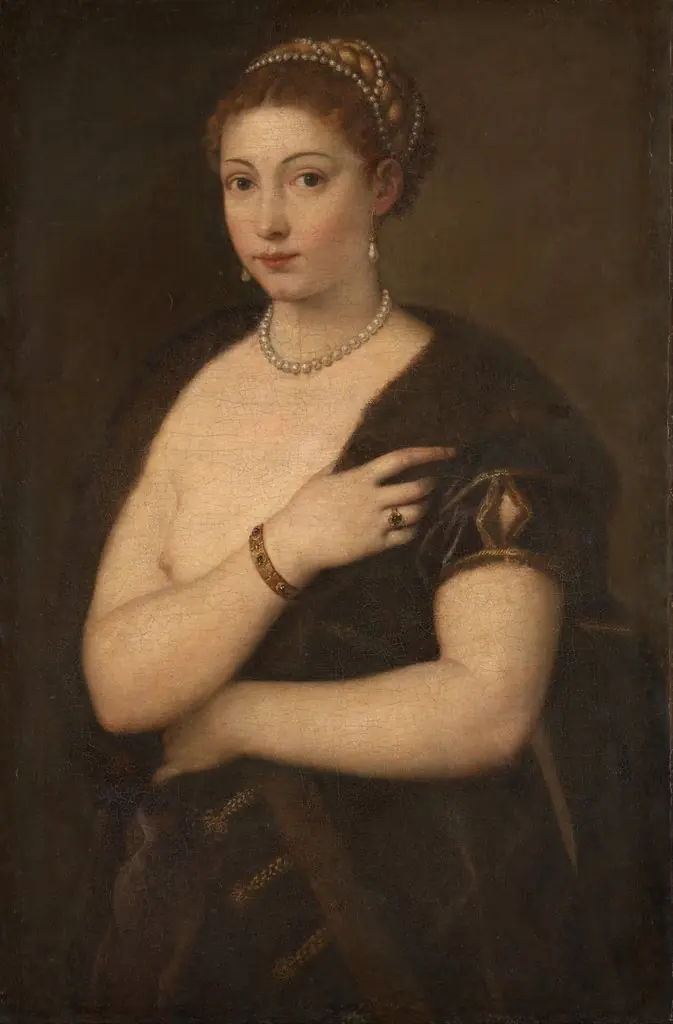 Girl in a Fur