Artwork
Mater Dolorosa with Clapsed Hands
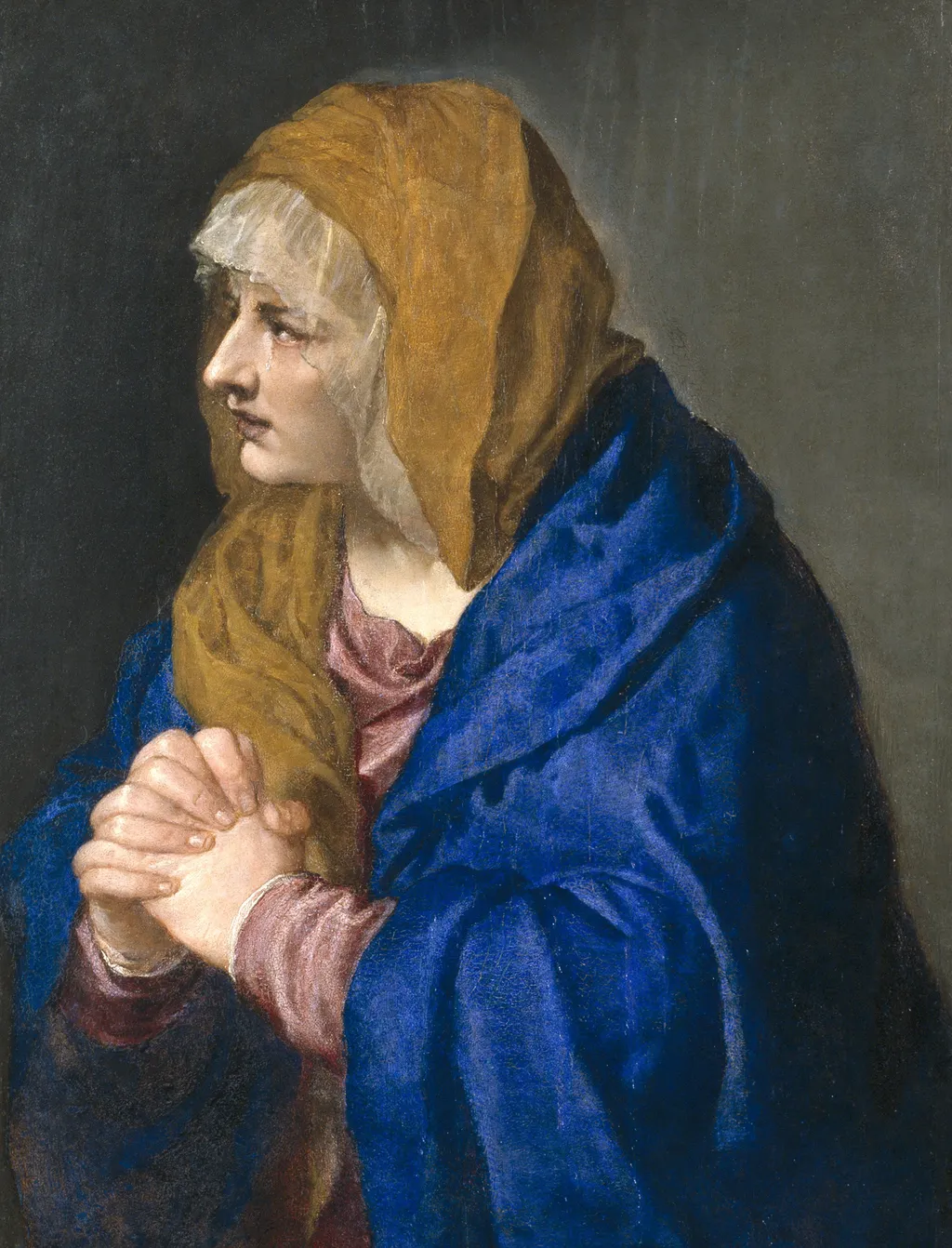
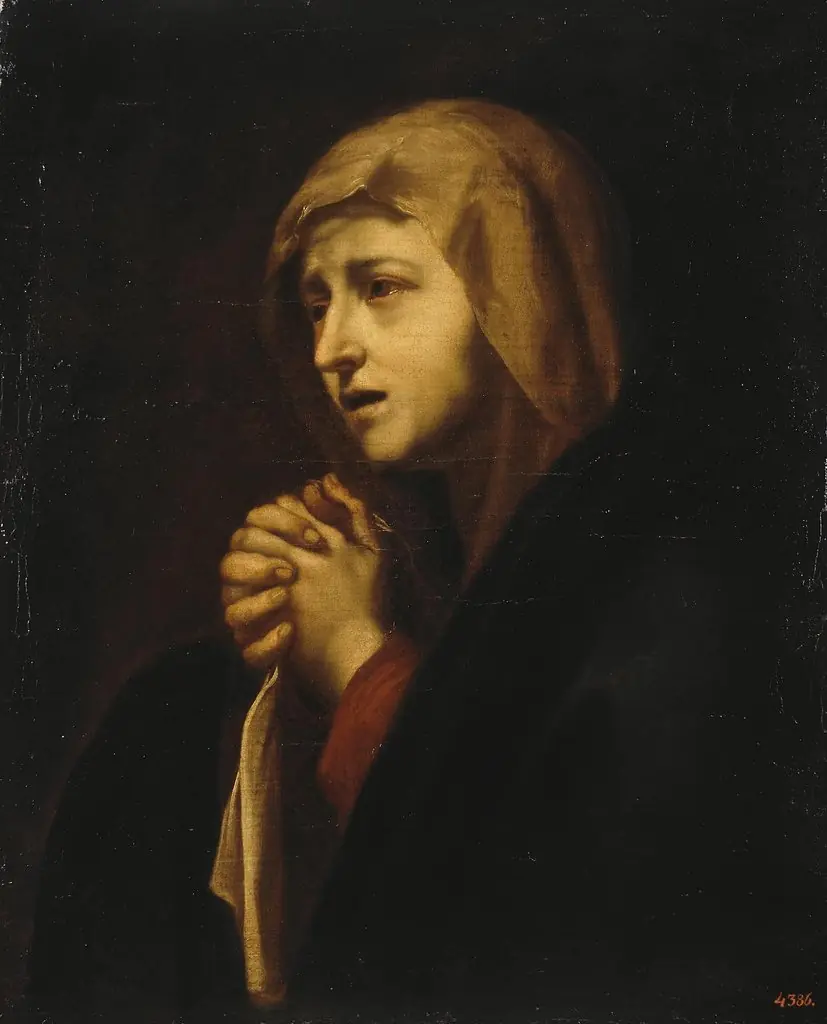
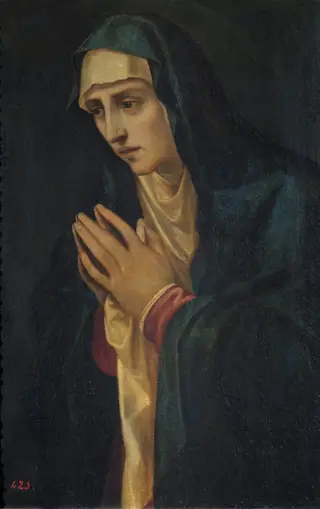
Mater Dolorosa with Clapsed Hands is an oil painting by the High Renaissance artist Titian. It dates from 1554 and is held in the collection of the Museo del Prado.
About this work
This painting shows Mary in deep sorrow. It’s oil on canvas from around 1550-1555 by Titian and his studio. The work glows with delicate colors and soft light.
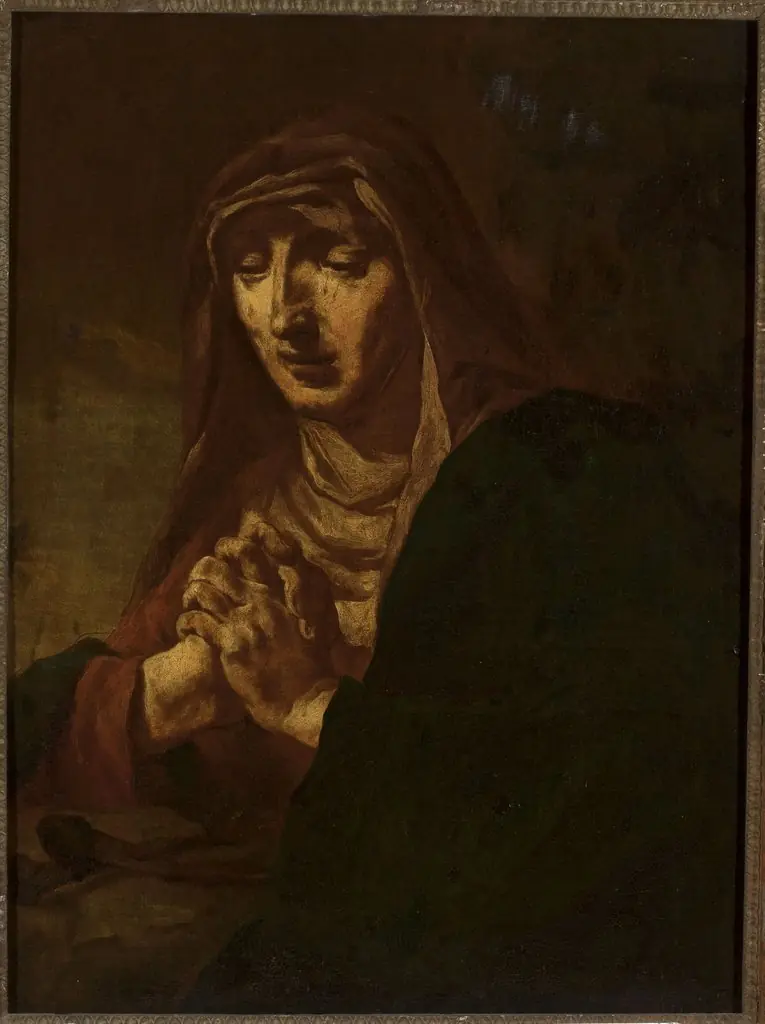
Titian painted this at a time when artists often explored human emotion. The Prado holds this version as well as another from 1554, both full of quiet strength.
Look up the subject, Our Lady of Sorrows, Mary.
Subject & Meaning
The work belongs to the religious tradition of the Venetian school, reflecting Titian's mastery of color and emotional depth in devotional imagery.
The painting portrays the Virgin Mary in her aspect as Our Lady of Sorrows, standing with her hands clasped in prayer. This iconography emphasizes her role as a compassionate intercessor and underscores the theme of shared suffering between Christ and his mother. The work belongs to the religious tradition of the Venetian school, reflecting Titian's mastery of color and emotional depth in devotional imagery.
Technique & Style
The work is an oil painting executed on wooden panel, reflecting Titian's technique characteristic of the Venetian school. The composition depicts the Virgin Mary in a pose of clasped hands, rendered with delicate modeling and a restrained palette that emphasizes the figure's sorrowful expression. Visible craquelatures and areas of paint loss indicate a fragile condition, while earlier compositional adjustments, such as a more open veil, suggest pentimenti.
The painting has been part of the Museo del Prado's collection since 1839 and was originally commissioned by Emperor Charles V.
History & Provenance
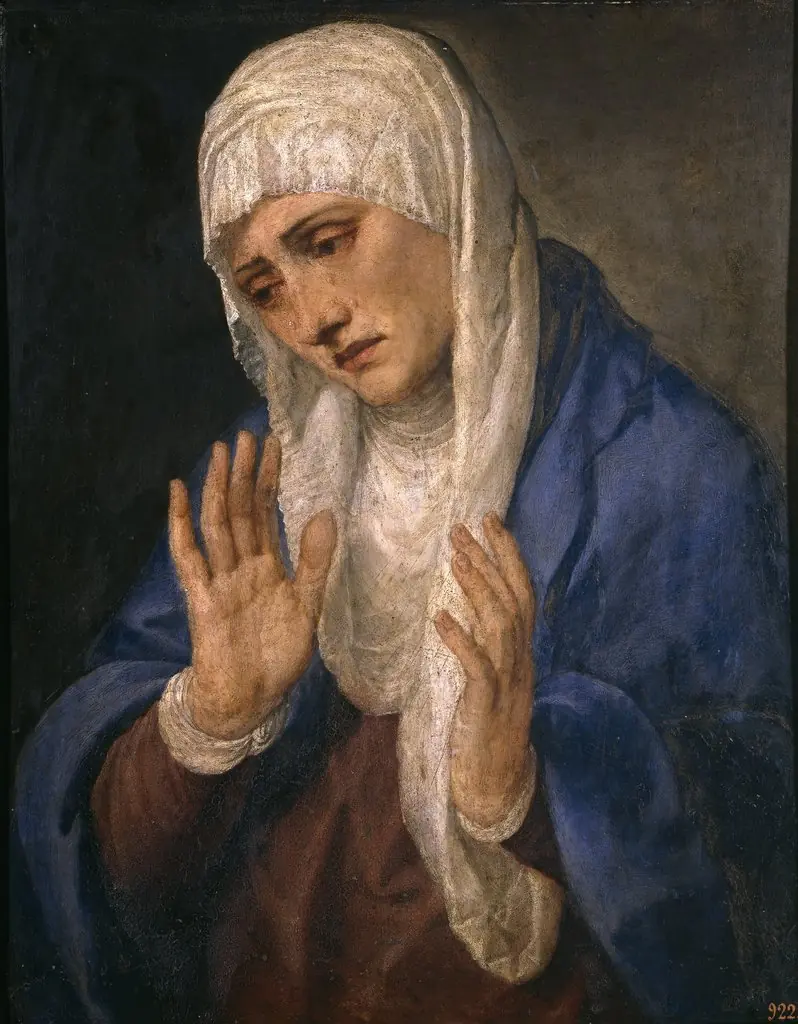
Created circa 1550 to 1555, this oil painting by Titian and his studio depicts the Mater Dolorosa. The work was commissioned by Emperor Charles V, intended to accompany a companion piece known as the Dolorosa with Open Hands and an Ecce Homo. Following its creation, the painting remained with the Emperor during his retirement at the Monastery of Yuste.
It subsequently entered the collection of the Monastery of El Escorial before being transferred to the Museo del Prado in 1839, where it remains housed.
The work is held in the Museo del Prado in Madrid. It entered the museum's collection in 1839 after having been part of Emperor Charles V's retreat at Yuste and later passing through the Monastery of El Escorial. The painting is executed in oil on panel and depicts the Virgin Mary as Our Lady of Sorrows.
Its dimensions are 68 cm in height and 61 cm in width. The work shows Mary with clasped hands, reflecting a specific devotional type associated with Titian's output in the 1550s. It is distinct from another version of the subject dated 1554, also housed in the Prado.
Legacy
The visual tradition of the grieving Virgin, exemplified by this work, shaped Counter‑Reformation devotional imagery across Europe. Reproductions and copies of the composition circulated in the 17th century, informing later depictions of the Mater Dolorosa in Spain and France. Its presence in the royal collection of Charles V amplified the image’s prestige, linking it to imperial patronage.
The painting’s influence persisted through the Baroque period, inspiring derivative works that emphasized emotional intensity and refined chiaroscuro. Contemporary scholarship cites it as a benchmark for Venetian coloristic techniques and as a reference point for studies of Spanish royal art collecting.
Overview
Created between 1550 and 1555, this oil on canvas depicts the Mater Dolorosa, the sorrowful Virgin Mary, and is attributed to Titian together with his workshop. The work resides in Madrid’s Museo del Prado, where it is displayed alongside a later, circa 1554, rendition of the same theme by the same master.
Context
During the mid‑16th century, Venetian painters, including Titian, increasingly explored psychological depth in religious subjects. This work reflects that trend, focusing on inner feeling rather than narrative action, and aligns with contemporary Counter‑Reformation emphasis on personal piety.
Own this work as a print
Artist & collection
Artist
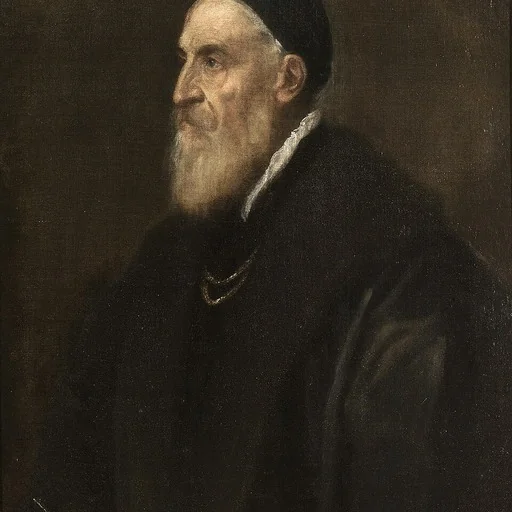
Tiziano Vecellio (Italian:; c. 1488/1490 – 27 August 1576), Latinized as Titianus, hence known in English as Titian ( TISH-ən), was an Italian Renaissance painter. The most important artist of Renaissance Venetian…