Artwork
Portrait of a Man
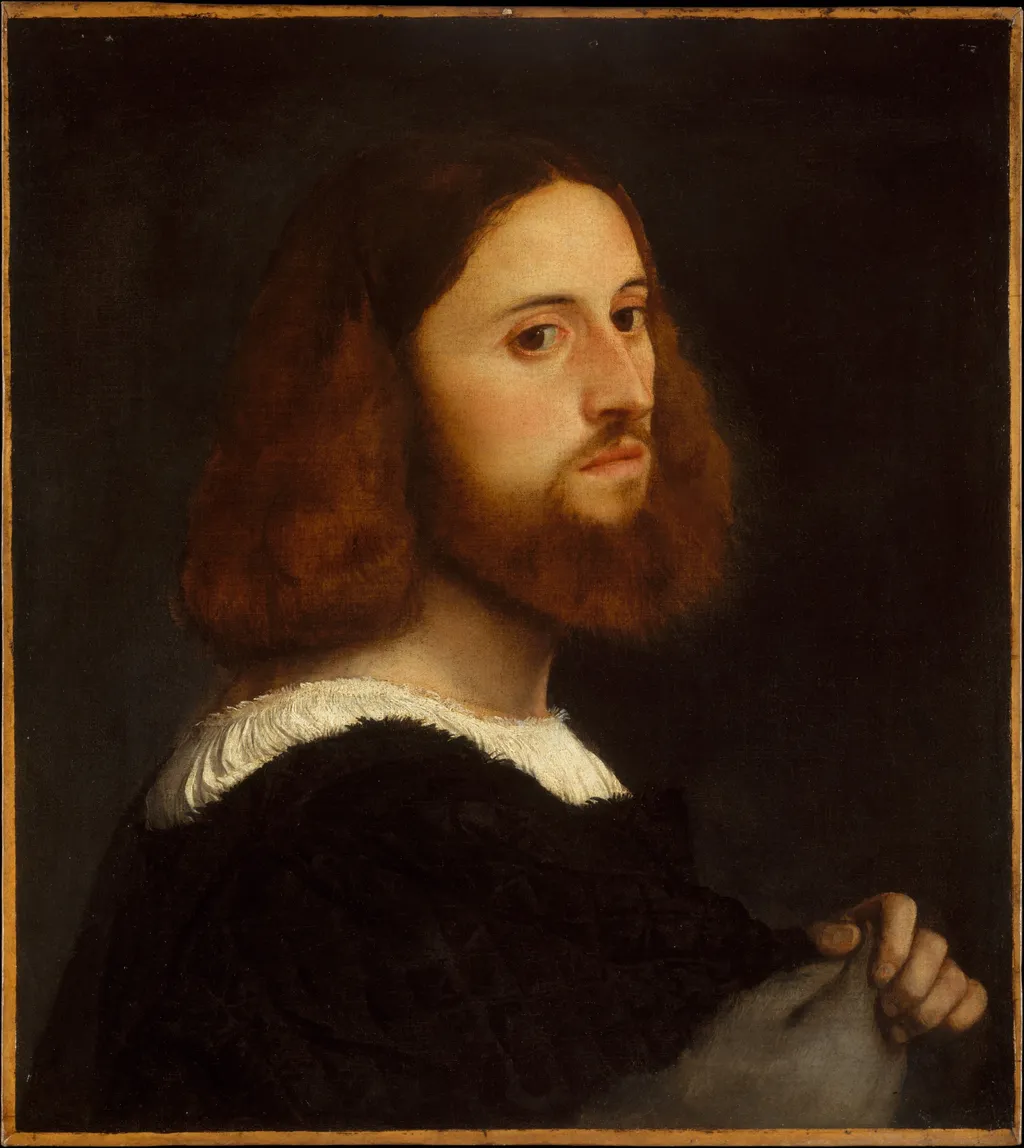
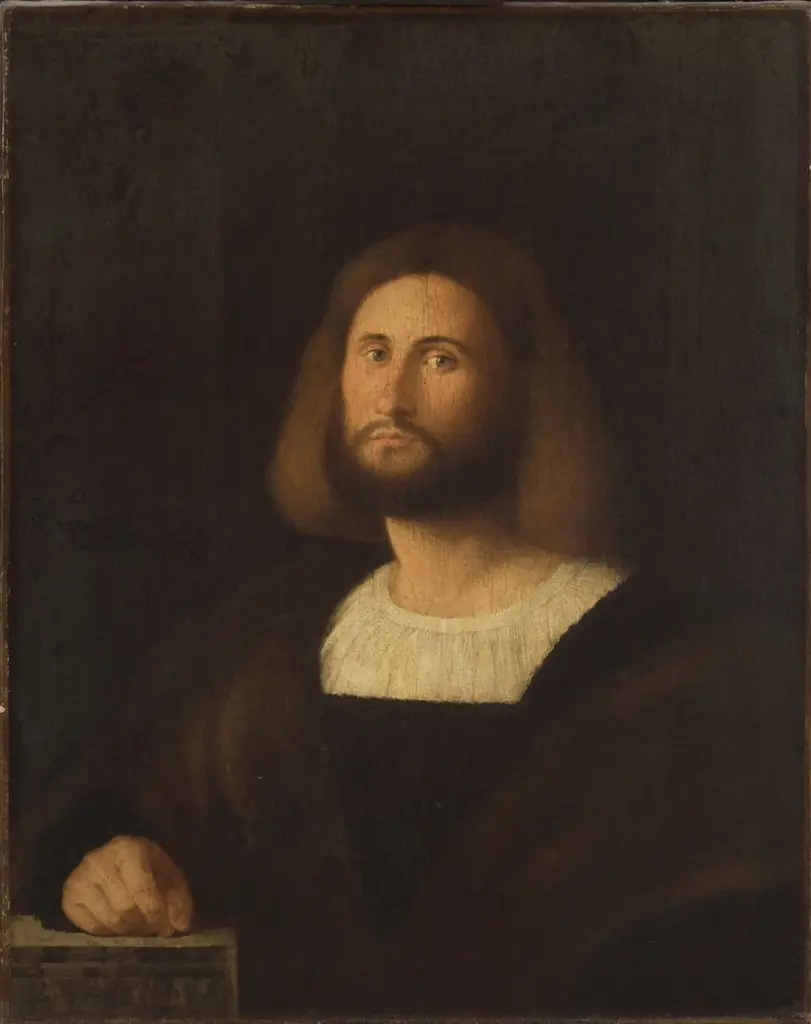
Portrait of a Man is an oil painting by the High Renaissance artist Titian. It dates from 1512 and is held in the collection of the Metropolitan Museum of Art.
About this work
Subject & Meaning
A central element of the composition is the figure's action of removing a glove, a gesture noted as characteristic of Titian's portraiture style.
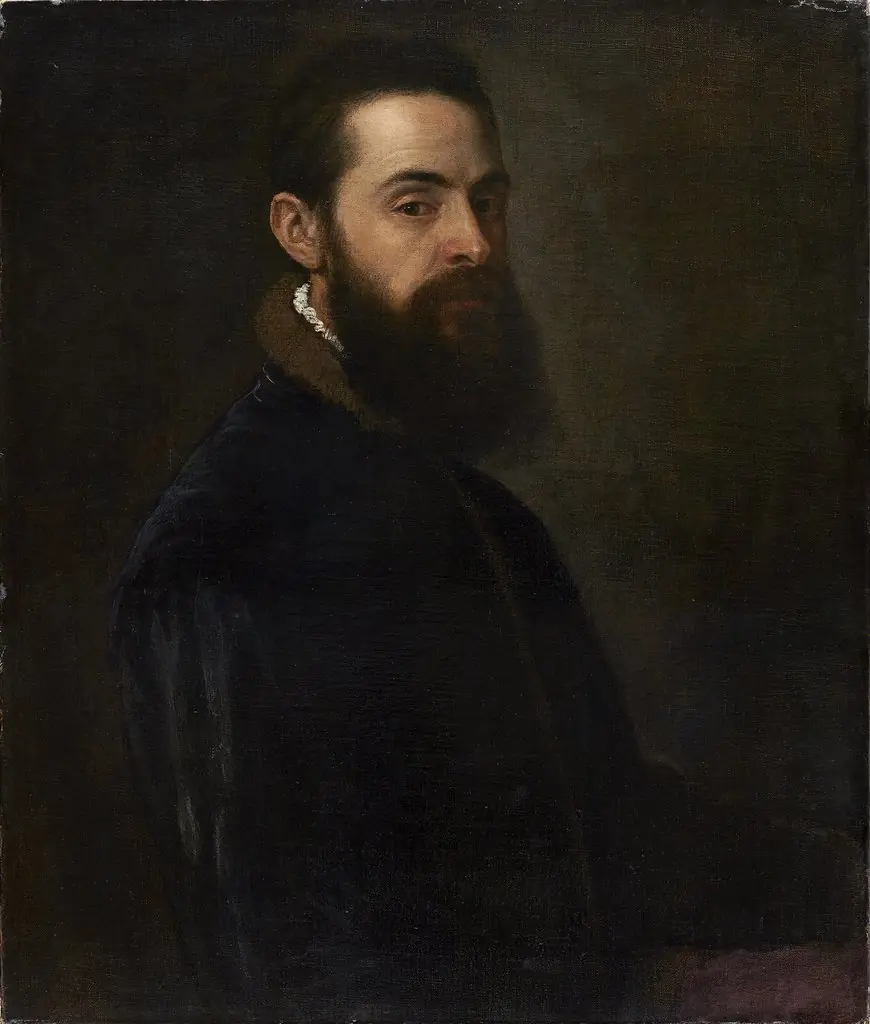
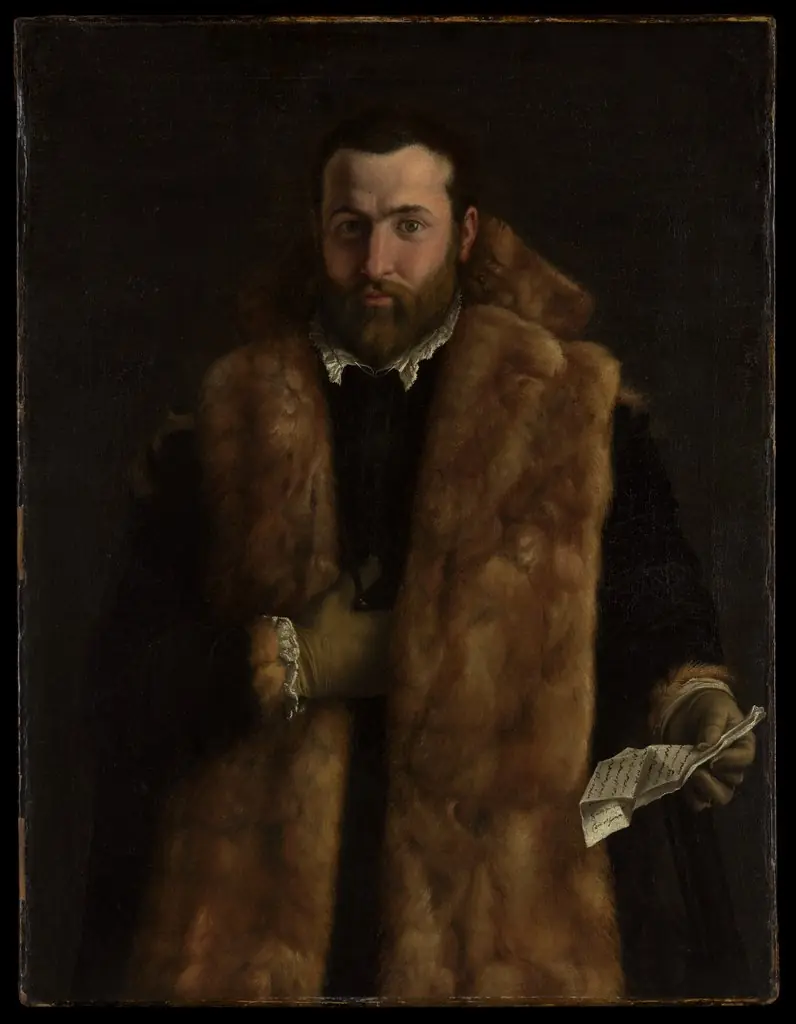
The work depicts a bust-length male figure emerging from a dark background, characterized by a turned posture and a gaze directed downward, avoiding direct contact with the viewer. The subject is dressed in fashion typical of the 1510s and 1520s, wearing a black jacket that reveals a pleated white shirt beneath, accompanied by long hair and a full beard. A central element of the composition is the figure's action of removing a glove, a gesture noted as characteristic of Titian's portraiture style.
While some scholars have speculated the sitter may be a member of the Grimani family, the painting primarily functions as a study of youthful masculinity and introspection rather than a specific historical identification. The figure's pensive expression, combined with the specific attire, reflects the High Renaissance Venetian interest in psychological depth and contemporary fashion.
Technique & Style
The portrait is executed in oil on canvas, consistent with Titian's early Venetian practice, and measures 50.2 × 45.1 cm. Stylistically, the composition isolates the sitter's bust against a dark ground, with the figure turned three-quarters right while his gaze is lowered and averted, creating an introspective immediacy. The handling emphasizes tactile realism, particularly in the rendering of the sitter's gloved right hand in the act of removing the glove, a motif associated with Titian's portraiture of the 1510s. The costume, a black doublet revealing a white pleated shirt beneath and shoulder-length hair with a full beard, reflects early sixteenth-century Venetian fashion.
The canvas shows abrasions and has been trimmed at the lower edge, where the elbow likely rested on a parapet, reducing the original spatial cues.
History & Provenance
Created circa 1512, this oil on canvas portrait is attributed to Titian, a consensus reached by scholars including Longhi, Suida, and Pignatti, despite earlier attributions to Giorgione by Wilhelm von Bode or Palma il Vecchio by Richter. The work's provenance begins with the Grimani family in Venice, who likely commissioned it or owned the sitter depicted. From Venice, the painting passed through the collection of W. Savage in London before reaching New York.
There, it was acquired by the philanthropist Benjamin Altman. Upon his death, Altman bequeathed the artwork to the Metropolitan Museum of Art in 1913, where it remains part of the permanent collection. The painting has suffered some physical degradation, including abrasions and a cut at the bottom that likely removed a parapet.
Context
Scholarly debate has centered on the attribution of this early Titian portrait. Early attributions by Wilhelm von Bode favored Giorgione, while other scholars proposed Palma il Vecchio; however, a consensus emerged in the mid-twentieth century through the work of Roberto Longhi, Suida, Phillips, Morassi, Pallucchini, and Pignatti, all supporting Titian's authorship. The painting's stylistic features, such as the individualized gesture of removing a glove, the dark, unadorned background, and the sitter's introspective gaze, align with Titian's emerging portrait style in the early 1510s, reflecting the Venetian High Renaissance emphasis on psychological presence and contemporary fashion.
Its provenance through the Venetian Grimani family and later collectors situates it within the broader cultural milieu of Venetian patrician portraiture.
Legacy
The painting's reception evolved from early attributions to Giorgione and Palma il Vecchio to a consensus in the twentieth century assigning it to Titian, reflecting shifts in connoisseurship rather than lasting influence on later artists. Within Titian's oeuvre, its handling of the sitter's withdrawn glance and the glove gesture became emblematic of High Renaissance Venetian portraiture, cited in studies of the period's immediacy and psychological nuance. Its posthumous trajectory, traversing Grimani, Savage, and Altman before entering the Met in 1913, anchored its scholarly visibility, though it has not seeded a distinct iconographic tradition or inspired a named school of followers. Canonical surveys such as Valcanover's 1969 catalogue perpetuate its status as a benchmark Titian portrait.
Overview
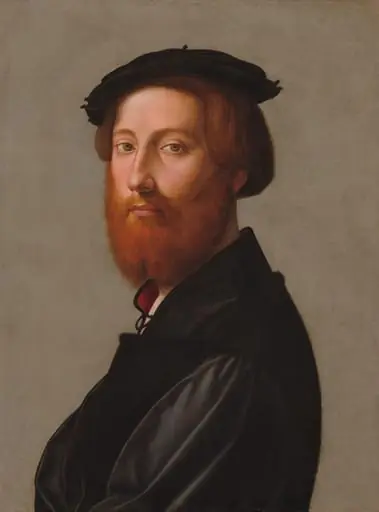
Titian's "Portrait of a Man," painted around 1512, is an oil on canvas work depicting an unidentified male subject. The painting showcases a figure with distinctive red hair and a beard, whose direct gaze engages the viewer. While its authorship was once debated among art historians, a consensus has emerged, firmly attributing this early sixteenth-century portrait to Titian, highlighting his developing skill in capturing human likeness and mood.
Own this work as a print
Artist & collection
Artist
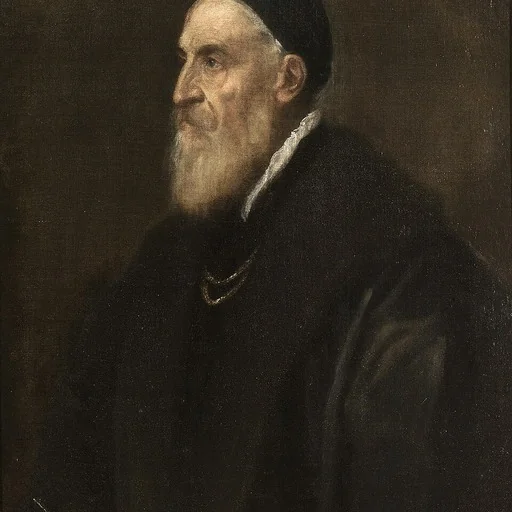
Tiziano Vecellio (Italian:; c. 1488/1490 – 27 August 1576), Latinized as Titianus, hence known in English as Titian ( TISH-ən), was an Italian Renaissance painter. The most important artist of Renaissance Venetian…