Artwork
Saint Catherine of Alexandria
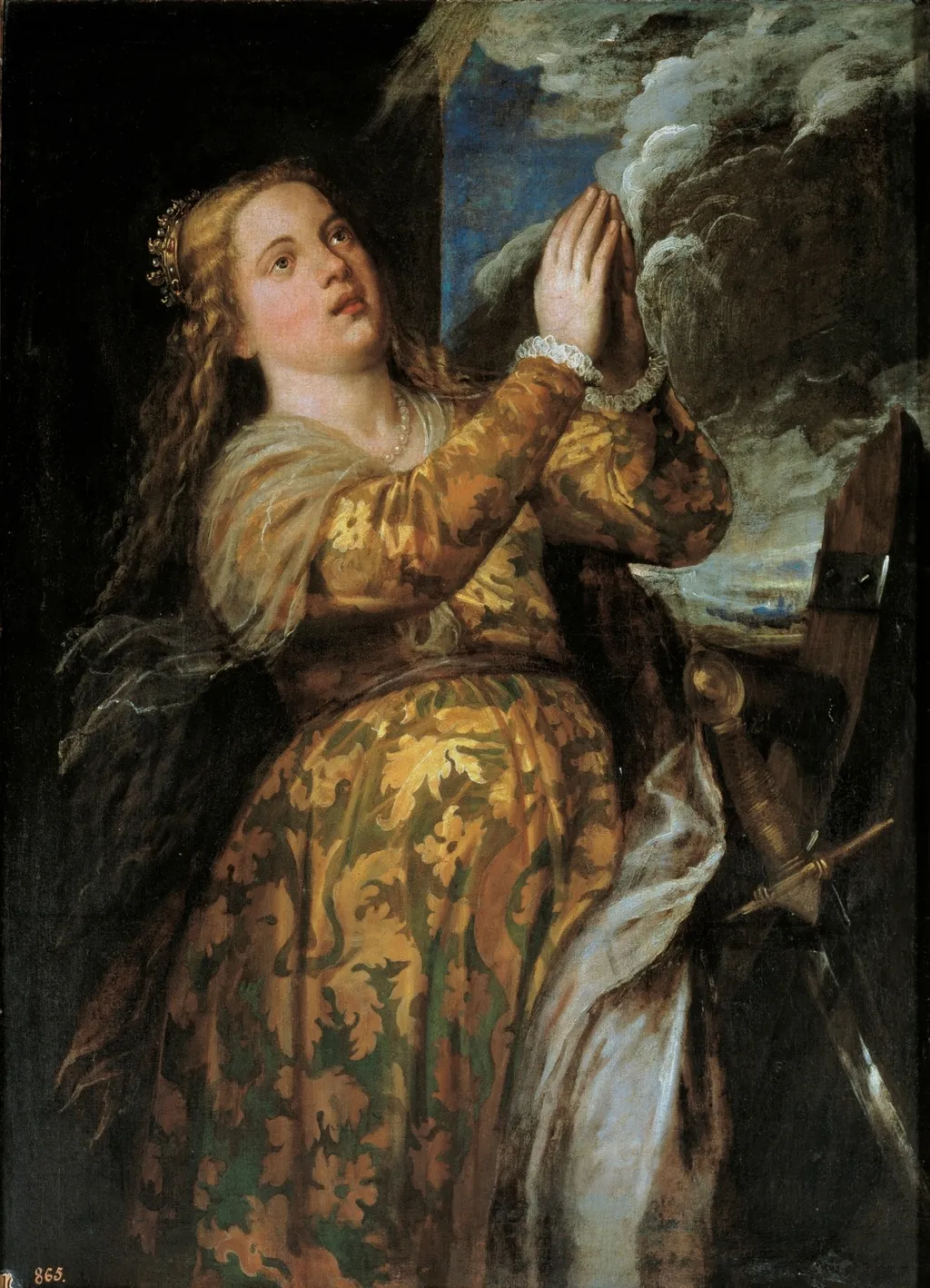
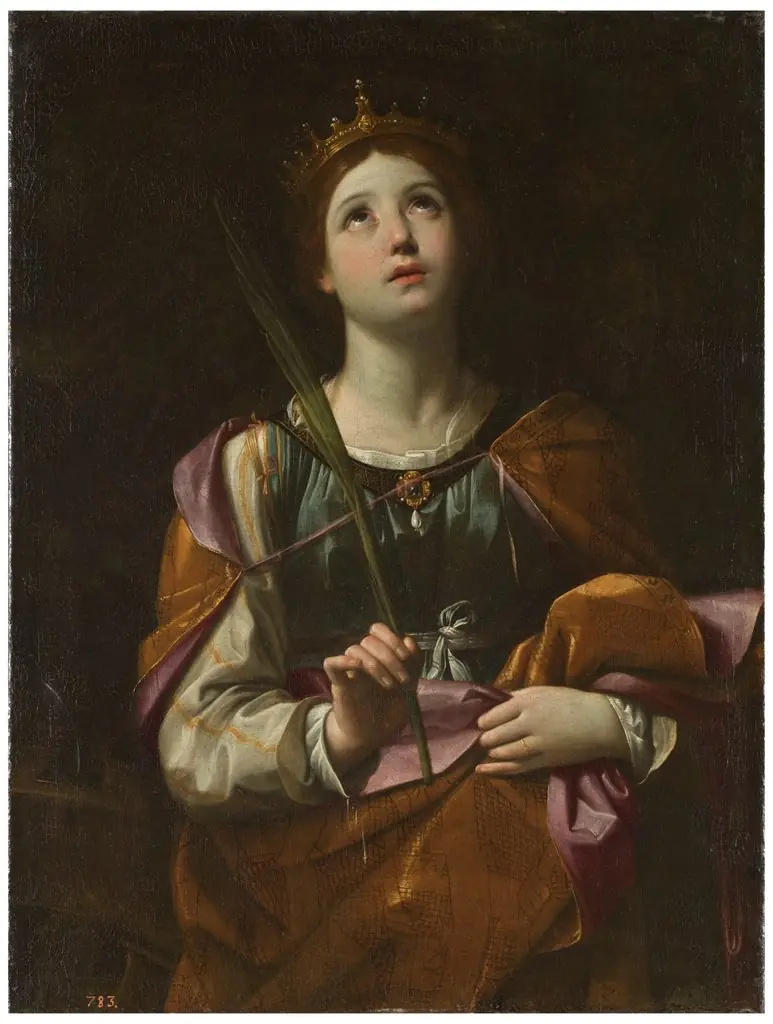
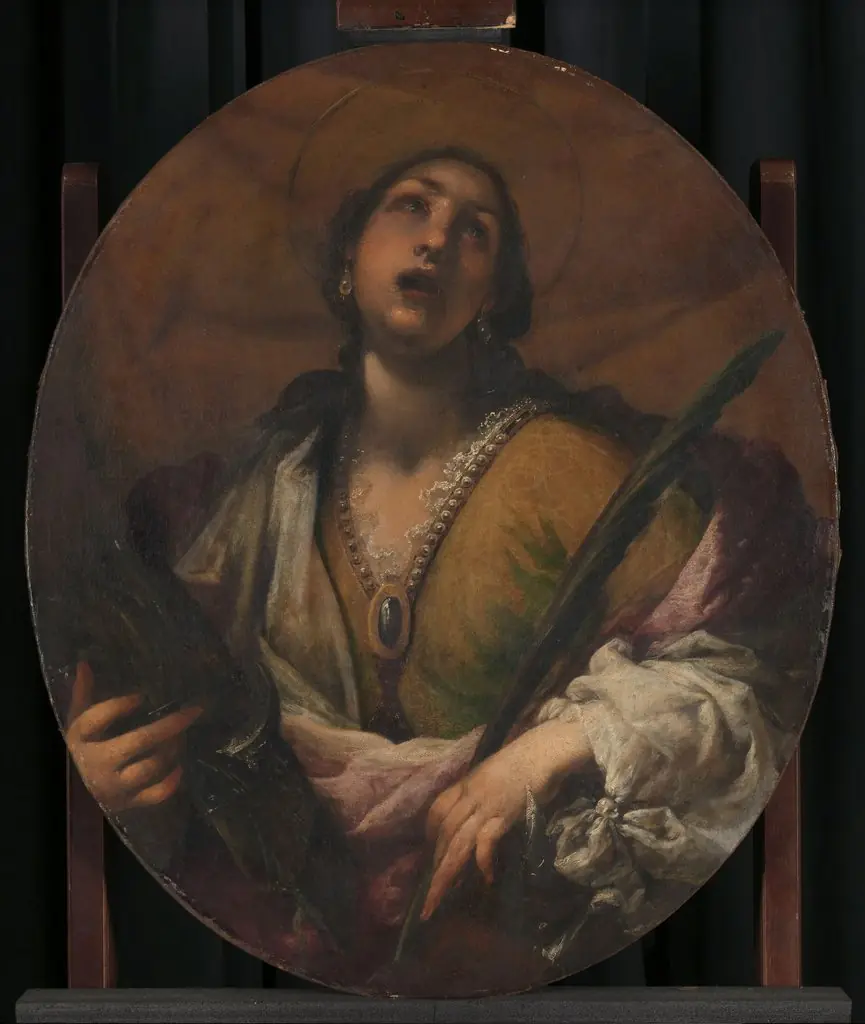
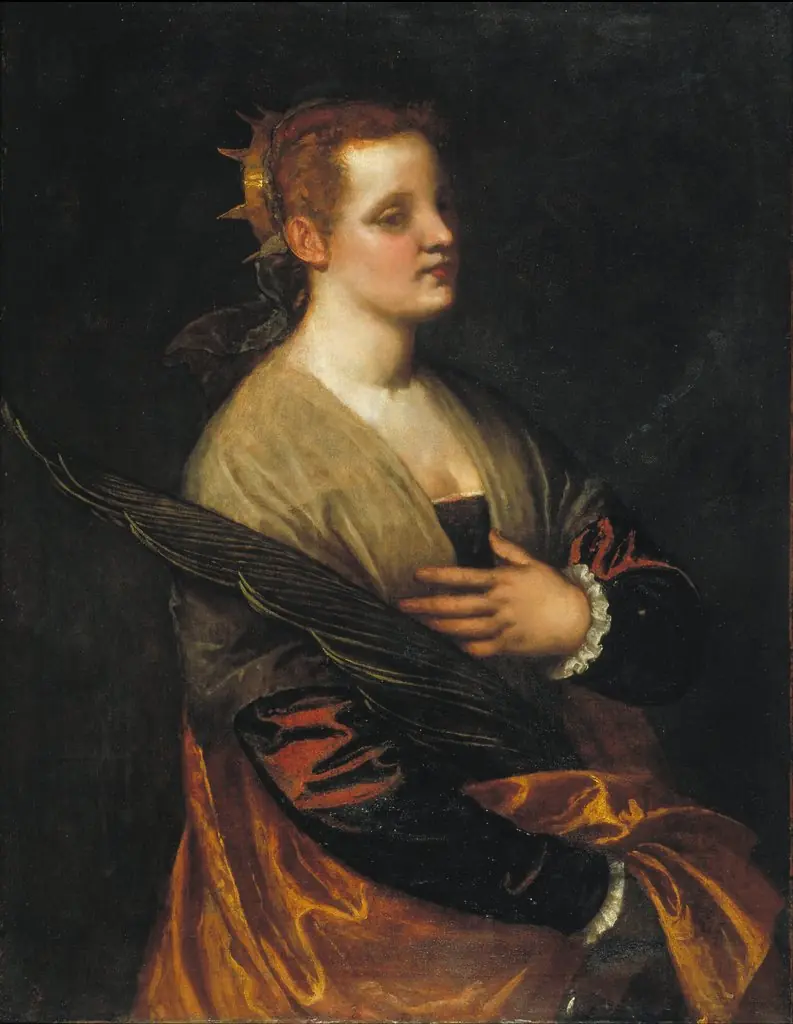
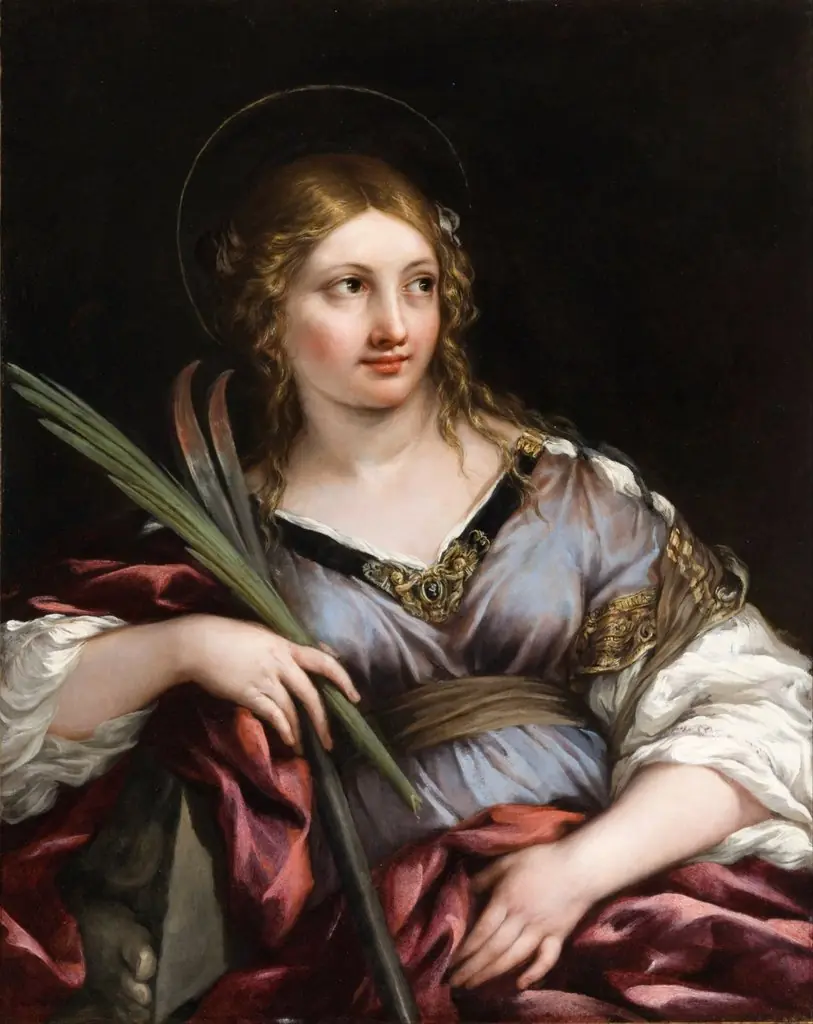
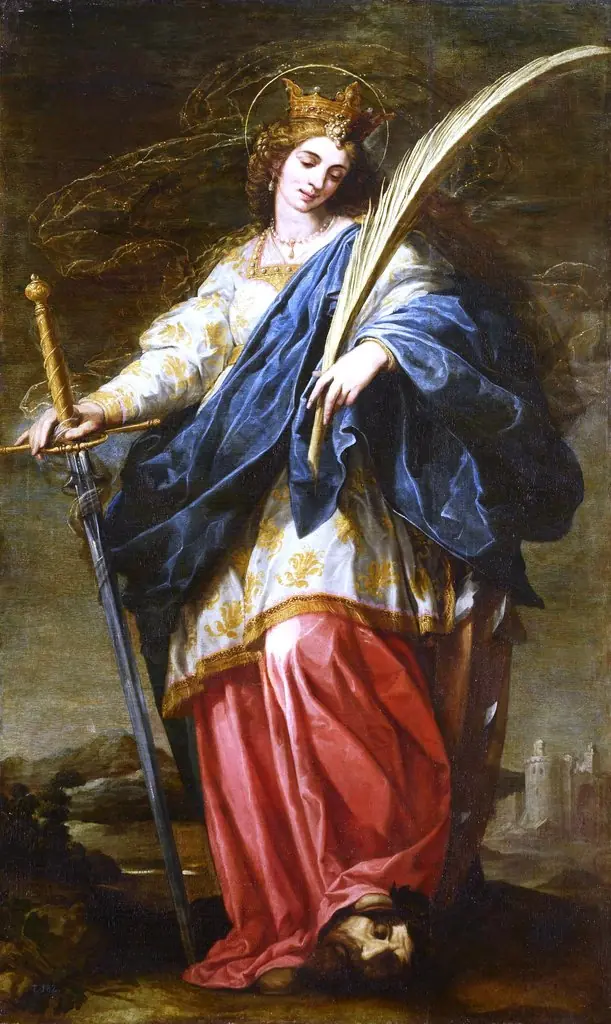
Saint Catherine of Alexandria is an oil painting by the High Renaissance artist Titian. It dates from 1560 and is held in the collection of the Museo del Prado.
About this work
Technique & Style
The work is held in the collection of the Fine Arts Museum of Asturias, with an additional collection association at the Museo del Prado.
Saint Catherine of Alexandria is executed in oil paint on canvas, a medium Titian employed throughout his late career. The painting measures 135 cm in height by 98 cm in width, an upright format suited to the half-length depiction of the saint. As a religious work, it belongs to the devotional tradition of Venetian late Renaissance painting, with the canvas support providing the ground for Titian's handling of oil glazes and layered pigment characteristic of his mature practice.
The work is held in the collection of the Fine Arts Museum of Asturias, with an additional collection association at the Museo del Prado.
History & Provenance
The painting Saint Catherine of Alexandria is dated to 1560 and attributed to Titian, who executed it in oil on canvas. The work entered the collection of the Museo del Prado and is presently housed in the Fine Arts Museum of Asturias, where it is displayed as a religious image of Catherine of Alexandria. While earlier ownership or specific commission details are not recorded in the available sources, the painting’s creation is firmly placed within Titian’s mid‑career output.
Overview
Titian’s oil painting of Saint Catherine of Alexandria, created around 1560, presents the early‑Christian martyr in a richly colored composition. The work measures roughly a life‑size figure, illuminated against a dark, cloud‑filled backdrop, and is part of the collection of the Museo del Prado in Madrid.
Subject & Meaning
The saint is shown holding the spiked wheel that, according to legend, was intended for her execution. This attribute identifies her and alludes to her steadfast faith, as she is depicted with a serene expression and a hand placed over her heart, suggesting inner devotion and sacrifice.
Context
The work exemplifies Titian’s versatility in religious subjects, aligning with contemporary Counter‑Reformation demands for clear, emotionally resonant images of saints. Its composition and palette also echo the broader Venetian tradition of rich coloration and dramatic lighting that distinguished the city’s artistic output in the 16th century.
Own this work as a print
Artist & collection
Artist
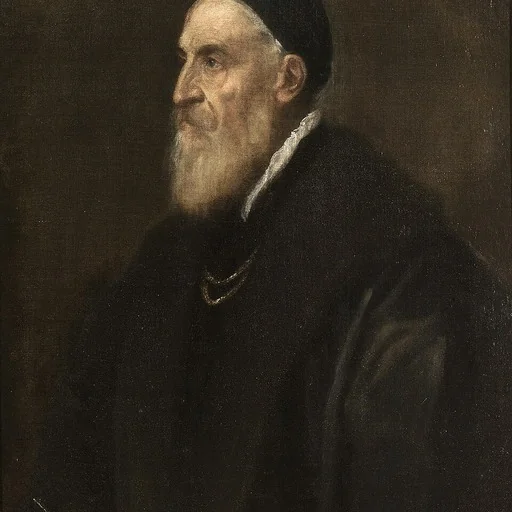
Tiziano Vecellio (Italian:; c. 1488/1490 – 27 August 1576), Latinized as Titianus, hence known in English as Titian ( TISH-ən), was an Italian Renaissance painter. The most important artist of Renaissance Venetian…