Artwork
Self-Portrait
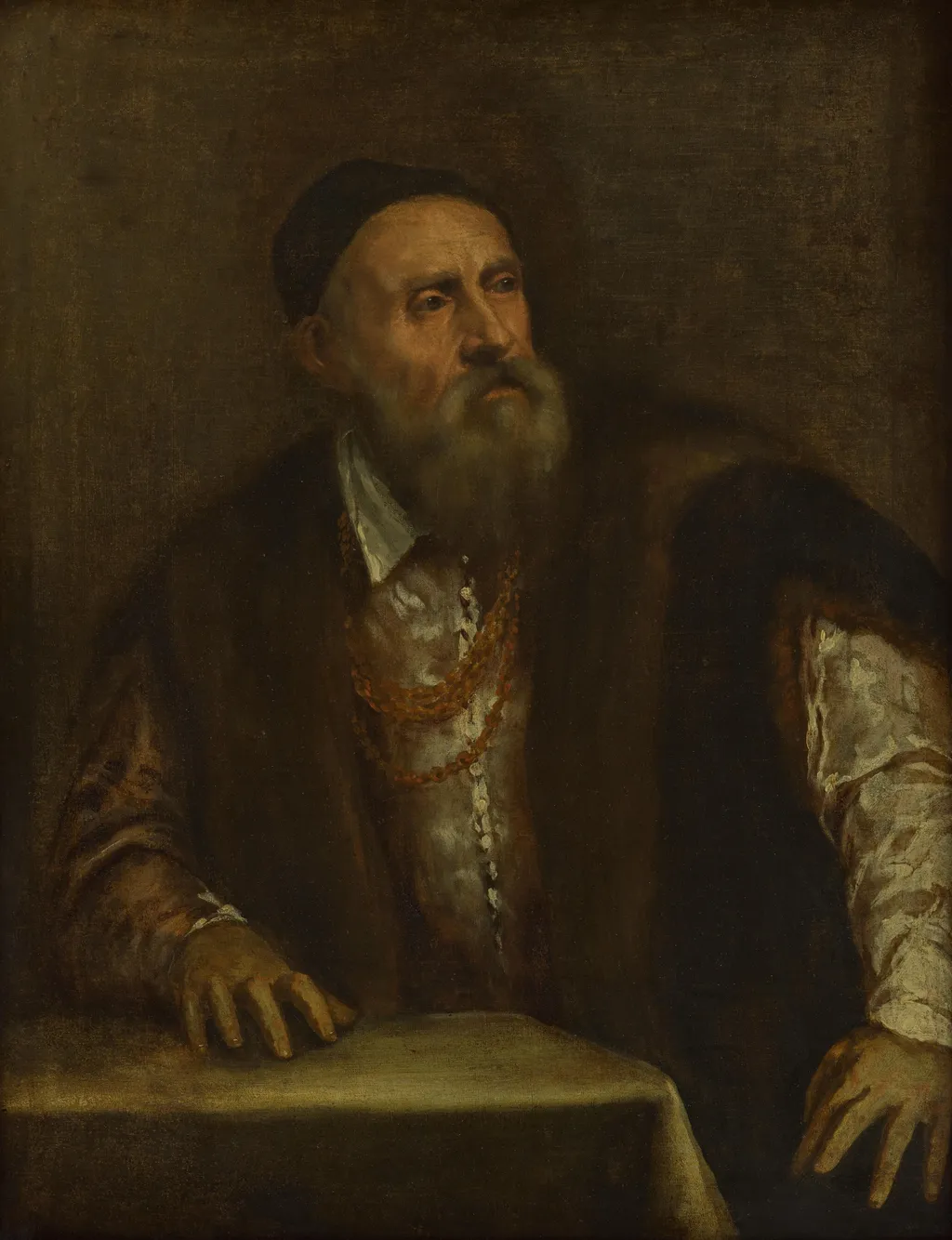
Self-Portrait is an oil painting by the High Renaissance artist Titian. It dates from 1550 and is held in the collection of the Gemäldegalerie Berlin.
About this work
Overview
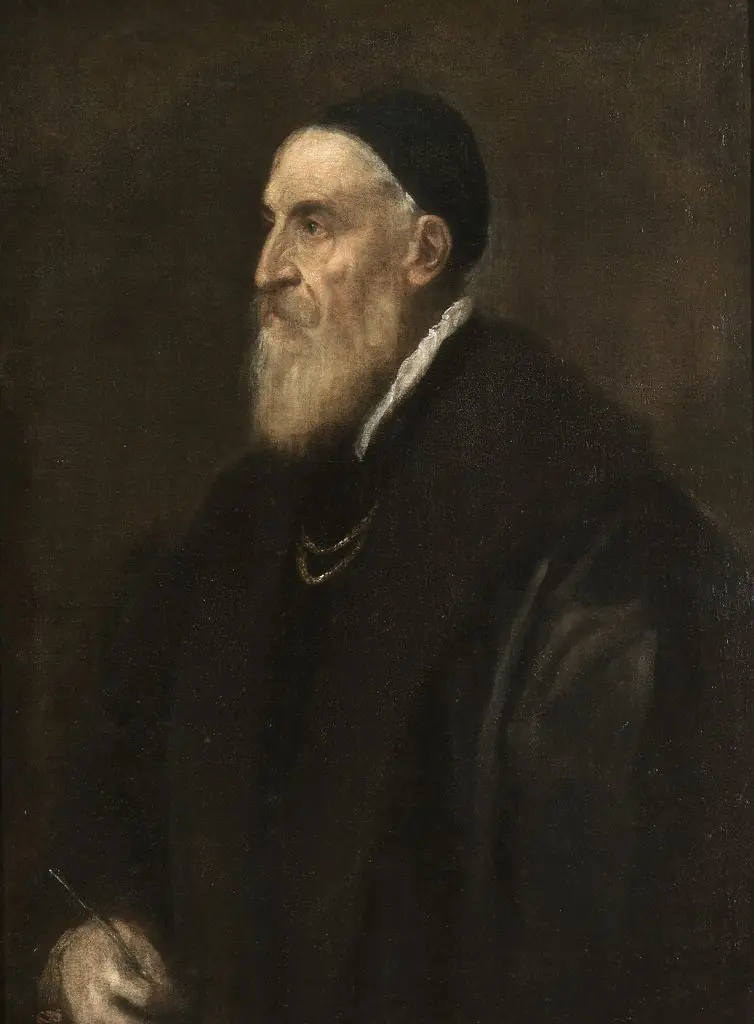
It is one of only two independent painted self-portraits by the artist to survive, the other being a later work from around 1560 held in Madrid.
Self-Portrait is an oil on canvas painting by the Venetian master Titian, created circa 1546 to 1555 and measuring 96 by 75 centimeters. It is one of only two independent painted self-portraits by the artist to survive, the other being a later work from around 1560 held in Madrid. The Berlin portrait depicts the artist in half-length, seated behind a table and turned in three-quarters profile. Notable for its somber palette and unfinished state, the work remained in the artist's studio during his lifetime. It is now housed in the Gemäldegalerie in Berlin.
Subject & Meaning
The painting shows an aging Titian, likely around sixty years old, gazing upward and away from the viewer in a pose that suggests both dignity and humility. He wears a dark cap, a motif seen in his later works that may associate him with scholarship, linking him to figures like Aristotle and Saint Jerome, or simply serve to cover baldness. Across his chest hang two gold chains, one of which is the chain of the Order of the Golden Spur, wrapped in three strands. Emperor Charles V conferred this knighthood upon him in 1533, and the chain prominently signifies his elevated social status. Unlike the later Madrid self-portrait, this work lacks explicit references to painting tools. However, the emphasis on his hands may reference his manual talent, and art historian David Rosand argues that the open brushwork itself declares his art. His complex expression has been read as alert and optimistic, though some detect an air of combativeness, disquietude, and misgiving.
Technique & Style
Executed in oil on canvas, the composition relies on a reserved palette dominated by browns, blacks, and warm ochres, punctuated by touches of white at the collar and slashed sleeves. Light falls from the left, illuminating the face, hands, and table surface, while deep shadows envelop the right side and background. The brushwork is visibly textured, employing thicker impasto in the highlights, such as the fur trim and white sleeves, and looser, blended strokes in the darker areas. The canvas is unfinished, with the left hand, the dark area around the face, and drapery only roughly sketched. This incomplete state reveals Titian's working methods, and the thick, irregular application of white paint aligns stylistically with his work around the 1540s and 1560s. The surface shows some age and wear, with a slightly mottled finish overall.
History & Provenance
Scholars generally date the work to between 1546 and 1555, based on the artist's apparent age and stylistic analysis, though Giorgio Vasari noted it around 1562 to 1564. The work corresponds closely to a record of a portrait given to Paolo Giovio in 1549. Parts of the canvas remained unfinished, and it stayed in Titian's studio at the Biri Grande in Venice until his death. Following his death, his son Pomponio Vecellio sold the house and its entire inventory to the collector Cristoforo Barbarigo in 1581, and the painting presumably entered the Palazzo Barbarigo della Terrazza at this time. In 1815, the scholar Leopoldo Cicognara purchased it, selling it almost immediately to the English Solly collection. The Gemäldegalerie in Berlin acquired the painting from the Solly collection in the early 1820s.
Context
The painting can be associated thematically and stylistically with Titian's 1545 Portrait of Pietro Aretino. While Vasari wrote in 1568 that Titian made self-portraits for his family to remember him by, the unfinished state of this canvas has led some historians to suggest it served as a modello, or study, for another now lost work. Its retention in his studio might equally reflect its incomplete status rather than a deliberate personal memorial. Unlike the later Madrid canvas, which directly depicts the artist's profession through the inclusion of a paintbrush, this work focuses on his social standing and introspective presence. A number of versions and variants of this composition exist, including drawings from Titian's own hand and paintings attributed to his workshop.
Legacy
The Berlin self-portrait, alongside the later Madrid example, profoundly influenced the trajectory of self-portraiture in western art. Titian's decision to depict himself with the attributes of nobility rather than the tools of his trade, while still asserting his artistic identity through visible brushwork, established a model for self-fashioning among elite artists. The Madrid variant, which directly incorporated a paintbrush, became one of the earliest self-portraits where the artist explicitly referred to himself as a painter, leading to numerous self-portraits by later generations, including Velazquez and Goya. The Berlin portrait's unfinished quality has also provided scholars with vital insight into Titian's late technique and methods.
Own this work as a print
Artist & collection
Artist
Tiziano Vecellio (Italian:; c. 1488/1490 – 27 August 1576), Latinized as Titianus, hence known in English as Titian ( TISH-ən), was an Italian Renaissance painter. The most important artist of Renaissance Venetian…


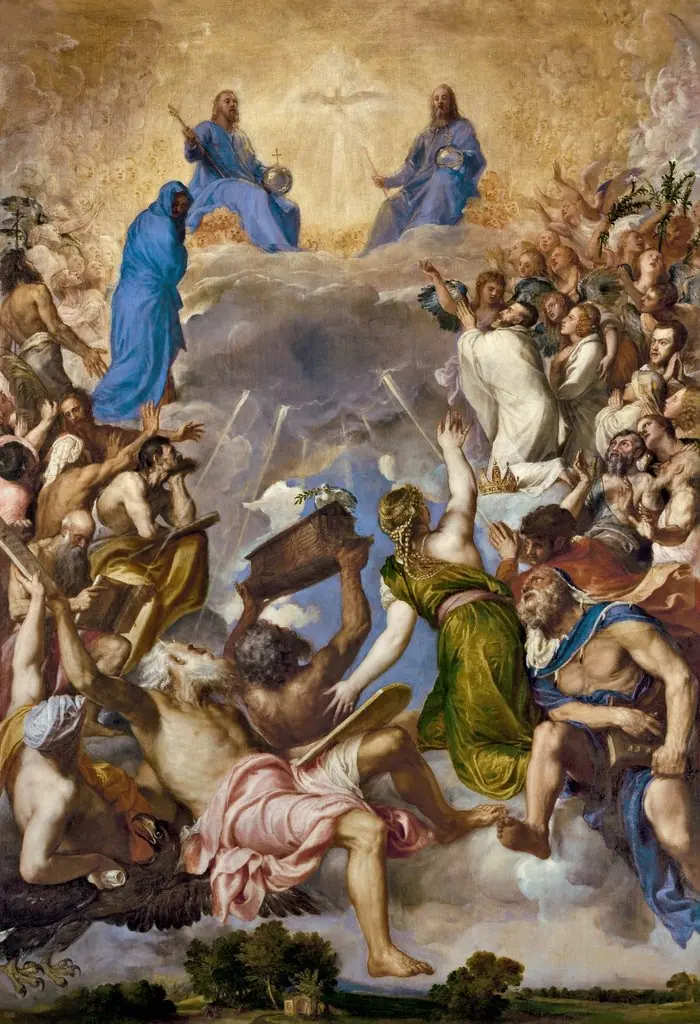
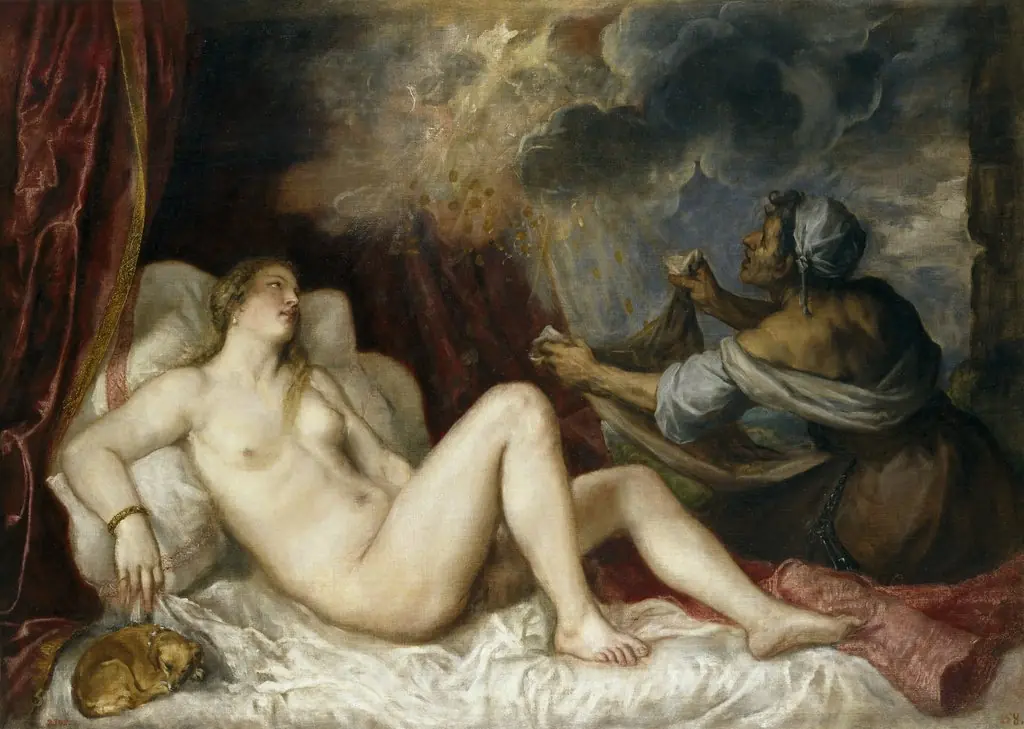
- Self-Portrait
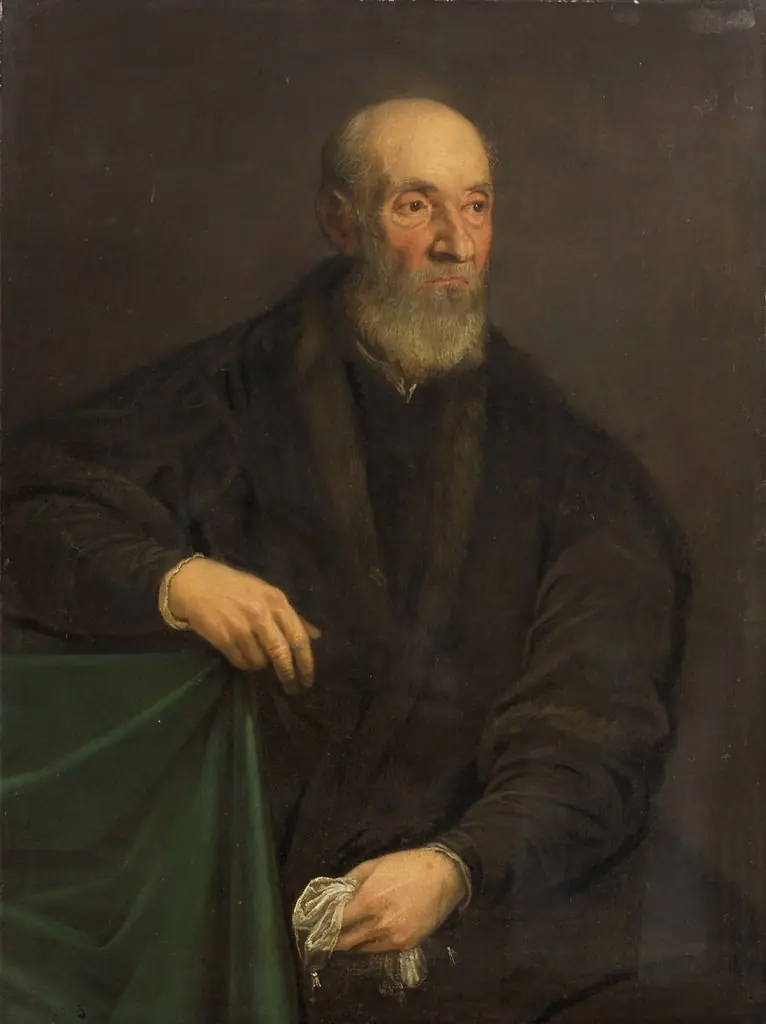 Bildnis eines alten Mannes, an einem Tisch sitzend
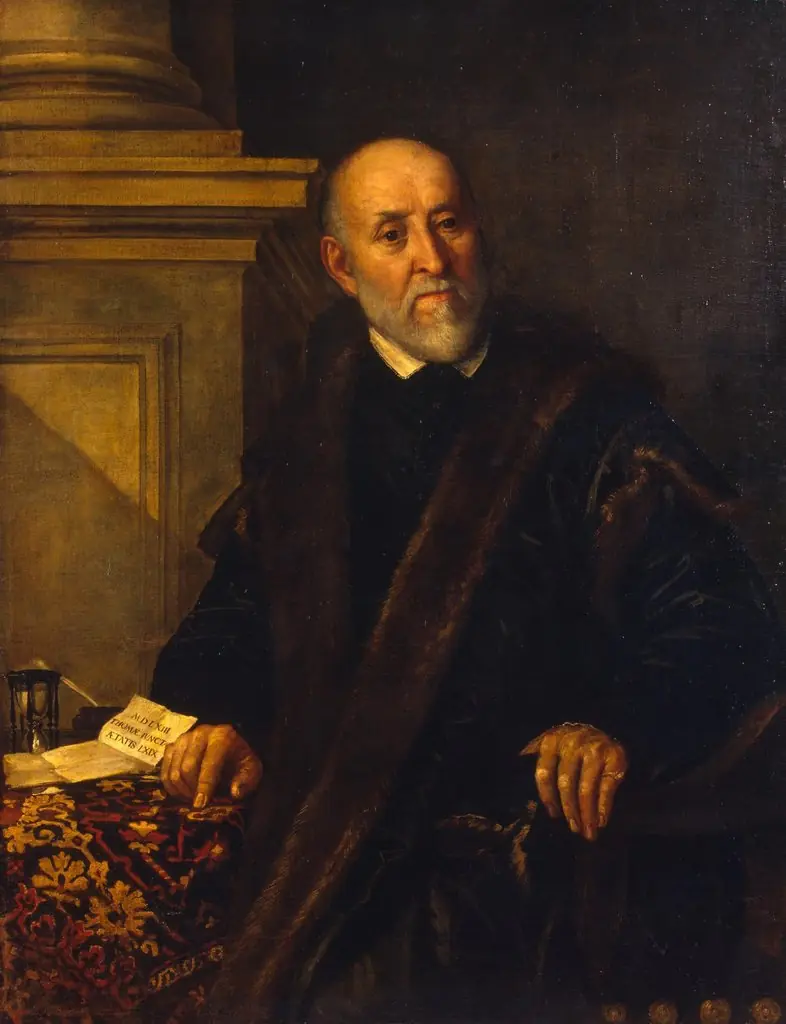 Portrait of Tommaso Guinta
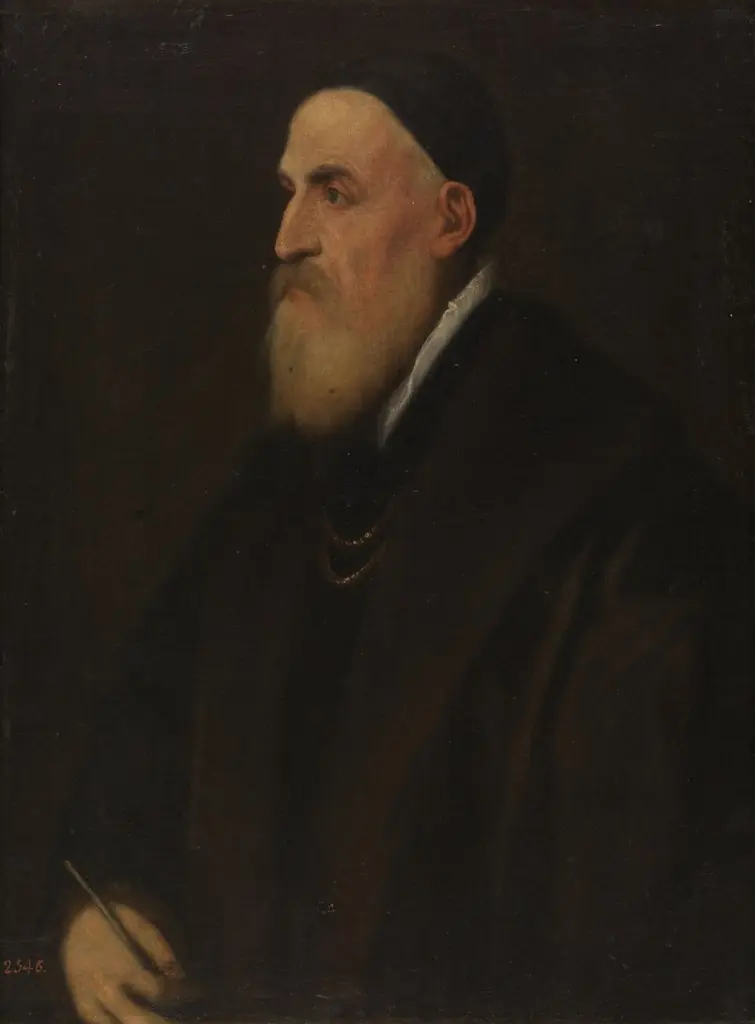 Self-portrait of Titian
 Portrait of a man with a gray beard
 Portrait of a seated Old Man
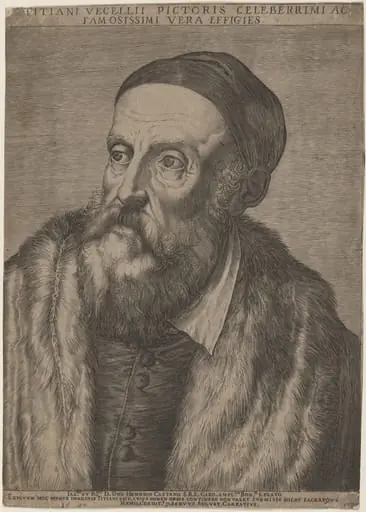 Titian
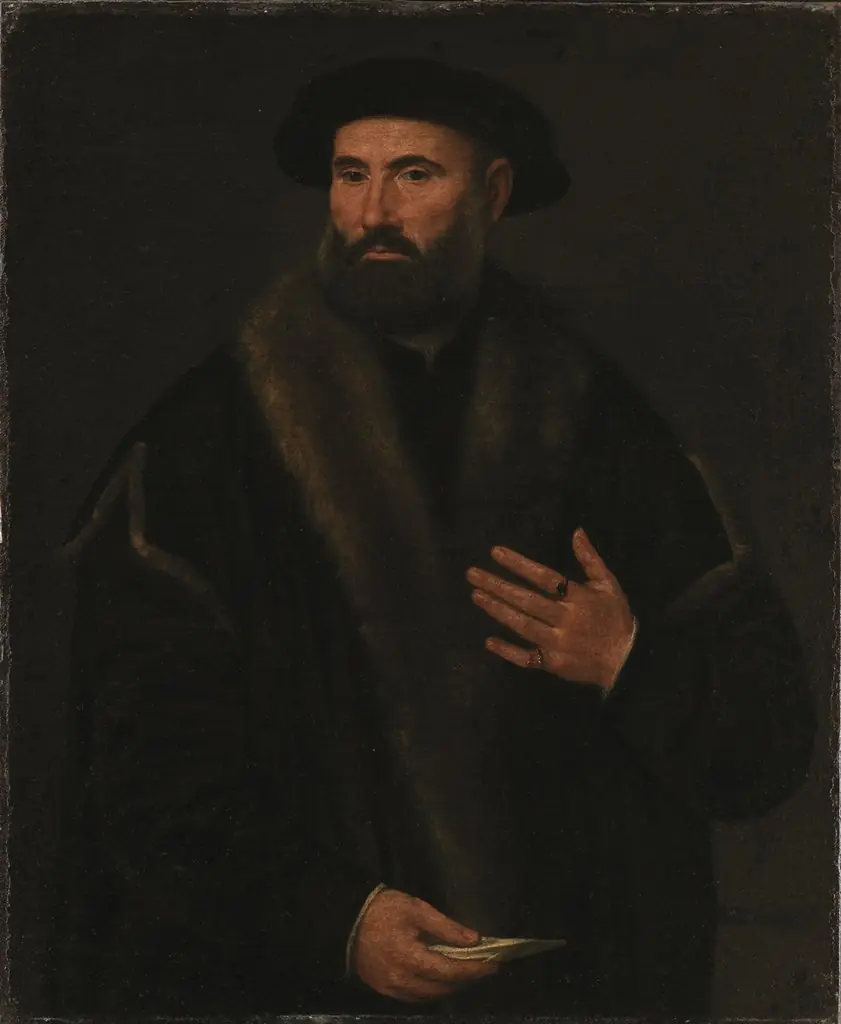 Portrait of a Man
 Portrait of a Man
 Old Man in Fanciful Costume Holding a Stick
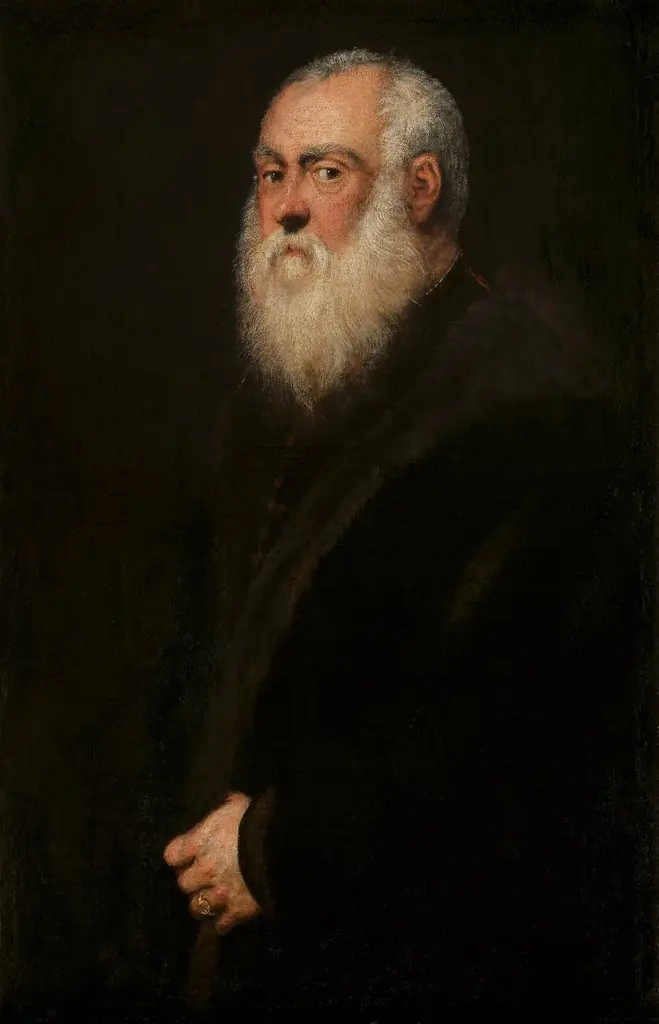 Portrait of a White-Bearded Man
 Bildnis eines Mannes im Lehnstuhl