Artwork
The Virgin and Child between Saint Anthony of Padua and Saint Roch
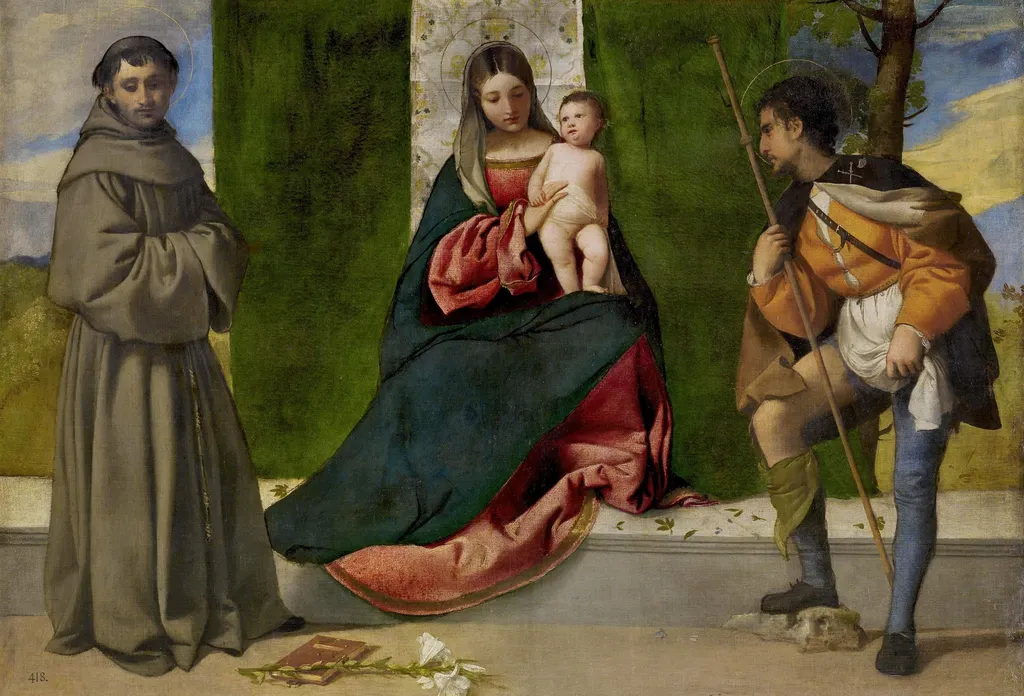
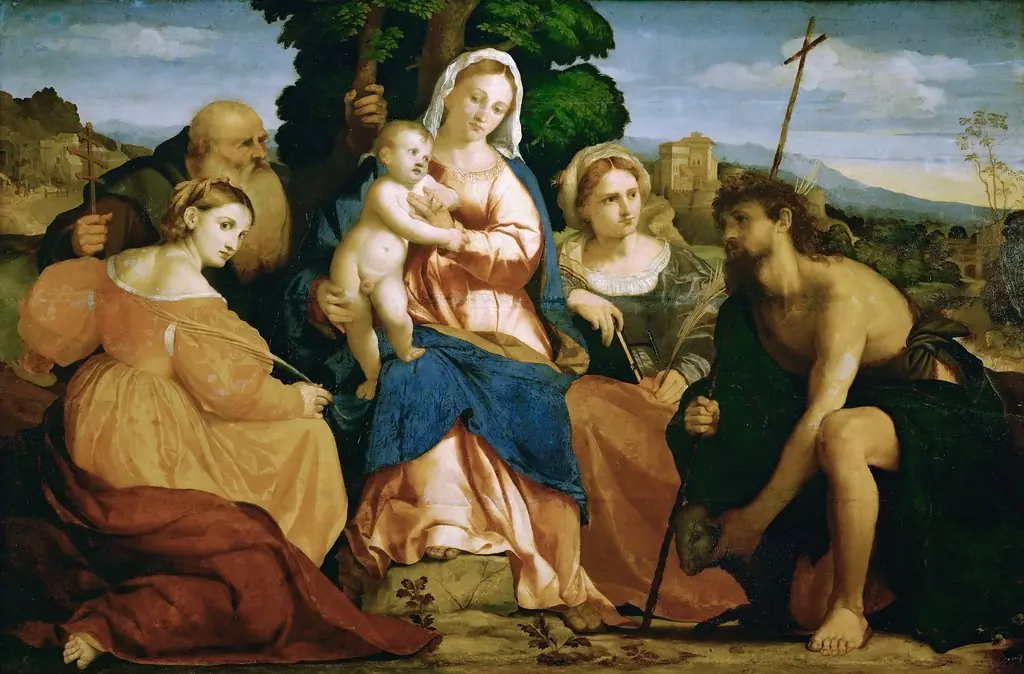
The Virgin and Child between Saint Anthony of Padua and Saint Roch is an oil painting by the High Renaissance artist Titian. It dates from 1510 and is held in the collection of the Museo del Prado.
About this work
Subject & Meaning
The two saints face inward but make little direct contact with one another or with the Virgin, lending the group a contemplative, absorbed symmetry.
The painting is structured as a sacra conversazione, in which the Virgin Mary holds the standing Christ Child on her lap, flanked by Saint Anthony of Padua on her right and Saint Roch on her left. The two saints face inward but make little direct contact with one another or with the Virgin, lending the group a contemplative, absorbed symmetry.
The pairing of Anthony and Roch is iconographically significant. Roch, the protector against plague, rests his leg on a stone to display the wound traditionally shown on his thigh, while Anthony is identified by his conventional attributes of a book and a white lily lying on the ground. The presence of both saints points to a Paduan commission connected with the plague outbreak of 1511, when Titian was working in Padua on the frescoes of the Scuola del Santo.
Behind the Virgin hangs a green curtain overlaid with a gold-embroidered cloth, set against landscape openings on either side. A marble step runs across the foreground, and the soft, uniform light gives the composition a quiet, devotional stillness appropriate to its votive, plague-related purpose.
History & Provenance
The painting is dated to about 1510–1511, a period when Titian worked in Padua during a plague outbreak, a context that likely prompted the inclusion of Saint Roch, the plague patron saint. It is generally believed to have been commissioned for a Paduan context, possibly by a local patron, though no definitive contract survives.
The work entered the Spanish royal collection as a gift from Ramiro Núñez de Guzmán, Viceroy of Naples, to Philip IV of Spain. By 1657 it was recorded in the sacristy of the Escorial Monastery, initially misattributed to "Bordonon" and later to Giorgione, Pordenone, and Francesco Vecellio before being reattributed to Titian. It remained at the Escorial until 1839, when it was transferred to the Museo del Prado, Madrid, where it has been held since.
The painting is currently held in the Museo del Prado in Madrid. It entered the museum's collection in 1839, having previously remained in the Monastery of El Escorial since at least 1657. Before its transfer to the Prado, the work was recorded in the sacristy of El Escorial in a 1657 description by Francisco de los Santos.
Historical accounts suggest the piece was originally a gift to Philip IV of Spain from Ramiro Núñez de Guzmán, the Viceroy of Naples, or potentially from the Duke of Medina de las Torres, though specific documentation for this transfer is absent. The work was depicted in the late 17th century by Claudio Coello within his painting of the Escorial sacristy. No specific exhibition history beyond its permanent location or these historical appearances is detailed in the provided sources.
Context
Scholars place this work within Titian's early collaboration with Giorgione in Venice, noting its adoption of the tonalist principle of applying color directly without preliminary drawing. This technique, combined with compositional elements borrowed from Giorgione's Castelfranco Madonna and Giovanni Bellini's altarpieces, led to historical misattributions to Giorgione, Pordenone, and Francesco Vecellio before critics restored the assignment to Titian based on its symmetry.
The painting is interpreted as a Paduan commission linked to the 1511 plague, explaining the prominent inclusion of Saint Roch alongside Saint Anthony. While the figures of Roch and the Christ Child are finished, the sketchy landscape suggests the work remained incomplete, possibly because Titian departed for Venice. Its isolated, contemplative symmetry distinguishes it within the artist's broader catalog.
Legacy
Later documentation shows the painting was listed in the Escorial sacristy in 1657, where it was mistakenly attributed to Bordonon before being linked to Giorgione, Pordenone and Francesco Vecellio, and ultimately re‑identified as a Titian composition. The work remained in the Escorial until 1839, when it entered the Prado’s collection and has since been displayed as a central example of Titian’s early sacra conversazione. Scholarly re‑evaluation of its style and patronage, especially the connection to the 1511 plague and a possible Paduan commission, has reinforced its reputation in art history.
Overview
Titian's painting, The Virgin and Child between Saint Anthony of Padua and Saint Roch, created around 1510, is an oil on canvas work. It depicts the Madonna and Christ Child centrally positioned, flanked by two revered saints. This early Renaissance composition showcases the artist's developing style and thematic approach to religious subjects, characteristic of the period's devotional art.
Technique & Style
Executed in oil on canvas, the artwork demonstrates Titian's early command of color and form. The figures are rendered with a sense of calm dignity, particularly the Virgin and Child. Details such as the drapery of the seat, the vibrant blue and red of Mary's attire, and the small, symbolic elements like scattered flowers and a book on the ground, contribute to the painting's visual richness and devotional atmosphere.
Own this work as a print
Artist & collection
Artist
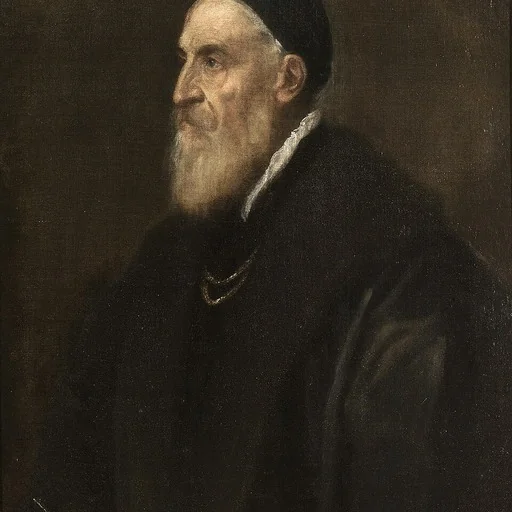
Tiziano Vecellio (Italian:; c. 1488/1490 – 27 August 1576), Latinized as Titianus, hence known in English as Titian ( TISH-ən), was an Italian Renaissance painter. The most important artist of Renaissance Venetian…

 The Gypsy Madonna
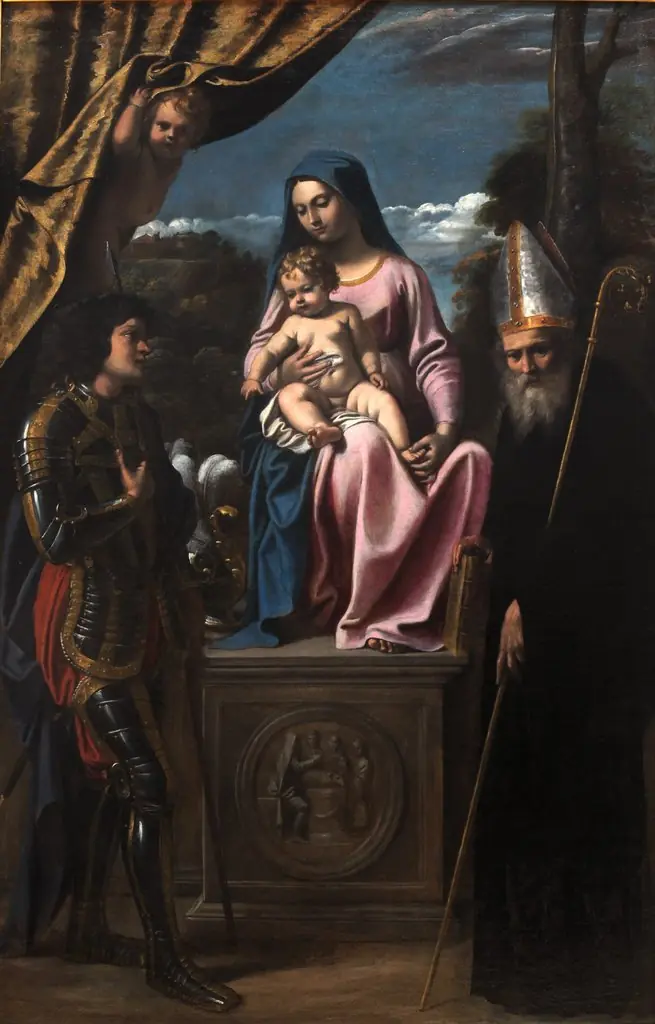 Virgin and Child between St Benedict and St Quentin
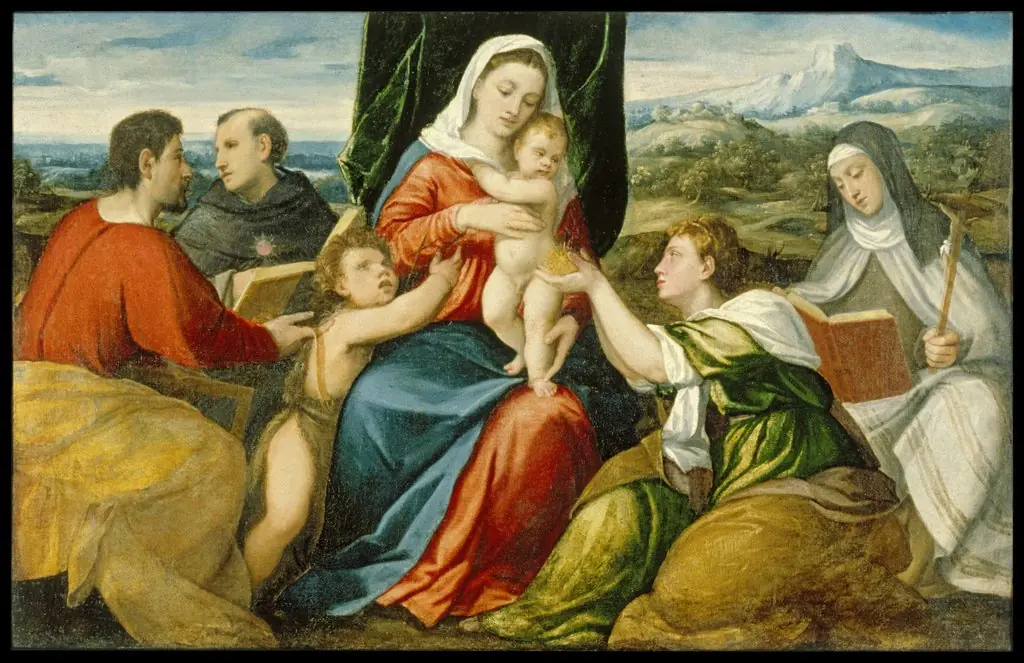 Madonna and Child with Saints
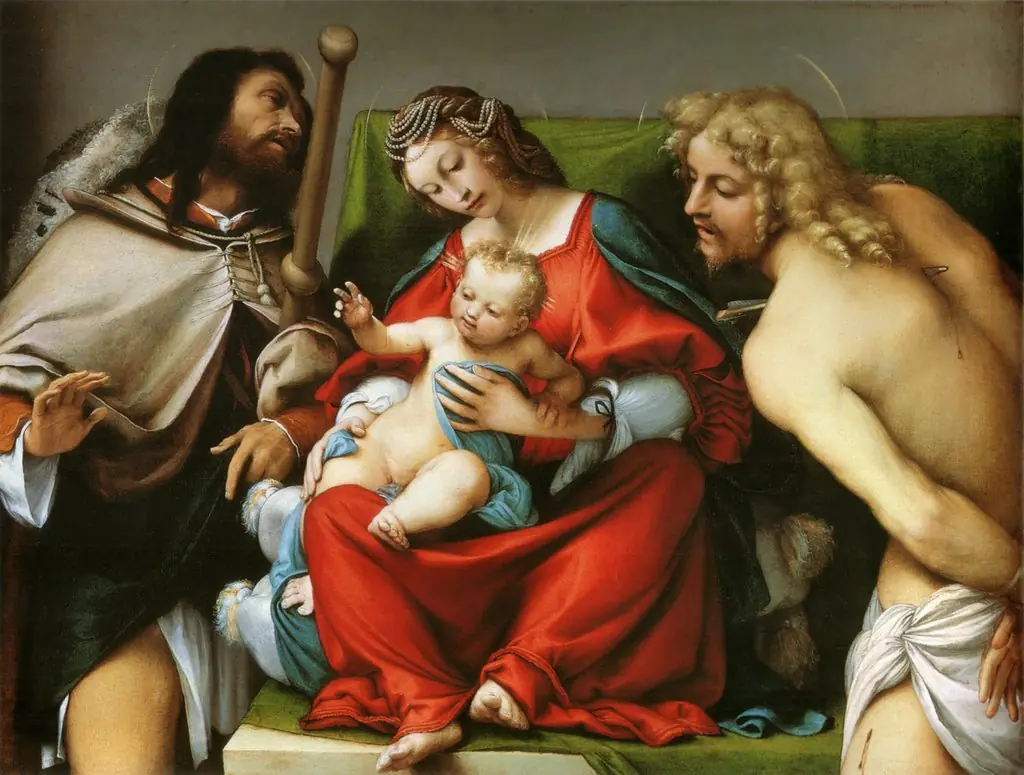 Madonna with the Child and Sts Rock and Sebastian
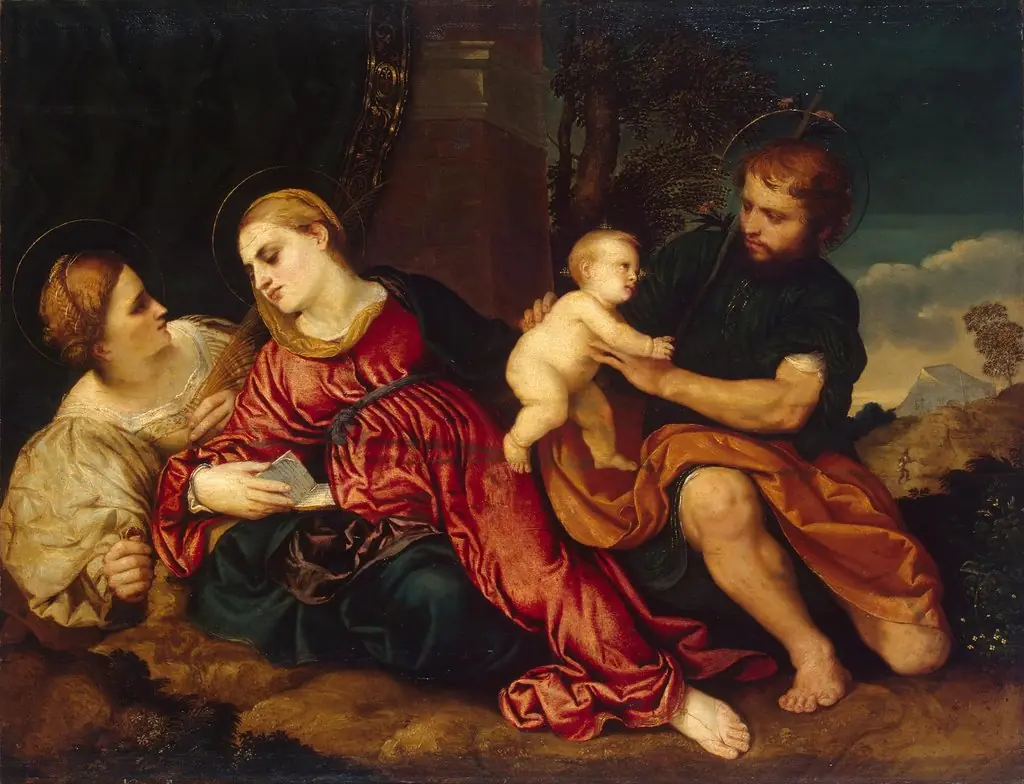 Holy Family with St Catherine
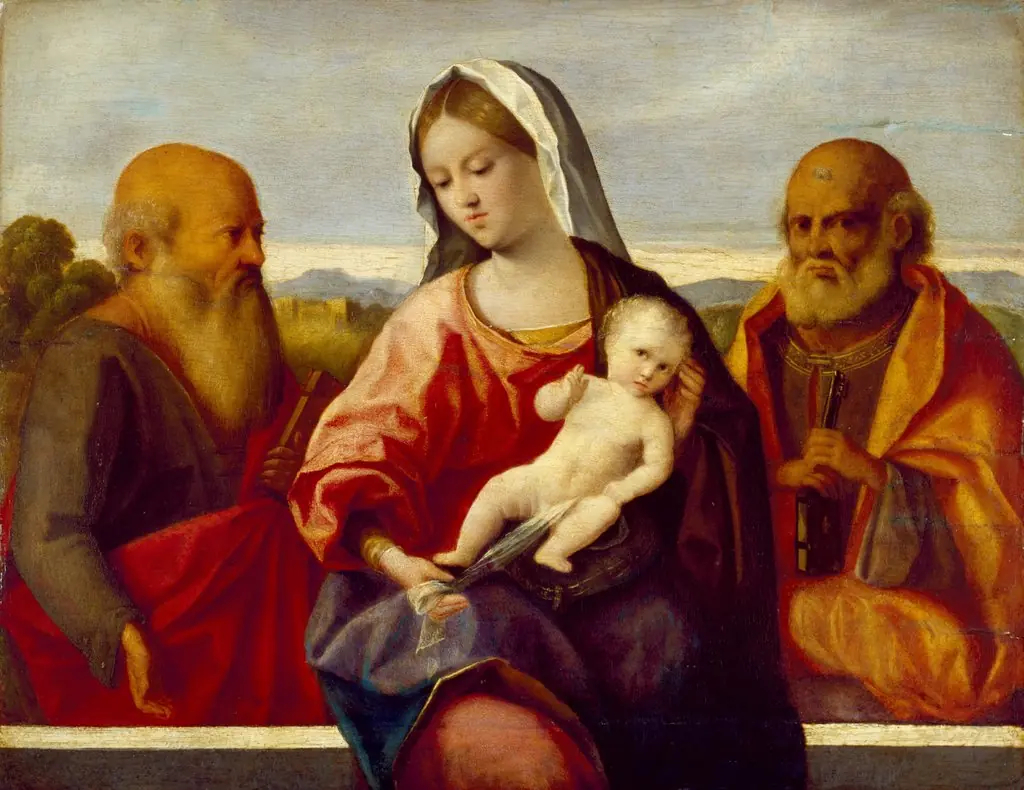 Madonna and Child with Saints Peter and Paul
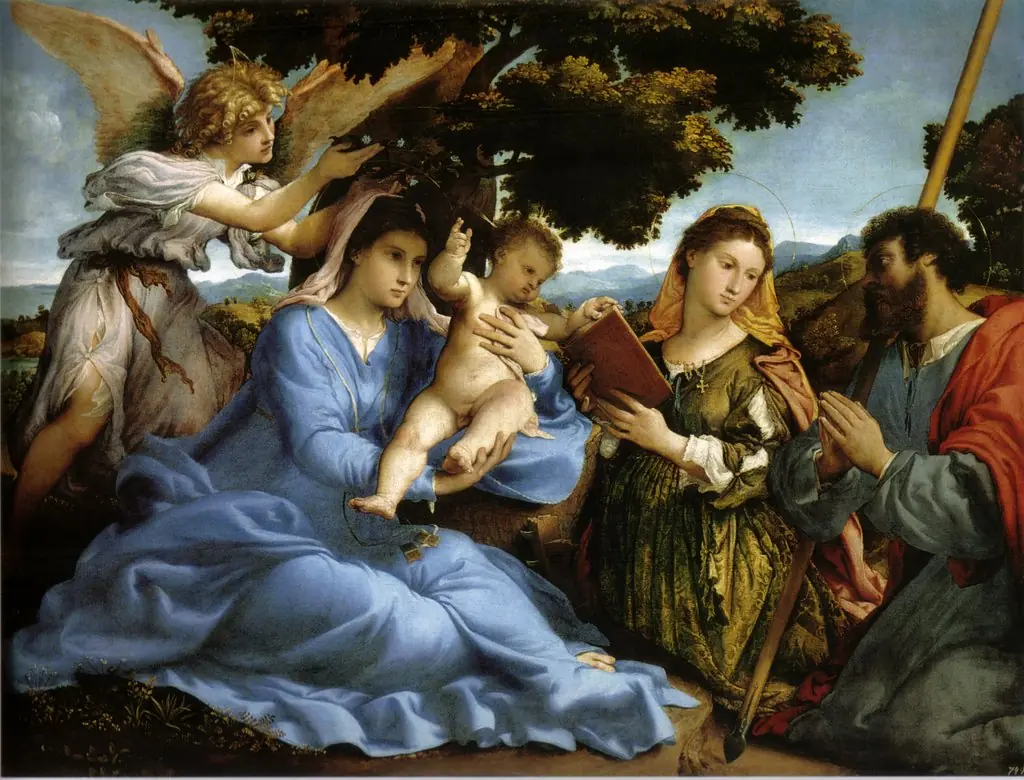 Madonna and child with Saint Catherine, Saint James the Greater, and an angel
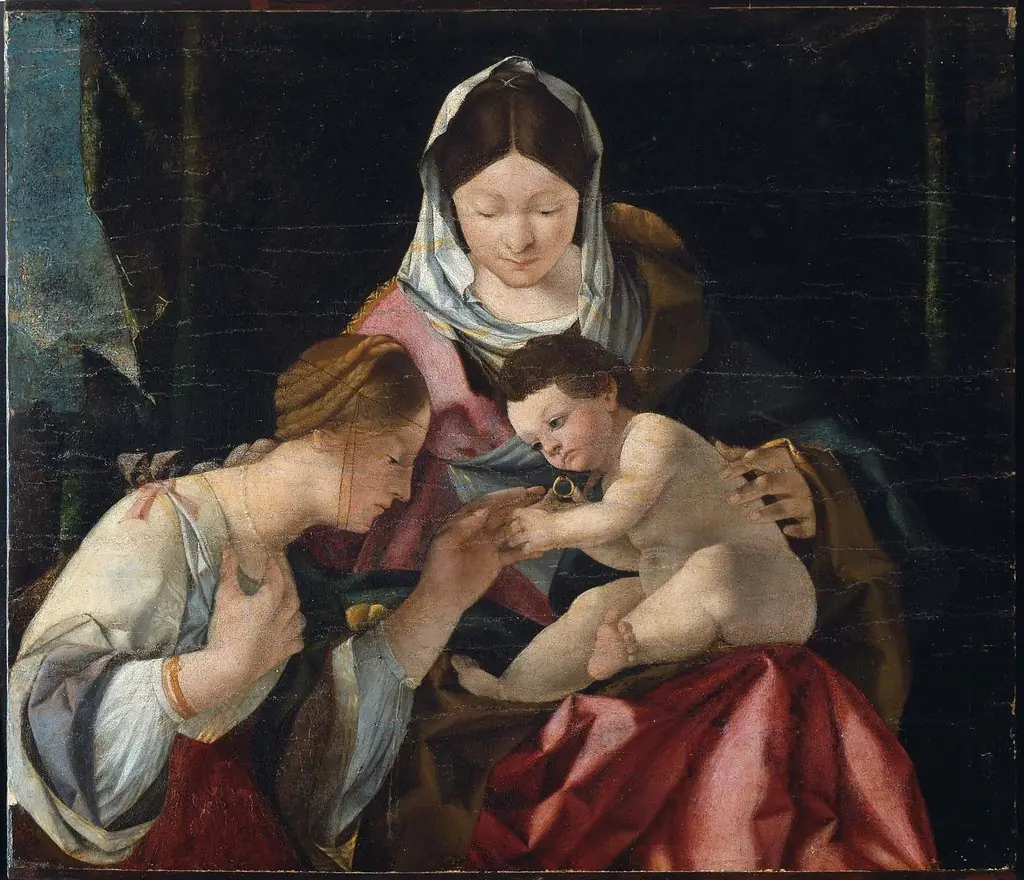 The Mystic Marriage of Saint Catherine
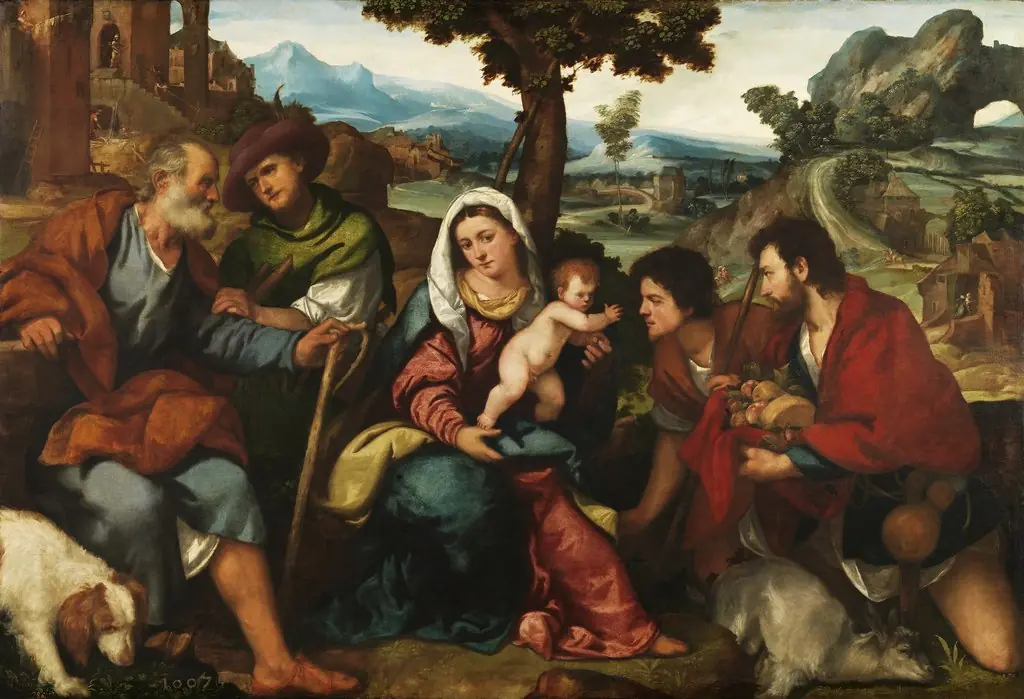 The Adoration of the Shepherds
 Sacred conversation