Artwork
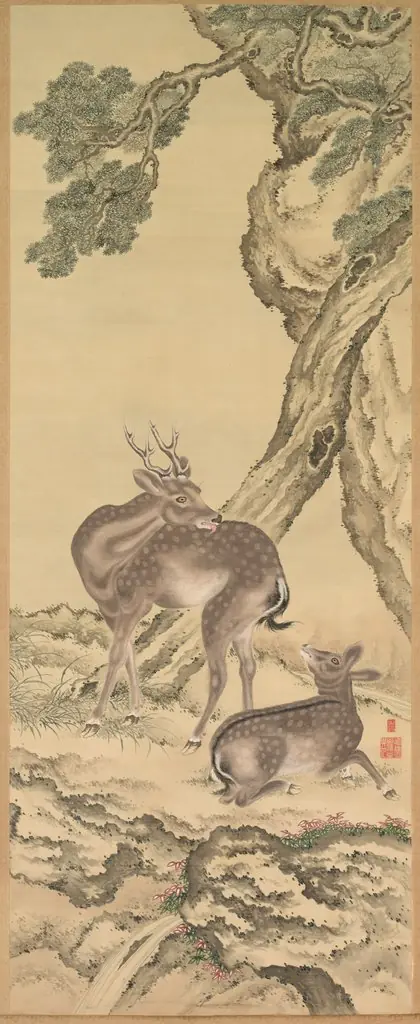
清 佚名 舊傳郎世寧 游鹿圖 軸|Fawn at Play
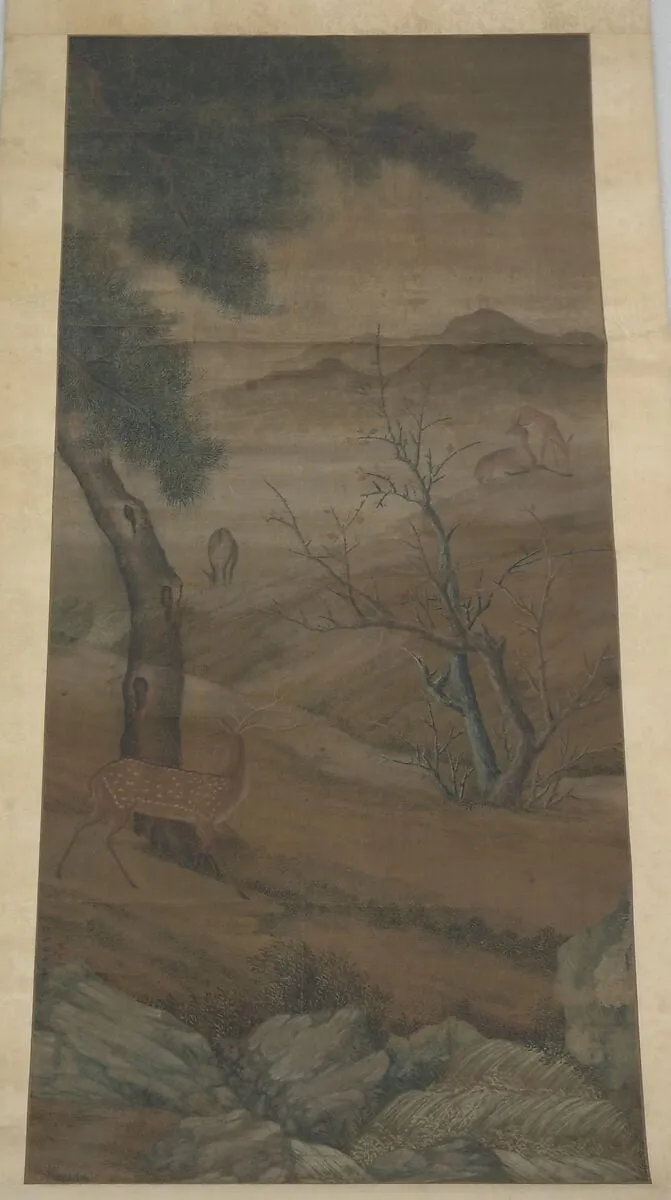
清 佚名 舊傳郎世寧 游鹿圖 軸|Fawn at Play is an unspecified painting by the Baroque artist After Giuseppe Castiglione. It dates from 1777 and is held in the collection of the Metropolitan Museum of Art. Fawn at Play is an 18th-century hanging scroll, likely created in 1777 by an anonymous artist from the Chinese imperial court.
About this work
Subject & Meaning
The subject centers entirely on the deer, with no additional symbolic figures or complex narrative described in the available records.
The work depicts a single deer, identified as a fawn, situated within a landscape setting. As a landscape painting, the composition focuses on the animal as the primary subject, presenting it in a naturalistic context. The title "Fawn at Play" suggests the scene captures the creature in a moment of activity.
Created in 1777 by an anonymous artist working in a style attributed to Giuseppe Castiglione, the piece reflects the Qing dynasty tradition of combining Western naturalism with Chinese landscape conventions. The subject centers entirely on the deer, with no additional symbolic figures or complex narrative described in the available records. The painting is held in the collection of the Metropolitan Museum of Art.
History & Provenance
The hanging scroll known as Fawn at Play, depicting a deer within a landscape setting, is dated to 1777. Although traditionally attributed to the Jesuit painter Giuseppe Castiglione, the work is cataloged as the creation of an anonymous artist working in the style of Castiglione. The painting was produced in China and is currently held in the collection of the Metropolitan Museum of Art.
The specific commission details and the precise chain of ownership prior to its arrival at the museum are not detailed in the available records. The work measures 62.9 by 137.2 centimeters and represents a Qing dynasty landscape painting.
Overview
Fawn at Play is an 18th-century hanging scroll, likely created in 1777 by an anonymous artist from the Chinese imperial court. Formerly attributed to Giuseppe Castiglione, this painting depicts a young deer within a rocky landscape. It exemplifies a distinctive fusion of European and Chinese artistic approaches, characterized by its delicate rendering and atmospheric qualities.
Technique & Style
This painting showcases a deliberate synthesis of artistic traditions. The precise rendering of the fawn's delicate spots and the subtle atmospheric effects in the background hint at European pictorial techniques. These elements are seamlessly integrated with traditional Chinese brushwork and the format of a hanging scroll, reflecting a harmonious dialogue between distinct aesthetic principles prevalent in the Qing court.
Context
The painting emerged from a period of significant cultural exchange within the Qing imperial court, where European artists like Giuseppe Castiglione introduced Western techniques. This cross-cultural environment fostered a unique blend of styles, influencing Chinese court painters to incorporate elements such as linear perspective and chiaroscuro while maintaining traditional Chinese compositional structures and materials, as seen in this work.
Artist & collection

Artist
After Giuseppe Castiglione is an attribution used for paintings made in the manner of, or copied after, Giuseppe Castiglione rather than by his own hand.

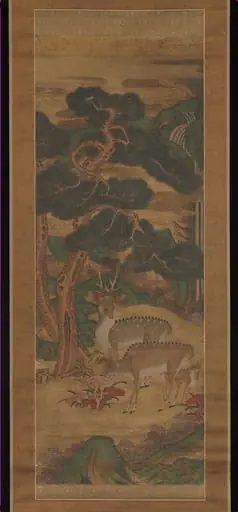
- 작자미상 소나무 아래 사슴 조선|作者未詳 松下雙鹿圖 朝鮮|Deer amid Pine Trees
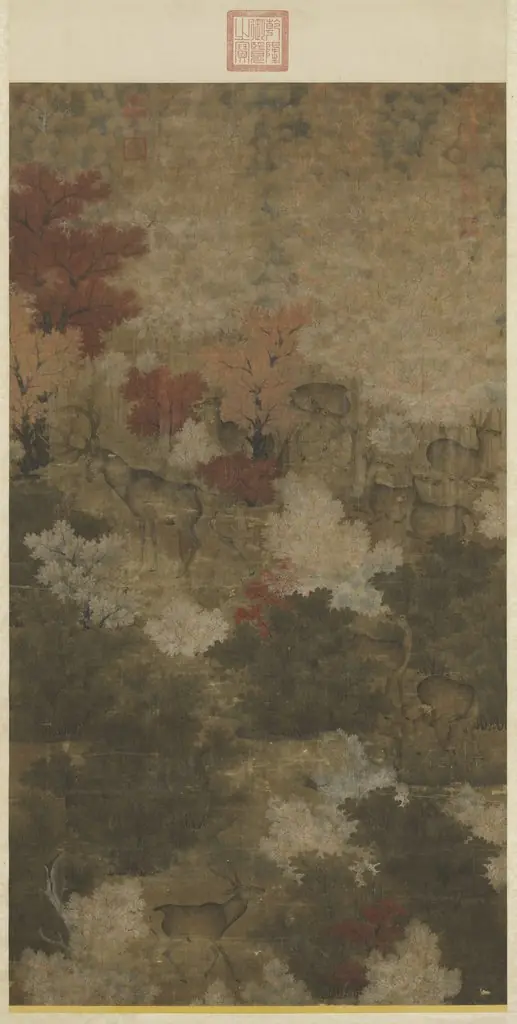 Herd of Deer in an Autumnal Grove
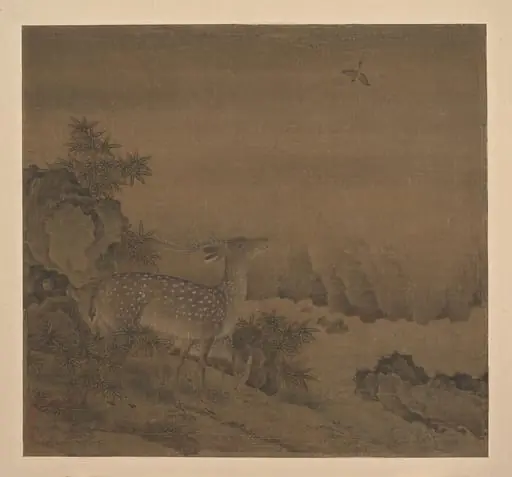 明 佚名 溪鹿圖 冊頁|Deer by a Pine Stream
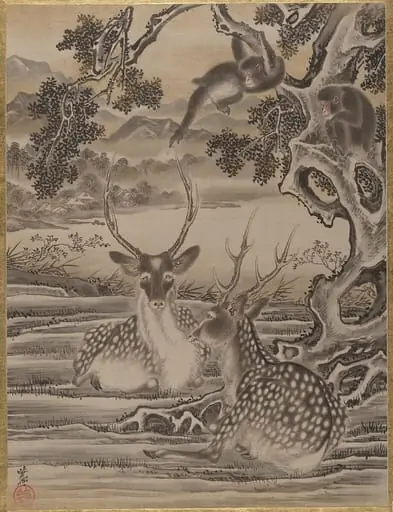 Untitled
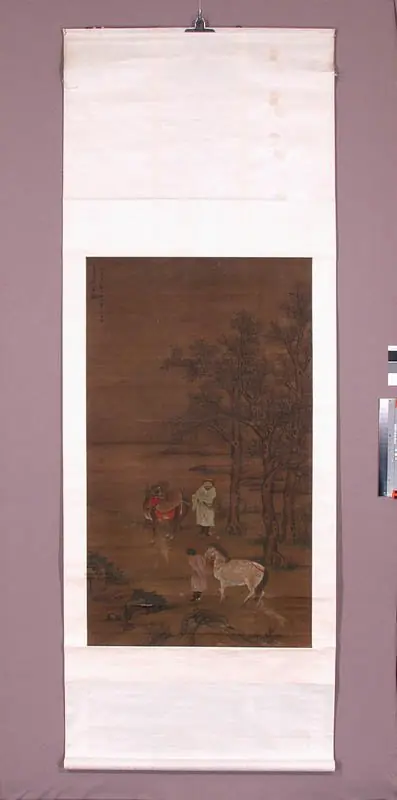 Dwóch Mongołów z końmi
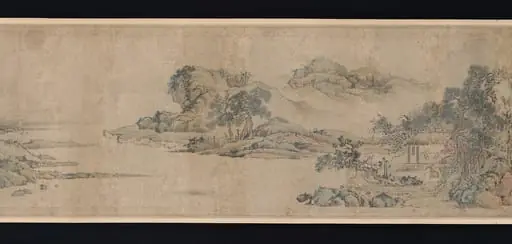 明 佚名 朱德潤 怡樂堂圖 卷|Hall of Harmony and Joy
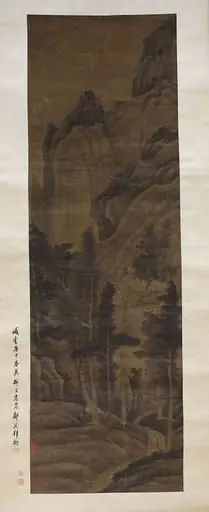 明/清 佚名 董源(僞款) 高樹叠嶂圖 軸|Mountain Landscape
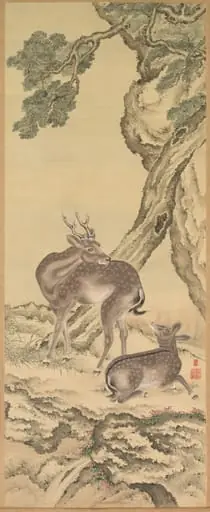 Symbols of Longevity: Deer under Peach and Pine (Peach) (left)
 Przeprawa przez górski potok - pejzaż w stylu niebiesko-zielonym
 清 張上龢 山水 軸|Landscape
 Symbols of Longevity: Deer under Peach and Pine (Peach) (left)
 Untitled