Artwork
元 忽哥赤 和 佚名 耕稼圖 卷 |Rice Culture, or Sowing and Reaping
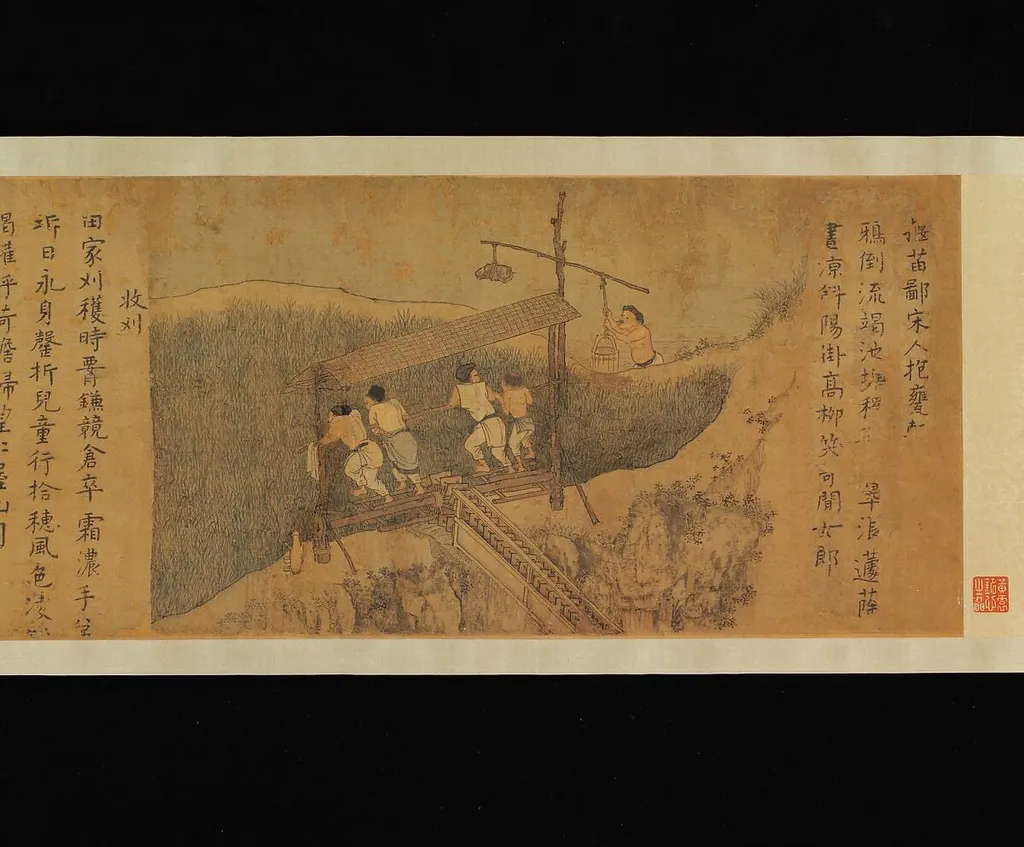
元 忽哥赤 和 佚名 耕稼圖 卷 |Rice Culture, or Sowing and Reaping is an ink painting. It dates from 1353 and is held in the collection of the Metropolitan Museum of Art. This handscroll, titled "Rice Culture, or Sowing and Reaping," is a painting executed with ink and color on silk.
About this work
Subject & Meaning
The composition focuses on genre scenes of labor, specifically depicting farmers engaged in the processes of sowing and reaping.
Created in 1353, this handscroll visually documents the agricultural cycle of rice cultivation in China. The composition focuses on genre scenes of labor, specifically depicting farmers engaged in the processes of sowing and reaping. By illustrating men at work within the fields, the artwork serves as a direct representation of agrarian life and the essential nature of farming during the Yuan dynasty.
The iconography centers entirely on the human effort required for food production, highlighting the physical acts of planting and harvesting without apparent allegorical embellishment. Consequently, the work functions as a historical record of rural economy and the dignity of manual labor, emphasizing the fundamental role of the farmer in society.
Technique & Style
Rice Culture, or Sowing and Reaping is executed as a handscroll on silk, utilizing both ink and color pigments. Dated to 1353, the work is attributed to an anonymous Chinese artist, often associated with the name Hutgechi in cataloging contexts. The medium combines monochrome ink lines with applied color to depict agricultural labor, a genre scene focusing on farmers at work.
The silk support and traditional brushwork techniques align with Yuan dynasty painting practices for genre subjects. The scroll format suggests a narrative or sequential viewing experience typical for such depictions of rural life. As a preserved artifact from the mid-14th century, the piece represents a specific formal approach to illustrating the daily toil of the peasantry through established pictorial conventions of the era.
History & Provenance
The handscroll titled "Rice Culture, or Sowing and Reaping" (元 忽哥赤 和 佚名 耕稼图 卷) is housed in the collection of the Metropolitan Museum of Art in New York. Its provenance is recorded only as part of the museum's holdings, with no further accession or inventory number disclosed in the available documentation. The work, attributed to an anonymous Chinese painter and dated to 1353, depicts farmers engaged in agricultural labor. No exhibition history for this piece is noted in the cited sources.
Overview
This handscroll, titled "Rice Culture, or Sowing and Reaping," is a painting executed with ink and color on silk. It presents a comprehensive depiction of agricultural life, specifically focusing on the cultivation of rice. The artwork captures various stages of farm work, illustrating a detailed and active rural environment through its continuous narrative format.
Context
The creation of this handscroll is attributed to both Hugozhi and an unidentified artist. The reference to an "Unidentified Artist" suggests that the specific authorship of such detailed agricultural scenes can sometimes be complex or collaborative, reflecting a broader tradition of depicting daily life and labor in Chinese art.
Artist & collection

- Three Visits to a Thatched Cottage
 Fujiwara Sanekata no Ason
 Gathering among the Members of Office Censor-General
 Untitled
 Layered Peaks and Splashing Waterfall: Portrait of Hua Yan as a Young Man
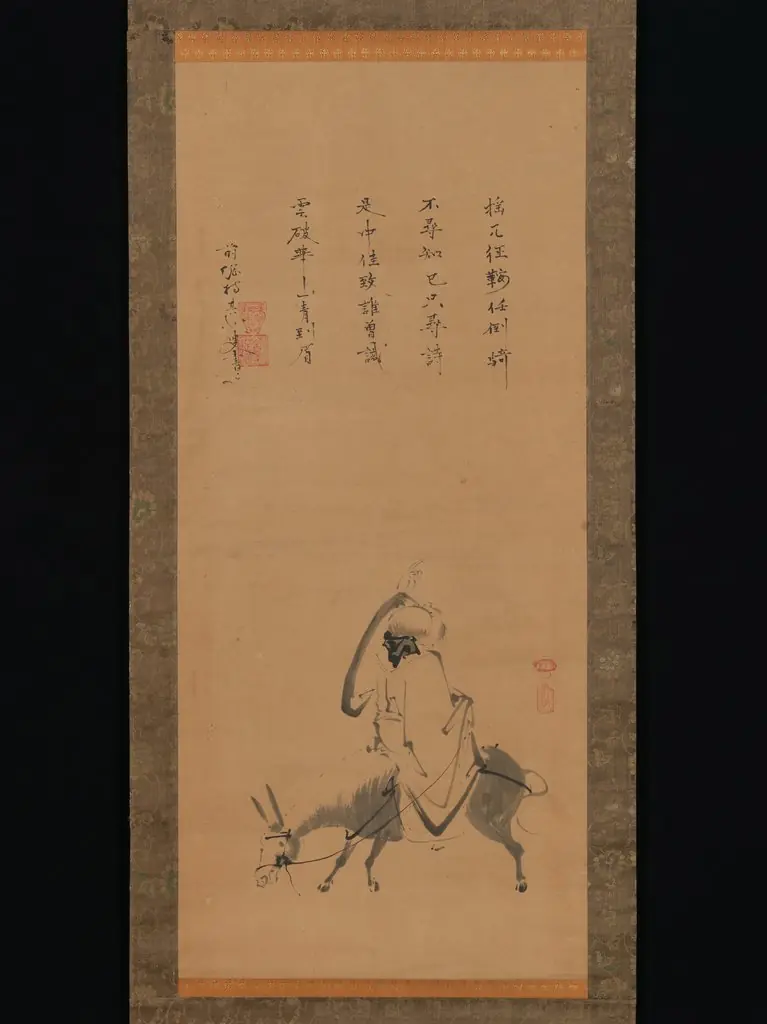 The Chinese Poet Pan Lang on a Donkey
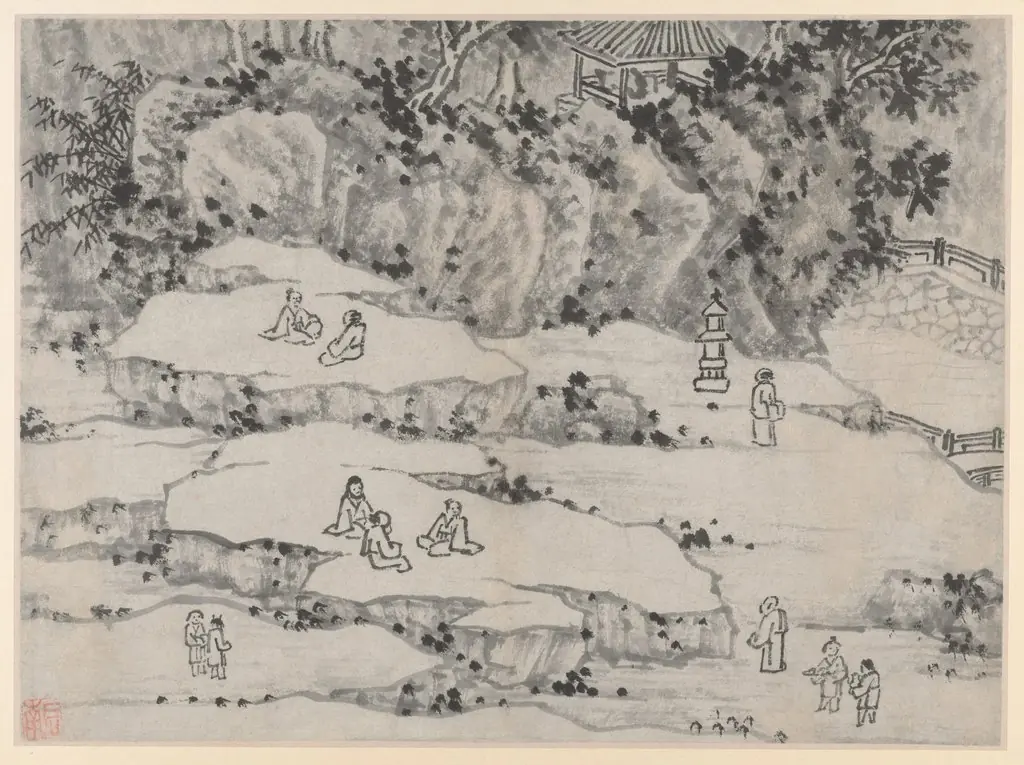 The Nodding Stone Terrace, Tiger Hill, and the Thousand-Man Seat, from Twelve Views of Tiger Hill, Suzhou
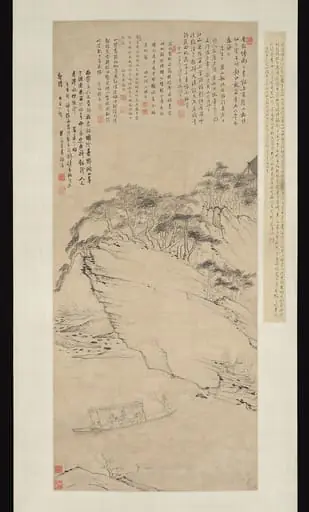 清 倣梅清 響山泛舟圖 軸|Boating beneath Echo Hill
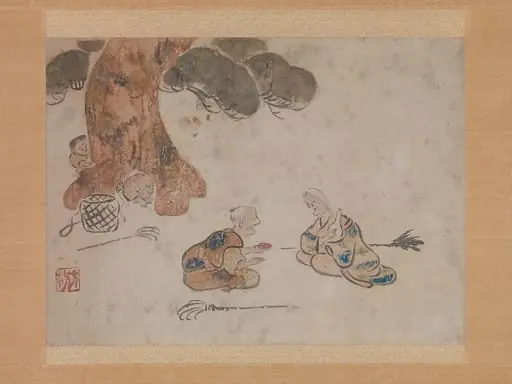 Untitled
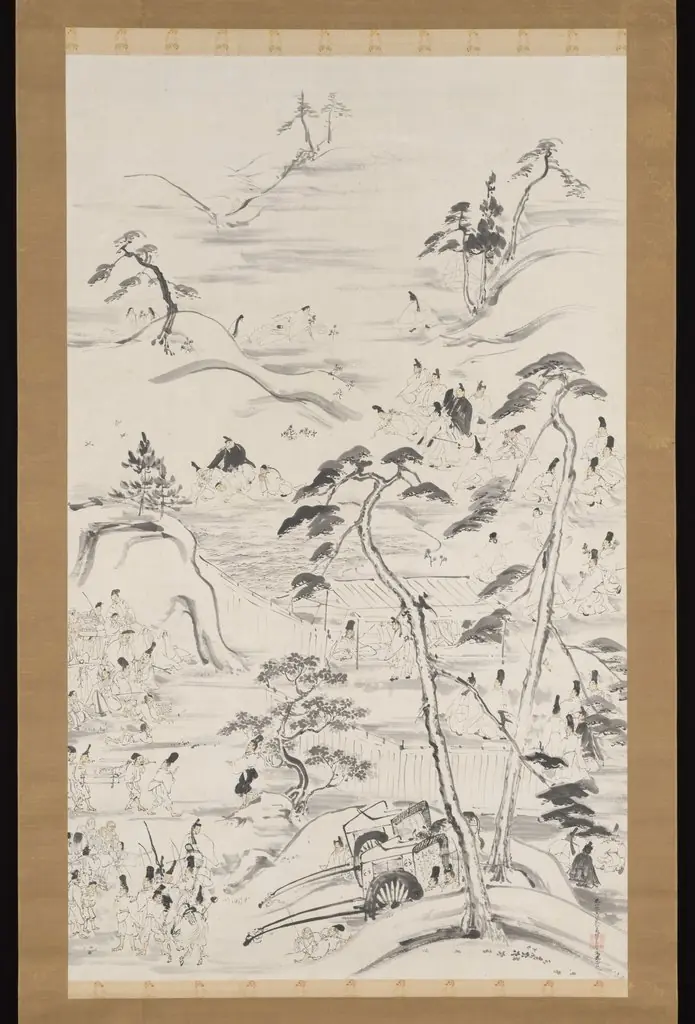 Emperor Enyū’s Outing to Funaokayama on the First Day of the Rat in the New Year
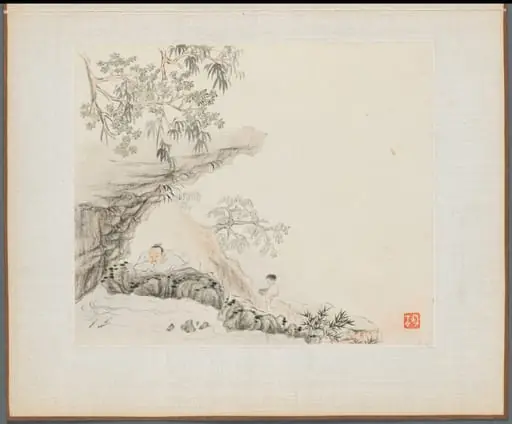 Album of Landscape Paintings Illustrating Old Poems: Scholar watching Fish
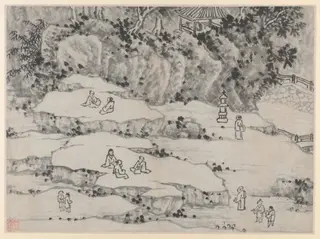 The Nodding Stone Terrace, Tiger Hill, and the Thousand-Man Seat, from Twelve Views of Tiger Hill, Suzhou