Artwork
아미타삼존도 고려|阿彌陀三尊圖 高麗|Amitabha triad
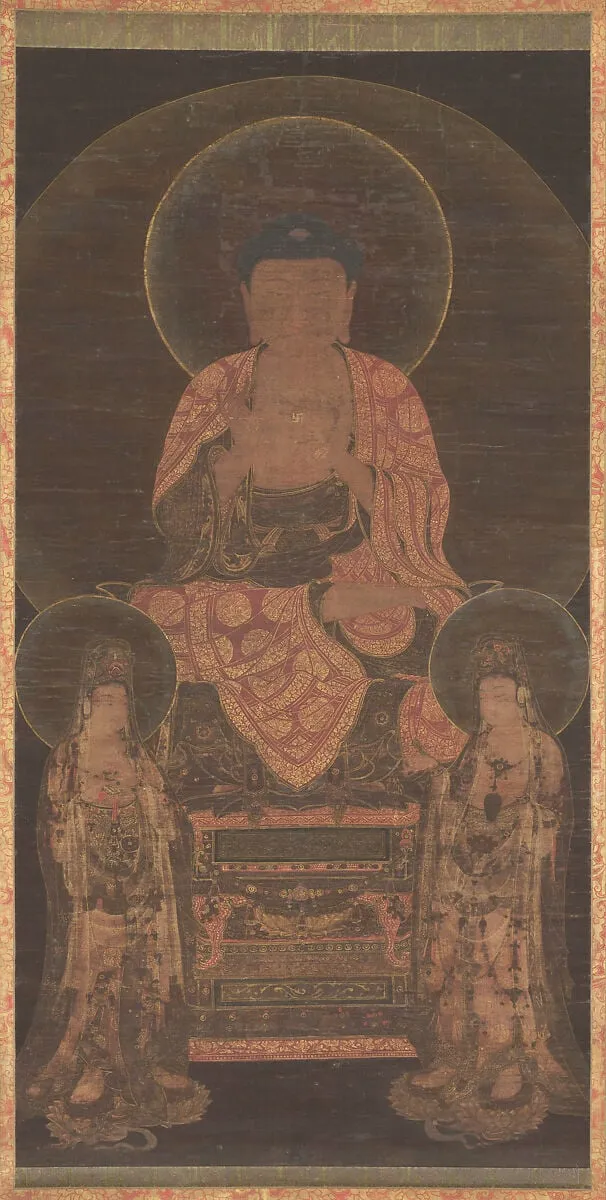
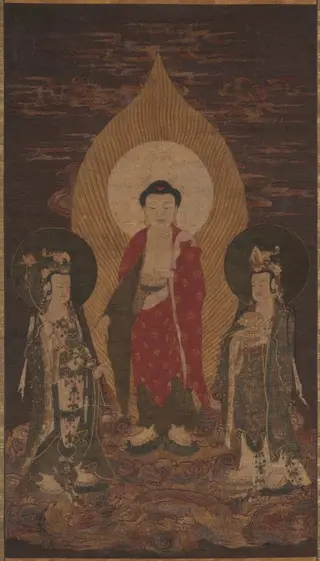
아미타삼존도 고려|阿彌陀三尊圖 高麗|Amitabha triad is an ink painting. It dates from 1250 and is held in the collection of the Metropolitan Museum of Art. This painting, titled Amitabha Triad, is a hanging scroll from the Goryeo period in Korea.
About this work
Subject & Meaning
The composition features the Buddha Amitabha as the central figure, flanked by two bodhisattvas, one of whom is identified as Avalokiteśvara.
Created circa 1250, this Goryeo dynasty hanging scroll depicts the Amitabha Triad, a central subject in East Asian Buddhist religious art. The composition features the Buddha Amitabha as the central figure, flanked by two bodhisattvas, one of whom is identified as Avalokiteśvara. Rendered in ink, color, and gold on silk, the work visually embodies the Pure Land tradition, representing the divine assembly that welcomes devotees into the Western Paradise.
The iconography serves as a focal point for meditation and devotion, symbolizing the compassion and salvific power of Amitabha and his attendants within the broader context of Buddhism.
Technique & Style
This early Goryeo Amitabha triad is executed as a hanging scroll using ink, mineral pigments, and gold on fine woven silk. The ground is prepared with gesso, allowing delicate layers of mineral washes for flesh tones and drapery, while gold pigment and gold leaf highlight nimbi, mandorlas, and decorative motifs. Stylistic traits include the slim, elongated Bodhisattva figures with attenuated fingers, serene linear drapery folds, and the use of aureoles rendered in concentric swirling lines.
The silk support remains intact, though the scroll edges show minor fraying typical of aged textiles. The overall palette, soft greens, blues, and ochres, is applied in translucent glazes, producing a luminous, otherworldly effect aligned with contemporaneous Buddhist icon painting conventions.
History & Provenance
The Amitabha triad, a hanging scroll executed in ink, color, and gold on silk, dates to 1250. Created by an anonymous painter, the work is classified as religious art depicting the Buddha, Bodhisattva, and Avalokiteśvara within the Buddhist tradition. While the specific commission details and the original ownership chain remain unrecorded in the available sources, the painting's creation is firmly established in the mid-thirteenth century.
It is currently held in the collection of the Metropolitan Museum of Art, where it is recognized as a significant example of Goryeo dynasty religious painting. The artwork's provenance prior to its acquisition by the museum is not detailed in the provided records, but its attribution to a 1250 origin and its anonymous authorship are consistent across documentation.
Overview
This painting, titled Amitabha Triad, is a hanging scroll from the Goryeo period in Korea. It depicts a central Buddha figure accompanied by two attendant bodhisattvas, forming a traditional Buddhist triad. Executed with ink, vibrant colors, and gold on silk, the artwork exemplifies the detailed and refined aesthetic characteristic of religious paintings from this era.
Artist & collection

- Amitābha Triad
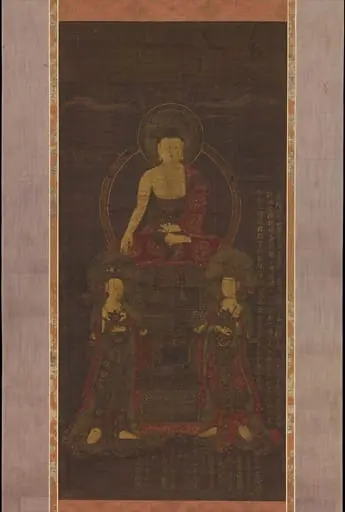 석가삼존도 조선|釋迦三尊圖 朝鮮|Shakyamuni triad
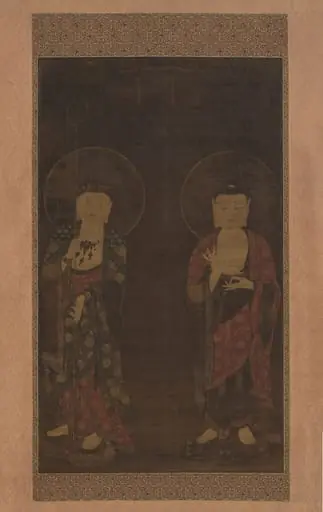 아미타불과 지장보살도 고려|阿彌陀佛・地藏菩薩圖 高麗|Amitabha and Kshitigarba
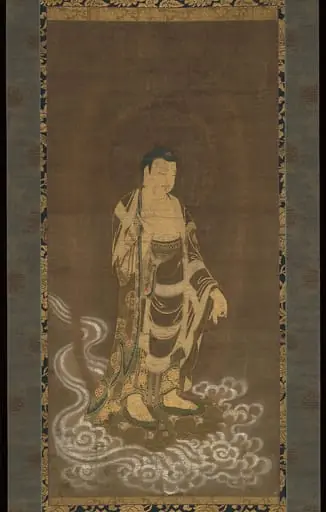 阿弥陀如来像|Welcoming Descent of Amida Buddha
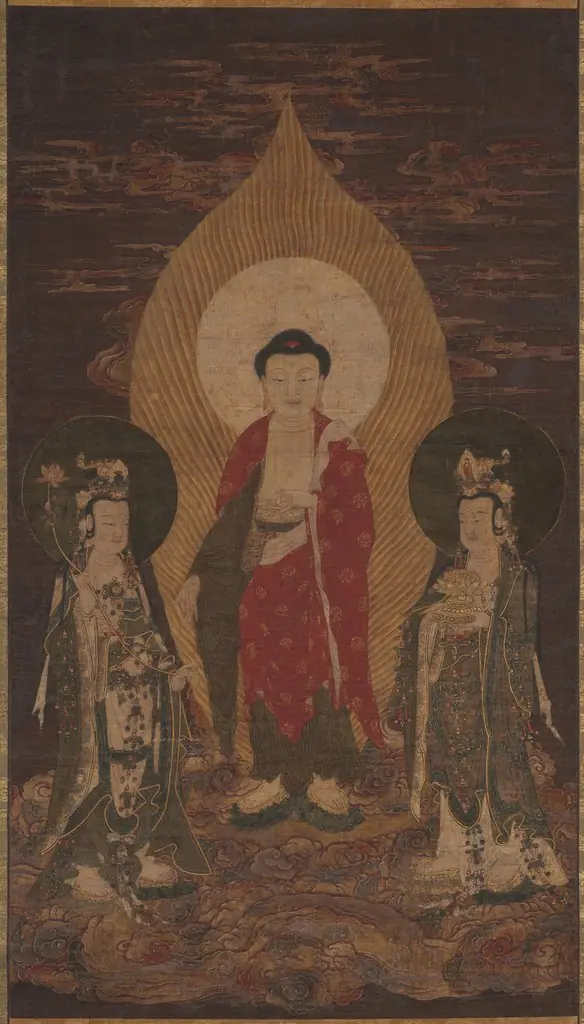 Amitābha Triad
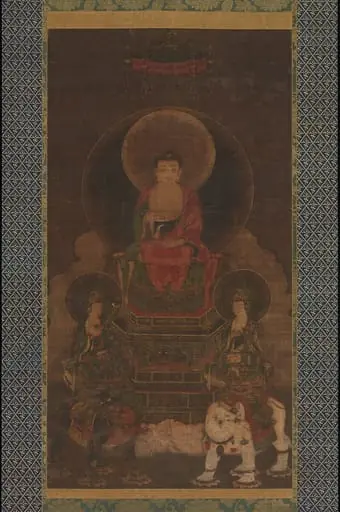 釈迦三尊像|Shaka (Shakyamuni) Triad
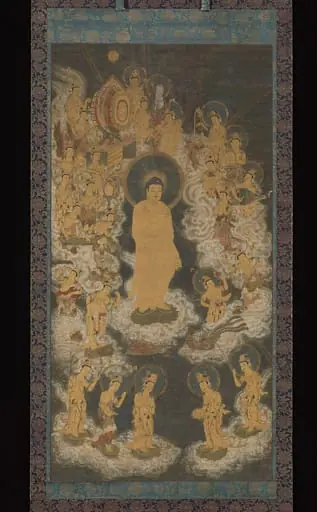 阿弥陀聖衆来迎図 |Welcoming Descent of Amida and Bodhisattvas
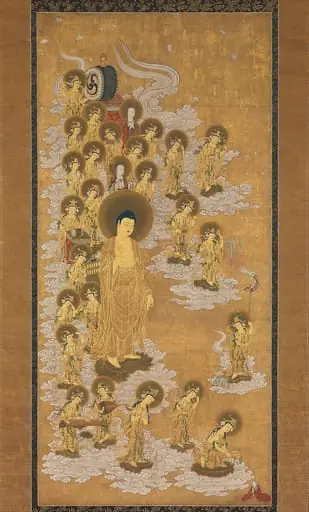 阿弥陀二十五菩薩来迎図|Welcoming Descent of Amida Buddha and Twenty-five Bodhisattvas
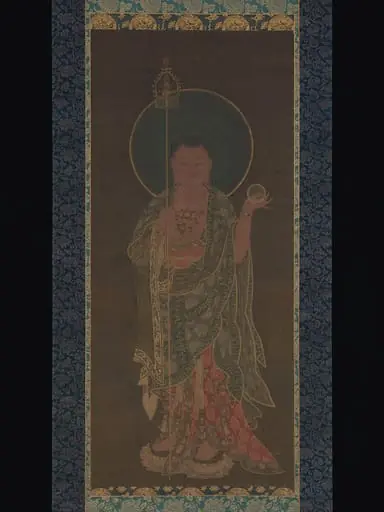 지장보살도 고려|地藏菩薩圖 高麗|Kshitigarbha