Artwork
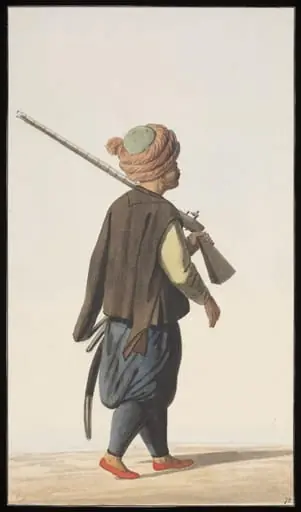
A Foot soldier
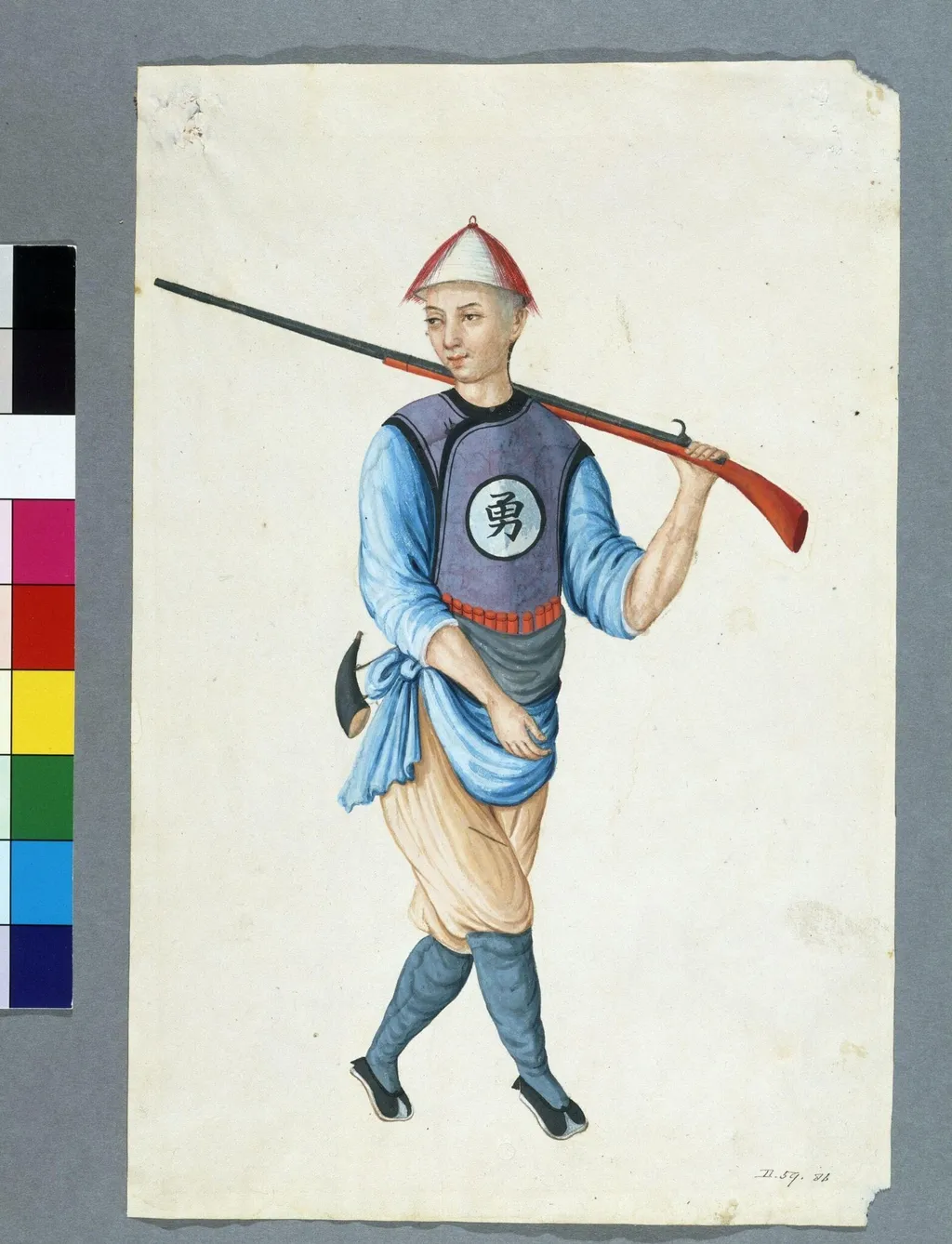
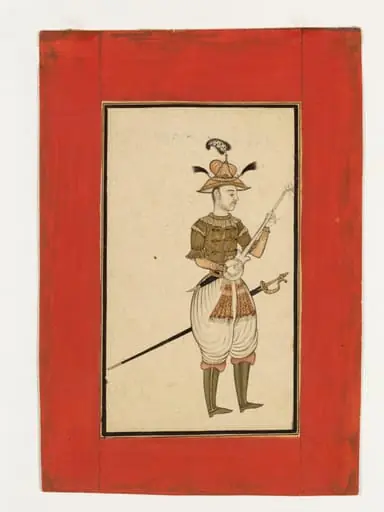
A Foot soldier is a paint painting by the Chinese Orthodox School artist Unknown. It dates from 1800 and is held in the collection of the Victoria and Albert Museum.
About this work
The soldier is from the Guangxi province, which is why foot soldiers were often called 'Guangxi'.
This painting shows a foot soldier with his rifle on his shoulder. He's dressed in traditional clothing from the early 19th century. The soldier is from the Guangxi province, which is why foot soldiers were often called 'Guangxi'.
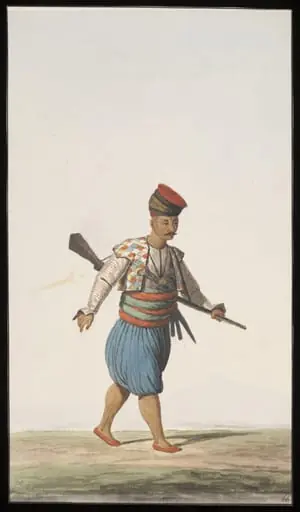
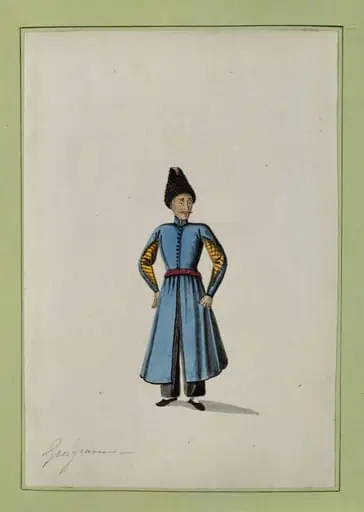
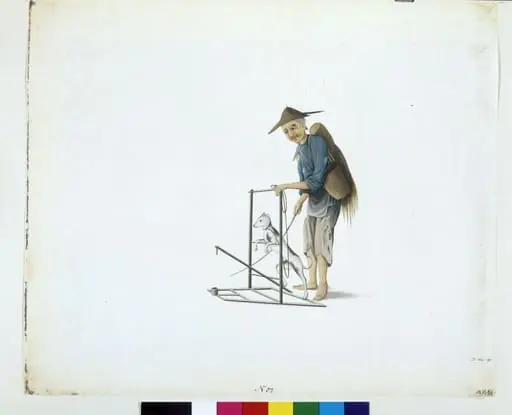
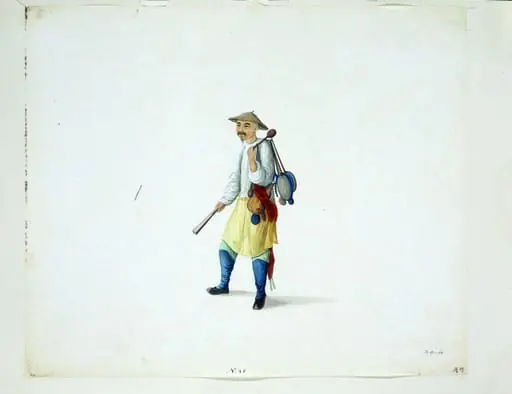
This painting is part of a group that showcases different Chinese costumes. Europeans were really interested in Chinese fashion back then. They liked the unique dresses and hairstyles that were different from their own.
You can learn more about this style by looking into the technique of chiaroscuro.
Overview
This painting belongs to a series illustrating traditional Chinese attire from the early 1800s, focusing on the dress and equipment of a foot soldier. Rendered in oil or watercolor, it captures a single figure in a standardized pose, likely produced for export to European markets. The work reflects a commercial interest in ethnographic detail rather than individual portraiture.
Subject & Meaning
The subject is a low-ranking infantryman, identifiable by his rifle shouldered at ease and regional attire. Soldiers from Guangxi province were frequently conscripted during this period, leading to the colloquial use of 'Guangxi' as a synonym for foot soldier. The image conveys neither heroism nor narrative, but serves as a visual record of military labor and regional identity within Qing-era China.
Technique & Style
The painting employs a flat, descriptive style with limited modeling, prioritizing costume accuracy over dramatic depth. Facial features are rendered with minimal expression, and background elements are absent, directing focus to the uniform and equipment. While some sources mention chiaroscuro, the work lacks pronounced light-shadow contrast, suggesting a decorative rather than illusionistic approach.
History & Provenance
Produced likely in Guangzhou for foreign traders and travelers, these images were part of a broader trade in Chinese export art. They were collected as curiosities and souvenirs, circulating in Europe as representations of an exoticized Other. Their mass production indicates a commercial demand driven by European fascination with Chinese material culture during the Canton System era.
Context
In the early 19th century, Qing China restricted foreign contact to the port of Guangzhou, fostering a niche market for visual records of local life. European patrons sought depictions of clothing, occupations, and customs, leading artists to produce standardized series. These works functioned as anthropological snapshots, shaped as much by foreign expectations as by local reality.
Legacy
The painting contributes to a visual archive of Qing-era military and civilian dress, now studied for its ethnographic value rather than artistic innovation. It reflects the early globalization of cultural imagery, where local traditions were adapted for foreign consumption. Such works remain important for understanding cross-cultural perception in the age of imperial trade.
Artist & collection