Artwork
A page from a Punishment series: Punishment for murder
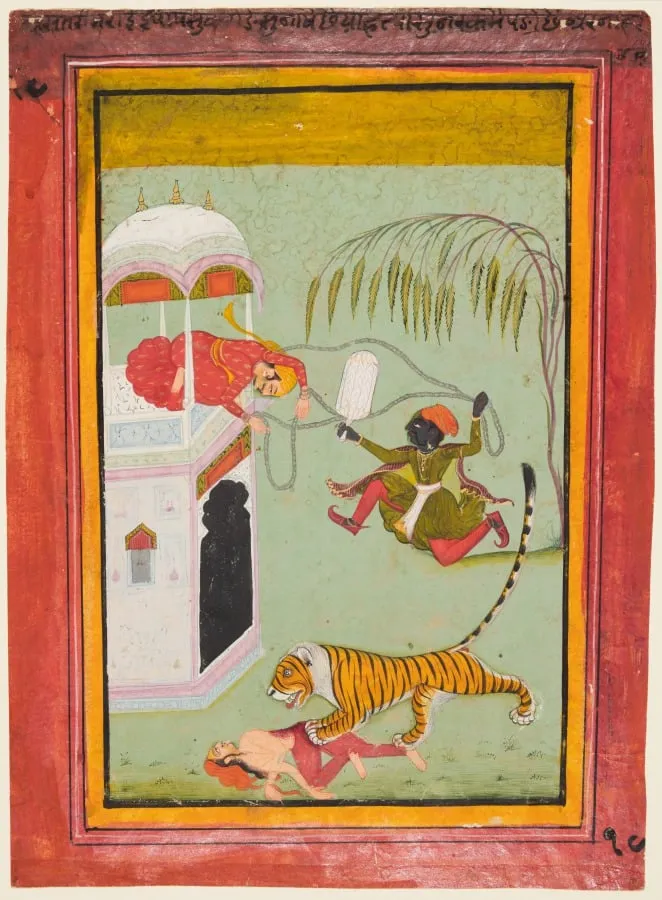
A page from a Punishment series: Punishment for murder is an unspecified painting by the Baroque artist Unknown. It dates from 1740 and is held in the collection of the Cleveland Museum of Art.
- Accession no.
- 2018.162
- Credit line
- Purchase and partial gift from the Catherine and Ralph Benkaim Collection; Severance and Greta Millikin Purchase Fund
About this work
Overview
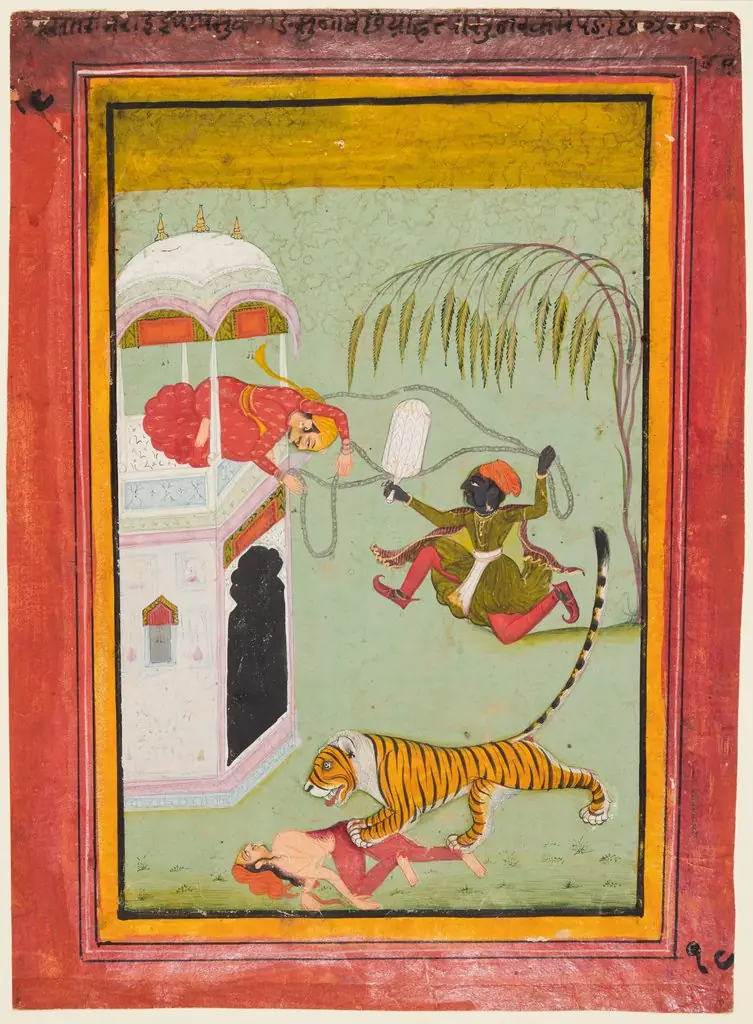
This small, densely composed painting belongs to a series illustrating punishments of the after‑life, a motif common in Rajasthani workshop art. It portrays a dark‑skinned enforcer dragging a regal figure from a balcony with chains, poised to strike with a baton, while a tiger attacks another man on the ground.
Subject & Meaning
The work visualizes a scene of infernal retribution, intended as a moral warning. By depicting a royal victim subjected to brutal punishment, the image underscores the belief that earthly status offers no protection in the after‑world, reinforcing ethical conduct through vivid terror.
Technique & Style
Executed in the characteristic Rajasthani atelier style, the painting employs bright pigments and intricate detailing to fill the limited space. Figures are rendered with exaggerated gestures, and the tiger is depicted with dynamic, clawed motion, creating a sense of chaotic violence within a compact composition.
History & Provenance
Created in a Rajasthan workshop, the piece was likely commissioned by a regional court to convey religious and moral teachings. No signature or documented patron survives, leaving the artist’s identity and precise ownership history unknown.
Context
During the period when Rajput kingdoms such as Bundi flourished, courts often ordered series of hell‑scenes to accompany devotional texts. These visual narratives functioned as didactic tools, reinforcing the doctrine of karmic retribution across social strata.
Artist & collection









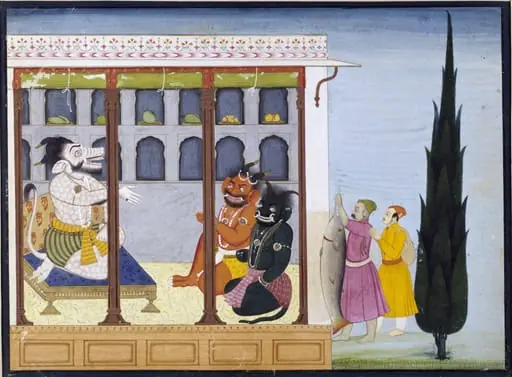 Sambara
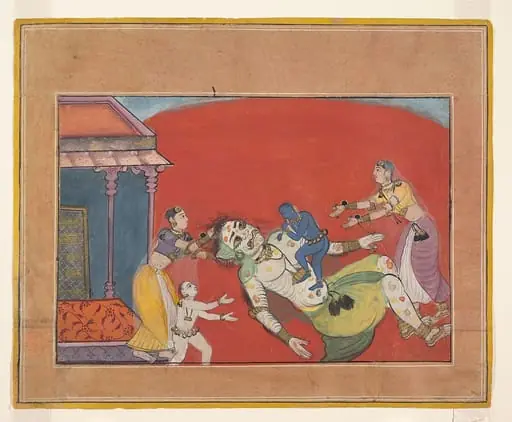 Untitled
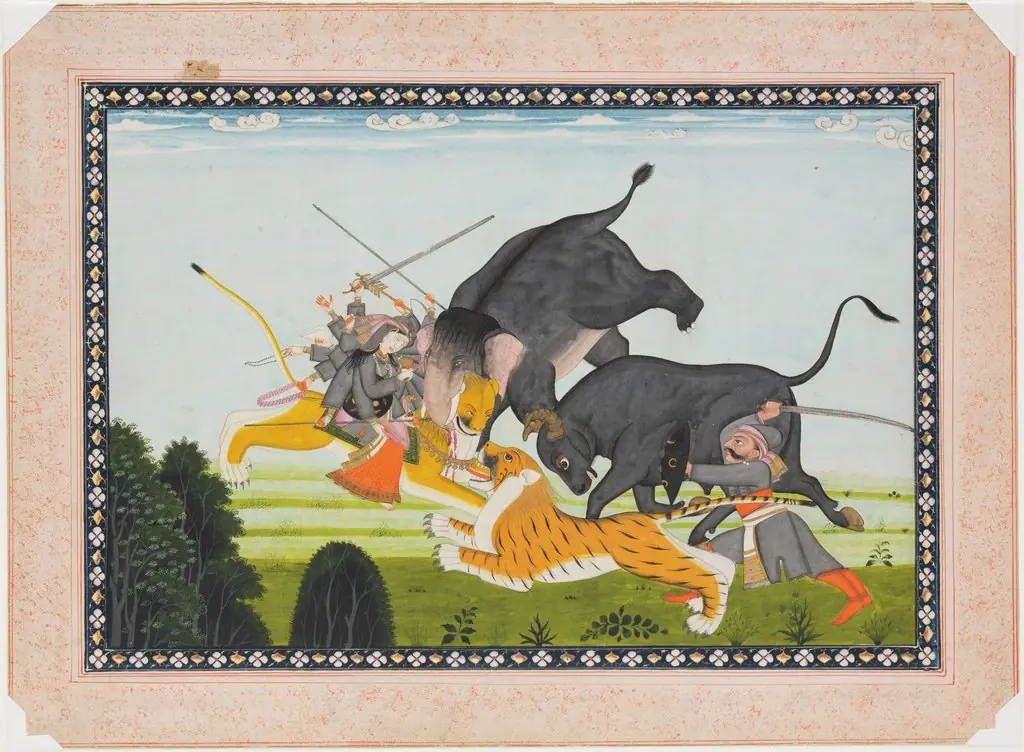 Durga Fighting an Elephant, Bull and Tiger
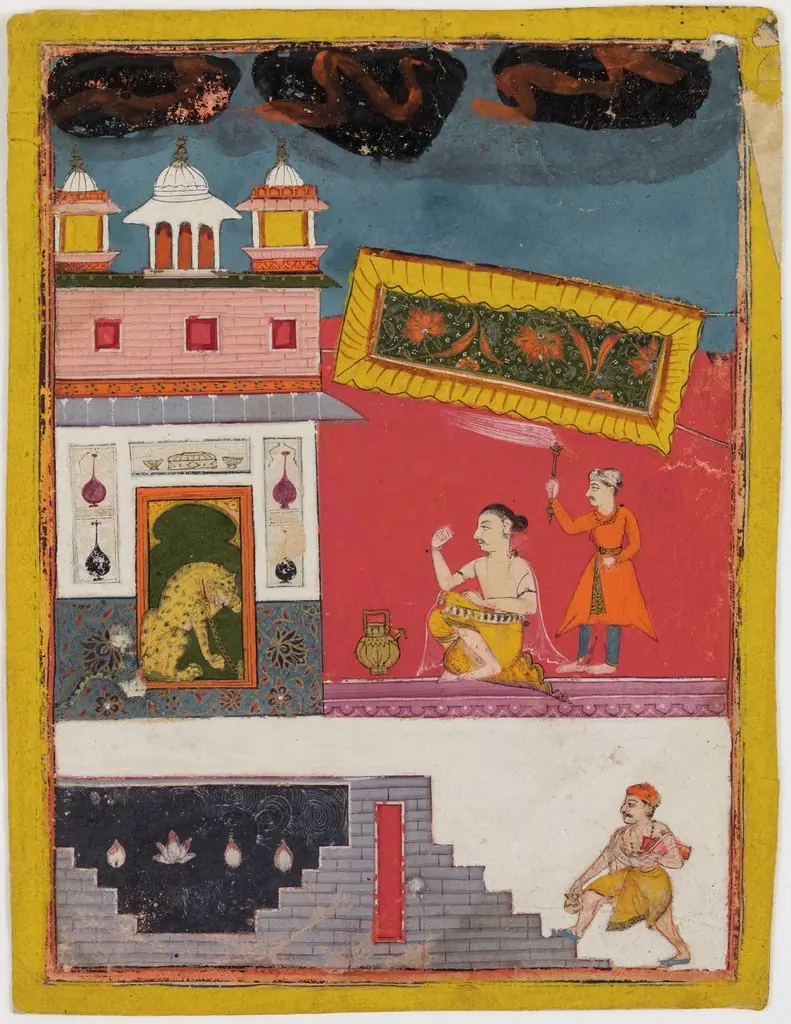 Palace Scene with Cheetah on Chain, Prince and Attendant
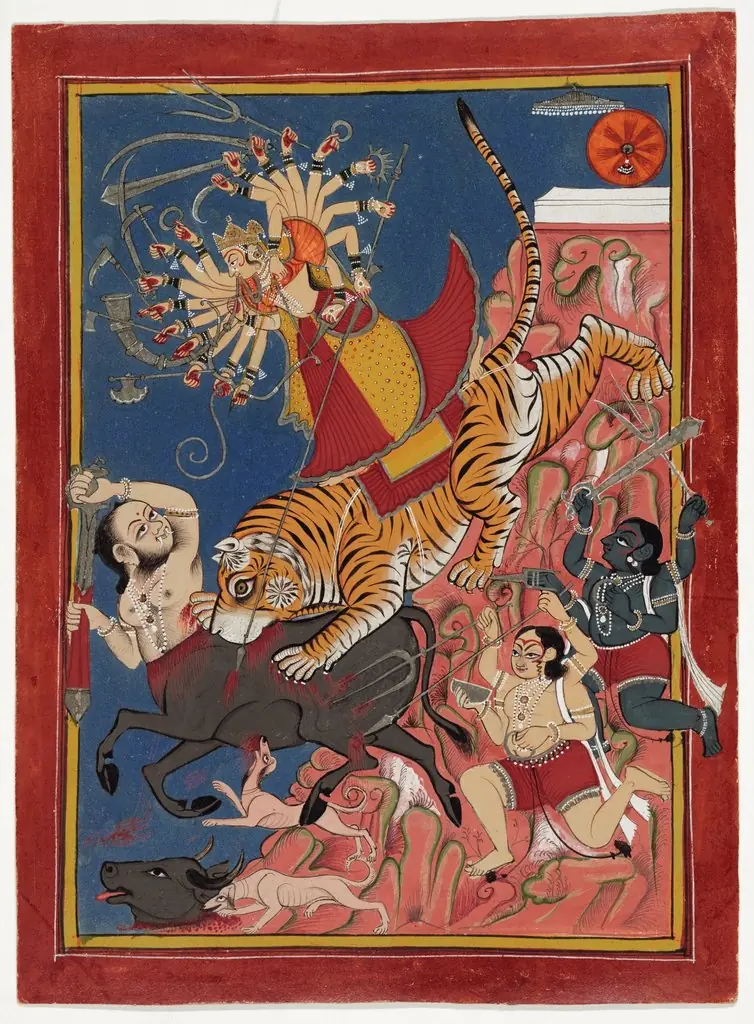 Durga Killing the Buffalo Demon
 The deceitful wife assaults her erring husband, from a Tuti-nama (Tales of a Parrot): Eighth Night
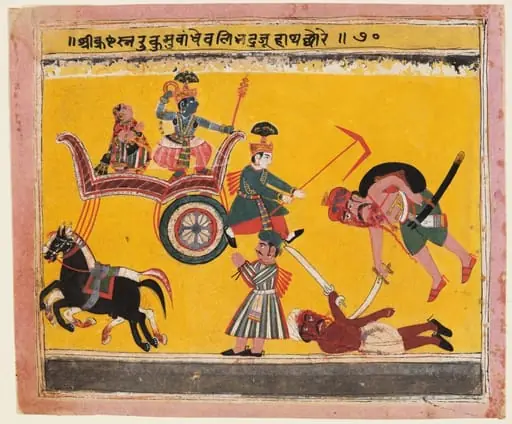 Abduction of Rukmini: Krishna Tied the Hands of Rukma, from a Bhagavata Purana
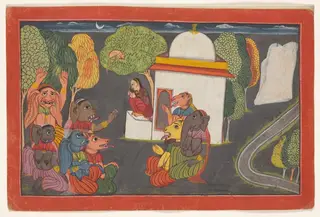 Hanuman spies Sita in the Ashoka Grove, from the “Shangri” Ramayana
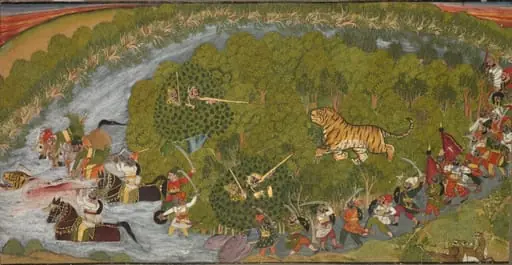 Tiger Hunt
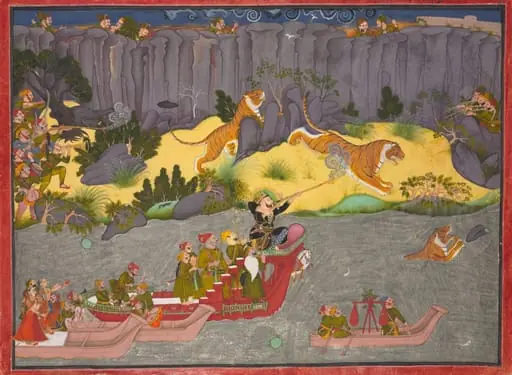 Tiger Hunt of Raja Ram Singh II
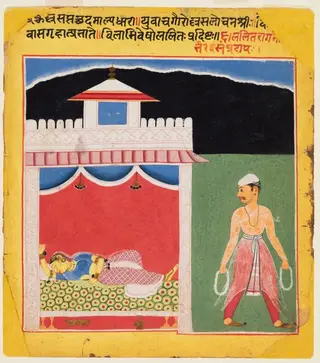 The Lover Leaves Wistfully in the Morning after a Passionate Tryst: Lalit Ragini, from a Ragamala
- A page from a Punishment series: Punishment for murder