Artwork
A Princess and Demons before a Nobleman: A Leaf from a Poetical Romance Relating to Shah Alam I (recto); Stenciled Scenes of Lion and Gazelle (verso)
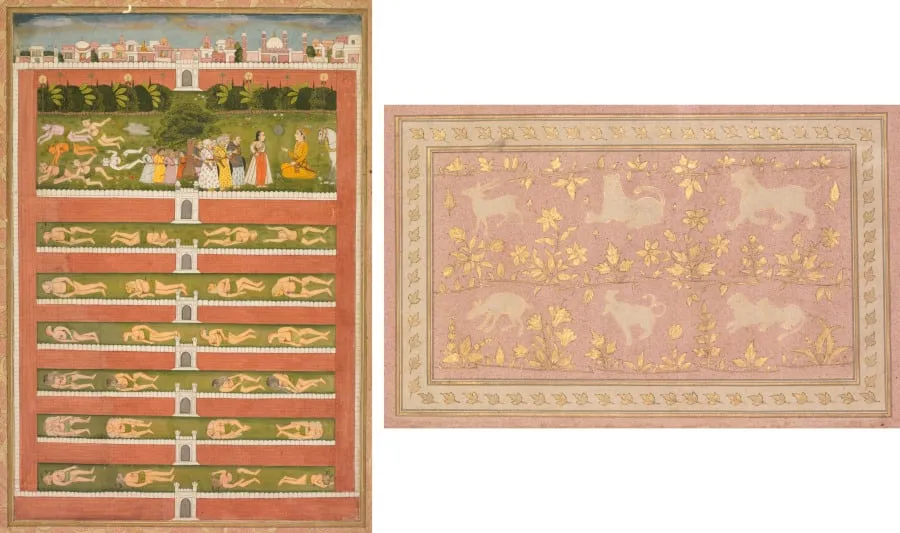
A Princess and Demons before a Nobleman: A Leaf from a Poetical Romance Relating to Shah Alam I (recto); Stenciled Scenes of Lion and Gazelle (verso) is an unspecified painting by the Baroque artist Unknown. It dates from 1710 and is held in the collection of the Cleveland Museum of Art. This painting depicts a complex, unidentified scene from a poetical romance associated with Shah Alam I.
- Accession no.
- 2013.337
- Credit line
- Gift in honor of Madeline Neves Clapp; Gift of Mrs. Henry White Cannon by exchange; Bequest of Louise T. Cooper; Leonard C. Hanna Jr. Fund; From the Catherine and Ralph Benkaim Collection
About this work
Overview
This painting depicts a complex, unidentified scene from a poetical romance associated with Shah Alam I. The composition features a kneeling prince, a noblewoman (possibly Mahliqa, a Chinese princess), and various groups of figures, including men with distinctive vertical eyes and slain horned creatures, set against a cityscape with unique architectural and demographic characteristics.
Subject & Meaning
The subject revolves around interactions between a prince, a possibly identified noblewoman (via lunar symbolism and adjacent inscription reference to Mahliqa), and several enigmatic groups. These include men with vertically aligned eyes and defeated horned, skirted figures, suggesting themes of encounter with the 'other', whether foreign, demonic, or tribal.
Technique & Style
The painting's style is characteristic of Mughal-era art, with detailed, intricate depictions of characters, attire, and architecture. Notable techniques include the use of symbolism (e.g., the moon to possibly signify Mahliqa) and the juxtaposition of realistic and fantastical elements to convey societal and mythological themes.
History & Provenance
The exact story behind the painting remains unclear to scholars. It is known to be a leaf from a broader poetical romance related to Shah Alam I, indicating its creation within the cultural and literary context of Mughal India.
Context
Created within the Mughal Indian context, this artwork reflects the period's fascination with poetical romances and the depiction of 'others' through distinctive visual cues (e.g., vertical eyes, grass skirts). The cityscape, with its all-female population and slain composite creatures, adds layers of cultural and mythological depth.
Legacy
While the specific narrative remains enigmatic, the painting contributes significantly to the understanding of Mughal art's thematic explorations of identity, mythology, and cultural exchange. Its unique elements encourage further study of the era's literary and artistic productions.
Artist & collection









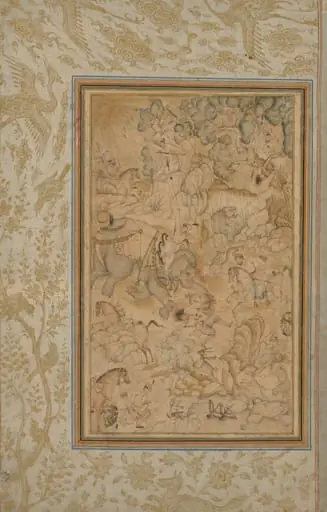
- Princes hunting in a rocky landscape
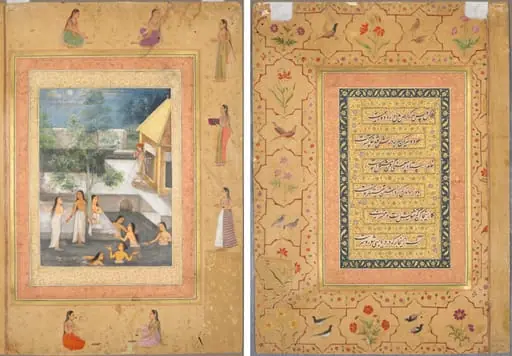 Leaf from the Late Shah Jahan Album: Harem Night-Bathing Scene (recto); Calligraphy Framed by an Ornamental Border of Flowers and Birds (verso)
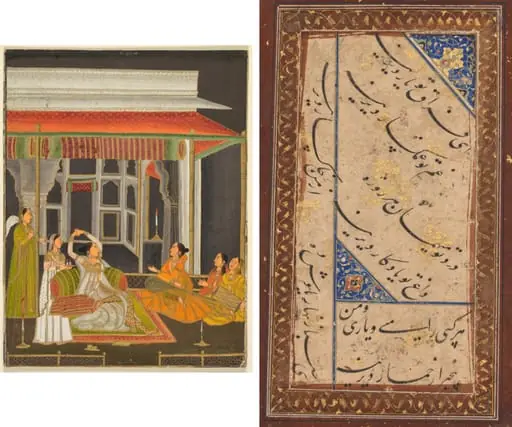 A princess on a terrace with attendants at night (recto); Calligraphy (verso)
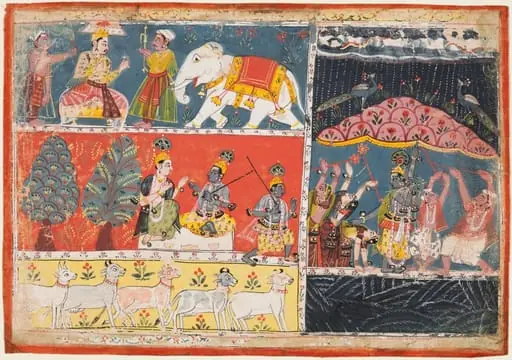 Krishna Lifts Mount Govardhan, from a Bhagavata Purana
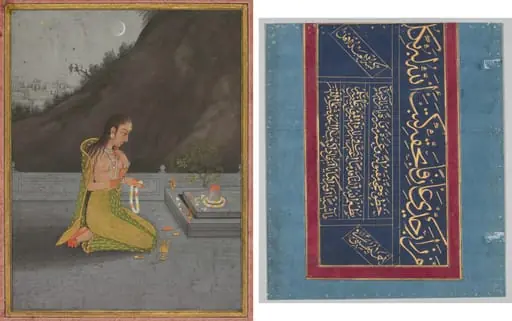 A night scene of Shiva puja (recto); Calligraphy (verso)
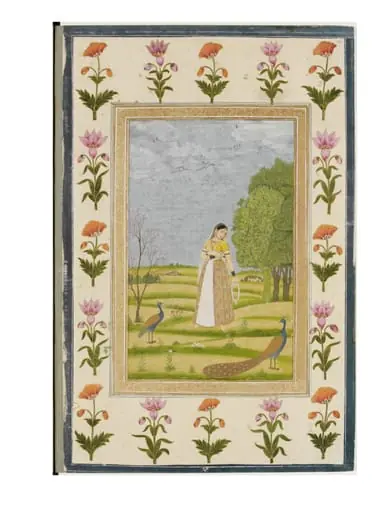 Kakubha Ragini
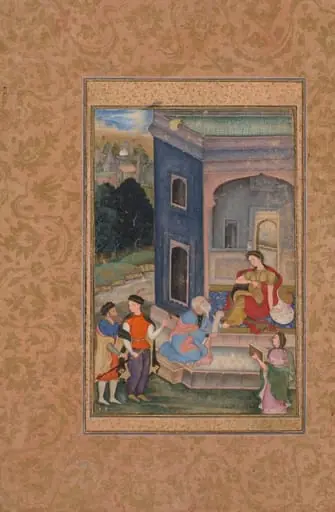 European Costume Scene
 Untitled
 Nanda and the Elders in Council with the Cowherds, from a Bhagavata Purana
 Untitled
 The Goddess Kali (recto), from a Kalighat album
 Prince and ascetics, from the Late Shah Jahan Album