Artwork
Anbetung der Könige
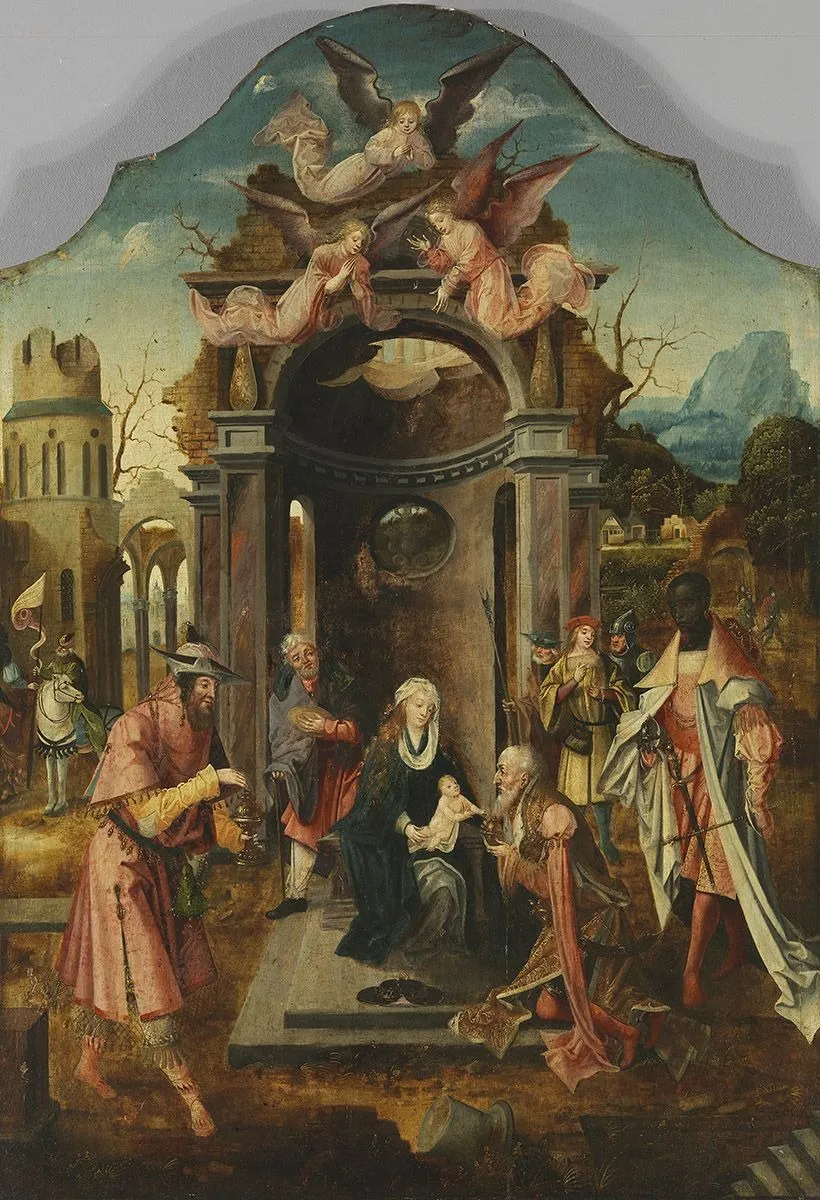
Anbetung der Könige is an unspecified painting by the Mannerist artist Unknown. It dates from 1520 and is held in the collection of the Bavarian State Painting Collections.
About this work
Subject & Meaning
The painting depicts the Adoration of the Magi, showing the infant Christ Child held by the Virgin Mary while the three Magi present gifts.
The painting depicts the Adoration of the Magi, showing the infant Christ Child held by the Virgin Mary while the three Magi present gifts. This scene of the Magi’s reverence symbolizes the recognition of Christ’s divinity by the Gentile world and underscores themes of kingship and homage within Christian iconography. The work is part of the Bavarian State Painting Collections and is housed in the Alte Pinakothek in Munich.
Technique & Style
The work is an oil painting on wood panel, measuring 105 cm by 73.5 cm, depicting the adoration of the Magi with the Christ Child at its center. Executed around 1520 by an Antwerp master, it belongs to the religious art genre and was originally part of the Bavarian State Painting Collections, where it remains on display in the Alte Pinakothek. The composition emphasizes intimate devotional focus through meticulous rendering of figures and richly detailed textures characteristic of early Northern Renaissance painting.
History & Provenance
Anbetung der Könige was created in 1520, as indicated by its inception date. The work is attributed to an Antwerpener Meister, an anonymous artist from Antwerp, and is classified as a religious painting depicting the adoration of the Magi and the Christ Child.
The painting is held by the Bavarian State Painting Collections and is housed at the Alte Pinakothek in Munich. It measures 105 cm in height and 73.5 cm in width.
The painting Anbetung der Könige, attributed to the Antwerp Master and dated to 1520, is held by the Bavarian State Painting Collections. It forms part of the permanent collection at the Alte Pinakothek in Munich. The work is cataloged under the specific accession details associated with the museum's holdings of religious art depicting the Adoration of the Magi. No specific exhibition history or temporary loan records are provided in the available documentation.
Context
The painting was created in 1520 by an anonymous Antwerp painter associated with the Antwerp School, depicting the adoration of the Magi as a religious scene featuring the Christ Child. It is housed in the Bavarian State Painting Collections at the Alte Pinakothek in Munich and is classified as a religious work within the tradition of early Netherlandish painting. Scholarly attention focuses on its stylistic connections to Antwerp School artists and its role within the broader context of early 16th-century devotional art.
The work's significance lies in its representation of Magi worship, reflecting theological themes prevalent in Renaissance art. Its precise authorship remains uncertain, though it is linked to the Antwerp School, placing it within the artistic milieu of early Netherlandish painting.
The painting measures 105 cm in height and 73.5 cm in width, aligning with typical dimensions for devotional panels of the period.
Overview
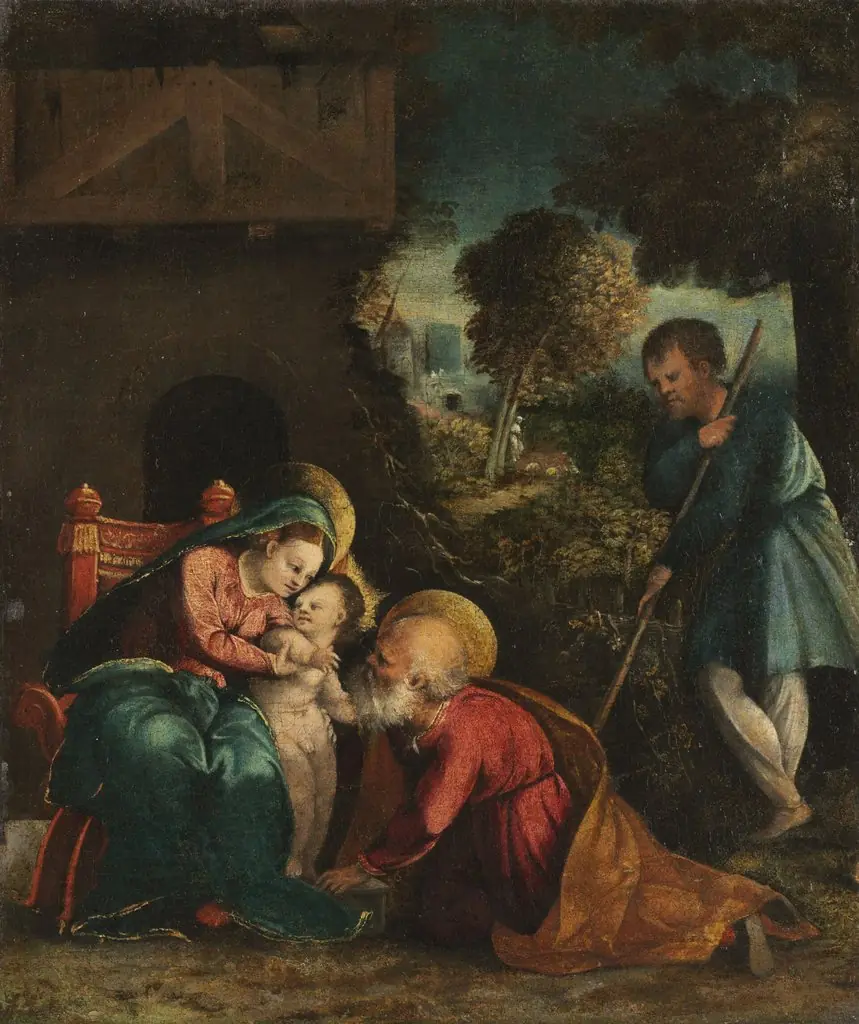
The work, titled Anbetung der Könige, depicts a crowded gathering centered on an infant. Figures in varied attire surround the child, with a kneeling man cradling the baby while others observe. Architectural elements rise in the distance, including a structure capped by a circular opening, and a landscape of trees and additional buildings frames the scene.
Artist & collection









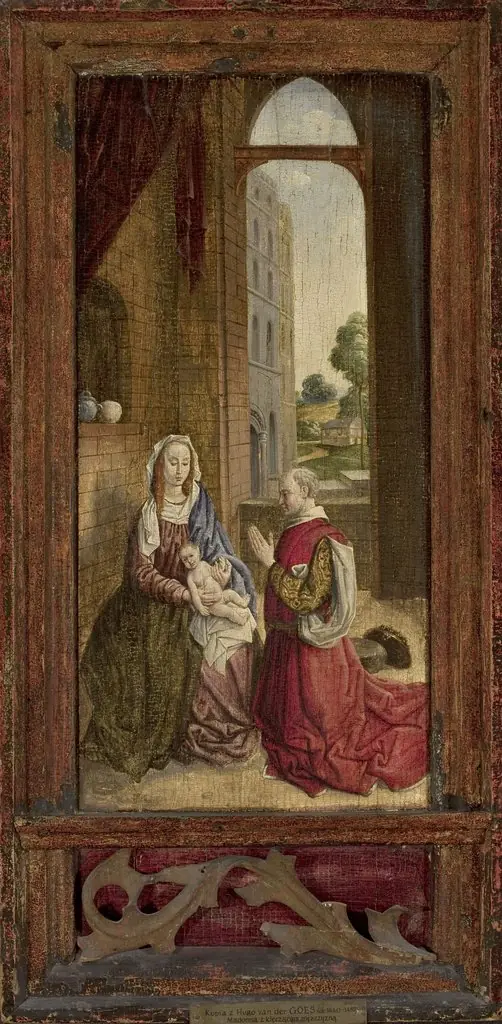
- Madonna with Child Jesus
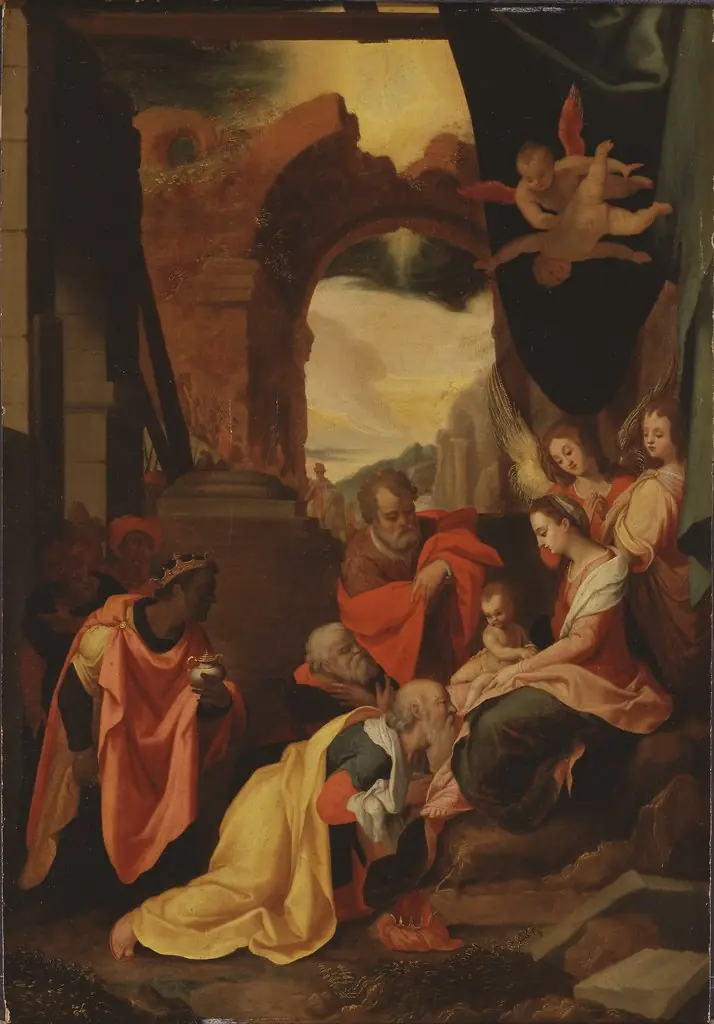 The Adoration of the Magi
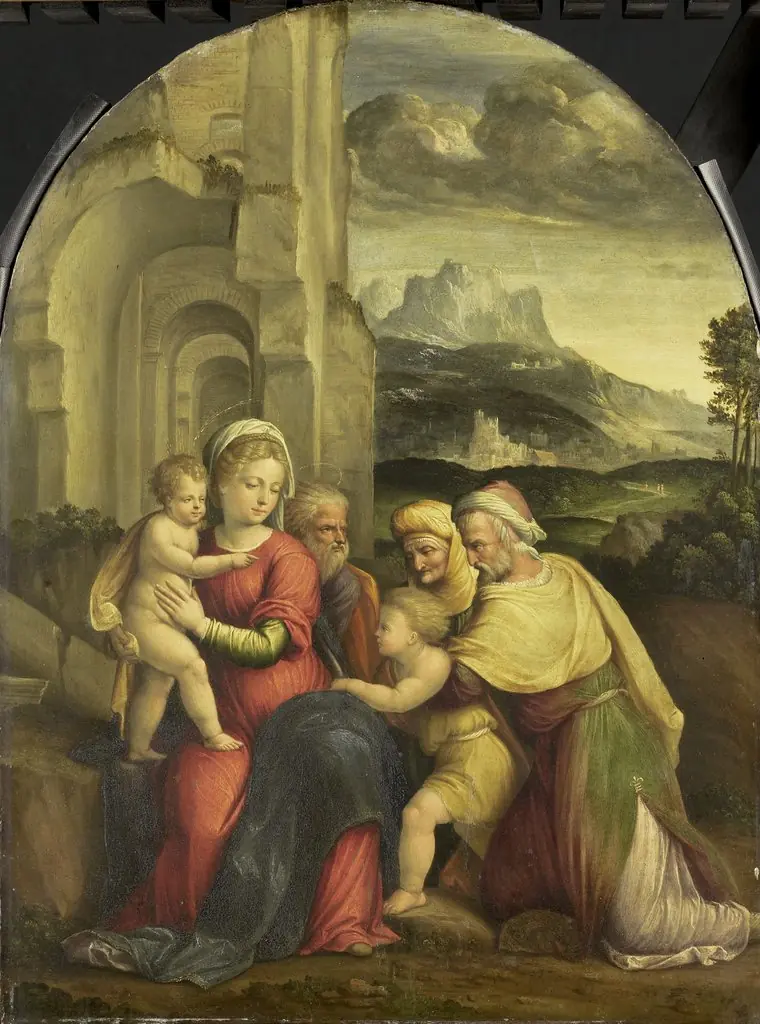 Holy Family
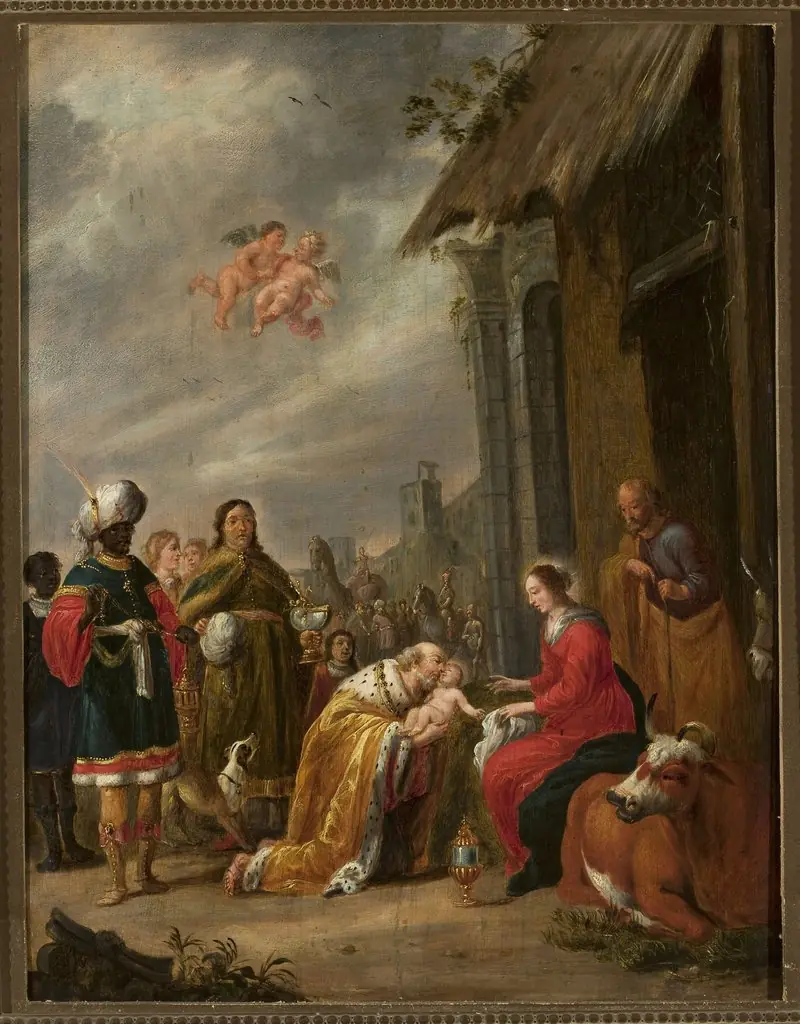 Adoration of the Magi (Matthew 2:10-11)
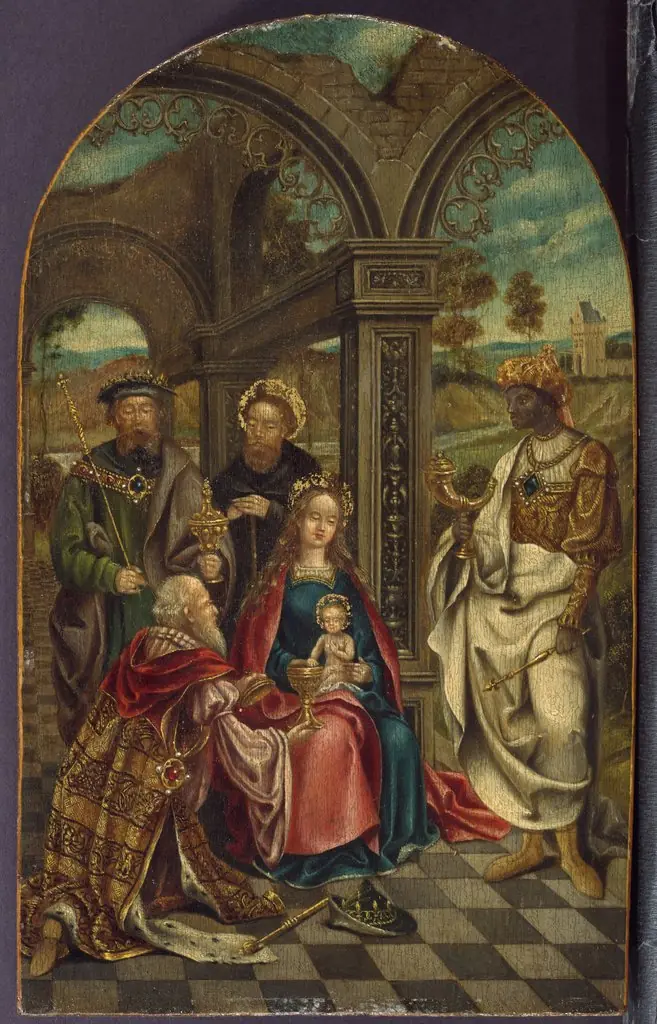 Adoration of the Magi
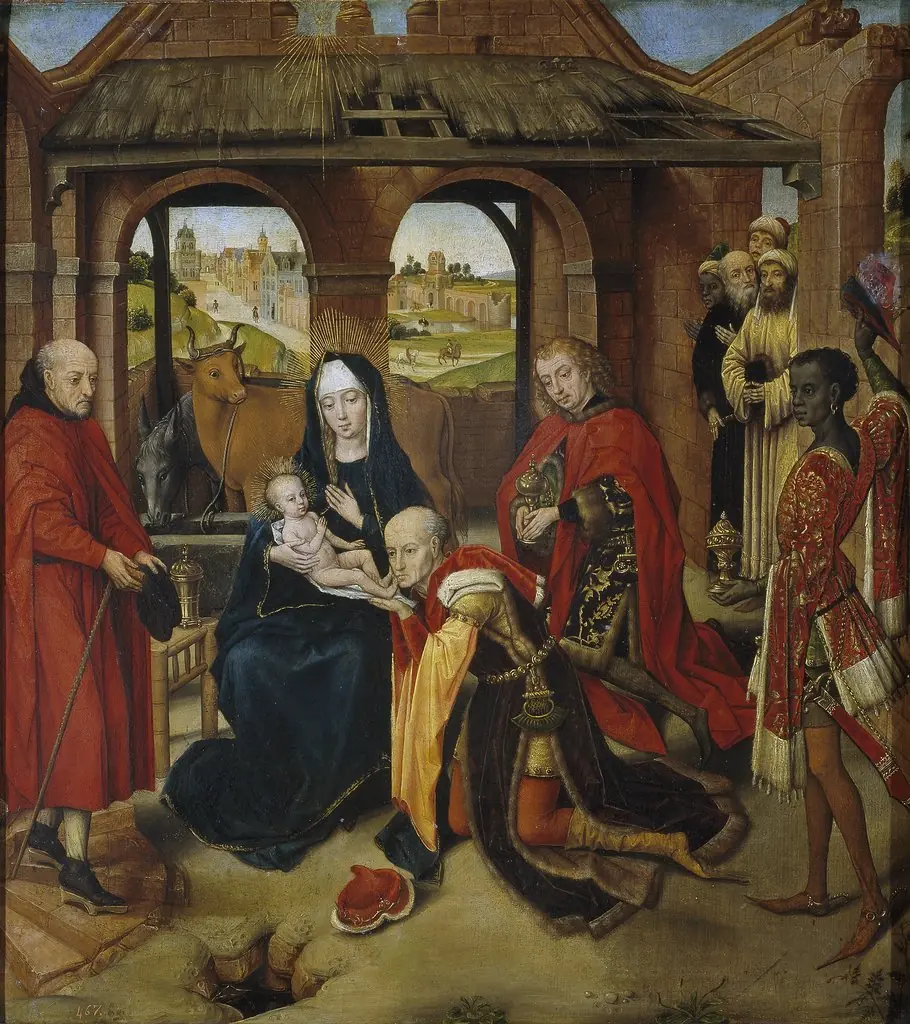 The Adoration of the Magi
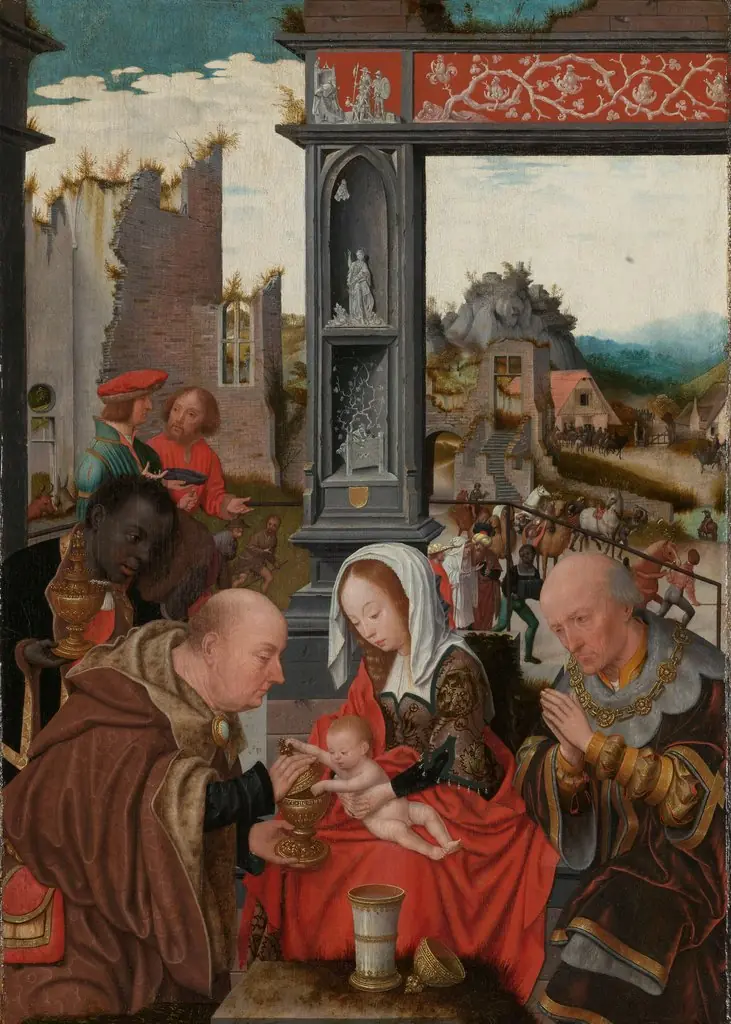 The Adoration of the Magi
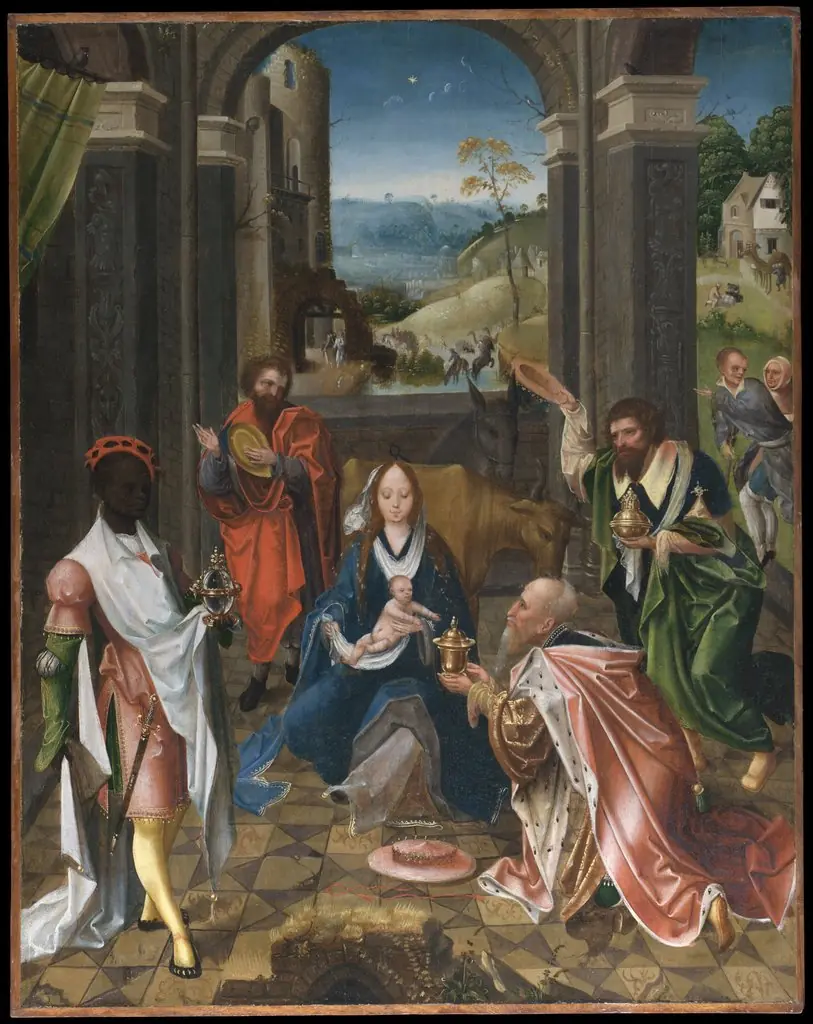 The Adoration of the Magi
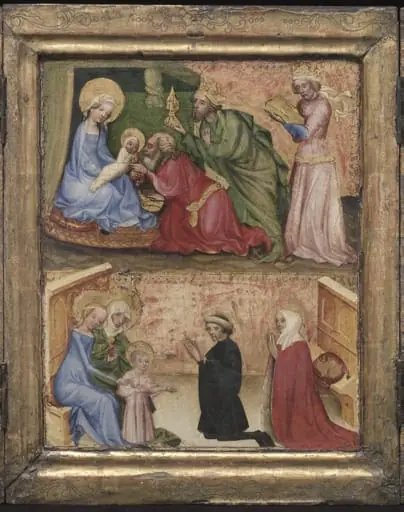 The Adoration of the Magi
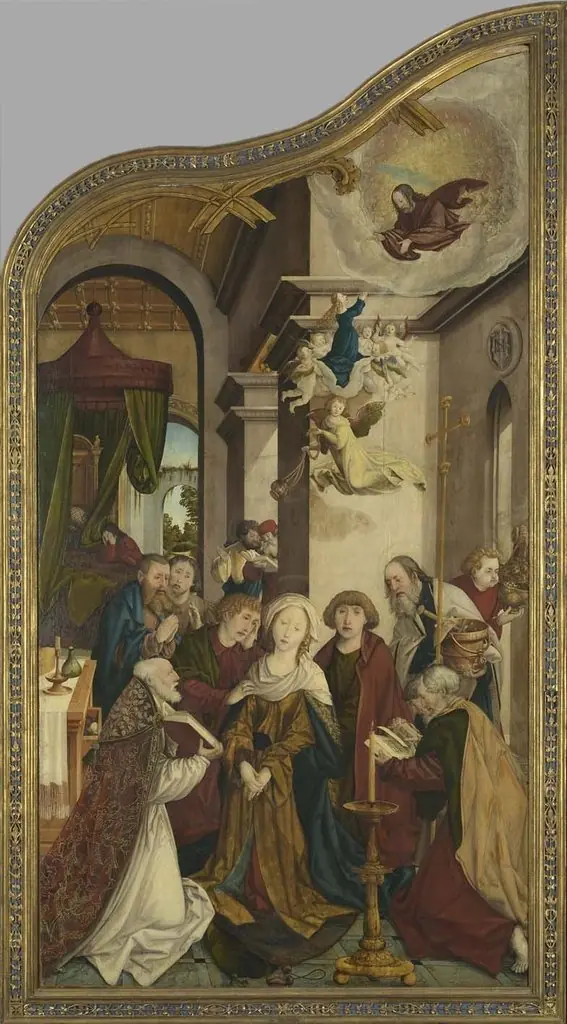 Wettenhauser Hochaltar: Tod Mariae Rückseite: Abschied Christi (rechte Hälfte) mit Stifter Ulrich Hieber
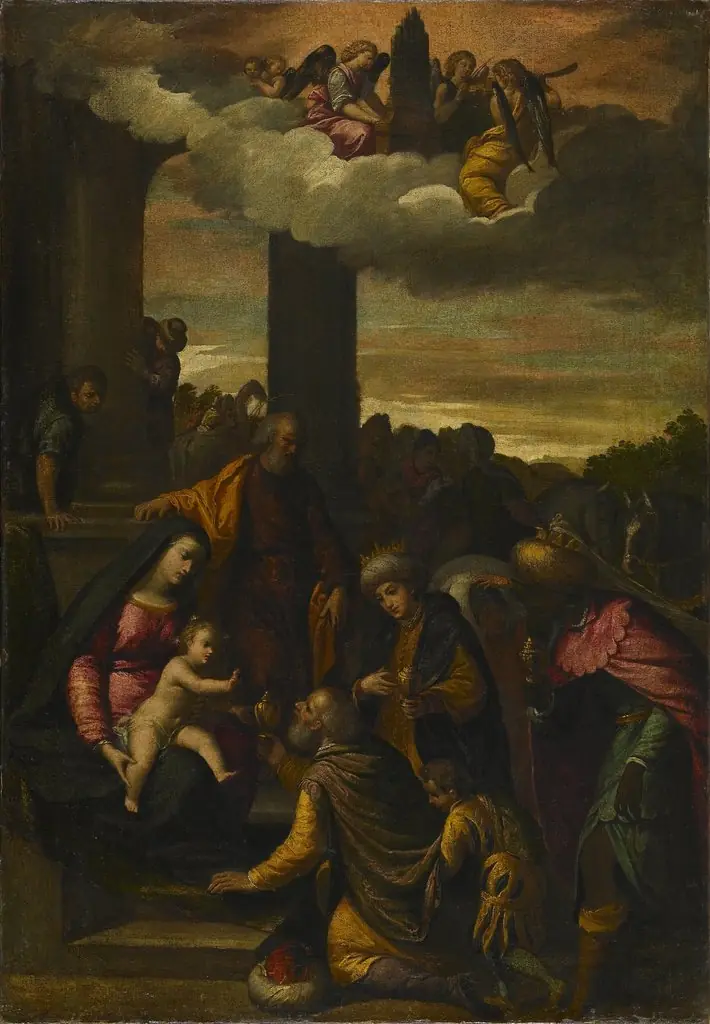 The Adoration of the Magi
 Holy Family with a Shepherd