Artwork
Architectural canopy
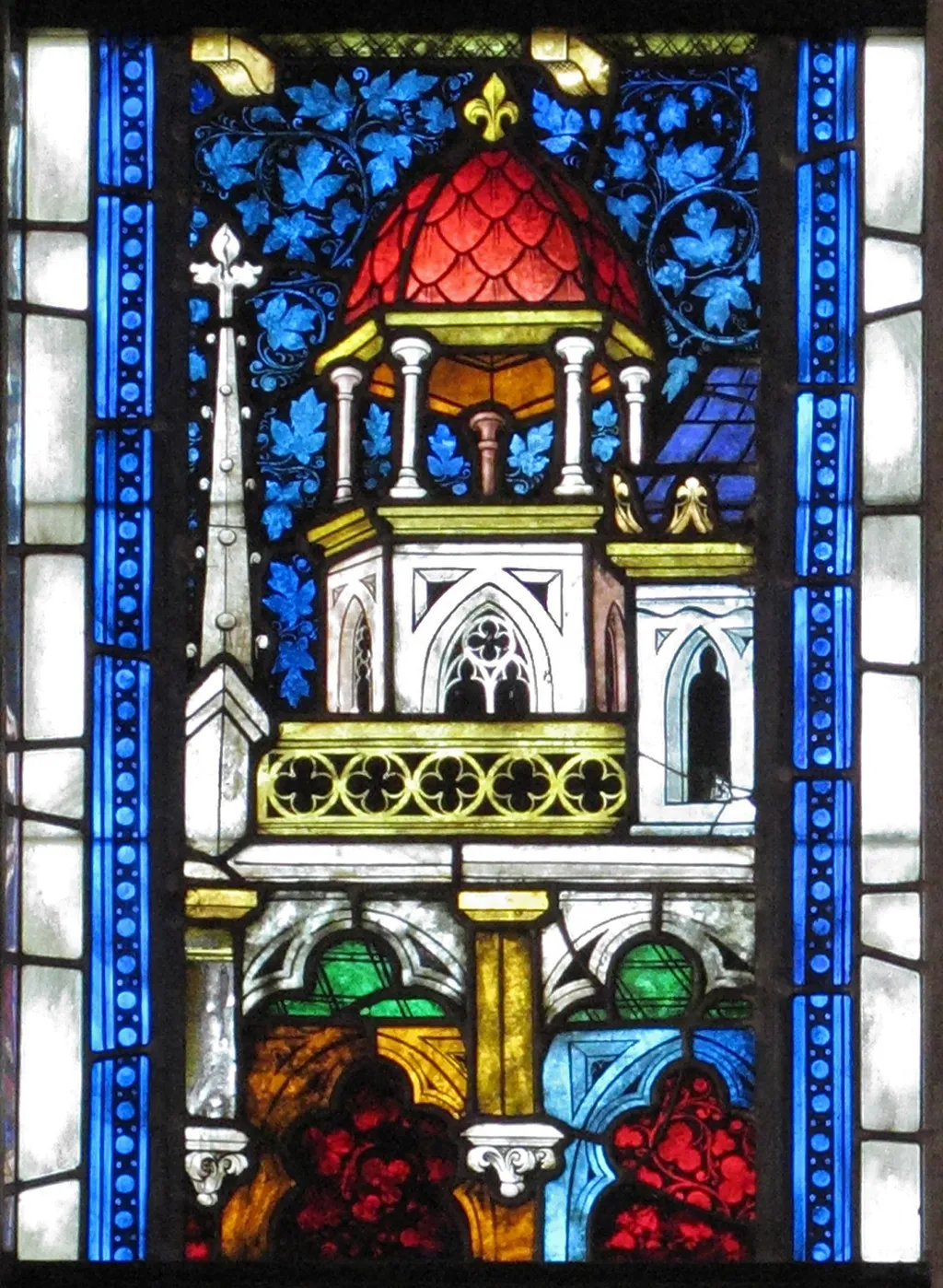
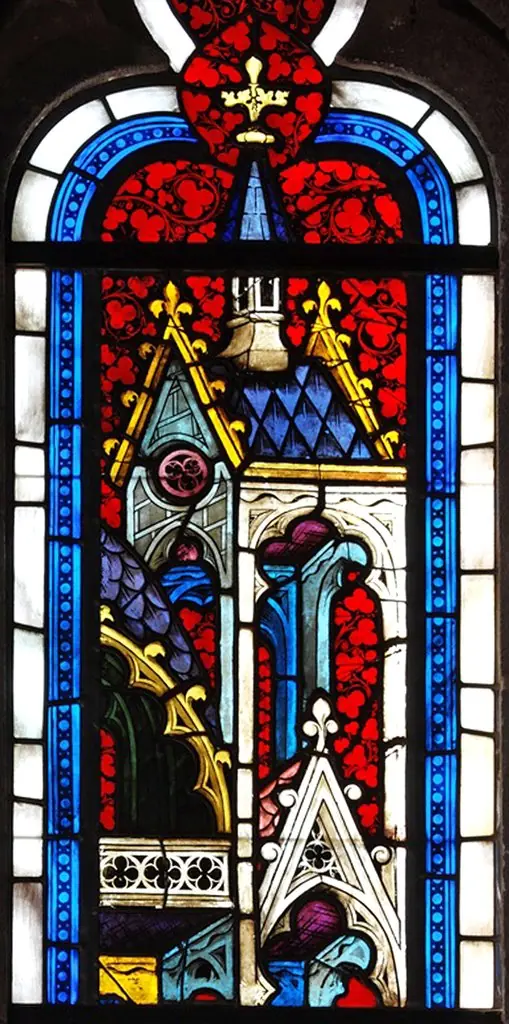
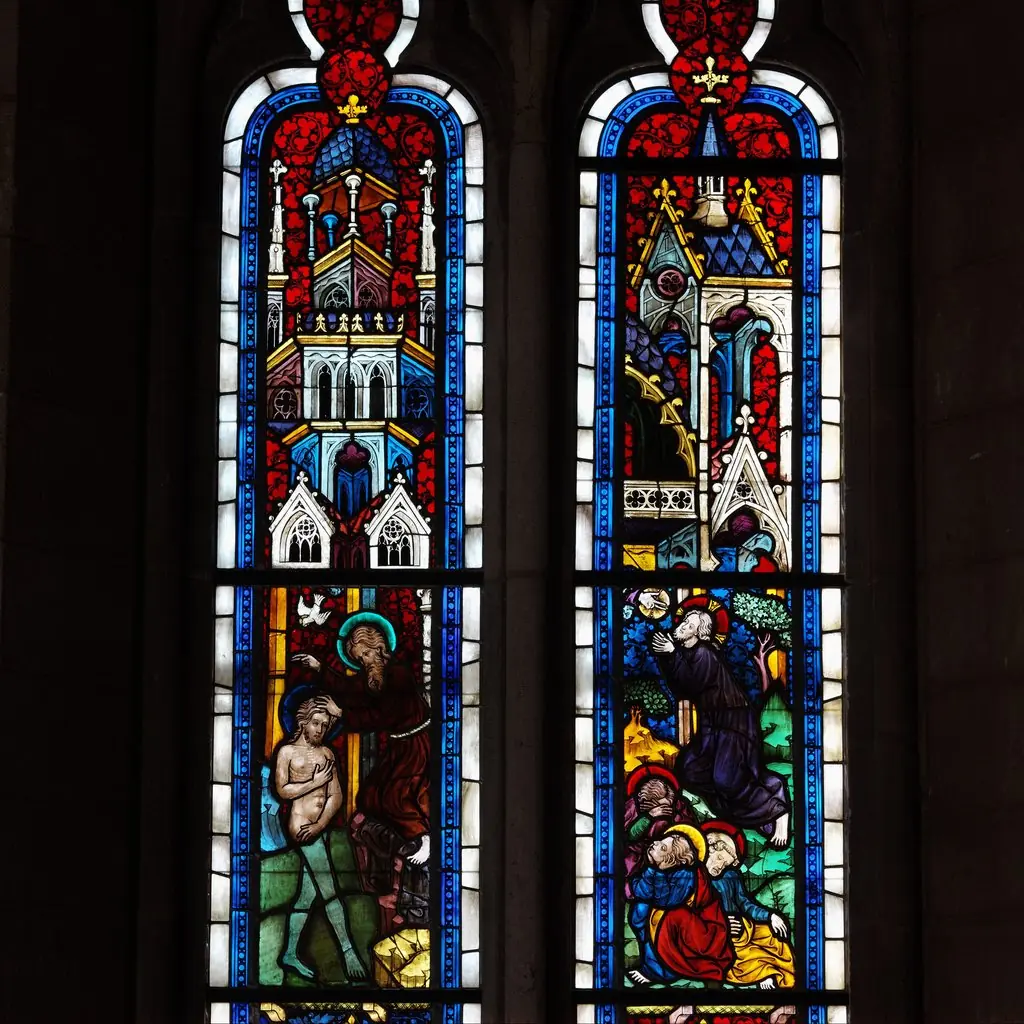
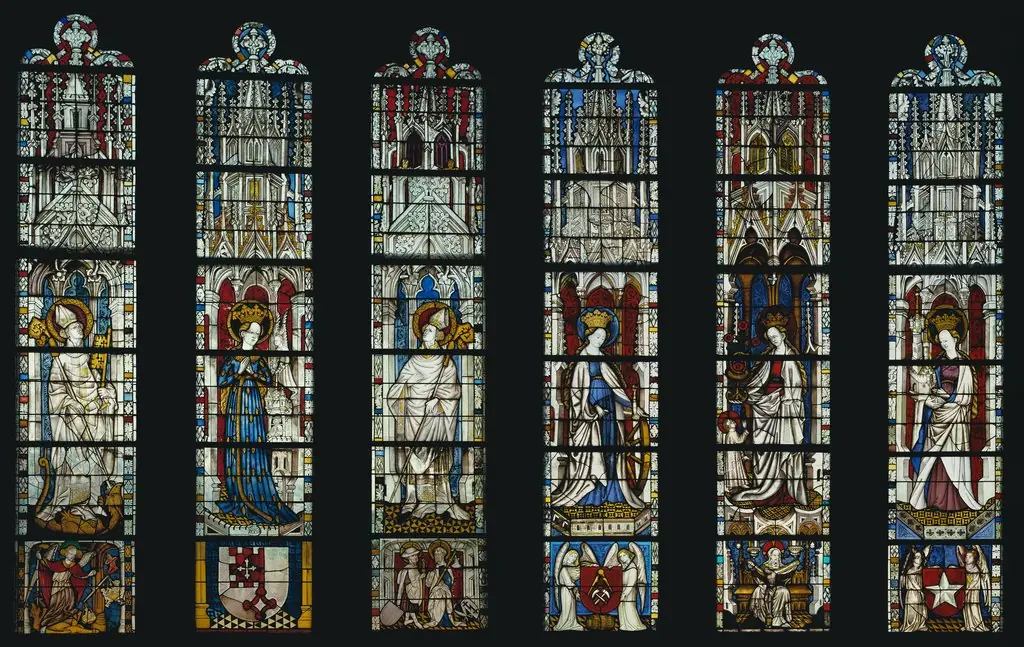
Architectural canopy is an unspecified painting by Unknown. It dates from 1396 and is held in the collection of the Metropolitan Museum of Art. This stained glass window presents a stylized architectural structure framed by ornamental borders and natural motifs.
About this work
Overview
This stained glass window presents a stylized architectural structure framed by ornamental borders and natural motifs. Its composition divides cleanly between man-made elements above and organic forms below, creating a symbolic interplay between built environment and landscape. The use of bold outlines enhances color saturation, giving the glass a luminous quality when illuminated.
Subject & Meaning
The central structure resembles a ceremonial pavilion or chapel, its red roof and white walls suggesting purity and grandeur. Fleur-de-lis and floral patterns in the upper border evoke heraldic or religious symbolism, while the lower green, red, and blue shapes imply a cultivated garden. Together, they may represent an idealized sacred space nestled within nature.
Technique & Style
Colors are separated by thick, dark leading lines that define each shape with clarity, a hallmark of traditional stained glass craftsmanship. The palette is rich but restrained, relying on saturated hues rather than gradation. The absence of chiaroscuro suggests a deliberate flatness, prioritizing symbolic clarity over illusionistic depth.
History & Provenance
The window’s design aligns with late 19th- to early 20th-century ecclesiastical or civic commissions that blended Gothic revival elements with Art Nouveau floral motifs. Exact origin and maker remain undocumented, but its stylistic features suggest production in a European studio specializing in liturgical glass during the Arts and Crafts movement.
Context
During its time, such windows often adorned chapels, town halls, or private chapels, serving both decorative and didactic purposes. The fusion of architecture and flora reflected broader cultural interests in harmonizing human creation with the natural world, a theme prevalent in design reform movements across Europe.
Legacy
Though not widely exhibited, this window exemplifies a transitional phase in stained glass art, where medieval techniques met modern aesthetic ideals. Its enduring presence in its original setting underscores the continued value placed on handcrafted glass as a medium for spiritual and civic expression in the early modern era.
Artist & collection