Artwork
Ariwara Narihira (825–880), from the Fujifusa version of Thirty-six Immortal Poets
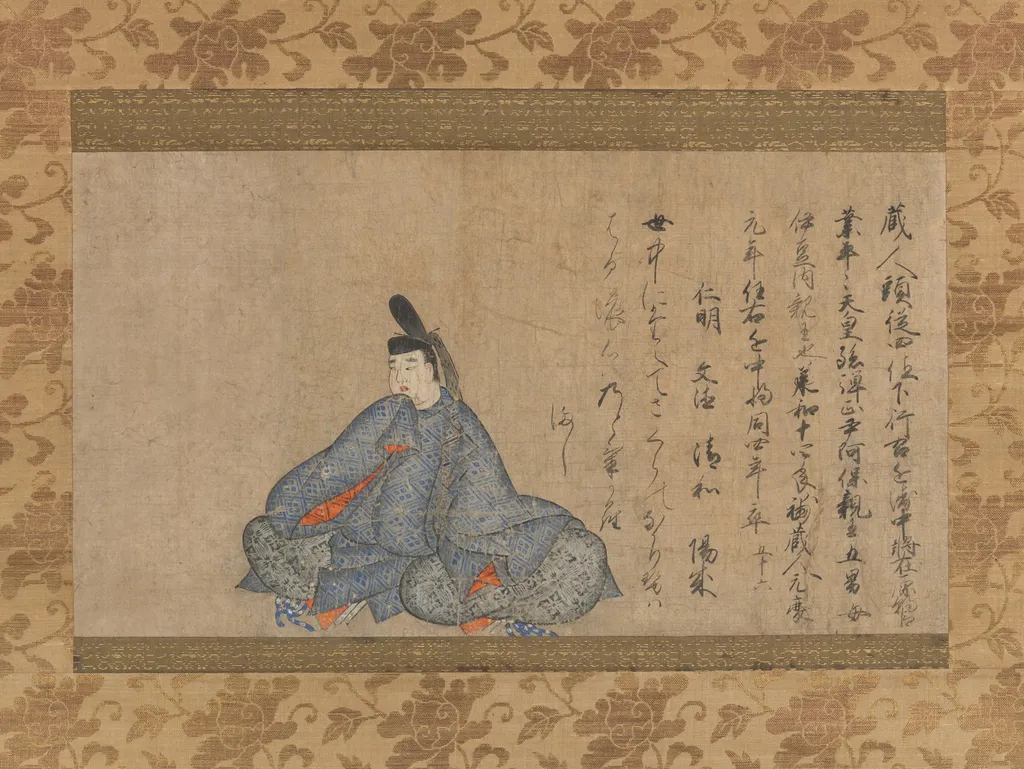
Ariwara Narihira (825–880), from the Fujifusa version of Thirty-six Immortal Poets is an unspecified painting. It dates from 1424 and is held in the collection of the Metropolitan Museum of Art. This painting depicts Ariwara Narihira (825–880), a celebrated Japanese poet, as part of the "Thirty-six Immortal Poets" series.
About this work
Subject & Meaning
Created in Japan in 1424, the image serves as a commemorative representation of the poet's enduring legacy within the Japanese literary tradition.
The work depicts Ariwara Narihira, a historical figure from the Heian period (825–880) recognized as one of the Thirty-six Immortal Poets. As a portrait within this specific series, the painting represents the subject as a man engaged with the art of poetry. The iconography focuses on Narihira's identity as a literary figure, visually establishing his status among the canonical group of poets.
Created in Japan in 1424, the image serves as a commemorative representation of the poet's enduring legacy within the Japanese literary tradition.
History & Provenance
The painting of Ariwara Narihira was created in 1424 in Japan, as an anonymous work produced for the Fujifusa version of the Thirty-six Immortal Poets series. It is now held in the collection of the Metropolitan Museum of Art. Beyond these basic facts of its 1424 inception and current institutional ownership, the sources do not document the commission, intermediate ownership chain, or earlier provenance of the work.
The painting is held by the Metropolitan Museum of Art in New York, where it is cataloged as part of the Fujifusa version of the Thirty-six Immortal Poets series.
It was included in the exhibition “Seasonal Pleasures in Japanese Art,” held at the Metropolitan Museum of Art from September 27, 2019, to February 2, 2020.
Context
The painting dated 1424 belongs to the Fujifusa manuscript of the Thirty‑Six Immortal Poets, a series that visually codifies the Heian poetic canon within Muromachi art. Executed by an anonymous hand, the work depicts a male figure engaged with poetic text, illustrating how literary narratives were materialized in visual form. Its location in the Metropolitan Museum of Art provides a focal point for scholarly examination of poetic illustration in Japanese art history.
Art historians view such pieces as exemplars of how medieval painters mediated classical literature through composition and iconography.
Overview
This painting depicts Ariwara Narihira (825–880), a celebrated Japanese poet, as part of the "Thirty-six Immortal Poets" series. Specifically, it belongs to the Fujifusa version of this well-known artistic tradition. The artwork presents a single figure, characteristic of these poet portraits, emphasizing the individual's significance within the literary canon.
Technique & Style
The artist employed a distinct visual style, characterized by simple, defined shapes and a palette of bold colors. The figure of Narihira, seated cross-legged, is rendered with clarity, wearing a dark hat and a blue patterned robe. A red scroll, highlighted against his attire, draws the viewer's eye.
The composition is set against a light tan background featuring a subtle leaf pattern, framed by a gold border, which collectively serves to emphasize the central poetic figure.
Artist & collection

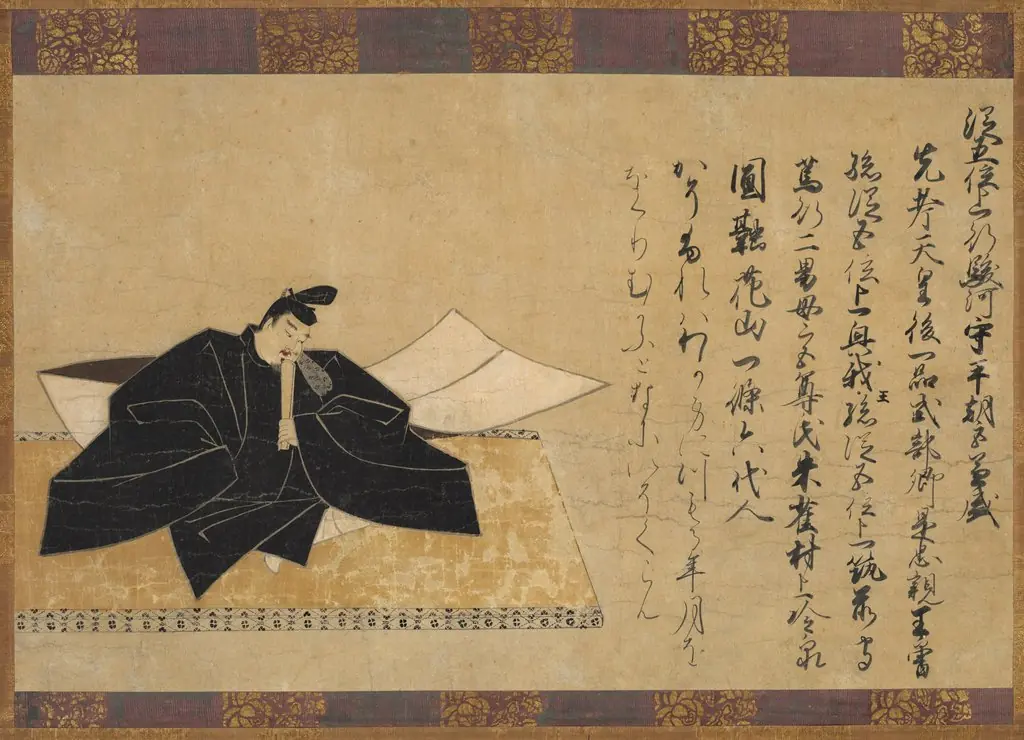
- Taira no Kanemori of the Thirty-six Poetic Immortals
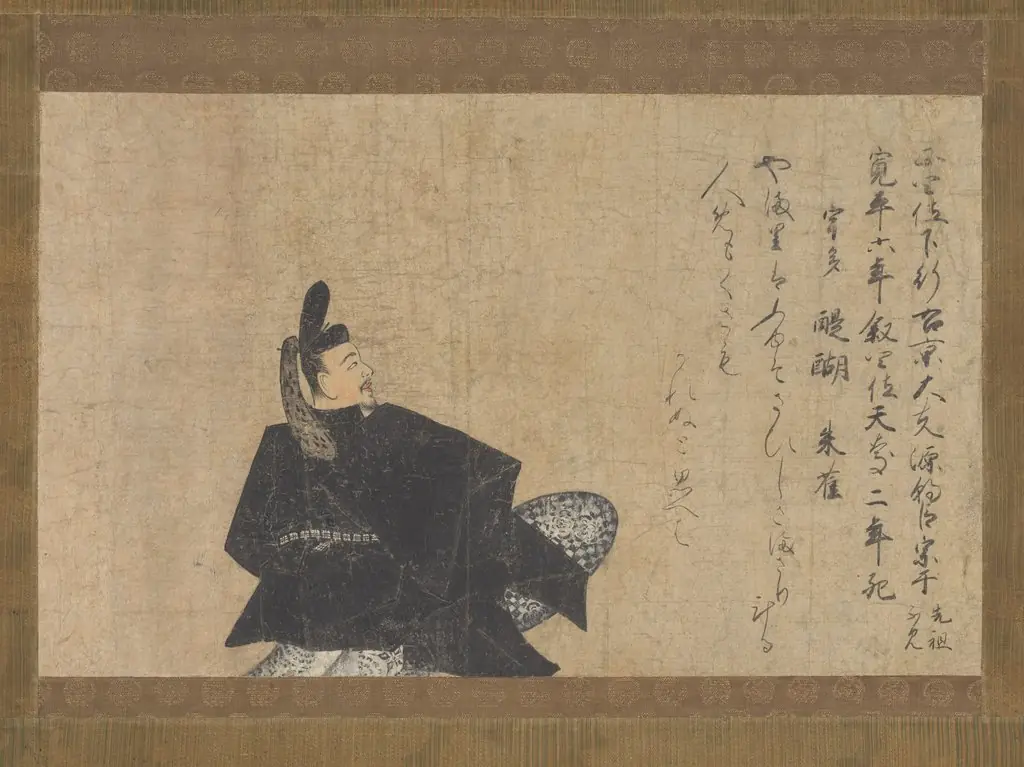 Minamoto no Muneyuki, from the “Fujifusa Version” of Thirty-six Poetic Immortals (Fujifusa-bon Sanjūrokkasen emaki)
 Taira no Kanemori of the Thirty-Six Poetic Immortals
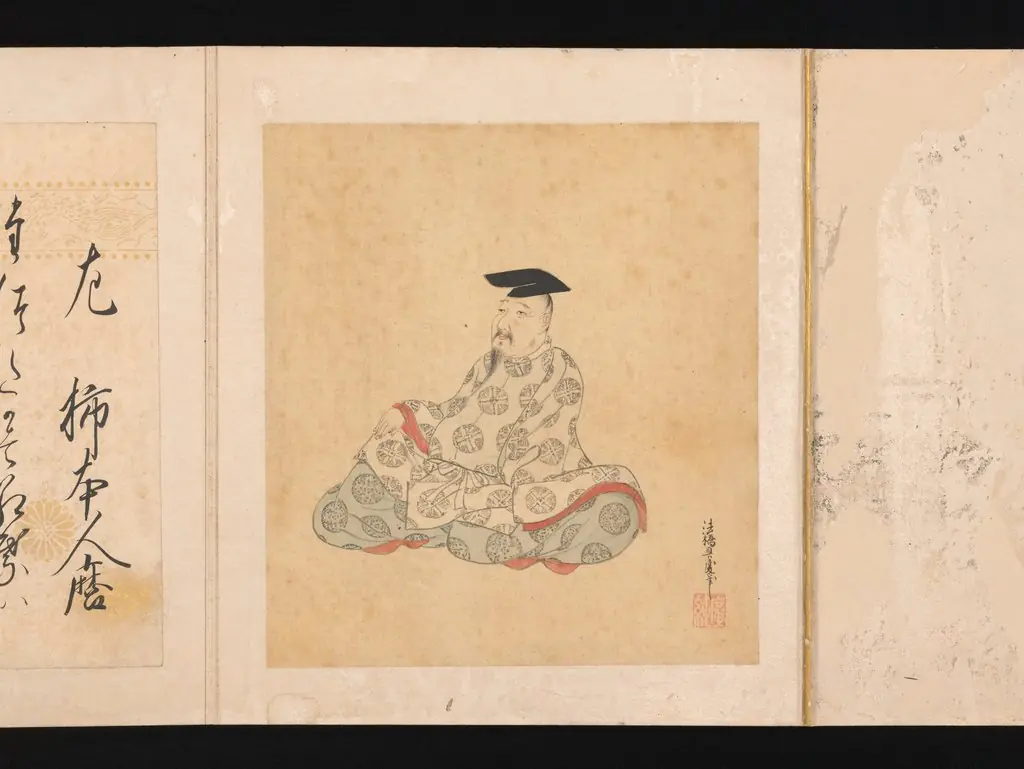 Portraits and Poems of the Thirty-six Poetic Immortals (Sanjūrokkasen)
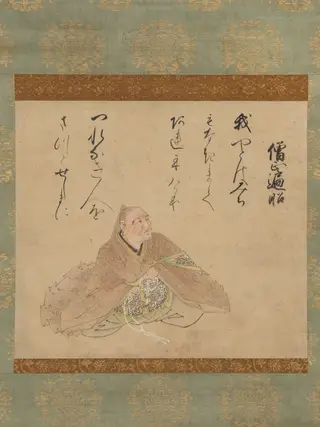 Archbishop Henjō (Sōjō Henjō zu), from the Dōon Version of the Thirty-Six Poetic Immortals
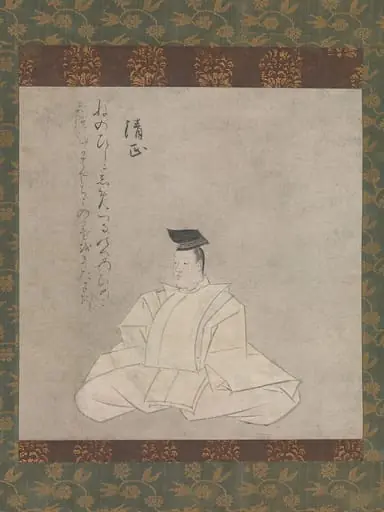 藤原清忠 「業兼本 時代不同歌合絵巻」 断簡|The Poet Fujiwara Kiyotada, from the “Narikane Version” of Thirty-six Poetic Immortals
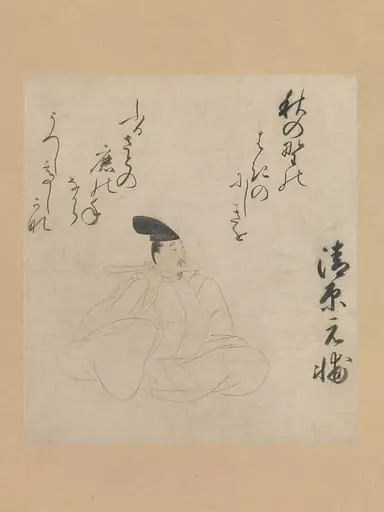 清原元輔 「為重本 時代不同歌合絵巻」 断簡 |The Poet Kiyohara Motosuke, from the “Tameshige Version” of Thirty-six Poetic Immortals (Tameshige-bon Jidai fudō utawase emaki)
 Immortal Poet
 Thirty-Six Poetic Immortals of the Buddhist Clergy
 Portrait of Sen no Rikyū with his Death Poem
 藤原鎌足像|Fujiwara no Kamatari as a Shinto Deity
 Daruma
 拾遺古徳伝絵断簡|Illustrated Biography of Hōnen (Shūikotokūden-e)
 Bandō Mitsugorō II as Shinbei in the Kabuki Play "Sukeroku"
 Shrine Maiden-Shamaness Possessed by a Spirit, from Illustrated Legends of the Kitano Tenjin Shrine (Kitano Tenjin engi emaki)
 Section of an Illustrated Tale of Genji Poetry Contest
 Untitled
 Monk Kenkō Reading by Lamplight