Artwork
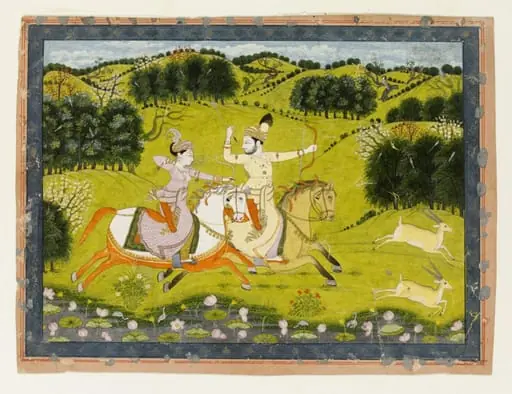
Baz Bahadur and Rupmati
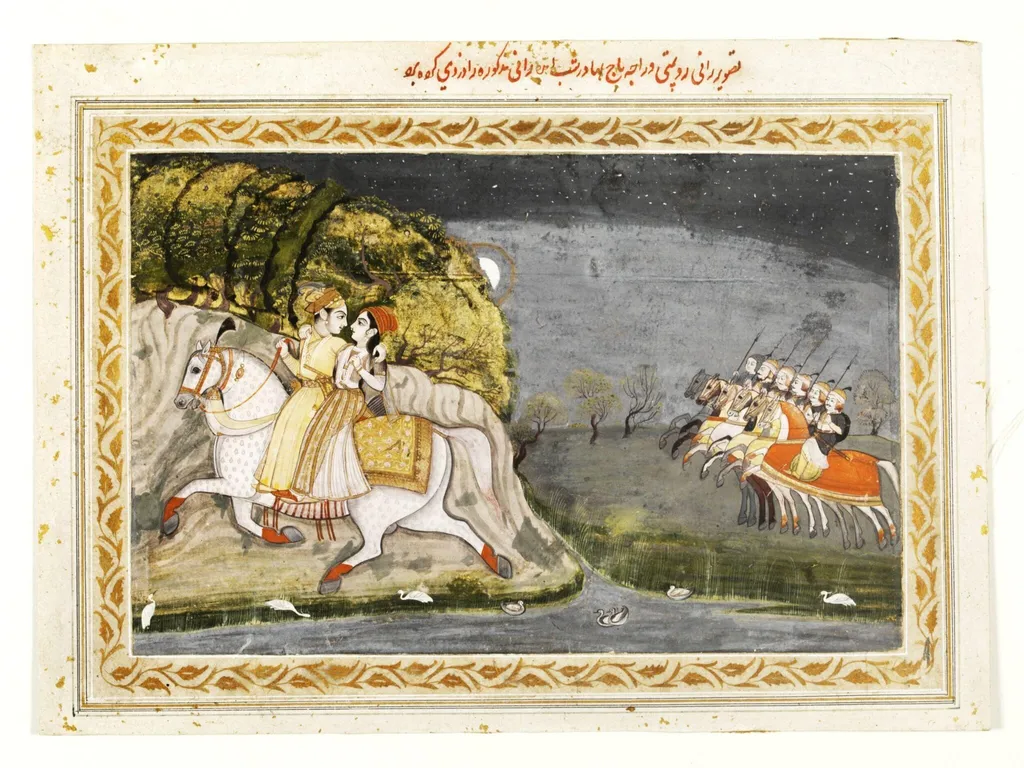
Baz Bahadur and Rupmati is a paint painting by Unknown. It dates from 1750 and is held in the collection of the Victoria and Albert Museum.
About this work
The painting is a beautiful example of Indian art from the 18th century, and it is now held at the Victoria and Albert Museum.
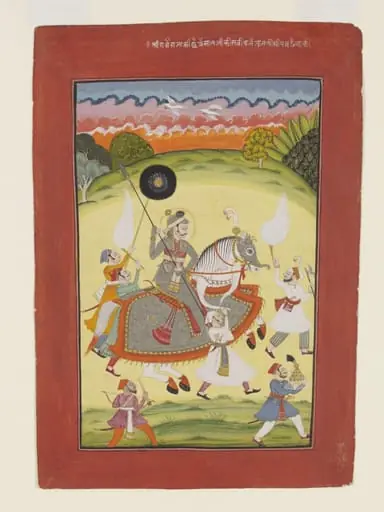
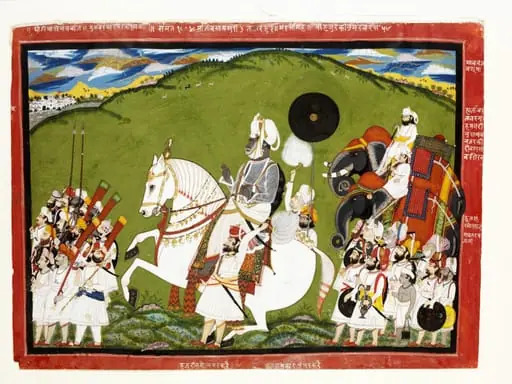
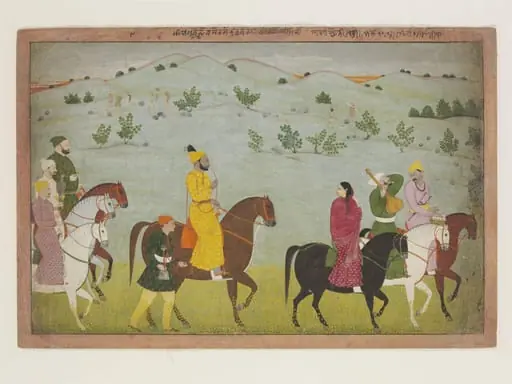
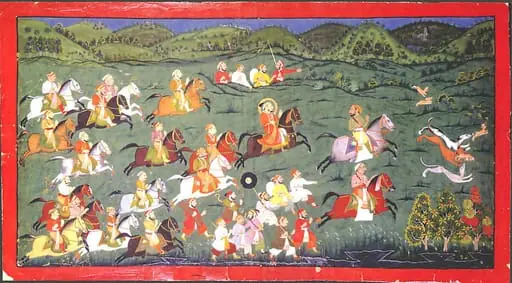
This painting depicts a romantic scene of a man and woman riding a white horse together. The man is dressed in a yellow outfit with a red headband, while the woman wears a white dress with a red head covering. They are surrounded by trees and a body of water, with a group of men on horseback in the background.
The painting features a mix of warm and cool colors, with the yellow and red hues of the couple's clothing standing out against the muted tones of the background. The brushstrokes are delicate and intricate, adding to the overall sense of elegance and refinement.
The painting is a beautiful example of Indian art from the 18th century, and it is now held at the Victoria and Albert Museum.
Overview
This opaque watercolour on paper, dated to around 1750, portrays the legendary rulers Baz Bahadur and Rupmati mounted together on a single white horse. Created in the Deccan region, the work exemplifies the refined aesthetic of late Mughal-influenced painting. Its delicate brushwork and balanced composition reflect the courtly traditions of the time, capturing a moment of intimate companionship against a tranquil natural setting.
Subject & Meaning
The scene illustrates the romantic legend of Baz Bahadur, the last independent ruler of Malwa, and Rupmati, a singer and his consort. Their shared ride symbolizes their deep bond, often interpreted as a union of power and devotion. The imagery draws from poetic traditions that idealize love between rulers, blending historical memory with literary myth to elevate their relationship beyond mere biography.
Technique & Style
Executed with fine, precise brushwork, the painting uses opaque watercolour to achieve luminous tones. The figures’ garments, yellow and red for Baz Bahadur, white and red for Rupmati, contrast vividly against the subdued greens and blues of the landscape. Delicate rendering of foliage and water, along with subtle gradations in skin and fabric, demonstrate the artist’s mastery of detail and atmospheric depth typical of Deccan court painting.
History & Provenance
The painting likely originated in the royal atelier of Malwa or a nearby Deccan court influenced by Mughal styles. It entered the collection of the Victoria and Albert Museum in the 19th century, possibly through British colonial acquisitions. Its survival reflects the enduring appeal of romantic courtly imagery, preserved as both artistic and cultural artifact despite political upheavals in the region.
Context
Produced during a period of political fragmentation in central India, the painting reflects a cultural nostalgia for the idealized past of the Malwa sultanate. While the actual kingdom had fallen to the Mughals decades earlier, artistic depictions of Baz Bahadur and Rupmati persisted as symbols of refined love and sovereignty. Such images were valued in regional courts for their emotional resonance and literary associations.
Legacy
The painting remains a key example of 18th-century Deccan miniature art, illustrating how historical narratives were visually sustained through lyrical imagery. Its preservation in a major museum underscores its role in shaping modern understanding of Indian courtly aesthetics. Though not widely known outside specialist circles, it continues to inform studies of love, power, and representation in pre-colonial Indian art.
Artist & collection