Artwork
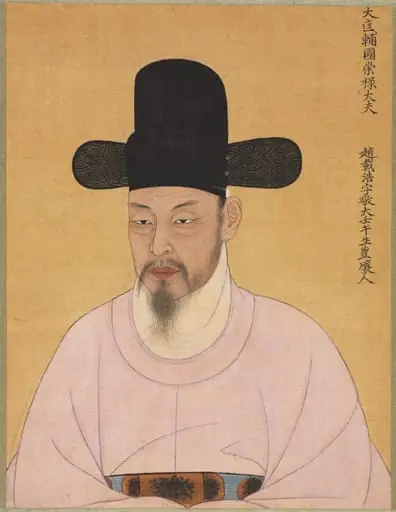
Cho Hyun-myeong from Punhyang Cho Family
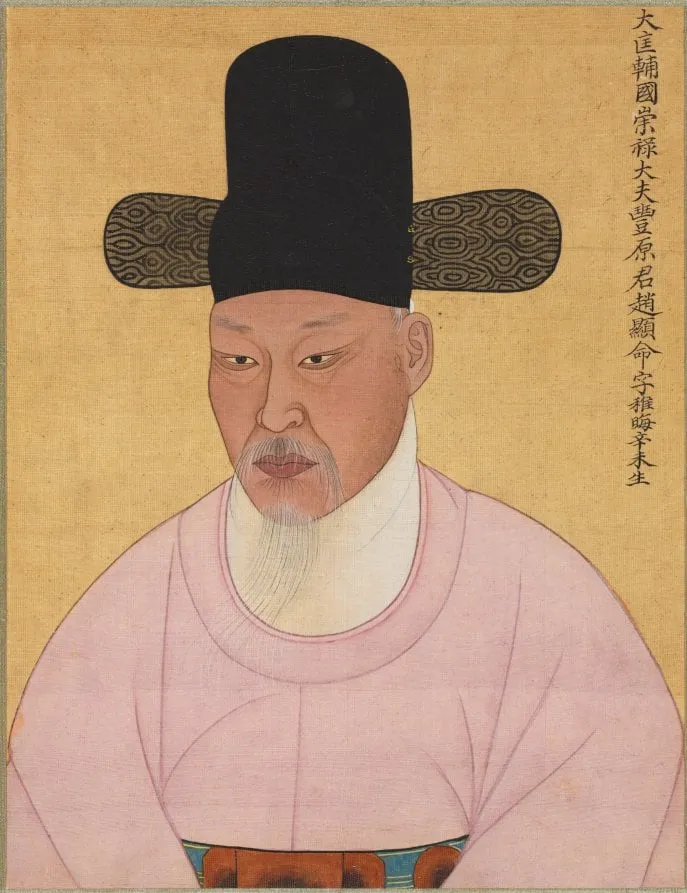
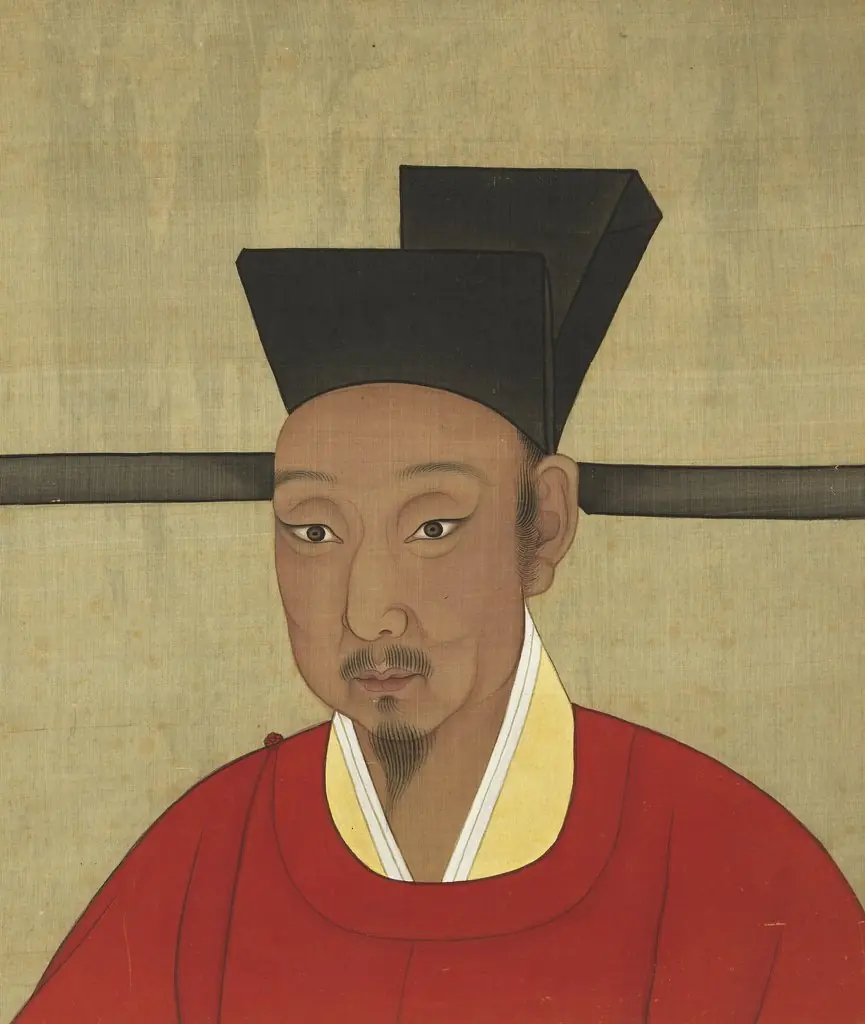
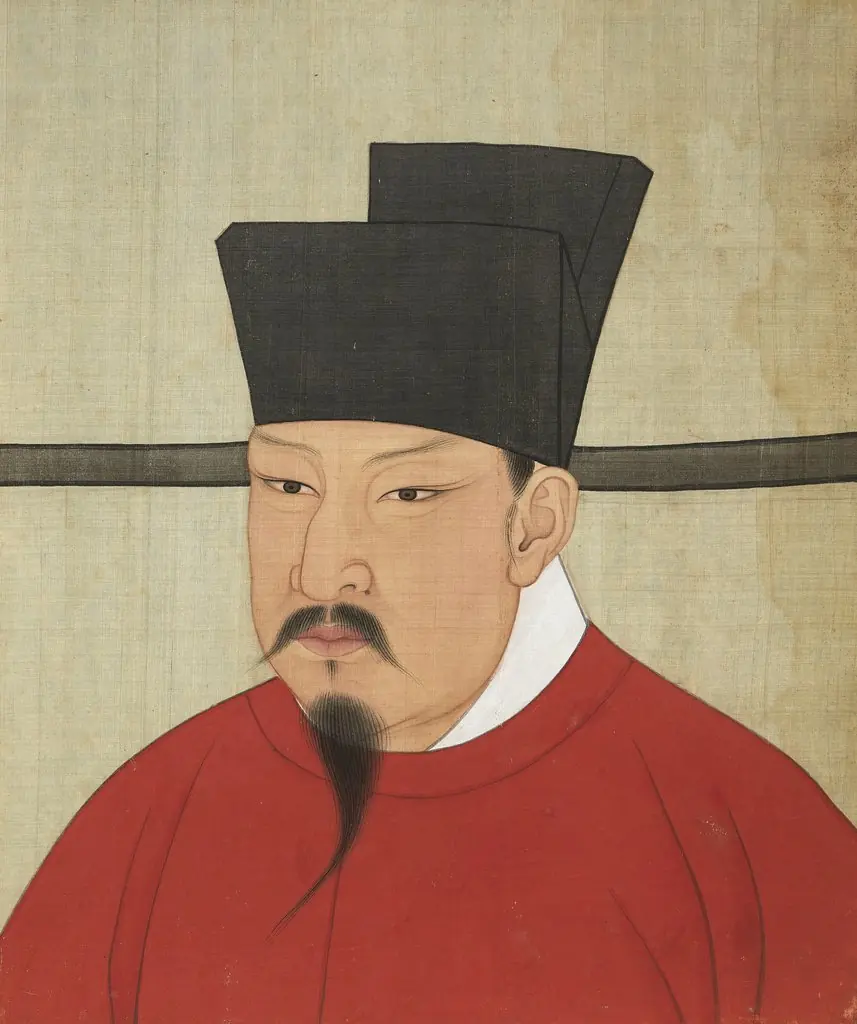
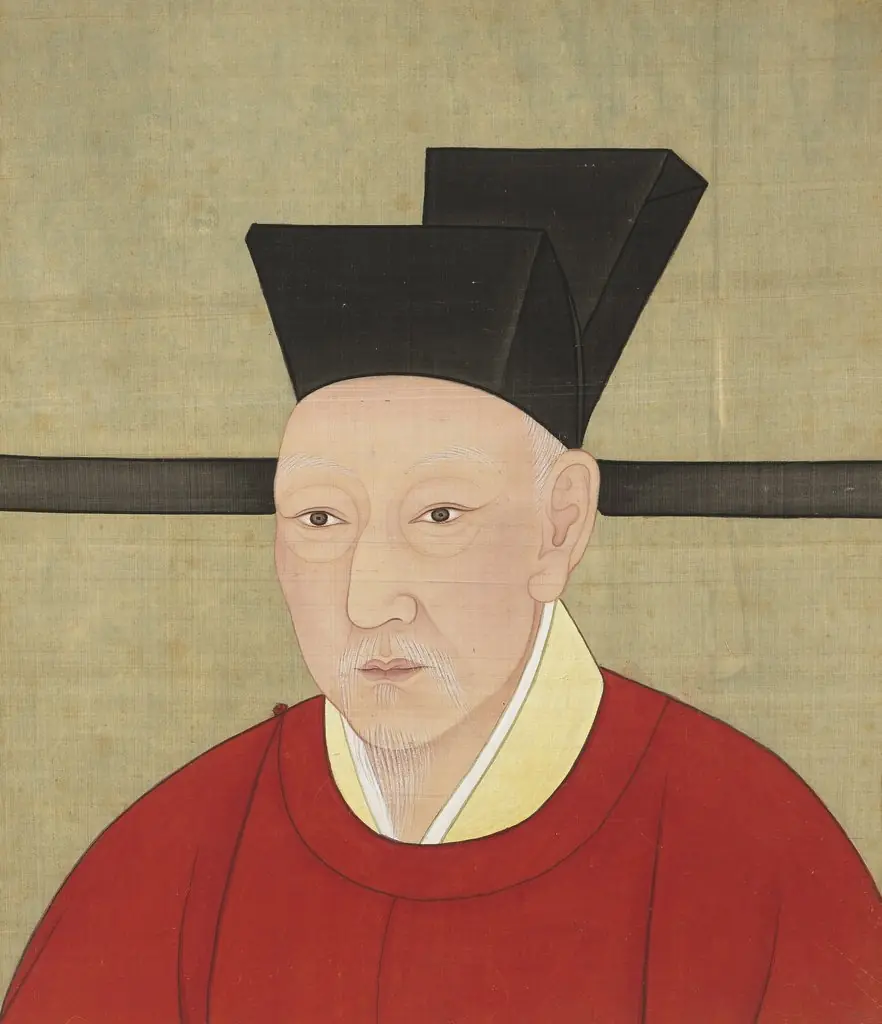
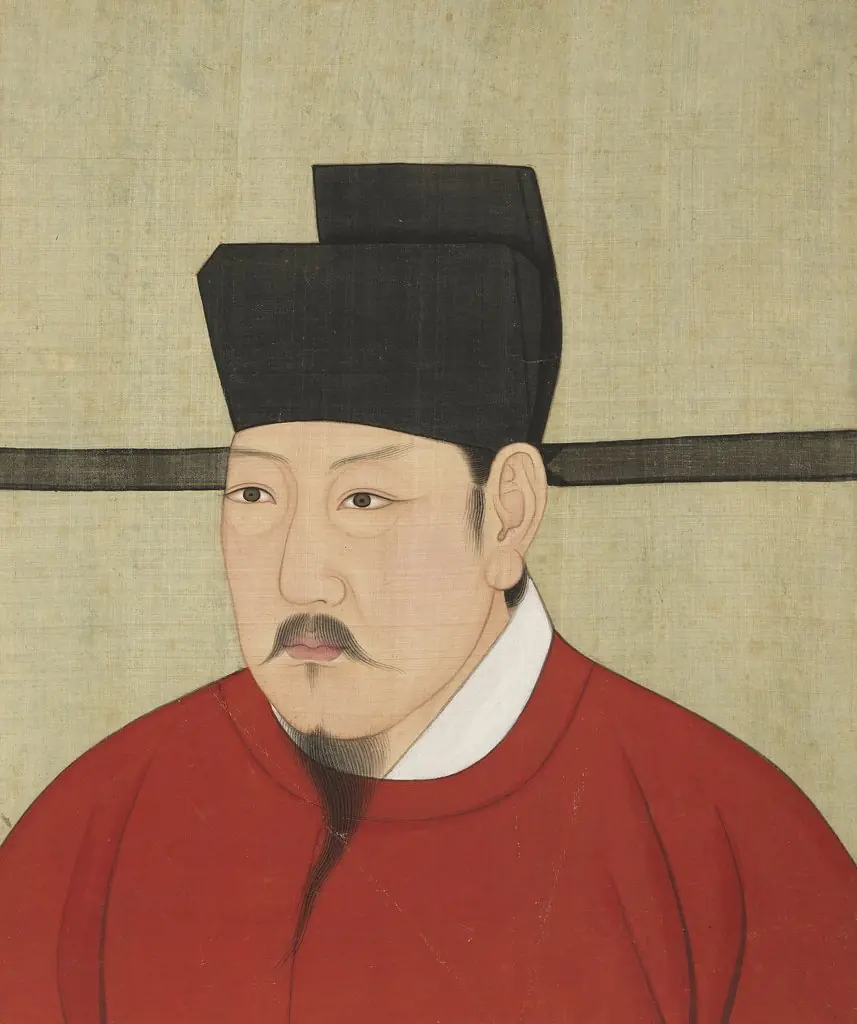
Cho Hyun-myeong from Punhyang Cho Family is an unspecified painting by the Joseon dynasty painting artist Unknown. It dates from 1804 and is held in the collection of the Cleveland Museum of Art. The pair of paintings depict two male members of the Cho lineage from Pungyang, each rendered as a formal portrait.
- Accession no.
- 1999.15.1
- Credit line
- John L. Severance Fund
About this work
Families copied these portraits to use in rituals, so there are other versions still in Korea today.
You see a man in a dark silk robe and black hat, sitting stiffly against a plain background. His face is smooth, almost like a mask, with tiny brushstrokes for his eyebrows and lips.
This is a Korean portrait from the 1800s, made to honor a high-ranking official. Families copied these portraits to use in rituals, so there are other versions still in Korea today.
If you want to see more like this, look up subject: korea, joseon dynasty (1392–1910).
Overview
The pair of paintings depict two male members of the Cho lineage from Pungyang, each rendered as a formal portrait. Both sit in dark silk garments and simple hats, positioned against an unadorned backdrop. Their expressions are rendered with minimal brushwork, giving the faces a smooth, mask‑like quality.
The works were created in the early nineteenth century to commemorate their official status within the Joseon court.
Subject & Meaning
The figures are Cho Jae‑ho (1702–1762) on the left and his cousin Cho Hyun‑myeong on the right, each having served as a yeong‑uijeong, a senior minister in the state council. The portraits functioned as ancestral images, intended for display during family Confucian rites, thereby reinforcing the clan’s scholarly prestige and governmental service.
Technique & Style
Executed in traditional Korean portraiture, the paintings employ a restrained palette of dark silk tones and subtle ink washes. Fine, almost invisible brushstrokes delineate facial features such as eyebrows and lips, while the overall composition remains austere, emphasizing the sitter’s dignified bearing over decorative detail.
History & Provenance
Commissioned by the Cho family as a tribute to their high‑ranking relatives, the portraits were duplicated for ritual use, a common practice among Korean aristocratic houses. Copies continue to reside within the Cho family’s private collection in Korea, attesting to the work’s ongoing ceremonial role.
Context
Created during the late Joseon period, the paintings reflect the era’s emphasis on Neo‑Confucian values, where visual representations of ancestors served both religious and social functions. The formal attire and solemn pose align with the expectations for officials of yeong‑uijeong rank, situating the works within the broader tradition of courtly portraiture.
Artist & collection