Artwork
Couple Playing Chaupar on a Terrace
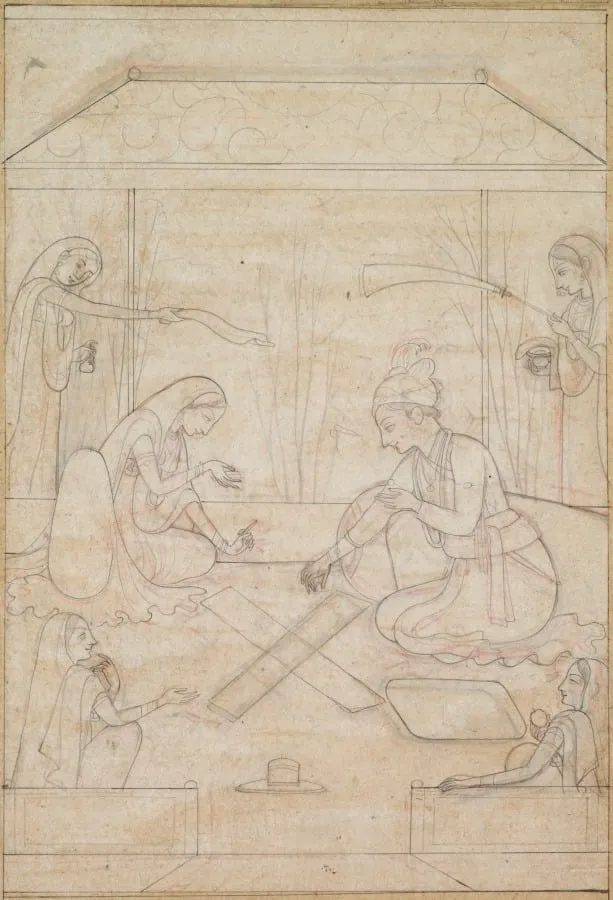
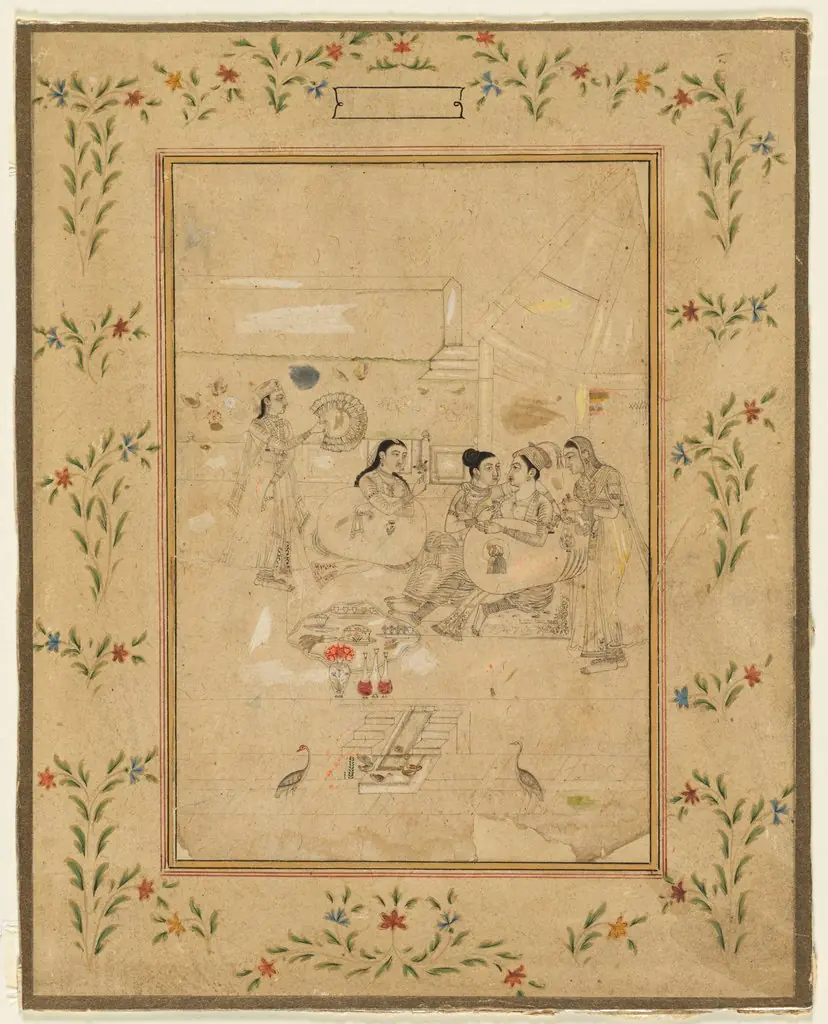
Couple Playing Chaupar on a Terrace is an unspecified painting by the Pahari Painting artist Unknown. It dates from 1795 and is held in the collection of the Cleveland Museum of Art. The canvas captures a domestic scene in which a man and a woman are engaged in a game of Chaupar on an open terrace.
- Accession no.
- 1936.683
- Credit line
- Edward L. Whittemore Fund
About this work
Overview
The canvas captures a domestic scene in which a man and a woman are engaged in a game of Chaupar on an open terrace. The woman, attired in a traditional sari, occupies the left side, while the man, wearing a turban, sits opposite her. Their concentration on the board is framed by a backdrop of trees and a distant building, with a few onlookers positioned at the periphery.
Subject & Meaning
The work portrays a moment of leisurely recreation, emphasizing the social interaction between the two players. The inclusion of additional figures observing the game suggests a communal interest in the pastime, while the relaxed posture and attentive expressions convey a sense of calm enjoyment within a private yet semi‑public space.
Technique & Style
The composition employs a balanced arrangement of figures and landscape, characteristic of Romantic sensibilities that prioritize emotional resonance and atmospheric depth. Soft modeling of the figures against a slightly idealized natural setting, together with a gentle handling of light, underscores the painting’s focus on mood rather than strict realism.
Context
Set within an Indian cultural milieu, the depiction of Chaupar, a traditional board game, reflects everyday leisure activities of the period. The attire of the participants, notably the sari and turban, situates the scene in a specific regional context, offering insight into contemporary dress and social customs.
Legacy
By documenting a commonplace yet intimate pastime, the painting contributes to visual records of domestic life and recreational practices. Its Romantic‑inflected treatment of a simple game scene illustrates how artists of the era extended the movement’s emotional focus beyond grand historical or natural subjects.
Artist & collection









 Untitled
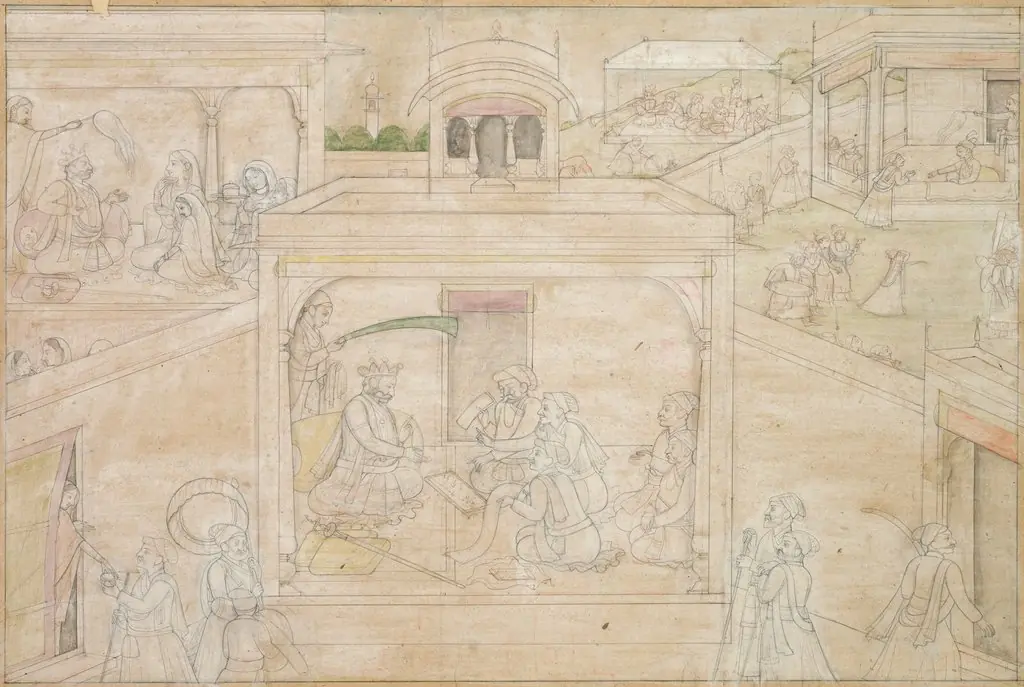 Bhima's Consultation with the Astrologer: Scene from the Nala-Damayanti Drawings
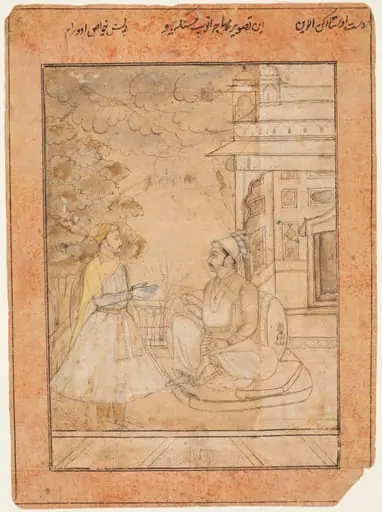 Maharaja Anup Singh of Bikaner (reigned 1669–98) Receives a Courtier
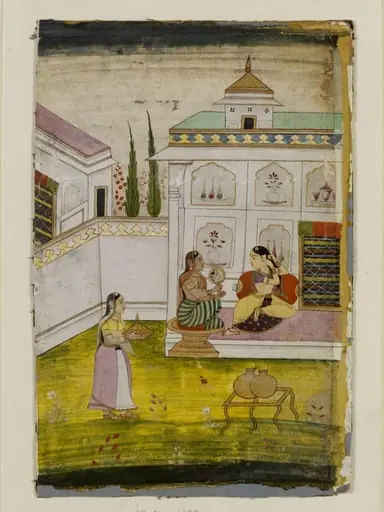 Vilaval Ragini
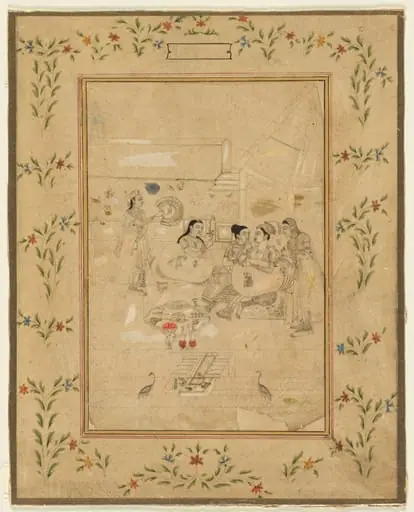 Women playing at cross-dressing
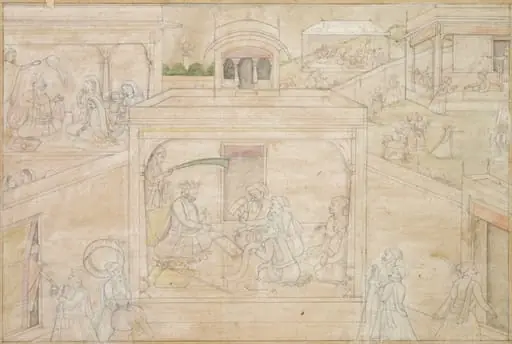 Bhima’s consultation with the astrologer, from a Nala-Damayanti
 Untitled
 Dhanasri Ragini
 Untitled
 Radha's Hair Being Dressed
 Women playing at cross-dressing
- Couple Playing Chaupar on a Terrace