Artwork
Der alte Tobias begräbt die Juden in Ninive
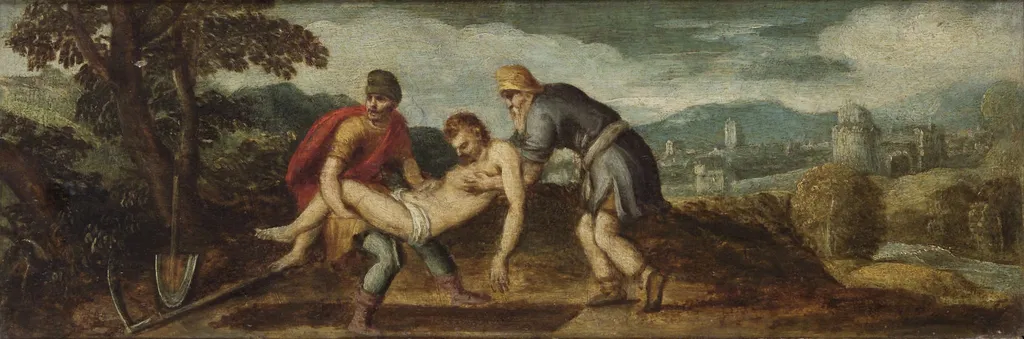
Der alte Tobias begräbt die Juden in Ninive is an unspecified painting by the Early Baroque Italian artist Unknown. It dates from 1550 and is held in the collection of the Kunsthistorisches Museum.
About this work
Subject & Meaning
The title explicitly names the location as Nineveh and the main figure as the old Tobias, highlighting the theme of pious duty and charity toward the dead.
The painting depicts a specific episode from the biblical Book of Tobit, showing the elderly protagonist burying his fellow Jews in Nineveh. This act of interment, performed despite the danger of persecution, serves as the central narrative focus, identifying the work firmly within the genre of religious art. The title explicitly names the location as Nineveh and the main figure as the old Tobias, highlighting the theme of pious duty and charity toward the dead.
As a mid-16th-century work attributed to a Venetian hand, the image represents the visual interpretation of Tobit's unwavering commitment to religious law and moral righteousness in a hostile environment.
Technique & Style
The work is an oil painting on a small wooden panel, measuring 18 × 44 cm. Its elongated horizontal format suggests a narrative or processional composition suited to the subject of Tobit burying the dead. The attribution to the Venetian school (Venezianisch) indicates a handling of color, light, and figural arrangement characteristic of mid-16th-century Venetian painting, though no further details of brushwork, surface condition, or specific stylistic devices are recorded in the available sources.
History & Provenance
The painting Der alte Tobias begräbt die Juden in Ninive is attributed to the Venetian school and dated to 1550.
The work entered the collection of the Kunsthistorisches Museum in Vienna, where it remains housed today. Its dimensions are recorded as 44 cm in height and 18 cm in width.
The painting titled Der alte Tobias begräbt die Juden in Ninive, attributed to a Venetian artist and dated to 1550, is held in the collection of the Kunsthistorisches Museum. The work, which depicts the biblical figure Tobit, is cataloged within the museum's holdings as a religious artwork. Specific inventory or accession numbers are not provided in the available records, nor is there any documented exhibition history for this piece in the current sources. The painting measures 18 cm in height and 44 cm in width.
Context
The painting titled Der alte Tobias begräbt die Juden in Ninive is attributed to a Venetian school hand and dated to 1550. It depicts the biblical scene of Tobit from the Book of Tobit, showing Tobias and the aged blind Tobit burying a stranger in Nineveh. The work is part of the collection at the Kunsthistorisches Museum in Vienna, where it is classified as religious art within the Venetian painting tradition.
Scholarship situates it within the broader context of 16th-century Northern European interpretations of apocryphal narratives, reflecting both devotional practice and stylistic influences from Venetian masters. Its composition and iconography contribute to understandings of religious storytelling in Renaissance visual culture.
Overview
This painting depicts a somber moment from the biblical narrative of Tobit, in which three men transport the lifeless body of a fellow Israelite for burial in Nineveh. The scene unfolds along a rural path, framed by muted landscape elements, a solitary tree, rolling hills, and a distant fortress, while the figures’ strained postures convey the weight of their task. The composition emphasizes quiet devotion over dramatic spectacle, grounding a sacred act in the rhythms of ordinary existence.
Legacy
While not widely reproduced, the painting contributes to the visual tradition of Tobit’s story, a subject explored by artists from Rembrandt to lesser-known contemporaries. Its understated treatment of martyrdom and solidarity offers a counterpoint to more theatrical depictions of biblical suffering. Today, it provides insight into how seventeenth-century artists negotiated devotional themes within increasingly naturalistic frameworks, bridging private piety and public art.
Artist & collection









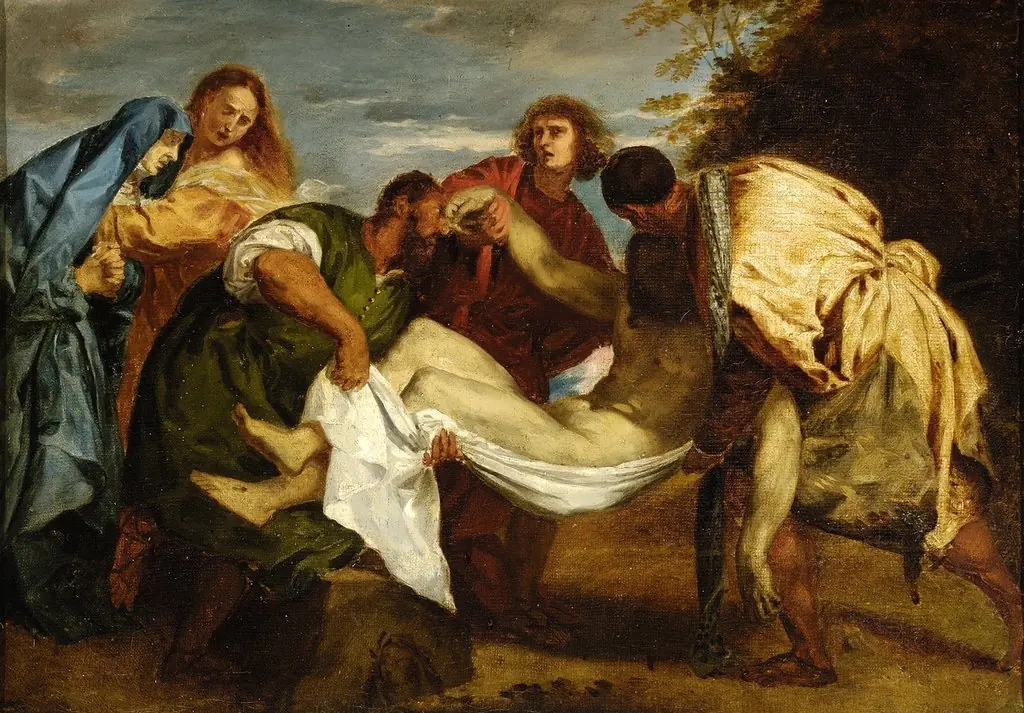
- The Entombment
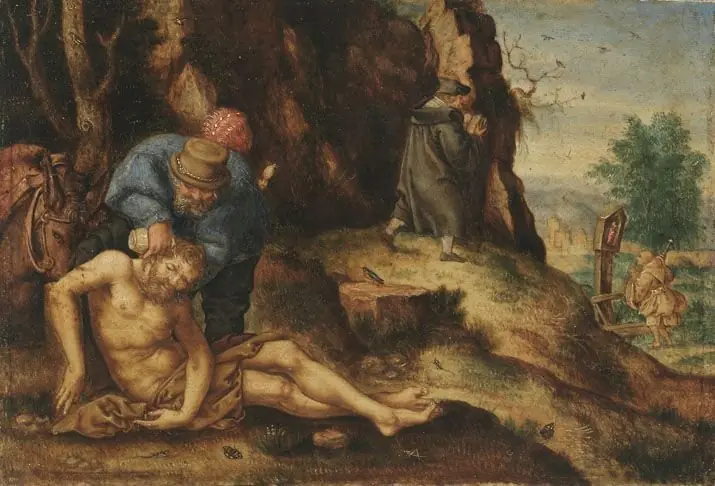 Der barmherzige Samariter pflegt den Verletzten (nach)
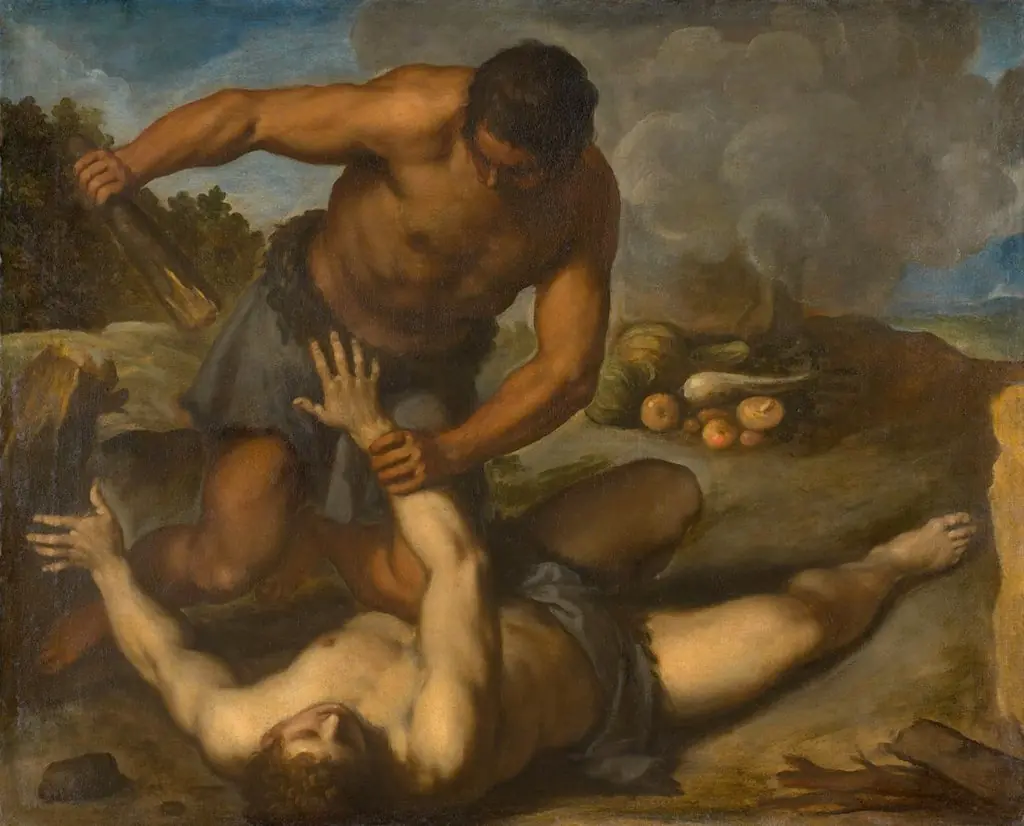 Cain and Abel
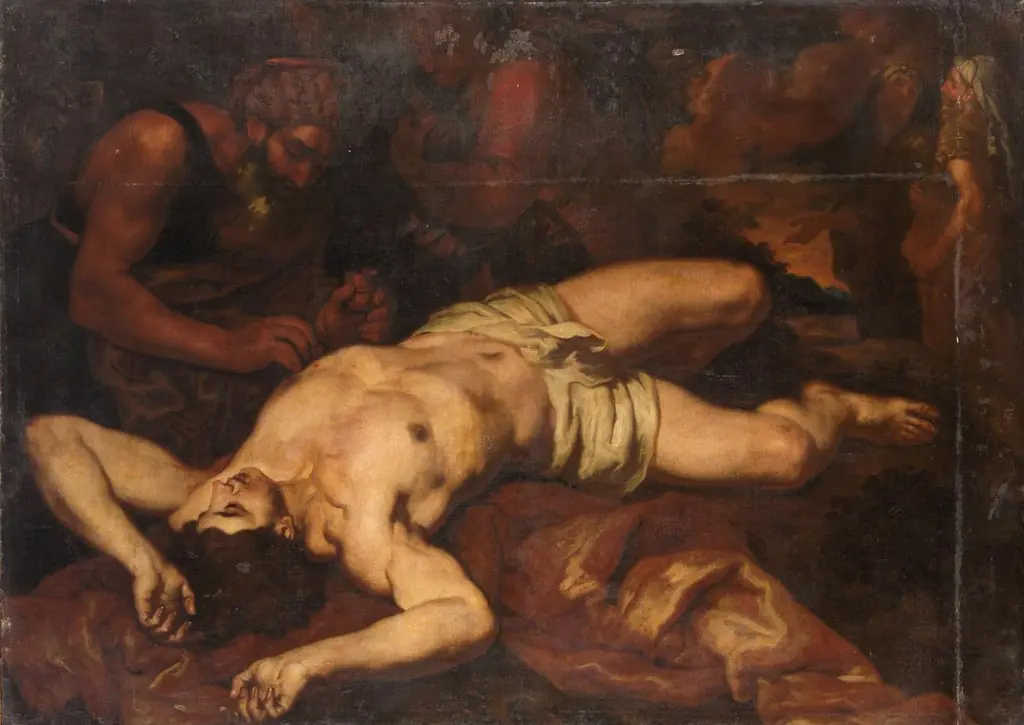 The Good Samaritan
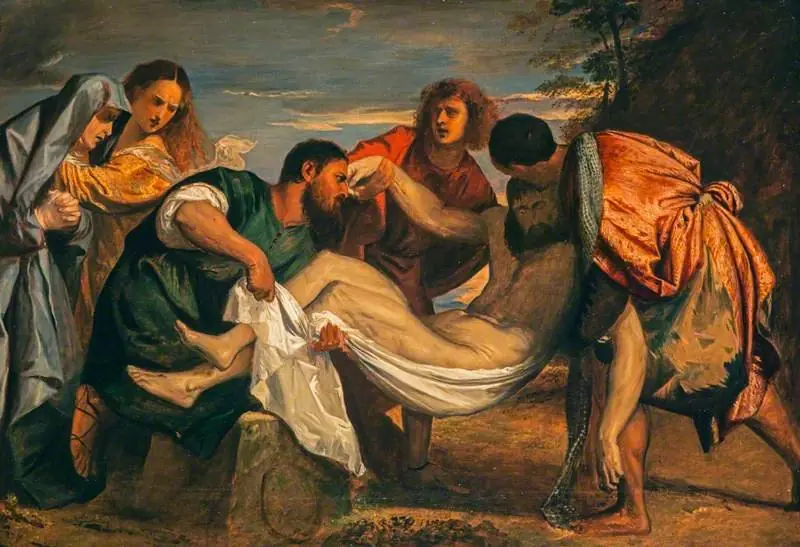 The Entombment of Christ (after Titian)
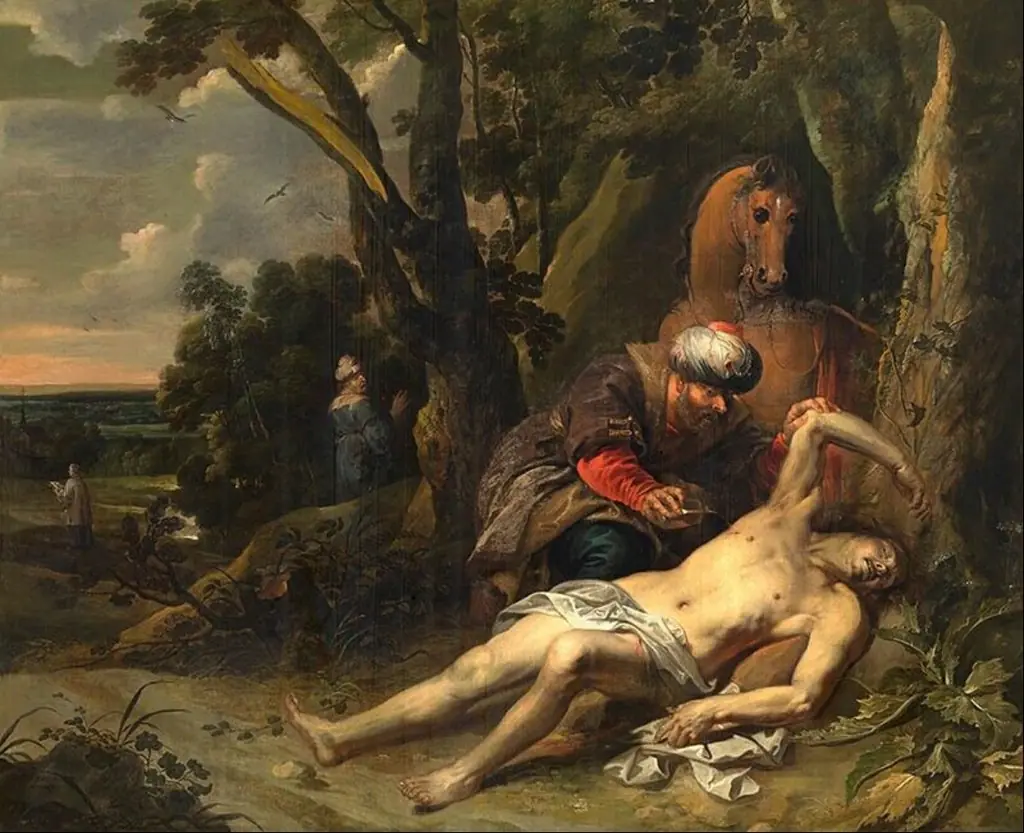 The Good Samaritan
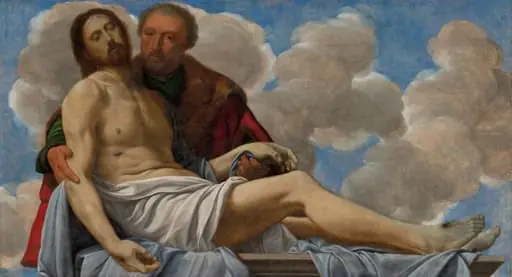 Christ with Joseph of Arimathea
 The Martyrdom of St. Peter
 Überführung der Bundeslade durch David; der Tod des Usa
 The Martyrdom of Saint Sebastian of Rome
 The Good Samaritan
 The Good Samaritan