Artwork
Doge Andrea Gritti
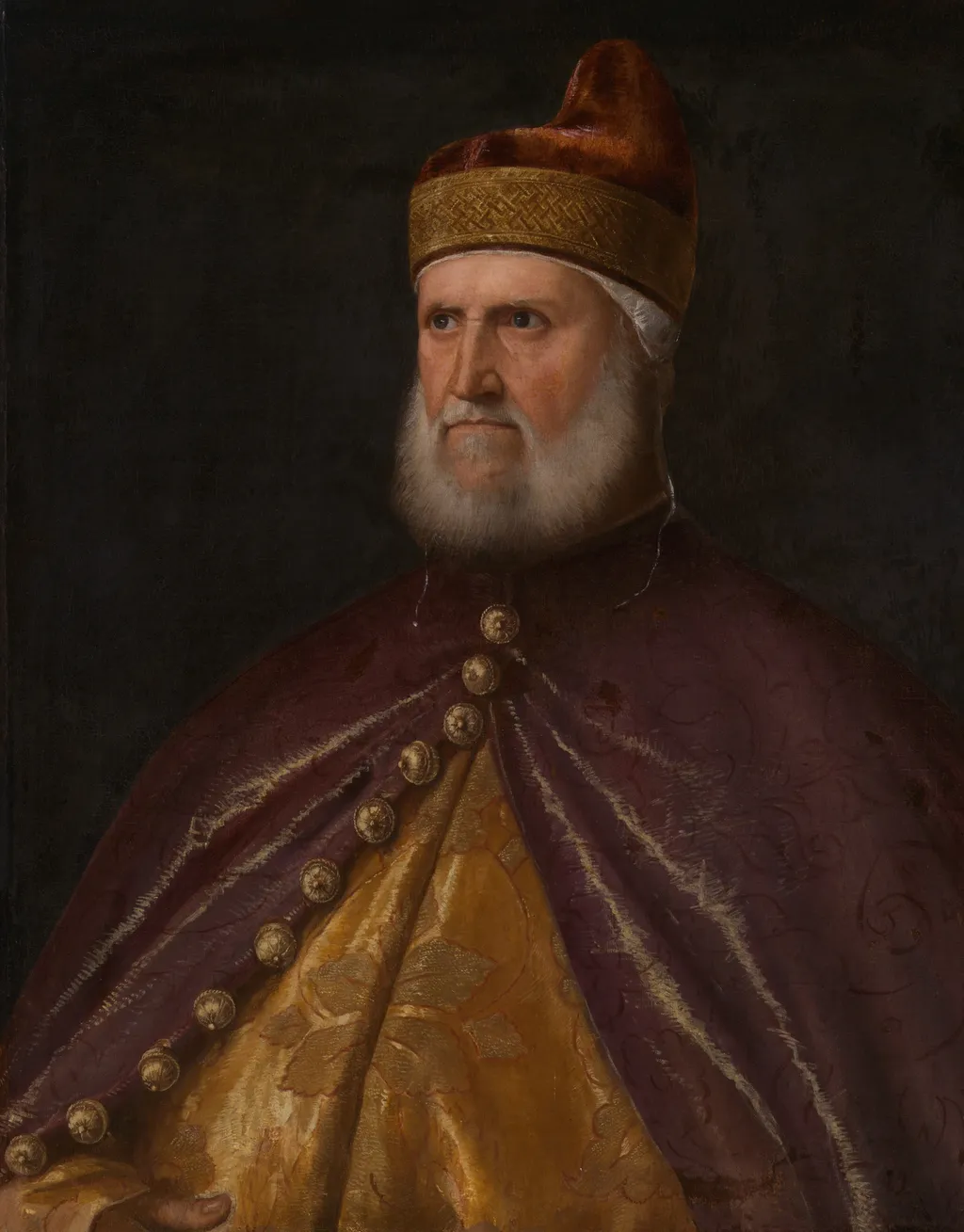
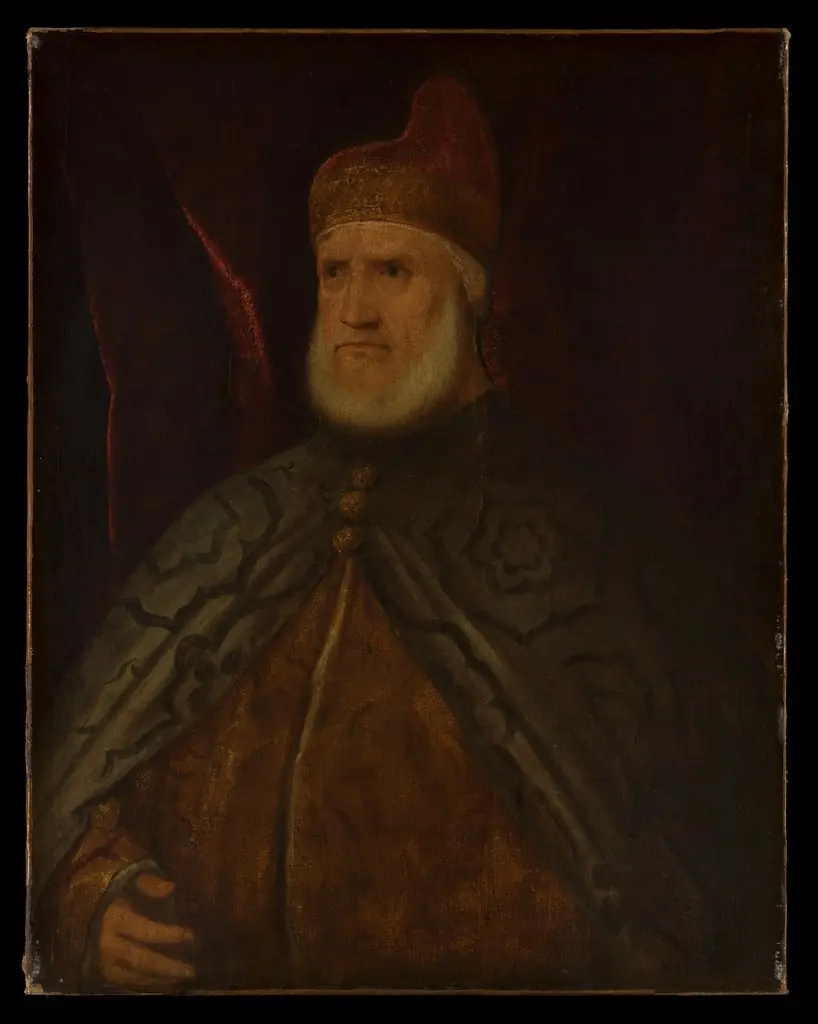
Doge Andrea Gritti is an oil painting by the Mannerist artist Unknown. It dates from 1535 and is held in the collection of the Art Institute of Chicago. The oil painting depicts Andrea Gritti, the 16th‑century Doge of Venice, presented in a solemn pose.
About this work
Subject & Meaning
The work depicts Andrea Gritti, the Doge of Venice, serving as a formal portrait within the Venetian school tradition. Created in 1535 by the workshop of Titian, the painting focuses exclusively on the representation of the Doge as its main subject. As a portrait genre piece, the image functions to document the likeness and status of the Venetian ruler during his tenure.
Technique & Style
Formal analysis reveals a restrained palette and precise modeling typical of Titian's circle, emphasizing the sitter's dignified presence.
The portrait was executed in oil paint on canvas, characteristic of the Venetian school's workshop practice in the mid-16th century. The work measures 85.8 cm by 68 cm and retains its original handling and support structure, though it is presently stored in museum conditions. Formal analysis reveals a restrained palette and precise modeling typical of Titian's circle, emphasizing the sitter's dignified presence.
Context
Doge Andrea Gritti emerged during the zenith of Venetian portraiture, reflecting the political and cultural dominance of the Republic’s ruling elite. The work, attributed to Titian’s workshop circa 1535, exemplifies the stylistic innovations of the Venetian school, particularly its emphasis on coloristic modeling and psychological depth in elite portraiture. Its inclusion in the Art Institute of Chicago’s collection, previously owned by Margaret Mary Hester Whitaker, underscores its scholarly significance as a representative example of High Renaissance portraiture that blends official state imagery with evolving artistic techniques.
Contemporary scholarship interprets the painting as both a diplomatic artifact and a technical study of oil medium manipulation, situating it within broader discussions of patronage and artistic identity in 16th-century Venice.
Legacy
The portrait of Doge Andrea Gritti, painted circa 1535, exemplifies the workshop of Titian's contribution to Venetian portraiture and has been housed in the Art Institute of Chicago's collection since its acquisition through the bequest of Margaret Mary Hester Whitaker. Its presence in museum storage underscores its continued scholarly interest within the Venetian school tradition. The work's enduring reputation is tied to its attribution to Titian's workshop and its role in documenting Renaissance-era leadership, reflecting broader historical narratives of Venetian governance.
The painting's physical dimensions of 85.8 cm by 68 cm remain consistent with contemporary portrait conventions, and its classification as an oil on canvas further informs its material significance.
Overview
The oil painting depicts Andrea Gritti, the 16th‑century Doge of Venice, presented in a solemn pose. He is dressed in a dark, sumptuous robe edged with gold trim and fastened with ornate buttons, while a fur‑lined hat with a wide brim and decorative band crowns his head. The figure stands against an unadorned black backdrop, which isolates his likeness and emphasizes the dignified expression.
History & Provenance
Created in the early 1500s, the portrait was likely commissioned to commemorate Gritti’s tenure as Doge. It entered the collection of the Venetian state shortly after his death and has remained in public holdings, moving through various civic museums before its current location.
Artist & collection