Artwork
Folio from a Qur'an (verso)
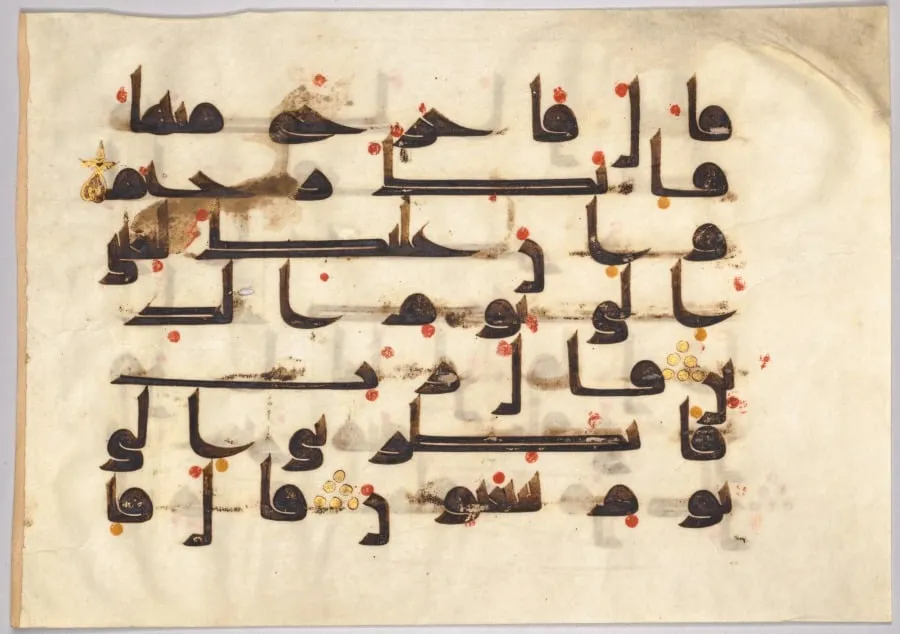
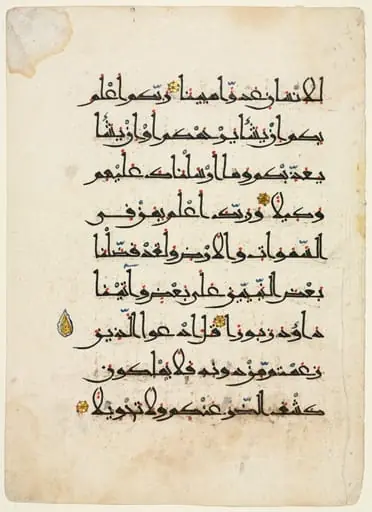
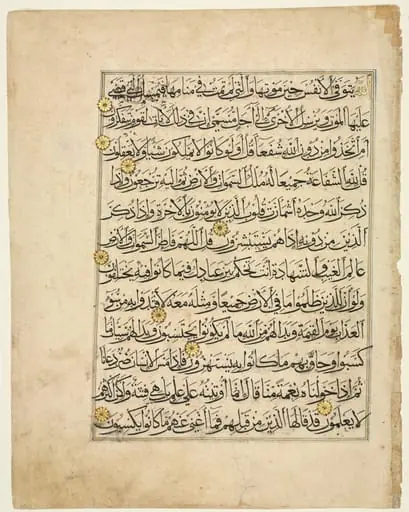
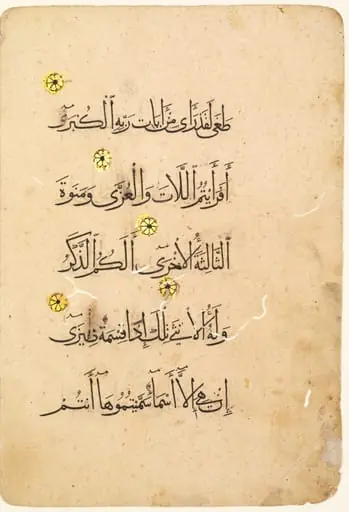
Folio from a Qur'an (verso) is a drawing by Unknown. It dates from 850 and is held in the collection of the Cleveland Museum of Art. This folio is a fragment from an early handwritten Qur'an, produced during the Abbasid period in the 9th century.
- Accession no.
- 1933.493.b
- Credit line
- Edward L. Whittemore Fund
About this work
The wide margins and careful spacing weren’t just for beauty, they showed respect for the text.
You see a single page from an old Qur’an, written in black ink on cream-colored parchment. The letters are bold, angular, and spaced far apart, with red dots marking vowels.
This page uses Kufic script, the oldest style of Arabic calligraphy. It was made in the 800s, when scribes copied the Qur’an by hand, treating each word as sacred. The wide margins and careful spacing weren’t just for beauty, they showed respect for the text.
To see more pages like this, look up the Abbasid period (750–1258).
Overview
This folio is a fragment from an early handwritten Qur'an, produced during the Abbasid period in the 9th century. Written in Kufic script, one of the earliest forms of Arabic calligraphy, it reflects the reverence for the divine text through precise, deliberate lettering. The parchment, cream in color, bears black ink with red vowel markers and gold dotting to indicate verse endings, emphasizing both function and sacredness in its design.
Subject & Meaning
The verso contains verses describing God’s rejection of Lucifer after his refusal to bow to humanity. Lucifer, claiming superiority due to his fiery origin, is cast from paradise for his arrogance. The text underscores a central theological theme: humility before the divine will.
The visual clarity of the script reinforces the gravity of this narrative, ensuring the message remains unambiguous and solemn.
Technique & Style
Kufic script, characterized by its angular, elongated forms and horizontal emphasis, was employed here to maximize legibility and spatial harmony. Vowels are marked with small red dots, while gold triangles signal the end of each verse. The wide spacing between letters and generous margins reflect a disciplined approach to transcription, where every element served to honor the sanctity of the revealed word.
History & Provenance
Created in the 800s, likely in a scriptorium under Abbasid patronage, this folio belongs to a tradition of hand-copied Qur'ans that predated printing. Such manuscripts were produced by trained scribes who treated each letter as a sacred act. The survival of this fragment offers rare insight into early Islamic book culture, where textual accuracy and aesthetic discipline were inseparable.
Context
During the Abbasid era, the Qur'an was copied with increasing uniformity as Islamic scholarship expanded. Calligraphy became a primary medium for conveying divine authority, especially in regions where Arabic was not the native tongue. The use of Kufic script, though later replaced by more cursive styles, remained a symbol of textual authenticity and early Islamic identity.
Legacy
This folio exemplifies the foundational role of calligraphy in Islamic religious expression. Its formal rigor influenced later Qur'anic manuscripts and established standards for textual presentation that endured for centuries. Though the script fell out of common use, its historical significance persists as a benchmark for early Islamic scribal practice and devotional discipline.
Artist & collection









- Folio from a Qur'an
 Folio from a Qur'an (recto)
![Qur'an Manuscript Folio (recto; verso) [Right side of Bifolio], by Unknown](https://artifactworldgallery.com/img/unknown--qur-an-manuscript-folio-recto-verso-right-side-of-bifolio--0873974e1864806f-w320.webp) Qur'an Manuscript Folio (recto; verso) [Right side of Bifolio]
Qur'an Manuscript Folio (recto; verso) [Right side of Bifolio] Leaf from a Qur'an (verso)
![Qur'an Manuscript Folio (recto; verso) [Left side of Bifolio], by Unknown](https://artifactworldgallery.com/img/unknown--qur-an-manuscript-folio-recto-verso-left-side-of-bifolio--7b560e06b8af0905-w320.webp) Qur'an Manuscript Folio (recto; verso) [Left side of Bifolio]
Qur'an Manuscript Folio (recto; verso) [Left side of Bifolio]![Qur'an Manuscript Folio (recto) [Right side of Bifolio], by Unknown](https://artifactworldgallery.com/img/unknown--qur-an-manuscript-folio-recto-right-side-of-bifolio--c1fa5781f1fa5bcd-w320.webp) Qur'an Manuscript Folio (recto) [Right side of Bifolio]
Qur'an Manuscript Folio (recto) [Right side of Bifolio]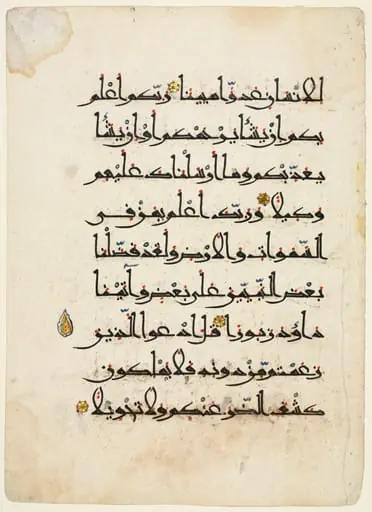 Leaf from a Qur'an (recto)
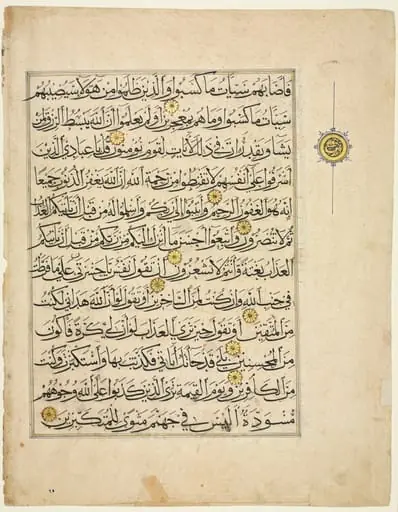 Qur'an Manuscript Folio (verso)
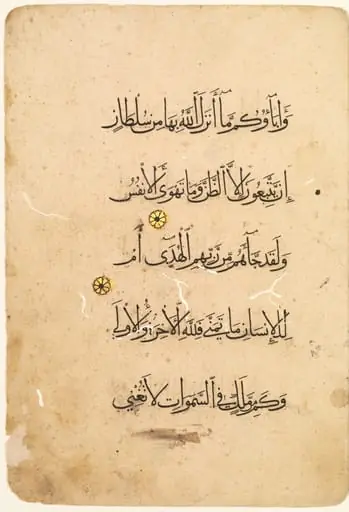 Qur'an Manuscript Folio (recto) (left side of bifolio)
 Leaf from a Qur'an
 Qur'an Manuscript Folio (recto)
 Qur'an Manuscript Folio (verso) (right side of bifolio)