Artwork
Qur'an Manuscript Folio (recto) (left side of bifolio)
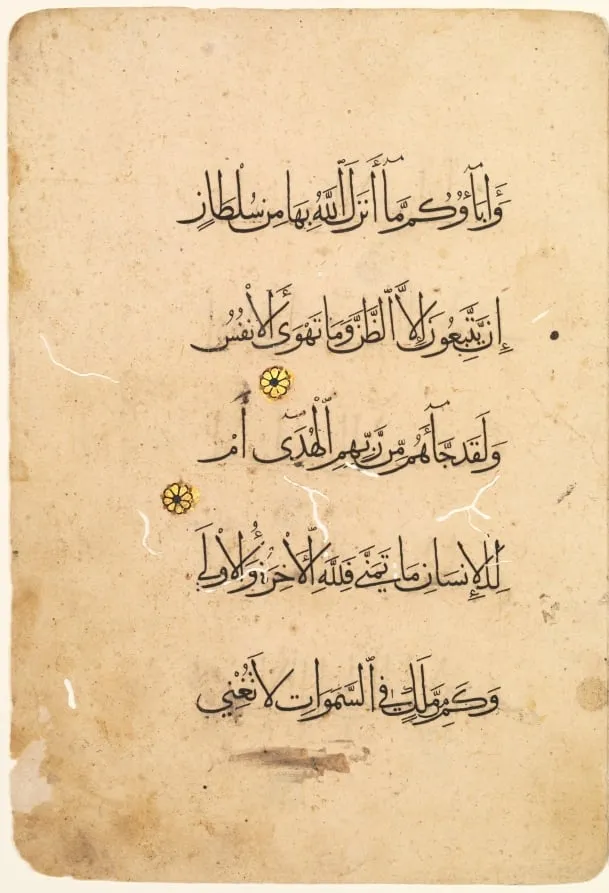
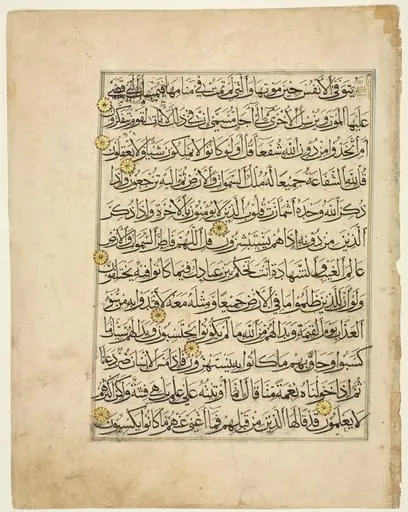
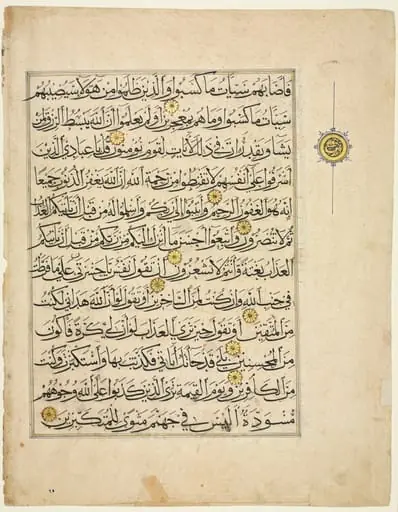
Qur'an Manuscript Folio (recto) (left side of bifolio) is a drawing by Unknown. It dates from 1400 and is held in the collection of the Cleveland Museum of Art. This folio, the recto of a Qur'an bifolio, presents a line of Arabic calligraphy rendered in black ink on cream‑colored paper.
- Accession no.
- 1933.473.2.a
- Credit line
- Edward L. Whittemore Fund
About this work
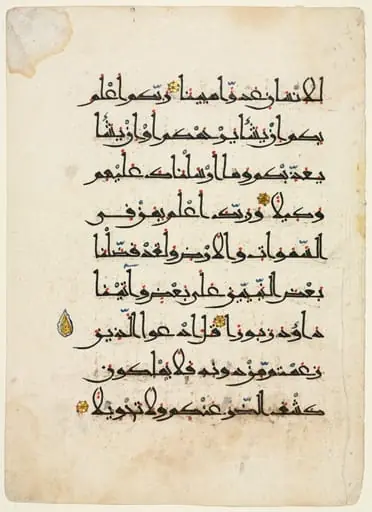
You see black ink on cream paper: looping Arabic letters in neat rows, with a red dot above or below each one.
You see black ink on cream paper: looping Arabic letters in neat rows, with a red dot above or below each one.
This page is from a Qur’an made in Egypt when the Mamluk sultans ruled. The red dots aren’t decoration, they show how to pronounce the words, like tiny pronunciation guides. Because Islam discourages images of people in holy books, the beauty is in the script itself.
Look up “Mamluk sultanate (1250–1517)” to see more objects from the same time.
Overview
This folio, the recto of a Qur'an bifolio, presents a line of Arabic calligraphy rendered in black ink on cream‑colored paper. The script is organized in orderly rows, each letter accompanied by a small red diacritic that indicates pronunciation. The piece originates from an Egyptian Qur'an produced under the Mamluk sultanate (1250–1517).
Subject & Meaning
The text transcribed on the page belongs to Surah An‑Najm, the 53rd chapter of the Qur'an, known as the Chapter of the Star. As a sacred passage, it exemplifies the central role of the Qur'an in Islamic religious life and the reverence afforded to its written form.
Technique & Style
The calligrapher employed a refined, flowing hand typical of Mamluk manuscript production, using a reed pen to create uniform black strokes. The red marks, known as harakat, function as phonetic guides, clarifying vowel sounds without altering the visual harmony of the script. The overall aesthetic relies on the elegance of the lettering rather than illustrative imagery, in accordance with Islamic aniconic conventions.
Context
During the Mamluk period, Egypt became a major centre for Qur'anic manuscript production, combining patronage from sultans with the expertise of professional scribes. This folio reflects the era’s emphasis on textual beauty and the development of standardized orthographic practices that facilitated accurate recitation across the Islamic world.
![Qur'an Manuscript Folio (recto; verso) [Left side of Bifolio]](https://artifactworldgallery.com/img/unknown--qur-an-manuscript-folio-recto-verso-left-side-of-bifolio--7b560e06b8af0905-w320.webp)
Artist & collection









![Qur'an Manuscript Folio (recto; verso) [Right side of Bifolio], by Unknown](https://artifactworldgallery.com/img/unknown--qur-an-manuscript-folio-recto-verso-right-side-of-bifolio--0873974e1864806f-w320.webp) Qur'an Manuscript Folio (recto; verso) [Right side of Bifolio]
Qur'an Manuscript Folio (recto; verso) [Right side of Bifolio]![Qur'an Manuscript Folio (recto) [Right side of Bifolio], by Unknown](https://artifactworldgallery.com/img/unknown--qur-an-manuscript-folio-recto-right-side-of-bifolio--c1fa5781f1fa5bcd-w320.webp) Qur'an Manuscript Folio (recto) [Right side of Bifolio]
Qur'an Manuscript Folio (recto) [Right side of Bifolio]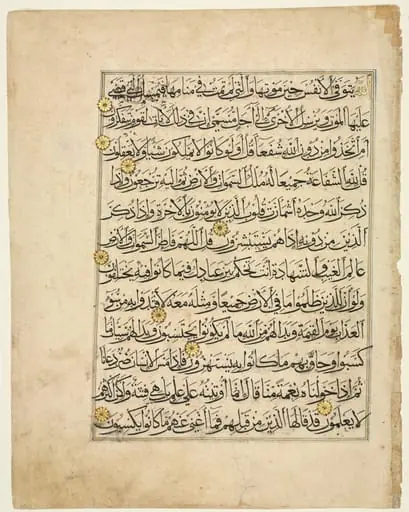 Qur'an Manuscript Folio (recto)
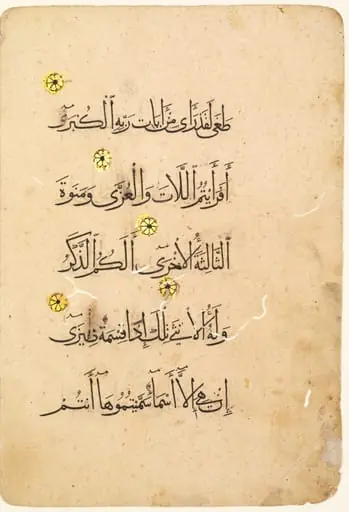 Qur'an Manuscript Folio (verso) (right side of bifolio)
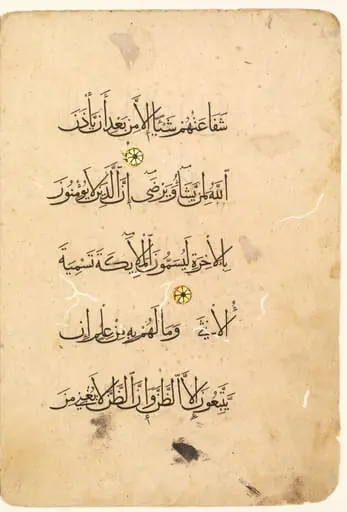 Qur'an Manuscript Folio. Left Folio of a Bifolio (verso)
 Qur'an Manuscript Folio
 Folio from a Qur'an
 Folio from a Qur'an (verso)
 Leaf from a Qur'an (recto)
 Qur'an Manuscript Folio (verso)
 Leaf from a Qur'an