Artwork
Folio from a Qur'an
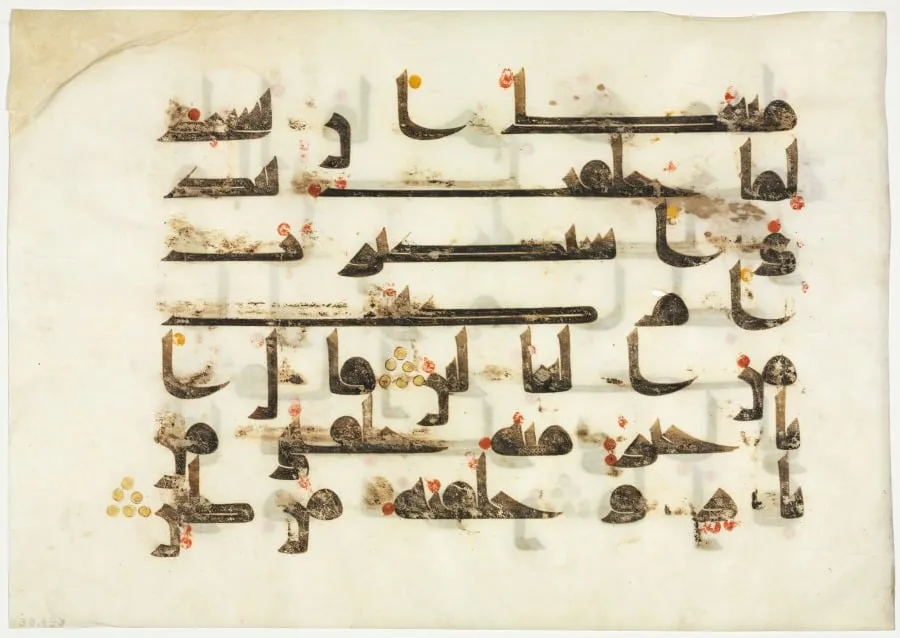
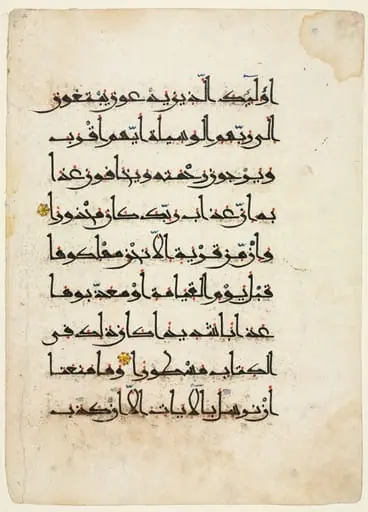
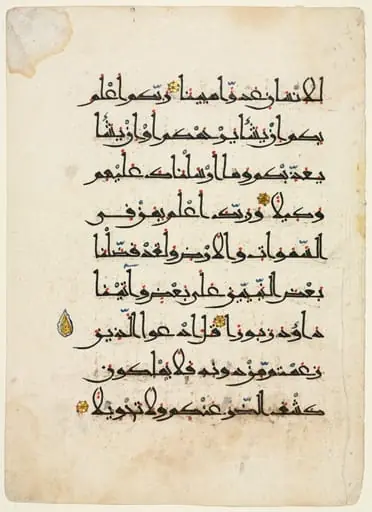
Folio from a Qur'an is a drawing by Unknown. It dates from 850 and is held in the collection of the Cleveland Museum of Art. This folio presents a single leaf from an early Qur’anic manuscript, rendered in black ink on a plain cream parchment.
- Accession no.
- 1933.493
- Credit line
- Edward L. Whittemore Fund
About this work
You see a single page from an old Qur’an, filled with bold, angular Arabic letters in black ink.
You see a single page from an old Qur’an, filled with bold, angular Arabic letters in black ink. The script sits on a plain cream background, with no pictures, just words.
This page uses Kufic script, the oldest style of Arabic calligraphy. It was made when copying the Qur’an by hand was a sacred act, not just writing. The letters are stretched wide, giving the page a strong, balanced look.
To see more pages like this, look up the Abbasid period (750–1258).
Overview
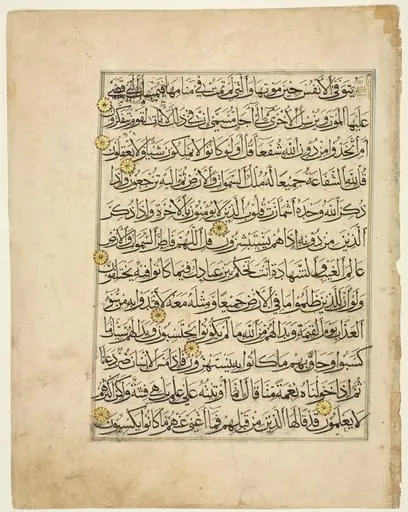
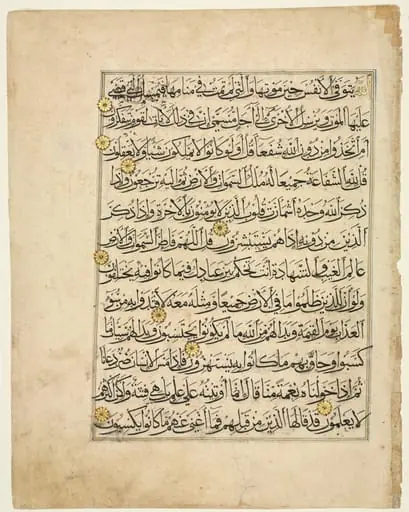
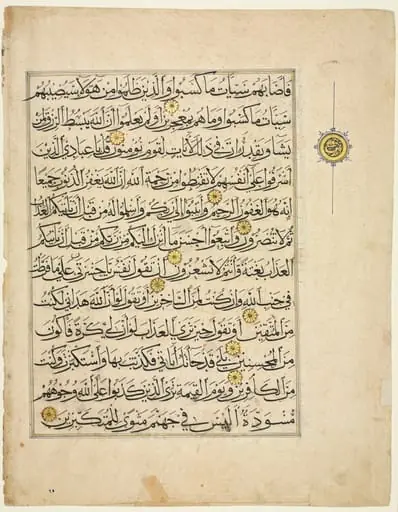
This folio presents a single leaf from an early Qur’anic manuscript, rendered in black ink on a plain cream parchment. The page is occupied entirely by bold, angular Arabic letters arranged in a wide, balanced composition, without any decorative illustration.
Technique & Style
The text is written in the earliest form of Arabic calligraphy known as Kufic script, characterized by its elongated horizontal strokes and geometric precision. Vowel markings appear as small red dots, while gold triangles denote the termination of each verse, reflecting the manuscript’s devotional purpose.
Subject & Meaning
The recto contains verses describing a dialogue in which Lucifer claims superiority over humanity, citing his fiery origin compared with humans’ clay composition. The verso records God’s response, condemning Lucifer’s pride and expelling him from heaven.
Context
Kufic script was prevalent in the first centuries of Islam and is typical of Qur’anic copies produced during the Abbasid era (750–1258). At that time, the act of hand‑copying the Qur’an was regarded as a sacred ritual, and the script’s austere aesthetic underscored the reverence afforded to the divine text.
History & Provenance
The folio originates from one of the oldest surviving Qur’anic codices, though the precise origin and subsequent ownership are not documented. Its material and stylistic features align it with early Islamic manuscript production in the Middle East.
Artist & collection









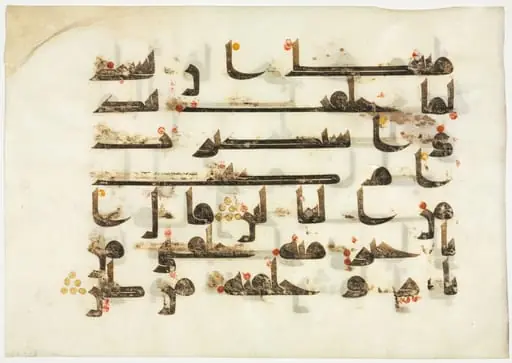
- Folio from a Qur'an (recto)
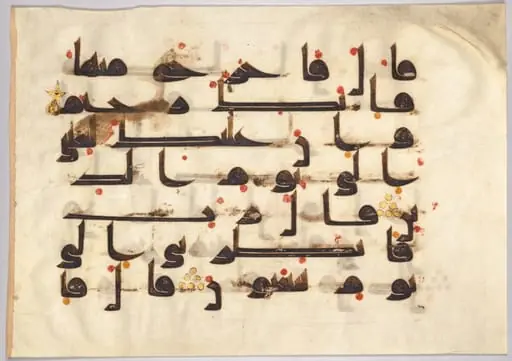 Folio from a Qur'an (verso)
![Qur'an Manuscript Folio (recto; verso) [Left side of Bifolio], by Unknown](https://artifactworldgallery.com/img/unknown--qur-an-manuscript-folio-recto-verso-left-side-of-bifolio--7b560e06b8af0905-w320.webp) Qur'an Manuscript Folio (recto; verso) [Left side of Bifolio]
Qur'an Manuscript Folio (recto; verso) [Left side of Bifolio]![Qur'an Manuscript Folio (recto; verso) [Right side of Bifolio], by Unknown](https://artifactworldgallery.com/img/unknown--qur-an-manuscript-folio-recto-verso-right-side-of-bifolio--0873974e1864806f-w320.webp) Qur'an Manuscript Folio (recto; verso) [Right side of Bifolio]
Qur'an Manuscript Folio (recto; verso) [Right side of Bifolio]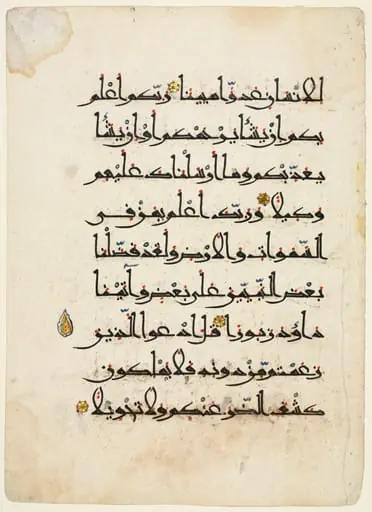 Leaf from a Qur'an (recto)
 Leaf from a Qur'an (verso)
 Qur'an Manuscript Folio
 Qur'an Manuscript Folio (recto)
 Qur'an Manuscript Folio (verso)
 Leaf from a Qur'an
![Qur'an Manuscript Folio (recto) [Right side of Bifolio], by Unknown](https://artifactworldgallery.com/img/unknown--qur-an-manuscript-folio-recto-right-side-of-bifolio--c1fa5781f1fa5bcd-w320.webp) Qur'an Manuscript Folio (recto) [Right side of Bifolio]
Qur'an Manuscript Folio (recto) [Right side of Bifolio]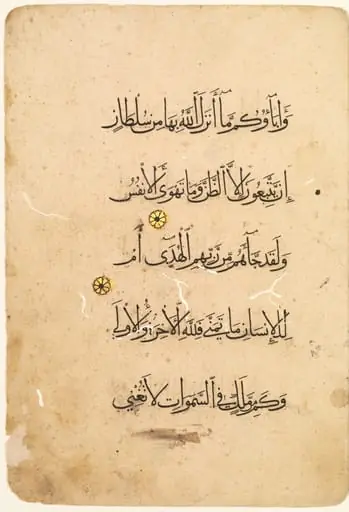 Qur'an Manuscript Folio (recto) (left side of bifolio)