Artwork
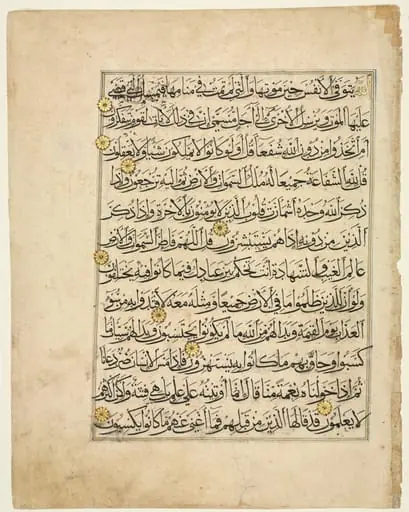
Qur'an Manuscript Folio (recto) [Right side of Bifolio]
![Qur'an Manuscript Folio (recto) [Right side of Bifolio], by Unknown, 1400](https://artifactworldgallery.com/img/unknown--qur-an-manuscript-folio-recto-right-side-of-bifolio--c1fa5781f1fa5bcd-w1024.webp)
Qur'an Manuscript Folio (recto) [Right side of Bifolio] is a drawing by Unknown. It dates from 1400 and is held in the collection of the Cleveland Museum of Art. This artwork is a folio from a Qur'an manuscript, featuring a page with Arabic calligraphy on cream-colored paper.
- Accession no.
- 1933.473.1.a
- Credit line
- Edward L. Whittemore Fund
About this work
The calligrapher used a script called muhaqqaq, each stroke is so precise it looks like it was carved, not written.
You see black ink on cream paper, shaped like a tall rectangle with rounded corners. The Arabic letters curve and stack in neat rows, framed by thin gold lines and red dots.
This page comes from a Qur’an made in Egypt when the Mamluk sultans ruled. The calligrapher used a script called muhaqqaq, each stroke is so precise it looks like it was carved, not written. The red dots aren’t decoration; they tell the reader how to pronounce the words.
Look up mamluk sultanate (1250–1517) to see more of their art.
Overview
This artwork is a folio from a Qur'an manuscript, featuring a page with Arabic calligraphy on cream-colored paper. The page is rectangular with rounded corners and contains text written in black ink.
Subject & Meaning
The text is from the 53rd chapter (Surah An-Najm) of the Qur'an, a significant Islamic scripture. The use of calligraphy reflects the importance of the Arabic language in Islamic tradition and the reverence for the Qur'an as a revealed text.
Technique & Style
The calligrapher employed the muhaqqaq script, characterized by precise strokes that give the impression of being carved. The text is organized into neat rows, framed by thin gold lines, with red dots indicating pronunciation.
History & Provenance
This folio originates from a Qur'an manuscript produced in Egypt during the Mamluk Sultanate period.
![Qur'an Manuscript Folio (recto; verso) [Right side of Bifolio]](https://artifactworldgallery.com/img/unknown--qur-an-manuscript-folio-recto-verso-right-side-of-bifolio--0873974e1864806f-w320.webp)
Artist & collection









- Qur'an Manuscript Folio (recto; verso) [Right side of Bifolio]
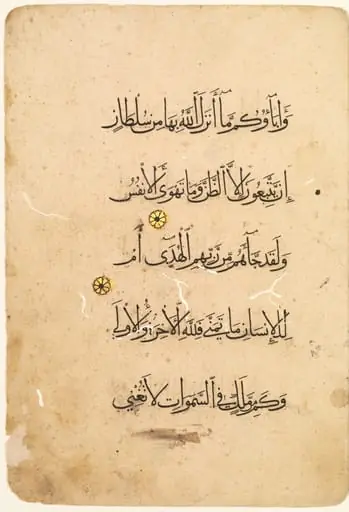 Qur'an Manuscript Folio (recto) (left side of bifolio)
 Qur'an Manuscript Folio (recto)
![Qur'an Manuscript Folio (recto; verso) [Left side of Bifolio], by Unknown](https://artifactworldgallery.com/img/unknown--qur-an-manuscript-folio-recto-verso-left-side-of-bifolio--7b560e06b8af0905-w320.webp) Qur'an Manuscript Folio (recto; verso) [Left side of Bifolio]
Qur'an Manuscript Folio (recto; verso) [Left side of Bifolio]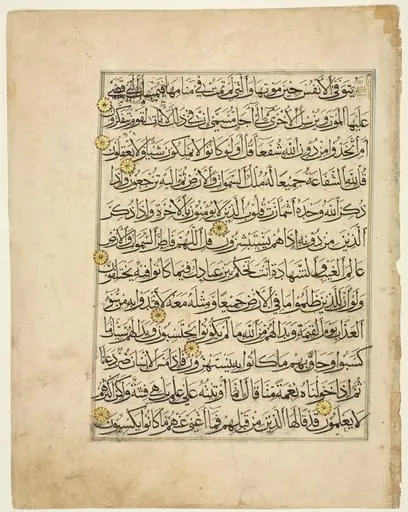 Qur'an Manuscript Folio
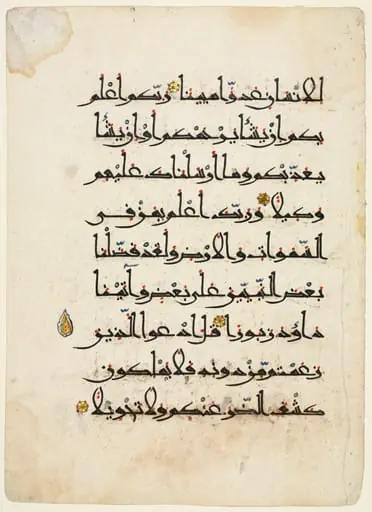 Leaf from a Qur'an (recto)
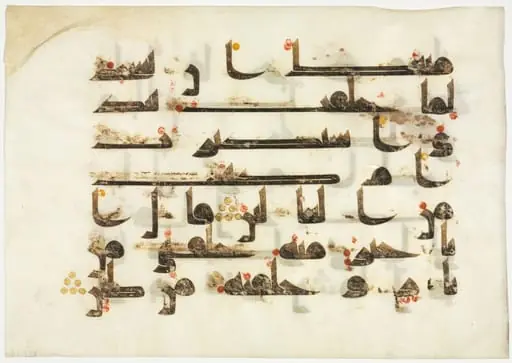 Folio from a Qur'an
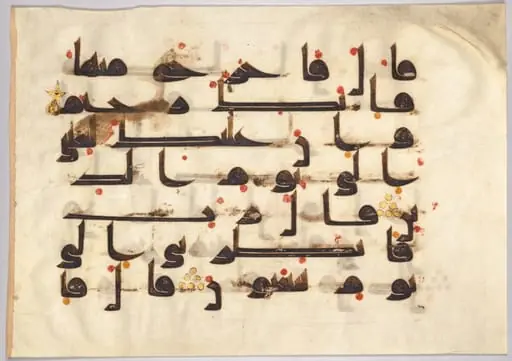 Folio from a Qur'an (verso)
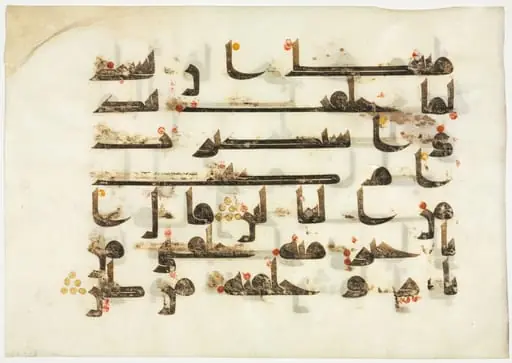 Folio from a Qur'an (recto)
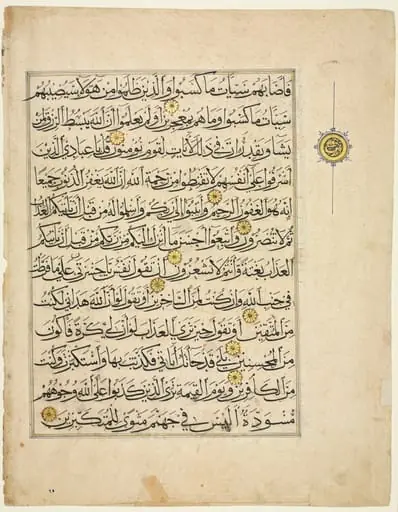 Qur'an Manuscript Folio (verso)