Artwork
Hanuman
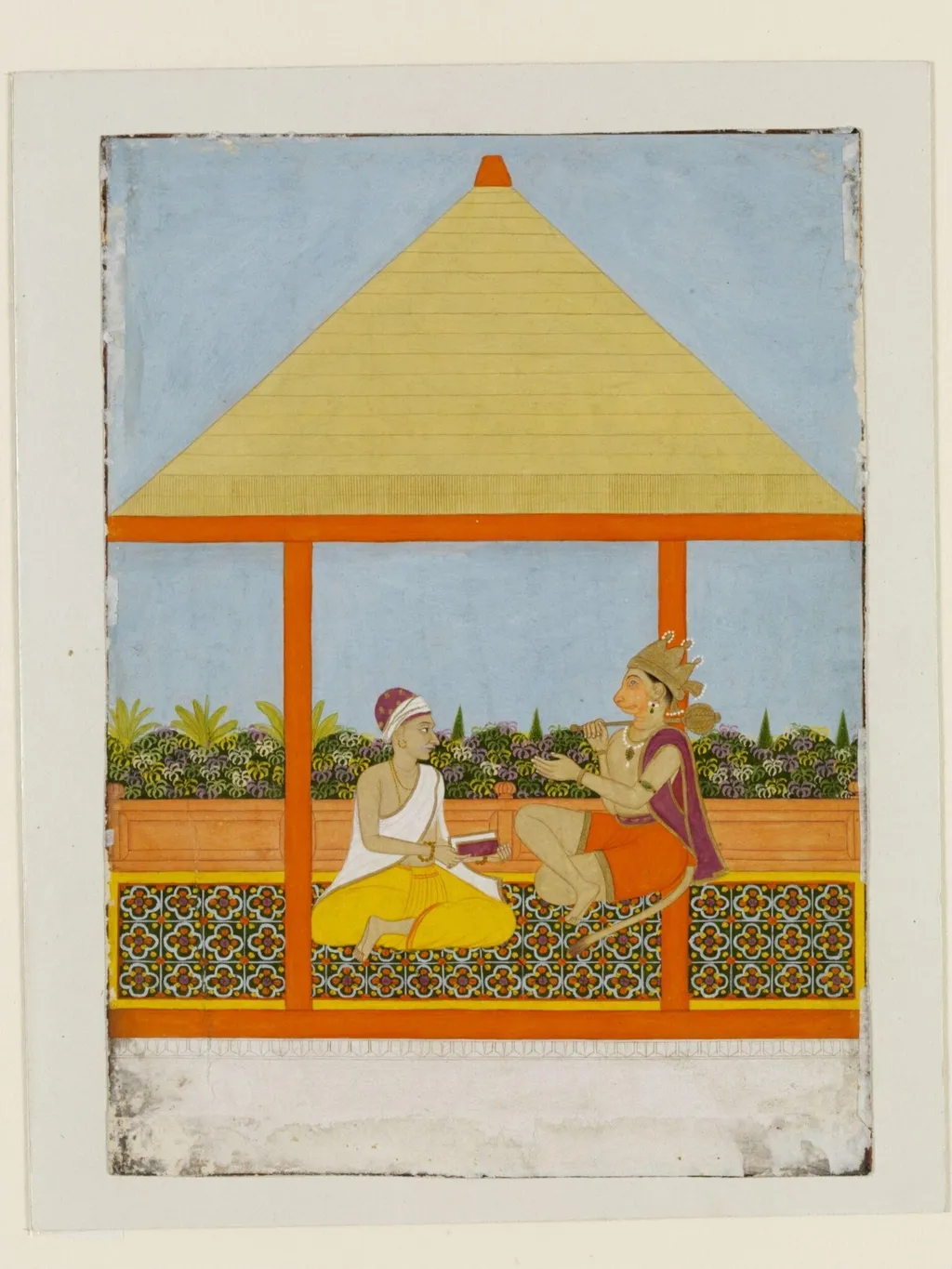
Hanuman is a paint painting by the Mughal Painting artist Unknown. It dates from 1760 and is held in the collection of the Victoria and Albert Museum. This painting, dated 1760, is executed in opaque watercolour and gold on paper, reflecting a tradition of Indian miniature painting.
About this work
Overview
This painting, dated 1760, is executed in opaque watercolour and gold on paper, reflecting a tradition of Indian miniature painting.
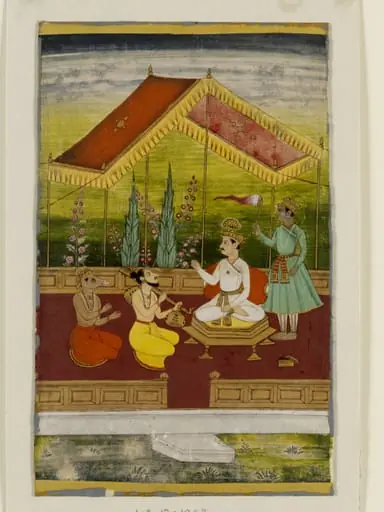
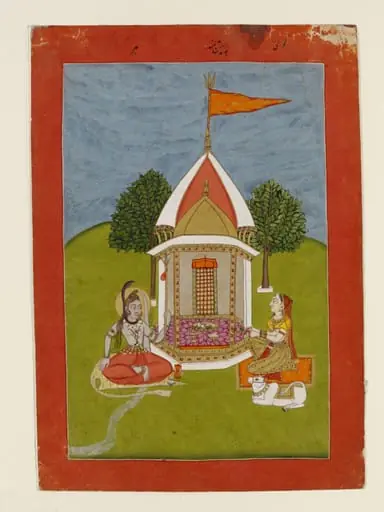
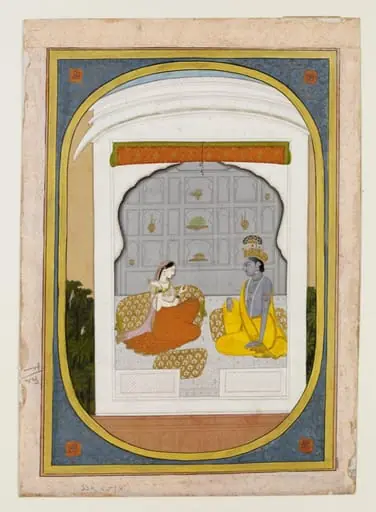
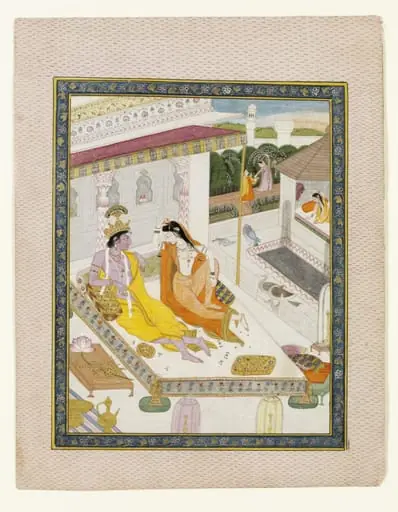
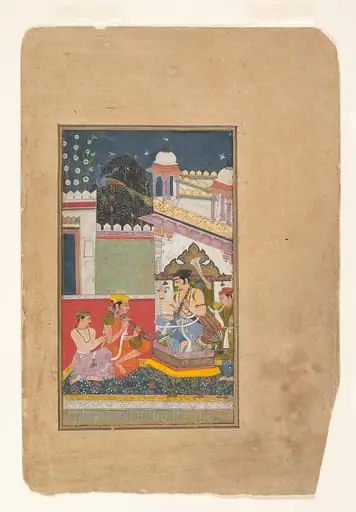
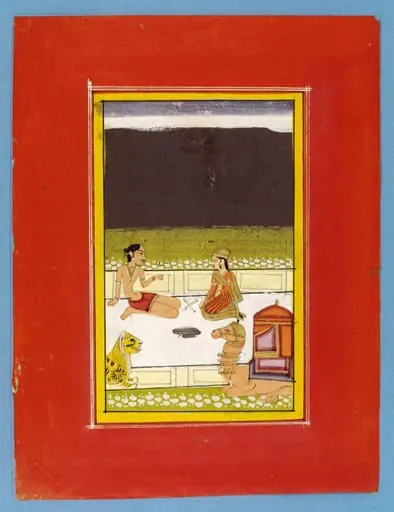
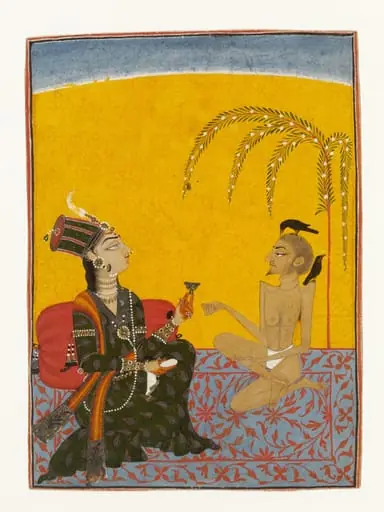
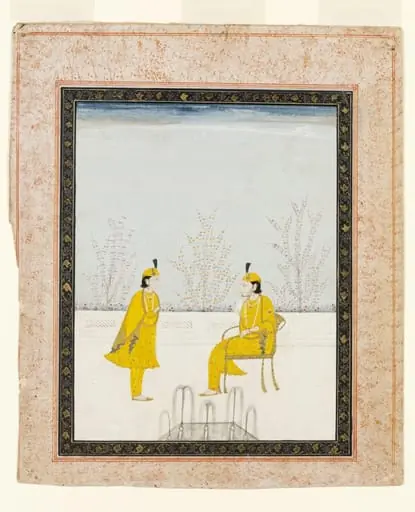
This painting, dated 1760, is executed in opaque watercolour and gold on paper, reflecting a tradition of Indian miniature painting. It belongs to a group of works transferred from the Department of Engraving, Illustration & Design, catalogued as RP 57/68. The composition centers on two figures in a tranquil outdoor setting, rendered with delicate detail and ornamental precision characteristic of regional courtly art of the period.
Subject & Meaning
The scene portrays Hanuman, the monkey deity and devotee of Rama, seated beside an elderly sage. Their presence suggests a moment of spiritual exchange, possibly drawn from the Ramayana, where Hanuman seeks wisdom or delivers a message. The calm interaction implies reverence and quiet devotion, aligning with devotional themes common in Hindu artistic traditions rather than Western Romantic ideals.
Technique & Style
The artist employed fine brushwork and layered opaque pigments, enhanced with gold leaf to highlight garments and architectural elements. The patterned floor and floral motifs reflect decorative conventions of Mughal and Rajput painting traditions. Soft modeling and flattened perspective create a stylized space, prioritizing symbolic harmony over naturalistic depth, typical of 18th-century North Indian miniatures.
History & Provenance
The painting entered institutional collections through a transfer from the Department of Engraving, Illustration & Design. Its catalog number, RP 57/68, indicates it was part of a curated group of works, likely assembled for study or preservation. While its earlier ownership is undocumented, its material and style suggest origin in a royal atelier, possibly in Rajasthan or the Punjab Hills.
Context
Created during a period when regional courts patronized illustrated manuscripts and devotional imagery, this work reflects the enduring influence of Hindu epics in visual culture. Unlike Romanticism, which emerged later in Europe, this painting’s serenity stems from religious narrative and aesthetic discipline, not emotional individualism. Its style aligns with contemporaneous works from Mewar, Kishangarh, or Basohli.
Legacy
As a preserved example of 18th-century Indian miniature painting, it contributes to scholarly understanding of devotional art and courtly patronage. Its survival in institutional archives underscores efforts to safeguard non-Western artistic traditions. While not widely exhibited, it remains a reference point for studies on iconography, pigment use, and regional stylistic variation in South Asian art.
Artist & collection