Artwork
Landscape with the Good Samaritan
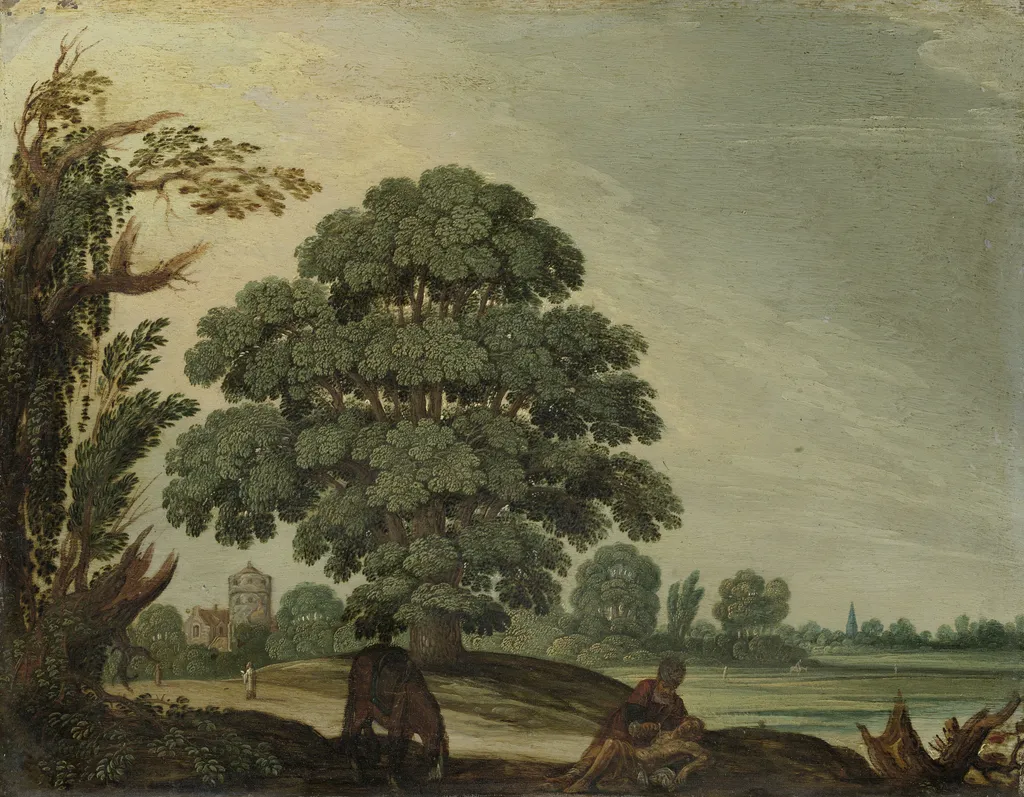
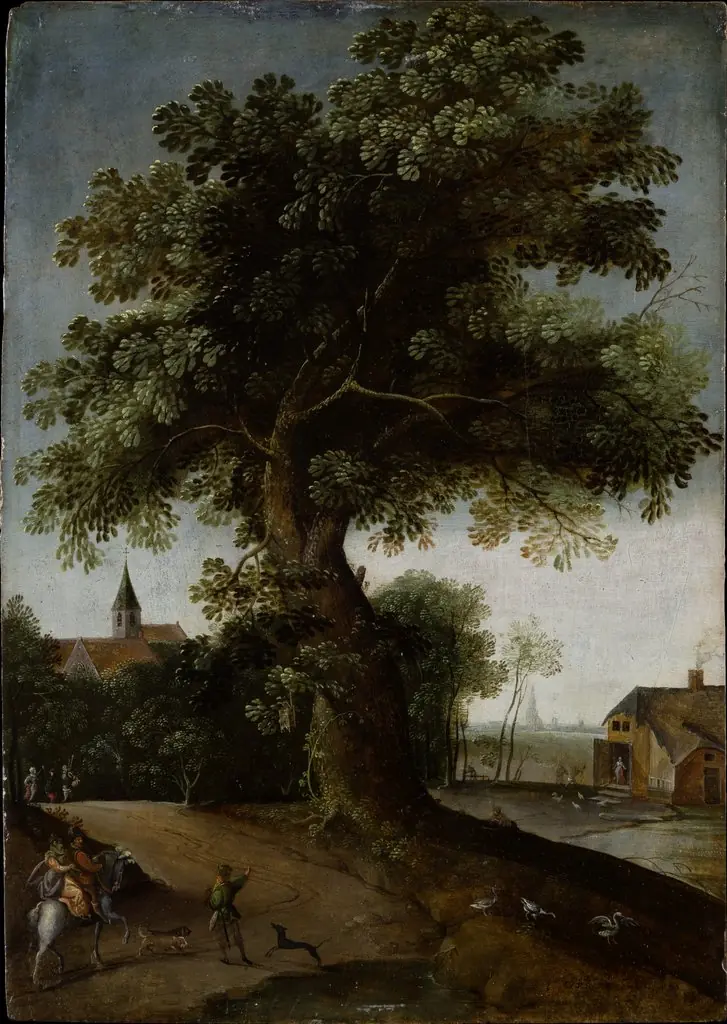
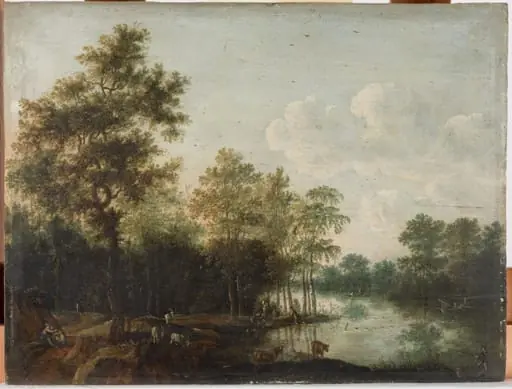
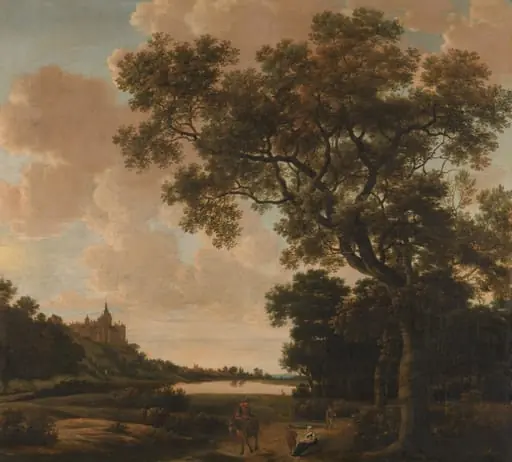
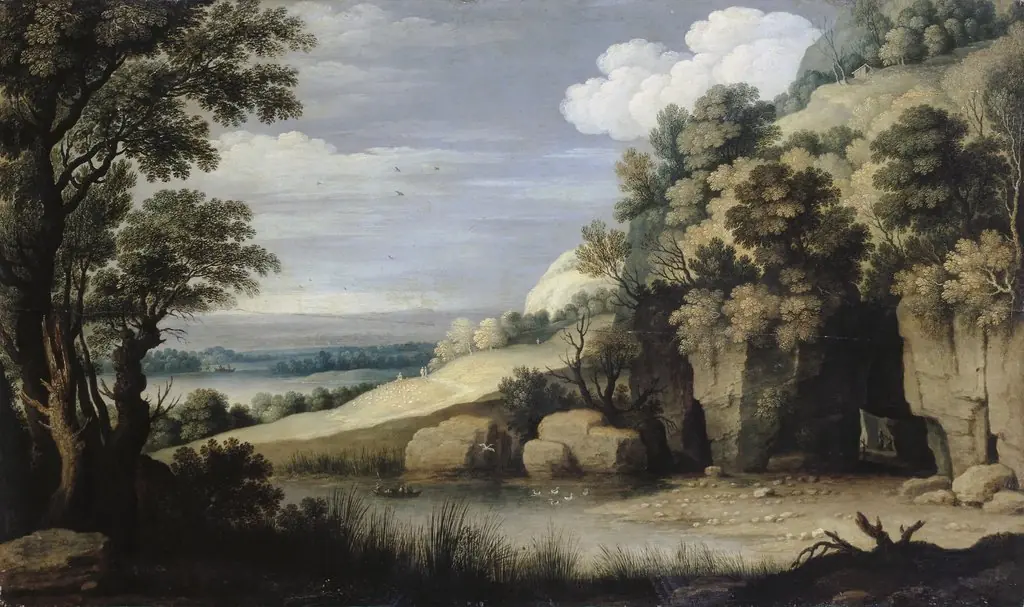
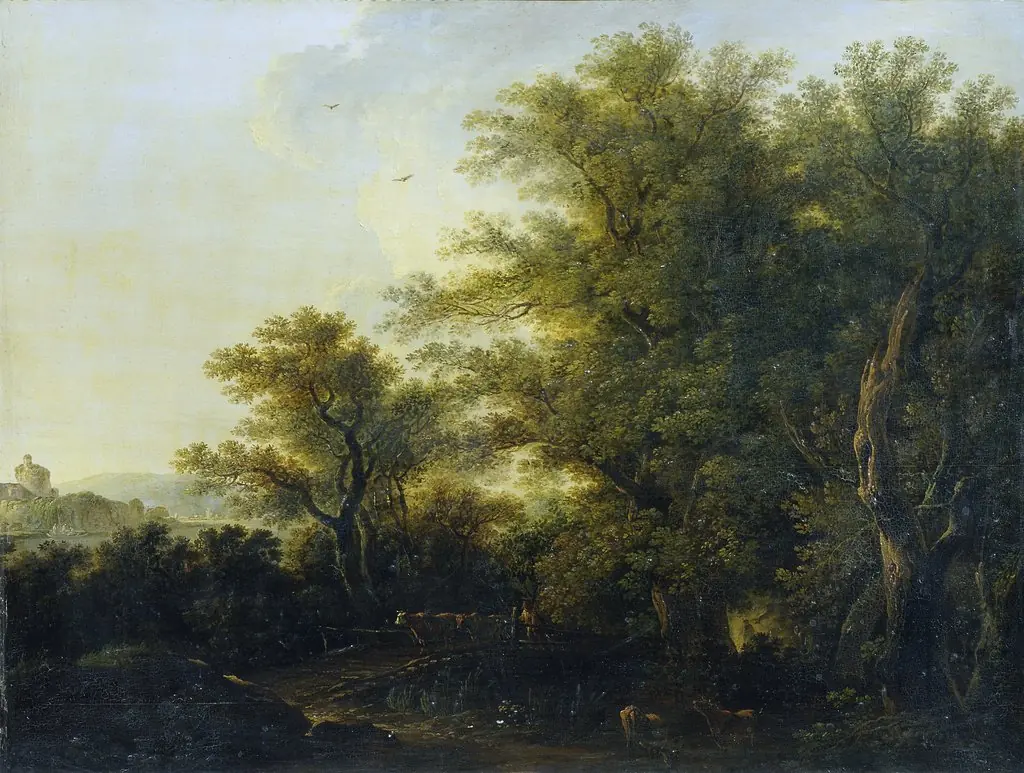
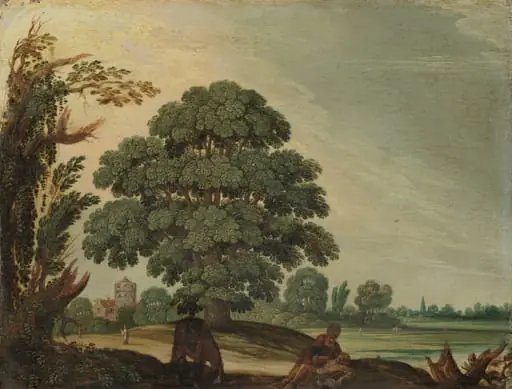
Landscape with the Good Samaritan is an oil painting by the Dutch Golden Age artist Unknown. It dates from 1630 and is held in the collection of the Rijksmuseum. This small-scale painting on copper depicts a tranquil rural scene, dominated by a central tree and framed by foliage.
About this work
Subject & Meaning
The painting illustrates the biblical parable of the Good Samaritan, emphasizing compassion toward a stranger in distress. It was created by a follower of Adam Elsheimer using oil paint on copper around 1630, measuring 21 by 27 centimeters. The work belongs to the landscape genre and is part of the Rijksmuseum's collection in Amsterdam.
Technique & Style
The painting’s surface shows careful handling, preserving fine details in the foliage and drapery, though the varnish has yellowed slightly over time.
The work is executed in oil on copper, a support typical of early 17th-century Dutch painting. The small dimensions (21 cm height, 27 cm width) are painted in a luminous, chiaroscuro-inflected style that reflects the influence of Adam Elsheimer and his followers. The composition is tightly structured, with precise brushwork that emphasizes the play of light on figures and landscape elements.
The painting’s surface shows careful handling, preserving fine details in the foliage and drapery, though the varnish has yellowed slightly over time.
Formal qualities include a balanced arrangement of figures within an idealized landscape, a muted palette dominated by earth tones and soft blues, and a subtle gradation of atmospheric depth that enhances the narrative scene.
History & Provenance
Landscape with the Good Samaritan was created in 1630 on a copper support. The work is attributed to a follower of the German artist Adam Elsheimer rather than Elsheimer himself. It is currently held in the collection of the Rijksmuseum.
The painting measures 21 cm in height and 27 cm in width, executed in oil paint on metal.
Context
Landscape with the Good Samaritan is recognized as a landscape painting executed in 1630 on a copper support. Art historical scholarship attributes the work to a follower of Adam Elsheimer, situating it within the circle of the German artist known for his innovative small-scale landscapes. The painting is currently held in the collection of the Rijksmuseum, where it is cataloged as an oil-on-copper work measuring 21 by 27 centimeters.
Its creation in the early 1630s places it in a period where the influence of Elsheimer's detailed naturalism continued to resonate with subsequent generations of artists working in the Netherlands.
Overview
This small-scale painting on copper depicts a tranquil rural scene, dominated by a central tree and framed by foliage. Two figures occupy the foreground, a seated traveler and a standing companion, while the surrounding landscape unfolds in layered planes. The composition balances naturalism with a quiet, introspective mood, achieved through subtle tonal shifts and delicate handling of light.
Legacy
While not among the most widely recognized works of its kind, the painting exemplifies the era’s fusion of moral storytelling and natural observation. Its technical refinement and thematic subtlety contribute to the broader understanding of Rembrandt’s influence on landscape painting. Today, it offers insight into the priorities of Dutch collectors who favored intimate, meticulously rendered scenes.
Artist & collection