Artwork
Man in Armor (Mars?)
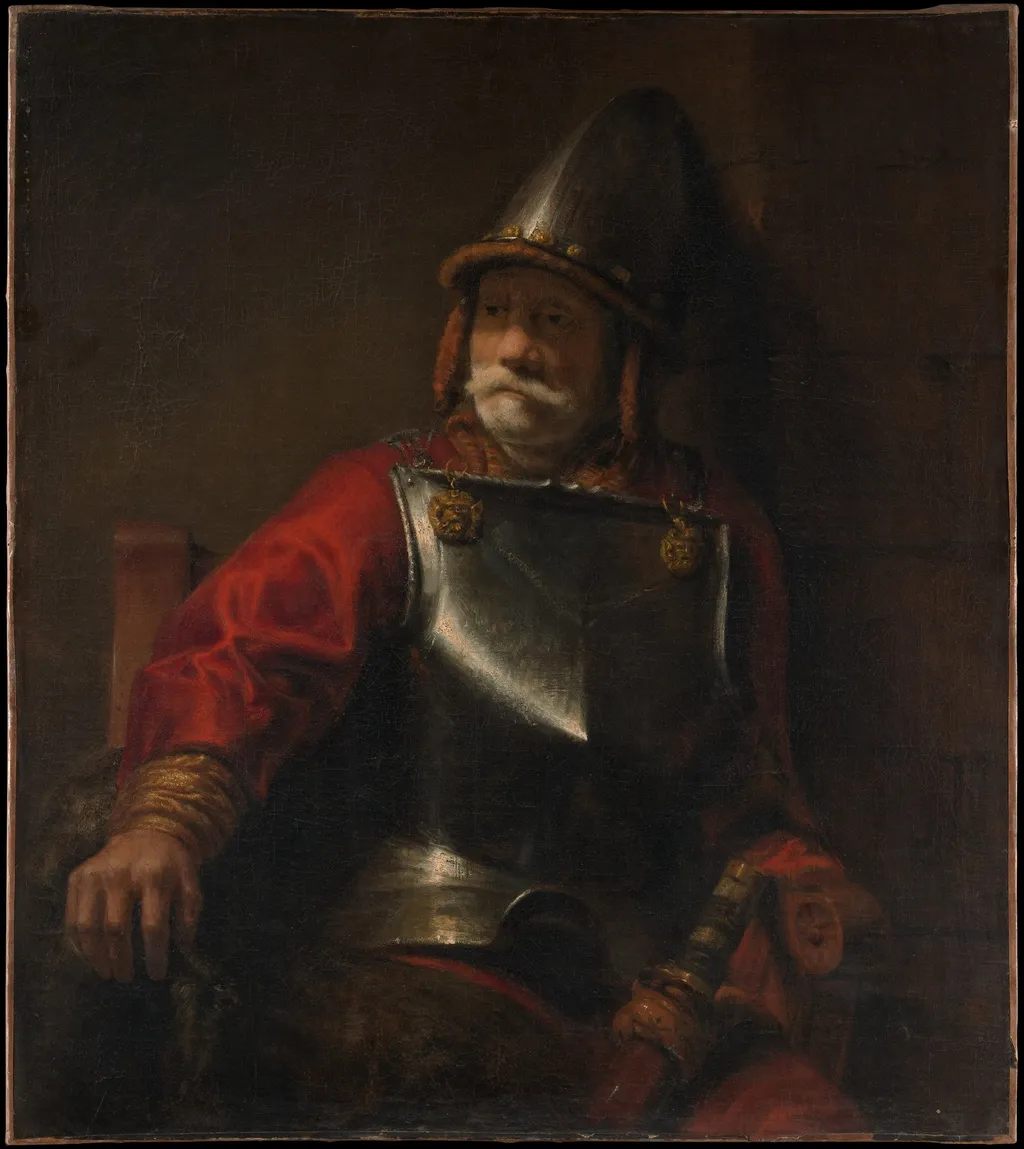
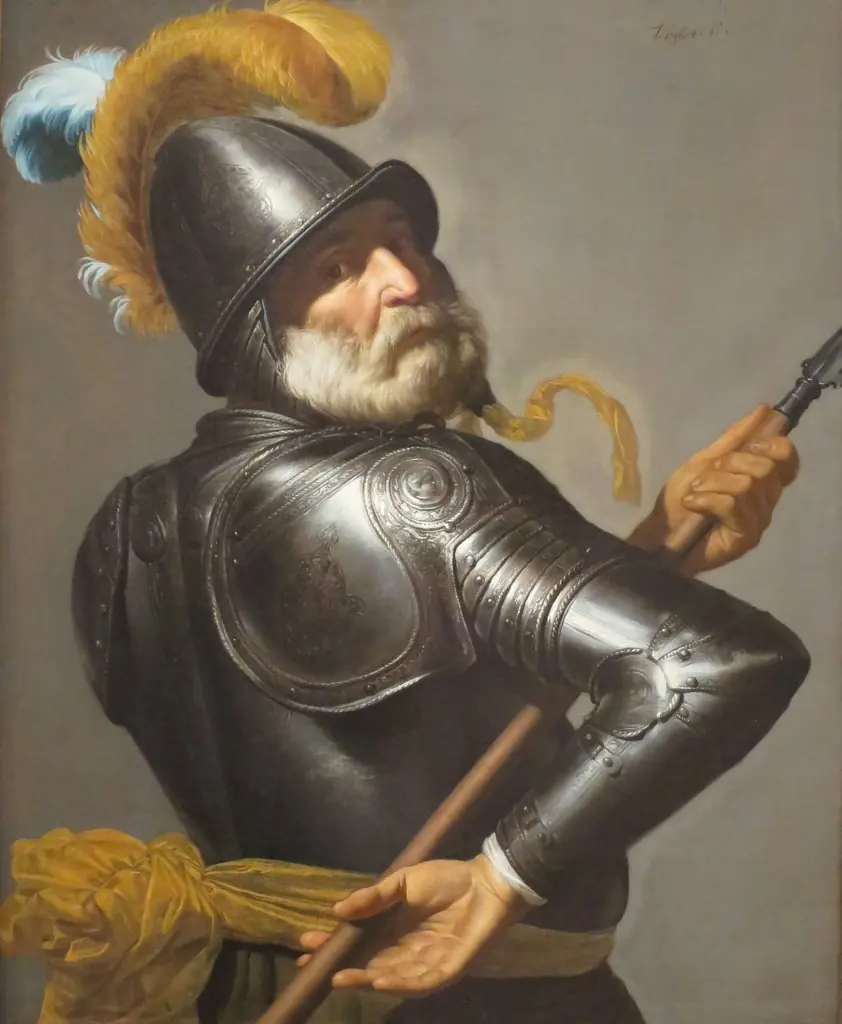
Man in Armor (Mars?) is an oil painting. It dates from 1700 and is held in the collection of the Metropolitan Museum of Art. This oil painting, titled Man in Armor (Mars?
About this work
Subject & Meaning
The presence of armor on a civilian sitter often served as an allegorical device or a statement of civic duty rather than a literal depiction of a soldier.
The work depicts a male figure clad in armor, classified formally as a portrait. While the title suggests the subject may represent Mars, the Roman god of war, the available records primarily identify the figure simply as a man wearing armor. The iconography centers on the martial attire, which traditionally symbolizes military prowess or status.
Attributed to the style of Rembrandt, with specific connections to pupils Arent de Gelder and Heiman Dullaart, the painting utilizes the visual language of seventeenth-century Dutch portraiture. The presence of armor on a civilian sitter often served as an allegorical device or a statement of civic duty rather than a literal depiction of a soldier. Consequently, the piece functions both as a representation of an individual and potentially as a personification of martial virtues, though the specific identification as Mars remains tentative within the documented title.
Technique & Style
Man in Armor (Mars?) is an oil painting executed on a canvas support, measuring 101.9 cm in height and 90.5 cm in width. Created in 1700, the work is attributed to the style of Rembrandt, with specific authorship proposed for Arent de Gelder or Heiman Dullaart. As a portrait genre piece, the artist depicts a man clad in armor using oil paint to render the figure and its attire.
The painting's formal qualities align with Dutch portraiture of the early 18th century, focusing on the representation of a male subject in military dress. The work has been associated with the Metropolitan Museum of Art's collection, where it has been exhibited in contexts exploring Rembrandt and his pupils, as well as Dutch paintings from the museum's holdings.
History & Provenance
The painting Man in Armor (Mars?) is dated to circa 1700, aligning with the late period of Arent de Gelder, to whom it is attributed in the Metropolitan Museum of Art’s records. The work entered the museum’s collection through successive private ownerships: it was acquired by Théophile Thoré-Bürger, then passed to William T. Blodgett, and later to John Taylor Johnston before entering the Metropolitan Museum’s holdings. The painting was included in several exhibitions at the Metropolitan Museum, including "Rembrandt and His Pupils" and "The Age of Rembrandt: Dutch Paintings in The Metropolitan Museum of Art," which contextualized it within Dutch portraiture of the late 17th and early 18th centuries.
The painting is held at the Metropolitan Museum of Art, New York, with the accession number 14.40.614. It entered the museum through the William T. Blodgett collection in 1885. Its exhibition history includes Dutch Celebration at the Metropolitan Museum of Art, Rembrandt and His Pupils (location unspecified), The Age of Rembrandt: Dutch Paintings in The Metropolitan Museum of Art, and Rembrandt/Not Rembrandt in The Metropolitan Museum of Art.
Overview
This oil painting, titled Man in Armor (Mars?), presents a solitary figure clad in military attire. The subject is depicted seated, engaging the viewer with a direct gaze, yet conveying an introspective demeanor. Rendered with a dark, subtly graduated background, the composition emphasizes the figure's presence and the quiet, thoughtful atmosphere. The work exemplifies a focused study of character and material texture through the medium of oil.
Artist & collection

 Man in plumed beret
 Half-Length Portrait of an Old Man
 The Man with the Golden Helmet
 An Old Man in Military Costume
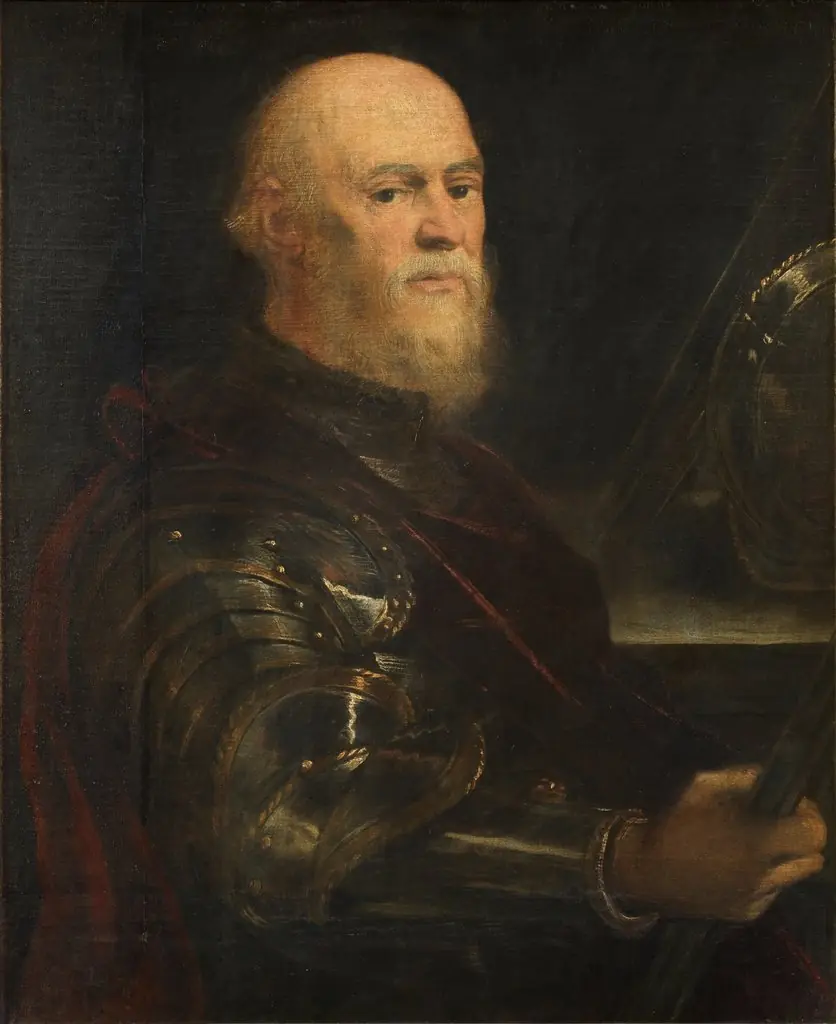 A Venetian General
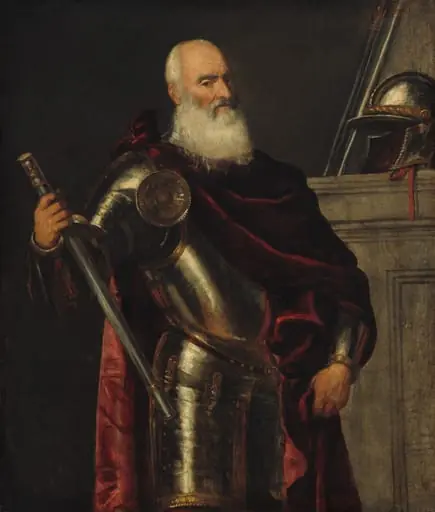 Vincenzo Cappello
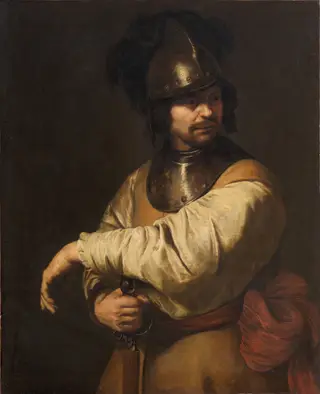 Krieger
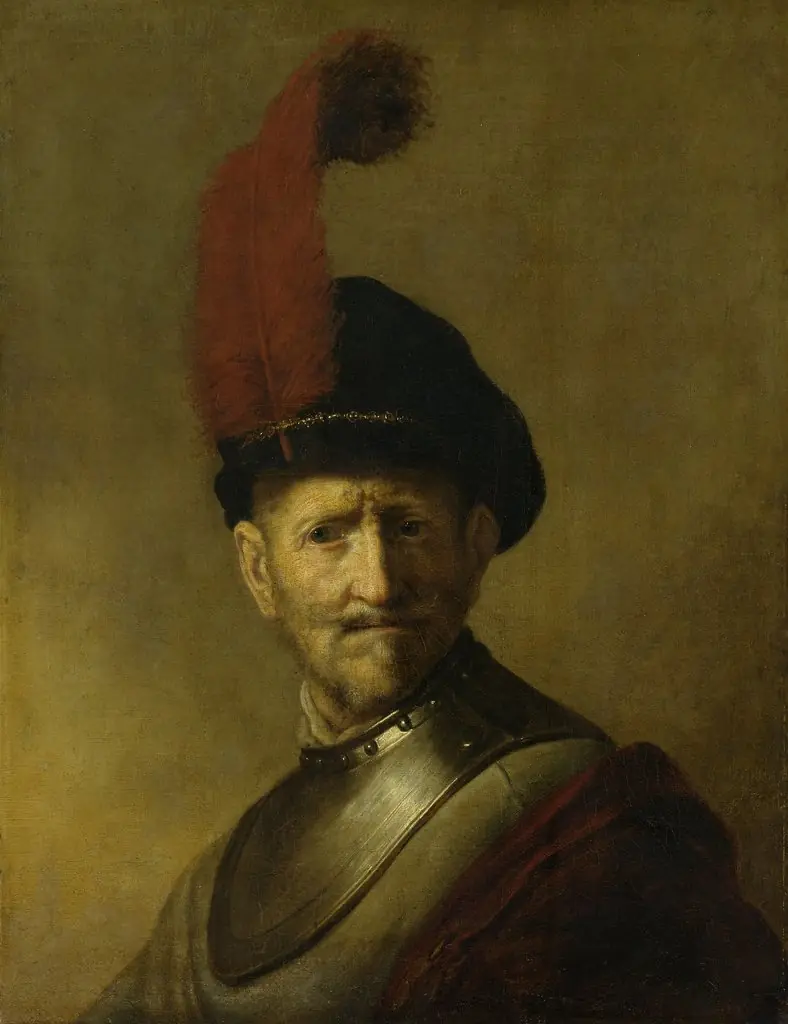 Portrait of a man, perhaps Rembrandt's father, Harmen Gerritsz van Rijn
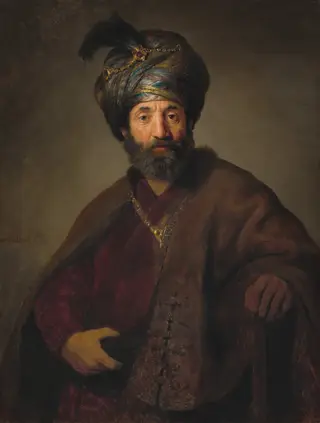 Man in Oriental Costume
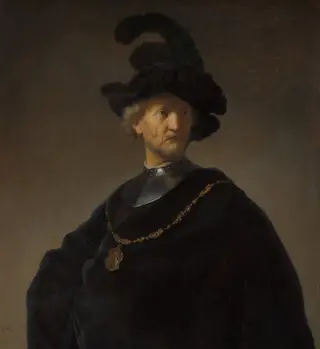 Old Man with a Gold Chain
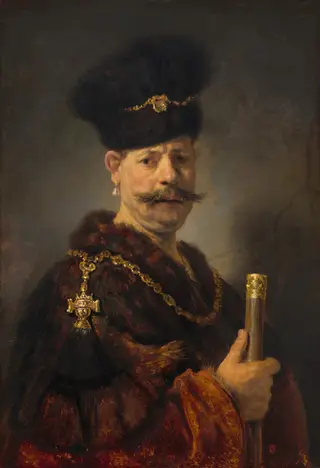 A Polish Nobleman
- Man in Armour Holding a Pike