Artwork
The Bodhisattvas of the Ten Stages in Attaining the Most Perfect Knowledge
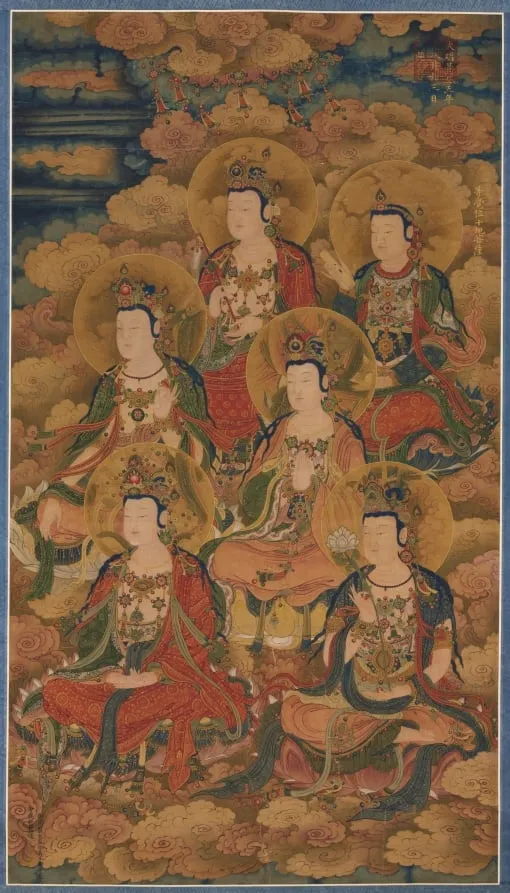
The Bodhisattvas of the Ten Stages in Attaining the Most Perfect Knowledge is an unspecified painting by the Ming dynasty painting artist Unknown. It dates from 1454 and is held in the collection of the Cleveland Museum of Art.
- Accession no.
- 1973.70.1
- Credit line
- John L. Severance Fund
About this work
You see ten robed figures seated in rows, each holding different objects, books, flowers, or jewels, against a gold-leaf background.
You see ten robed figures seated in rows, each holding different objects, books, flowers, or jewels, against a gold-leaf background.
These are bodhisattvas, beings who delay enlightenment to help others. The painting was part of a set used in a ritual where water and land spirits were honored. The fine details, wrinkles in silk, tiny patterns on hems, show how much care went into temple art during this time.
To see more works like this, look up china, ming dynasty (1368–1644).
Overview
The work depicts ten bodhisattvas, each seated in a row and holding distinct objects such as books, flowers, or jewels, set against a gold‑leaf background. Created in 1454 during the Jingtai reign of the Ming dynasty, the painting formed part of a pair of scrolls employed in the Water‑Land (shuilu) ritual, a ceremony honoring water and land spirits.
Subject & Meaning
The figures represent the ten stages (bhūmis) of a bodhisattva’s progression toward full Buddhahood, embodying the ideal of postponing personal enlightenment to aid sentient beings. Their varied attributes illustrate the specific qualities and teachings associated with each stage of spiritual development.
Technique & Style
Executed with meticulous brushwork, the painting showcases sinuous drapery, layered silk garments, and finely rendered textures that convey the sumptuous visual culture of Ming temple art. Gold leaf underlies the composition, while delicate details such as fabric folds and ornamental hems are rendered in ink, emphasizing both opulence and precision.
History & Provenance
An imperial seal and a gold inscription in the upper right corner record the donation date: the third day of the eighth month, fifth year of the Jingtai reign (1454). Ink notes in the lower left indicate the pieces were produced by imperial command, likely intended as gifts to the Da Longfu monastery in Beijing.
Context
The scrolls were integral to the shuilu ritual, a complex liturgical practice that invoked protective spirits of water and land. Such rituals were central to Ming religious life, reflecting the dynasty’s emphasis on state‑sponsored Buddhism and the visual splendor of its ceremonial spaces.
Artist & collection









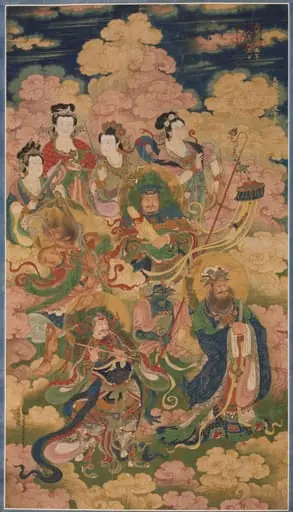
- The Eight Hosts of Deva, Naga, and Yakshi
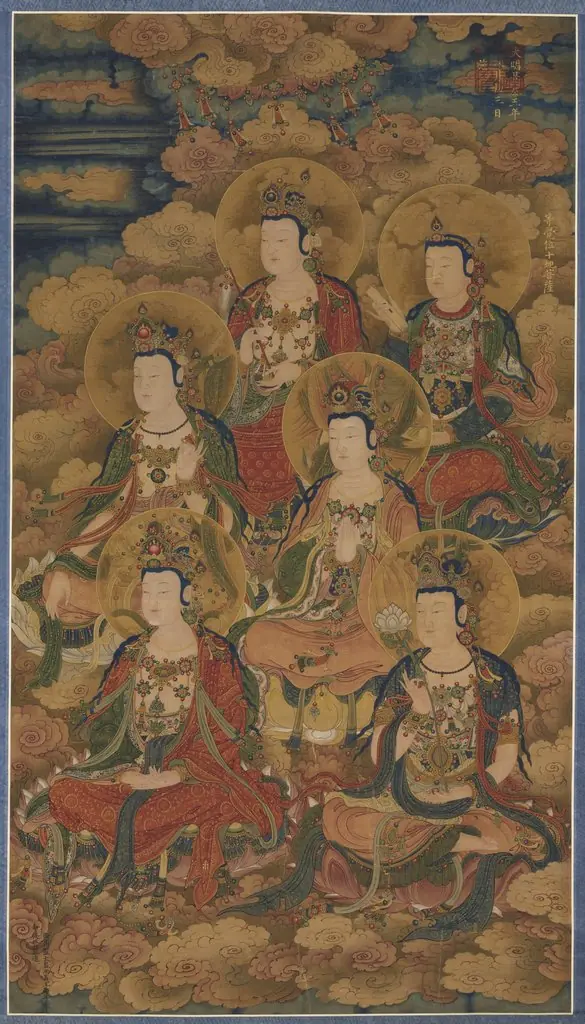 The Bodhisattvas of the Ten Stages in Attaining the Most Perfect Knowledge
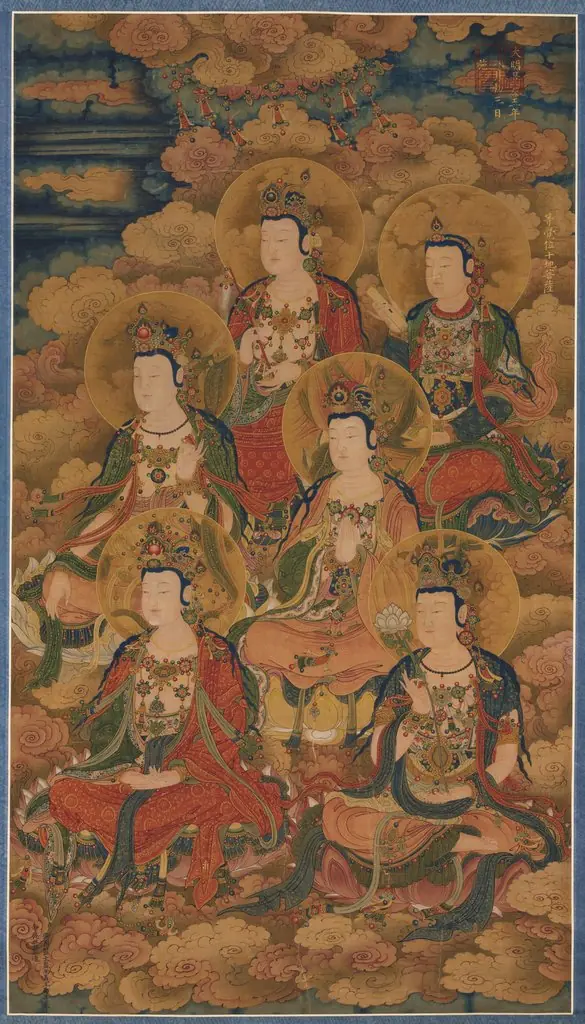 The Bodhisattvas of the Ten Stages in Attaining the Most Perfect Knowledge; The Eight Hosts of Deva, Naga, and Yakshi
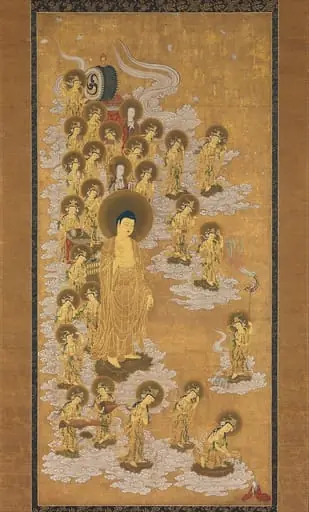 阿弥陀二十五菩薩来迎図|Welcoming Descent of Amida Buddha and Twenty-five Bodhisattvas
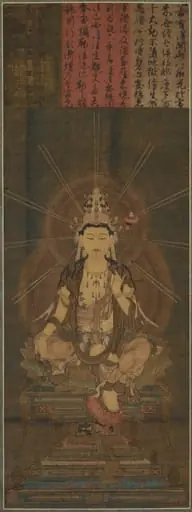 Miroku (Maitreya)
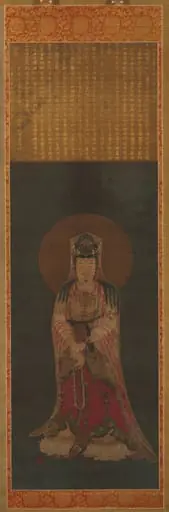 Kannon
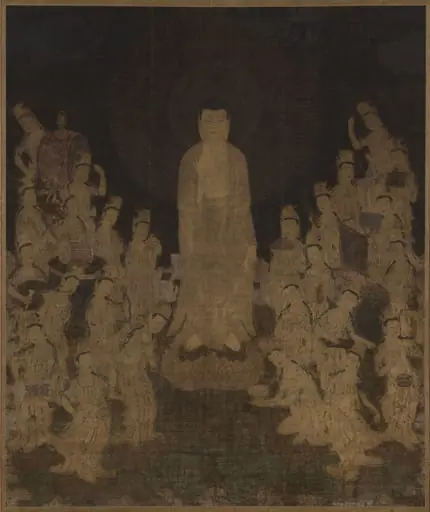 Welcoming Descent of Amida with Twenty-Five Bodhisattvas
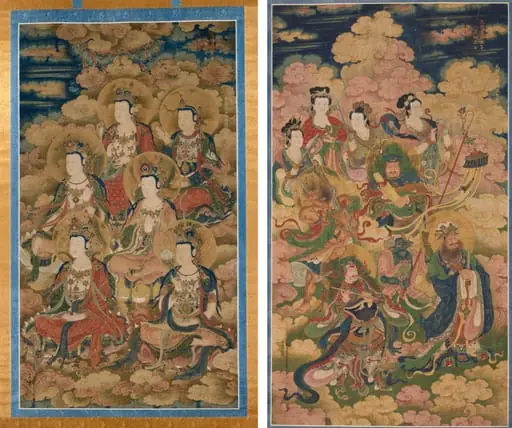 The Bodhisattvas of the Ten Stages in Attaining the Most Perfect Knowledge; The Eight Hosts of Deva, Naga, and Yakshi
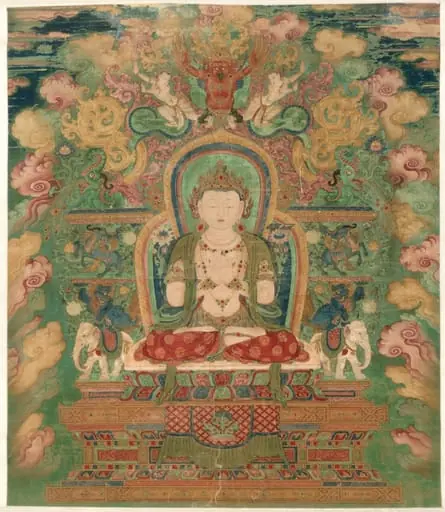 Manjushri
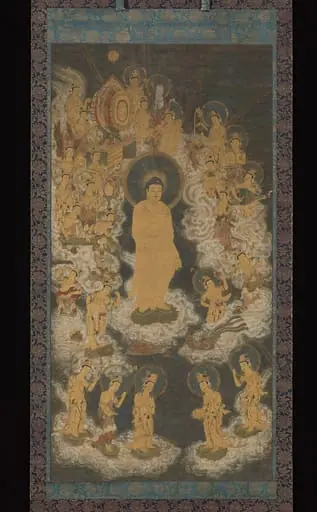 阿弥陀聖衆来迎図 |Welcoming Descent of Amida and Bodhisattvas
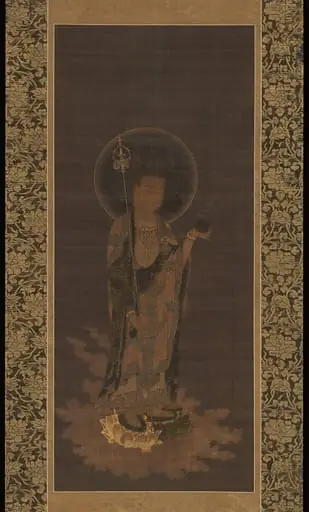 地蔵菩薩来迎図|Welcoming Descent of the Bodhisattva Jizō