Artwork
Nadir Shah
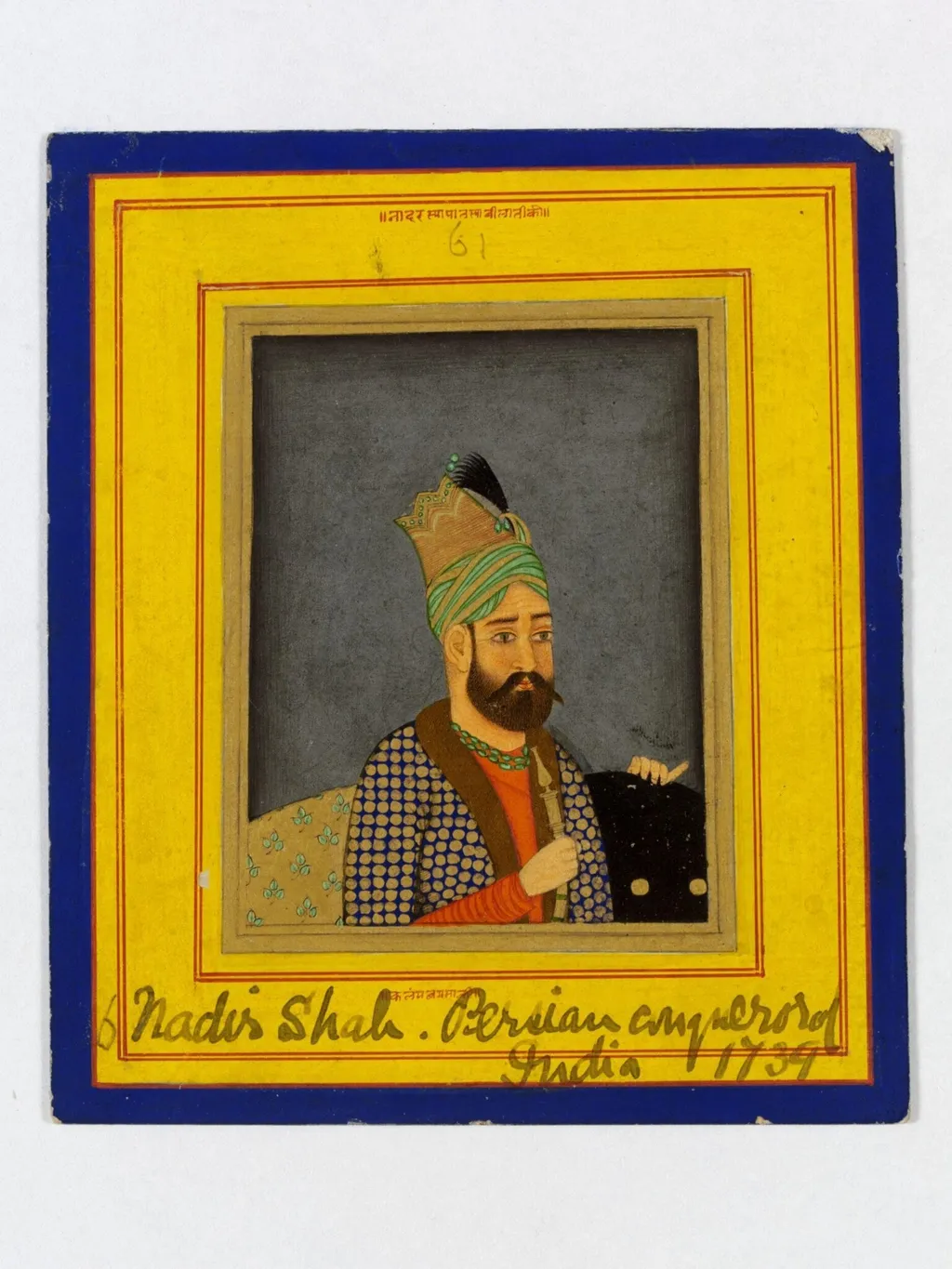
Nadir Shah is a paint painting by the Impressionist artist Unknown. It dates from 1890 and is held in the collection of the Victoria and Albert Museum.
About this work
Overview
Though the subject lived over a century earlier, the style and materials reflect 19th-century artistic conventions of the Indian subcontinent.
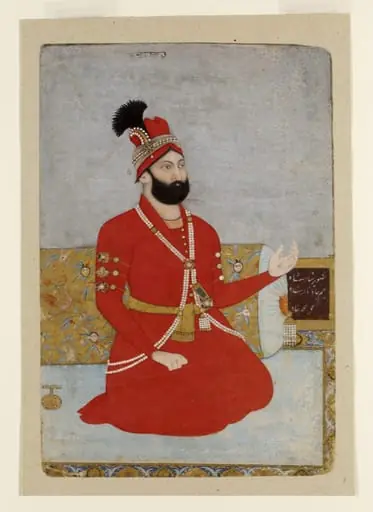
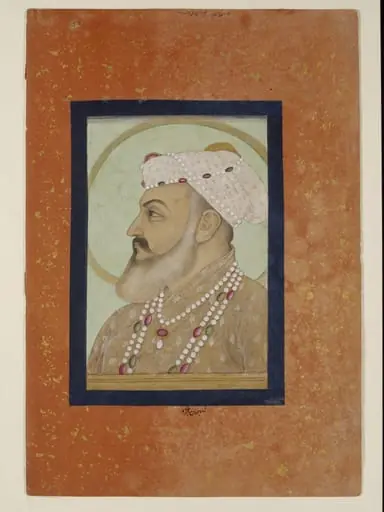
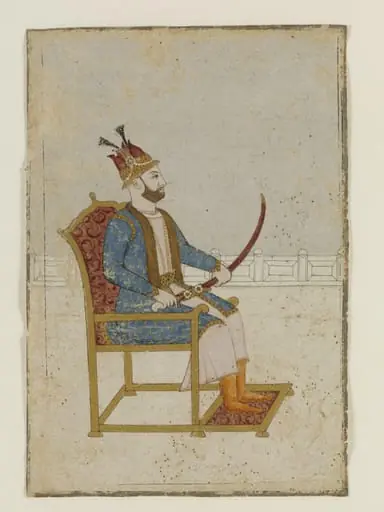
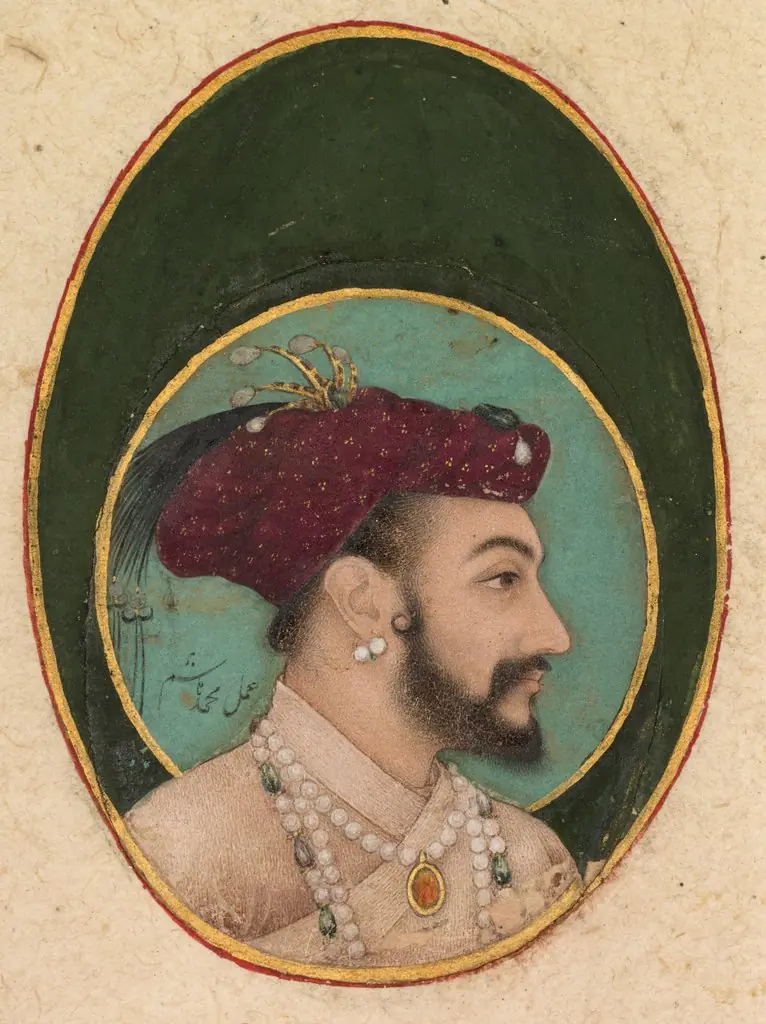
This painting, dated 1890, depicts Nadir Shah, the 18th-century Persian ruler, rendered in opaque watercolour and gold on paper. Though the subject lived over a century earlier, the style and materials reflect 19th-century artistic conventions of the Indian subcontinent. The work belongs to a tradition of retrospective portraiture, where historical figures were reimagined through contemporary visual languages rather than historical accuracy.
Subject & Meaning
Nadir Shah is portrayed seated, his identity confirmed by the inscription below. His elaborate attire, green-and-gold turban, blue coat with gold spots, and red undergarment, emphasizes status and regality. The dark object in his hand may symbolize authority or scholarship, though its exact nature remains ambiguous.
The image functions less as a likeness and more as a ceremonial representation, aligning with 19th-century ideals of imperial dignity.
Technique & Style
The painting employs opaque watercolour with gold leaf accents, typical of late Mughal and post-Mughal courtly illustration. Fine brushwork defines the intricate patterns on the clothing, while the flat, unmodulated gray background isolates the figure. The yellow border with blue and red trim follows decorative conventions seen in album pages of the period, suggesting the work was intended for private contemplation or collection.
History & Provenance
Created in 1890, the painting is not a contemporary portrait but a later reinterpretation, likely produced in a regional atelier familiar with Mughal traditions. Its origin is unrecorded, but similar works were made for collectors and institutions seeking to preserve or romanticize Persian imperial imagery. The anachronistic style indicates it was made for aesthetic or cultural nostalgia rather than historical documentation.
Context
In the late 19th century, British colonial administrators and Indian patrons increasingly collected portraits of historical rulers as symbols of heritage. Artists in centers like Lucknow or Lahore revived earlier styles to meet this demand. Nadir Shah’s image, though historically distant, was reactivated as a cultural emblem, reflecting a broader trend of reimagining the past through contemporary visual idioms.
Legacy
This painting contributes to a body of 19th-century works that redefined historical figures through stylized, decorative means. It illustrates how imperial iconography persisted beyond political decline, adapted for new audiences and purposes. Today, such images serve as artifacts of cultural memory, revealing how history was visually reconstructed during colonial-era identity formation.
Artist & collection