Artwork
Narasimha
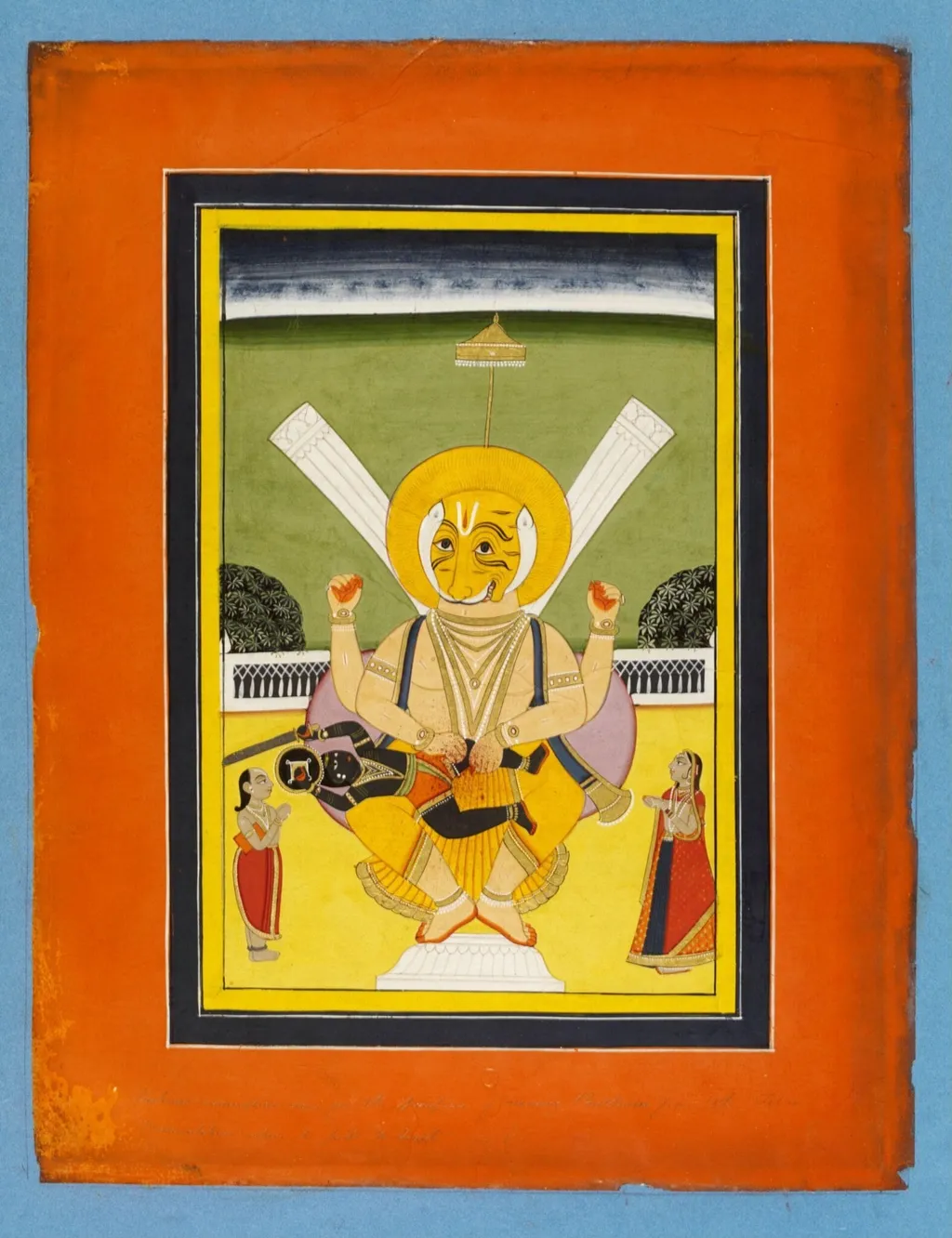
Narasimha is a paint painting by Unknown. It dates from 1850 and is held in the collection of the Victoria and Albert Museum.
About this work
Overview
It originates from a colonial-era institutional transfer involving the Department of Engraving, Illustration & Design, and is cataloged as RP 51/2237.
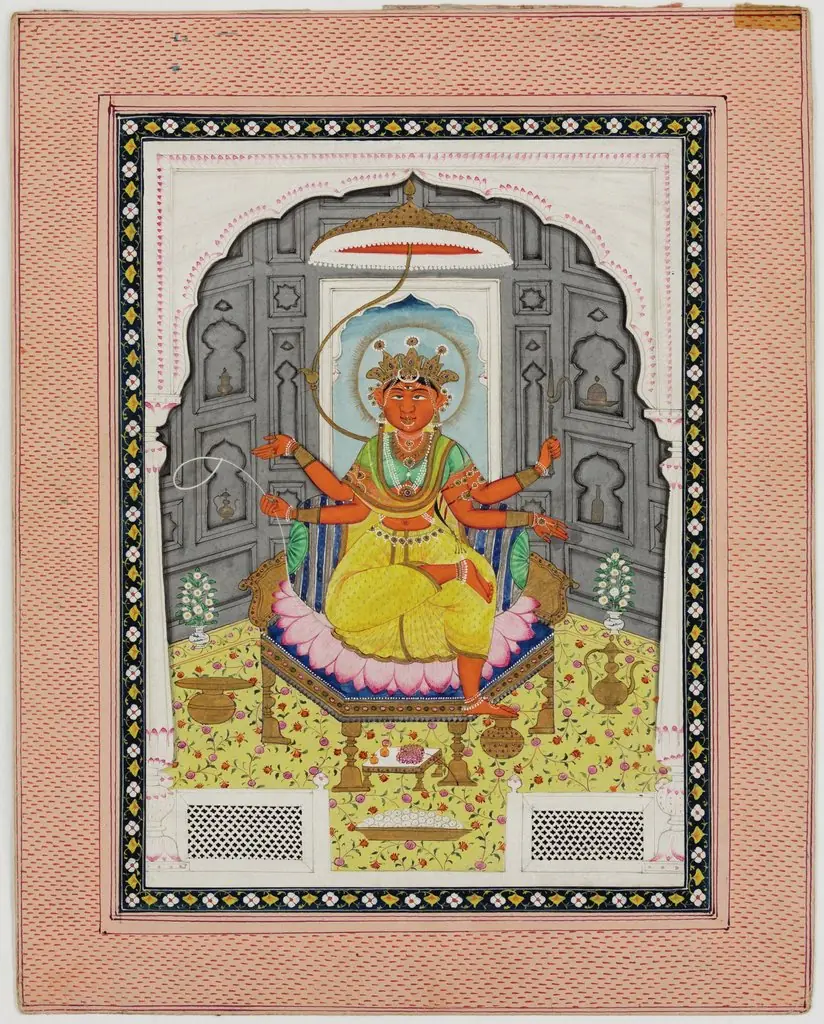
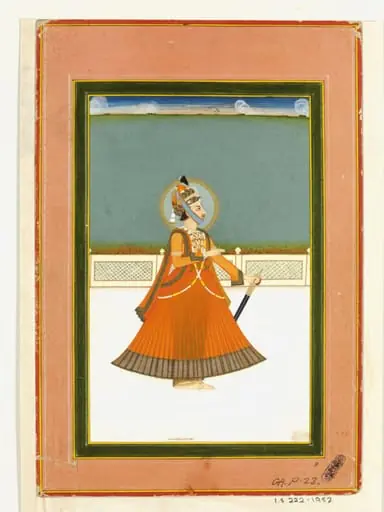
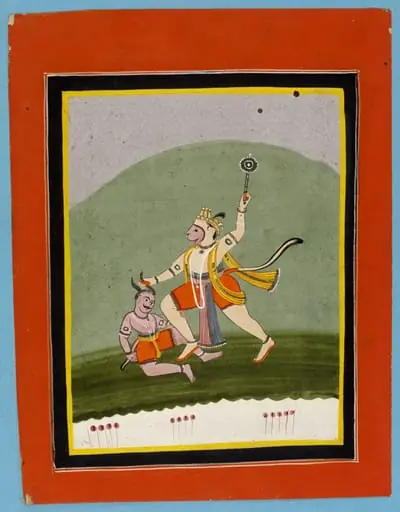
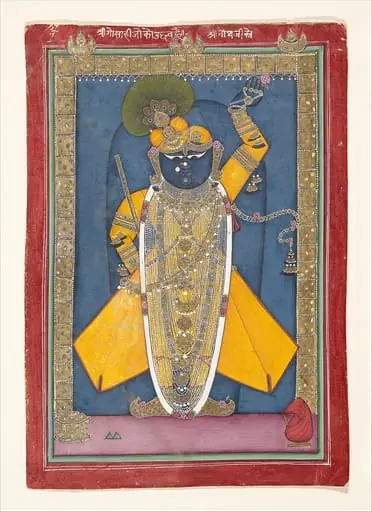
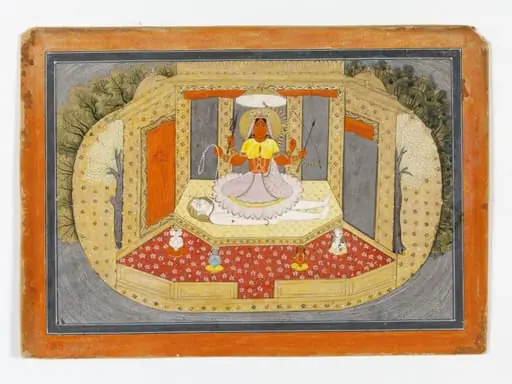
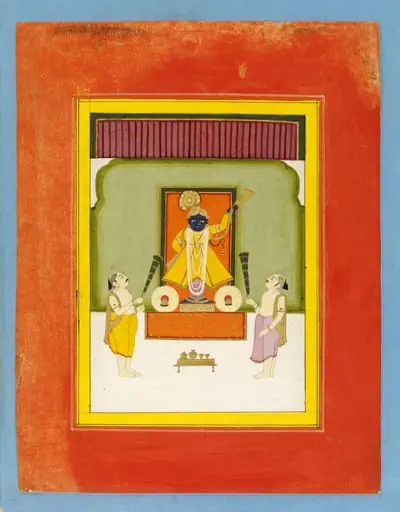
This opaque watercolor and gold painting on paper portrays Narasimha, the man-lion incarnation of Vishnu, created circa 1850. It originates from a colonial-era institutional transfer involving the Department of Engraving, Illustration & Design, and is cataloged as RP 51/2237. The composition is richly colored, employing vivid yellows, reds, blues, and greens against a flat green backdrop, with decorative elements like a white fence and trees framing the scene.
Subject & Meaning
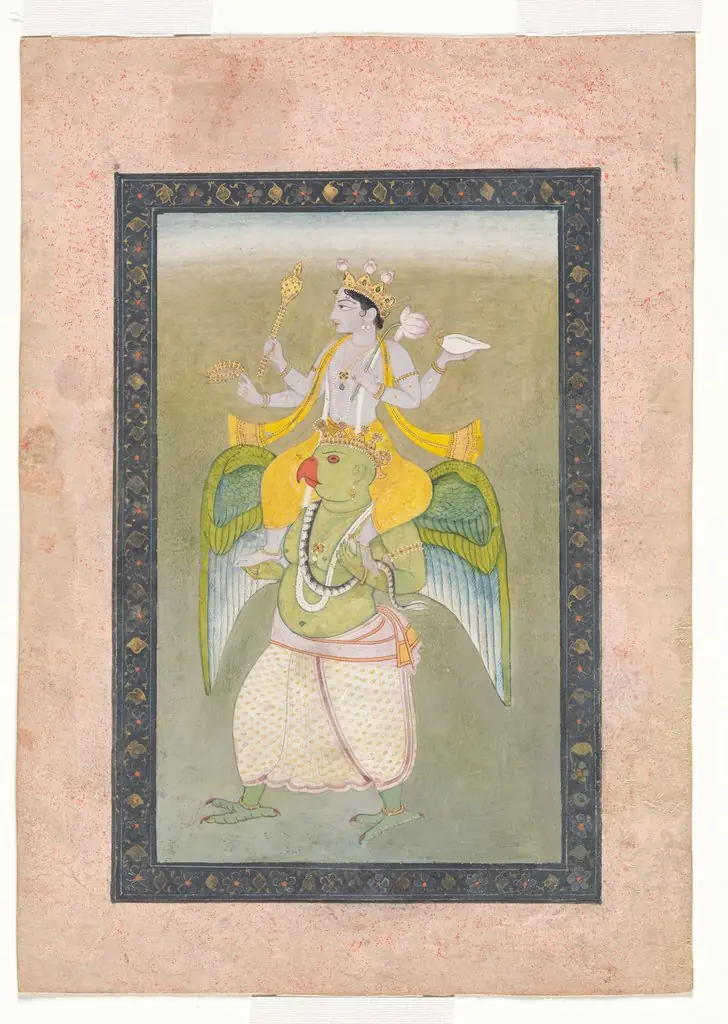
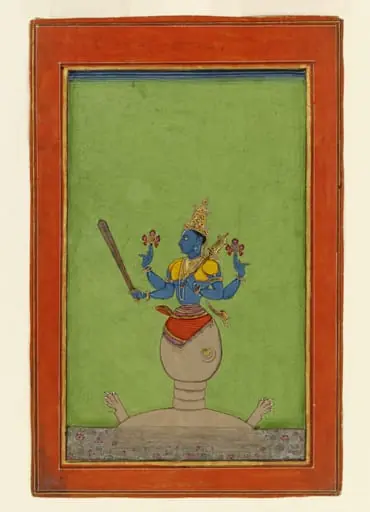
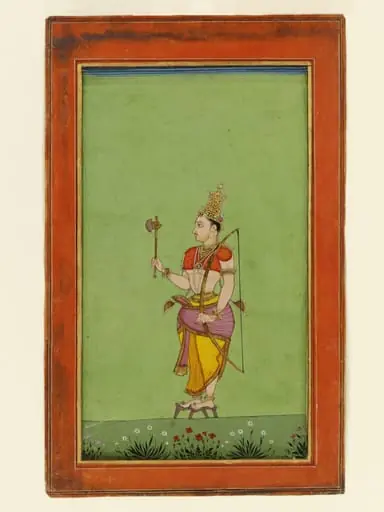
Narasimha, half-man and half-lion, represents the divine intervention of Vishnu to restore cosmic order. Seated on a white platform, he holds symbolic objects in his four arms, likely a discus and mace, emblems of protection and destruction. Flanked by two women, possibly devotees or celestial attendants, the scene conveys reverence and divine presence, rooted in Hindu devotional traditions that emphasize the deity’s role as protector of dharma.
Technique & Style
The painting uses opaque watercolor with gold accents to achieve luminous, flat planes of color. Details are rendered with fine brushwork, particularly in the decorative fence, foliage, and textile patterns. The lack of perspective and stylized forms reflect regional Indian miniature traditions, where symbolic clarity and ornamental richness take precedence over naturalistic depth, emphasizing spiritual rather than physical space.
History & Provenance
The work was once part of a government collection focused on design and illustration, later transferred to its current institutional home. Its catalog number, RP 51/2237, suggests it was documented during colonial-era efforts to classify Indian art. While its exact origin or artist remains unrecorded, its style aligns with 19th-century Pahari or Rajasthani school practices, where devotional imagery was commonly produced for private or courtly use.
Context
Created during a period of increasing British influence in India, this painting reflects the persistence of traditional Hindu iconography despite colonial shifts. Such works were often made for local patrons or religious institutions, preserving devotional practices through visual culture. The use of gold and bright pigments signals its ritual or ceremonial function, possibly linked to temple worship or domestic altars in north Indian communities.
Legacy
As a surviving example of mid-19th-century Indian devotional painting, it contributes to the understanding of regional artistic continuity amid colonial disruption. Its preservation within institutional collections highlights early efforts to document indigenous art forms, even as their spiritual contexts were often overlooked. The work remains a quiet testament to enduring visual traditions in Hindu religious expression.
Artist & collection