Artwork
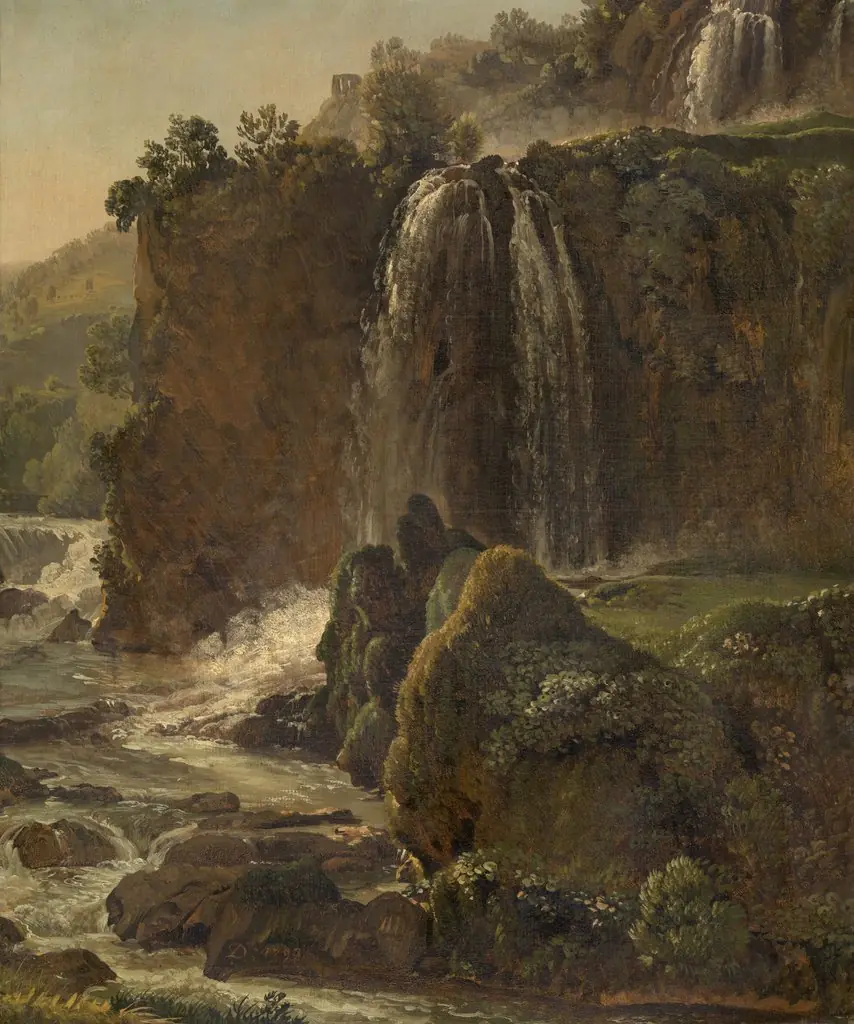
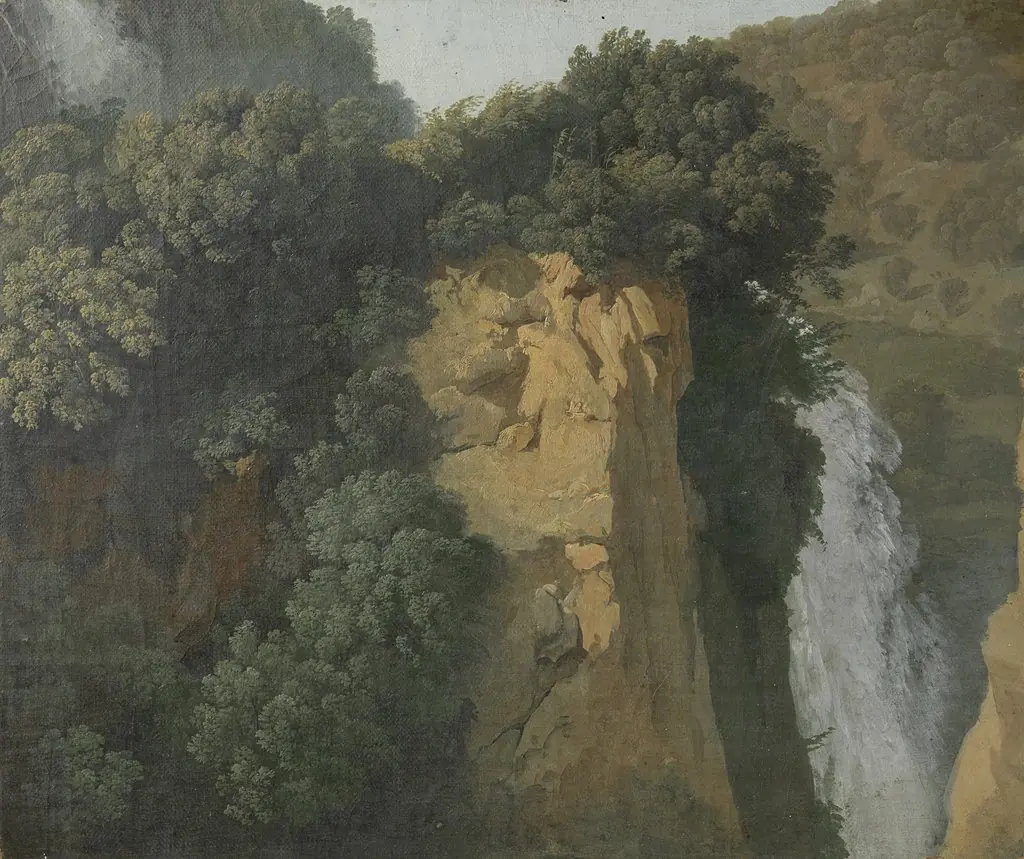
Overgrown Cliffs with a Waterfall in Italy, perhaps at Tivoli
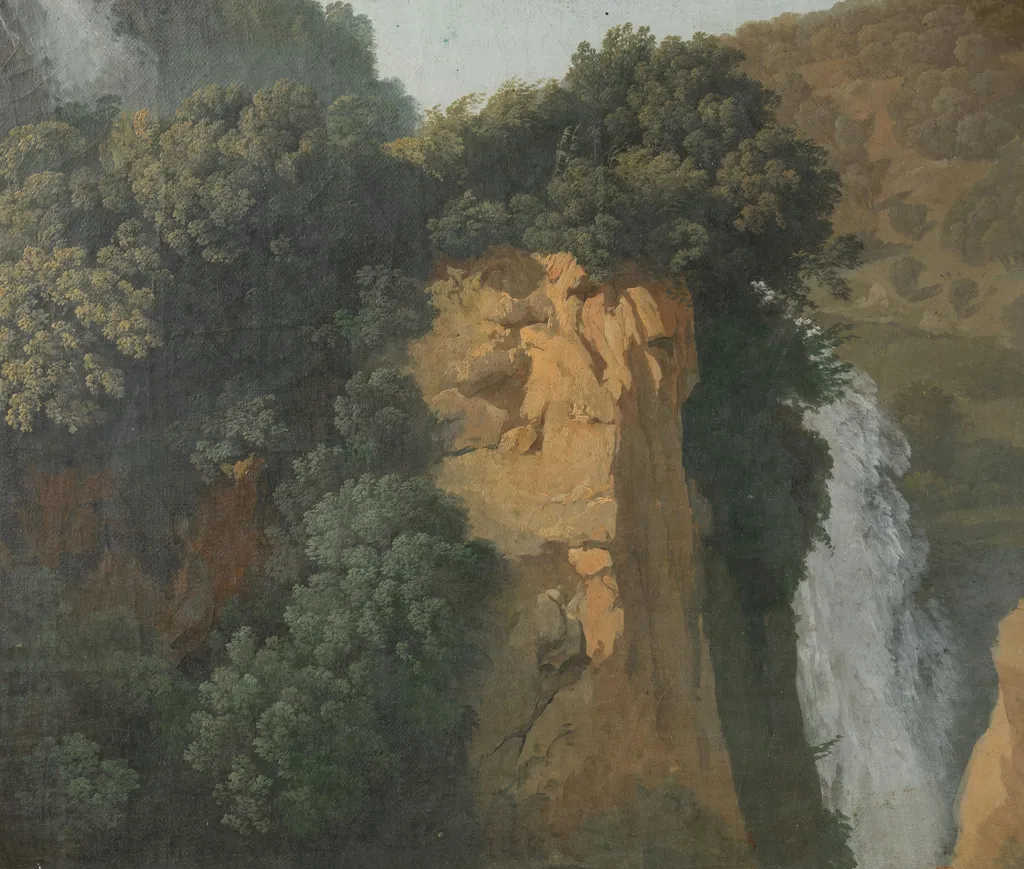
Overgrown Cliffs with a Waterfall in Italy, perhaps at Tivoli is an unspecified painting by the Romanesque artist Unknown. It dates from 1805 and is held in the collection of the Rijksmuseum.
About this work
Overview
A small, irregular fragment of a larger landscape painting survives, showing part of a rocky Italian cliffside with a cascading waterfall and a sliver of sky. The edges are uneven, suggesting it was deliberately cut from its original context, likely as a keepsake from a traveler’s journey through Italy. Its partial state invites speculation about the full composition it once belonged to.
Subject & Meaning
The scene depicts a rugged, vegetated cliff face with a thin stream of water falling over its edge, possibly inspired by the falls near Tivoli. The focus on natural detail, rather than human figures or architecture, suggests an appreciation for wild, untamed scenery. This fragment may have been preserved as a personal memento of a journey through the Italian countryside.
Technique & Style
The brushwork is loose and observational, capturing texture through layered greens and muted earth tones. The waterfall is rendered with quick, fluid strokes to suggest movement, while the sky is a thin wash of blue. The painting’s scale and detail indicate it was part of a larger, carefully composed landscape, not a standalone study.
History & Provenance
The fragment’s torn edges and intimate size point to its origin as a personal souvenir, possibly taken from a larger work during the 18th or early 19th century. Such fragments were sometimes removed by travelers as tangible reminders of their Grand Tour experiences. Its survival suggests it was kept privately, perhaps in a sketchbook or album, rather than displayed publicly.
Context
During the Grand Tour, European travelers collected landscape imagery as evidence of their cultural education. Italian scenery, especially waterfalls and ruins, was highly valued. This fragment aligns with a broader trend of preserving natural views as tokens of experience, reflecting a growing interest in landscape as subject in its own right, beyond mythological or historical narratives.
Legacy
Though incomplete, the fragment retains the quiet presence of its original setting. It stands as a quiet testament to how personal encounters with nature were preserved in art, long before photography. Its survival in collections today offers insight into the intimate ways people engaged with landscape during an era of emerging tourism and artistic documentation.
Artist & collection