Artwork
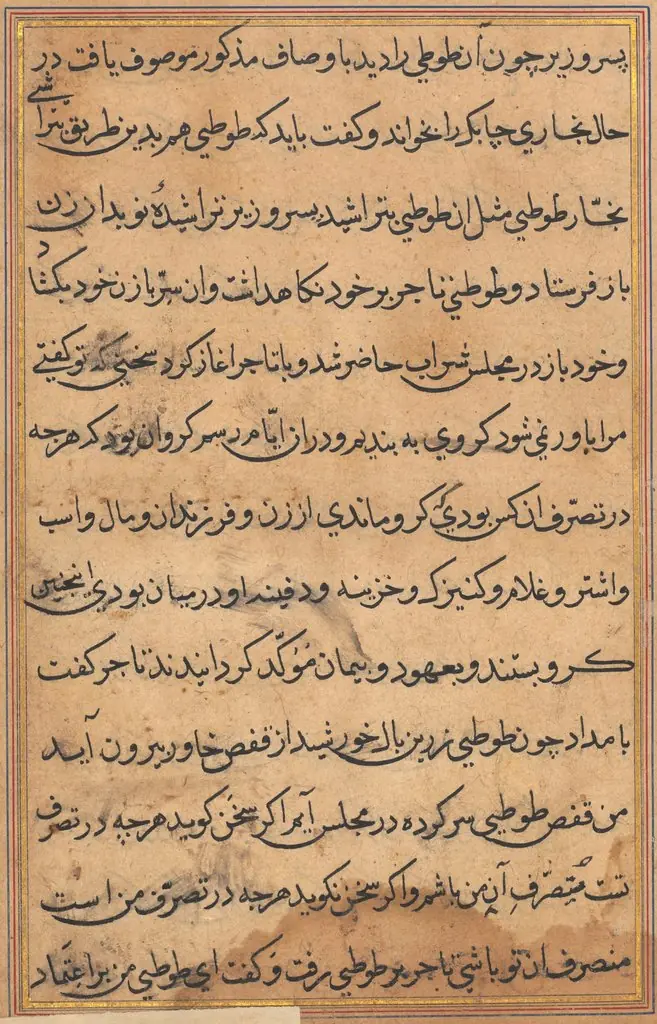
Page from Tales of a Parrot (Tuti-nama): text page
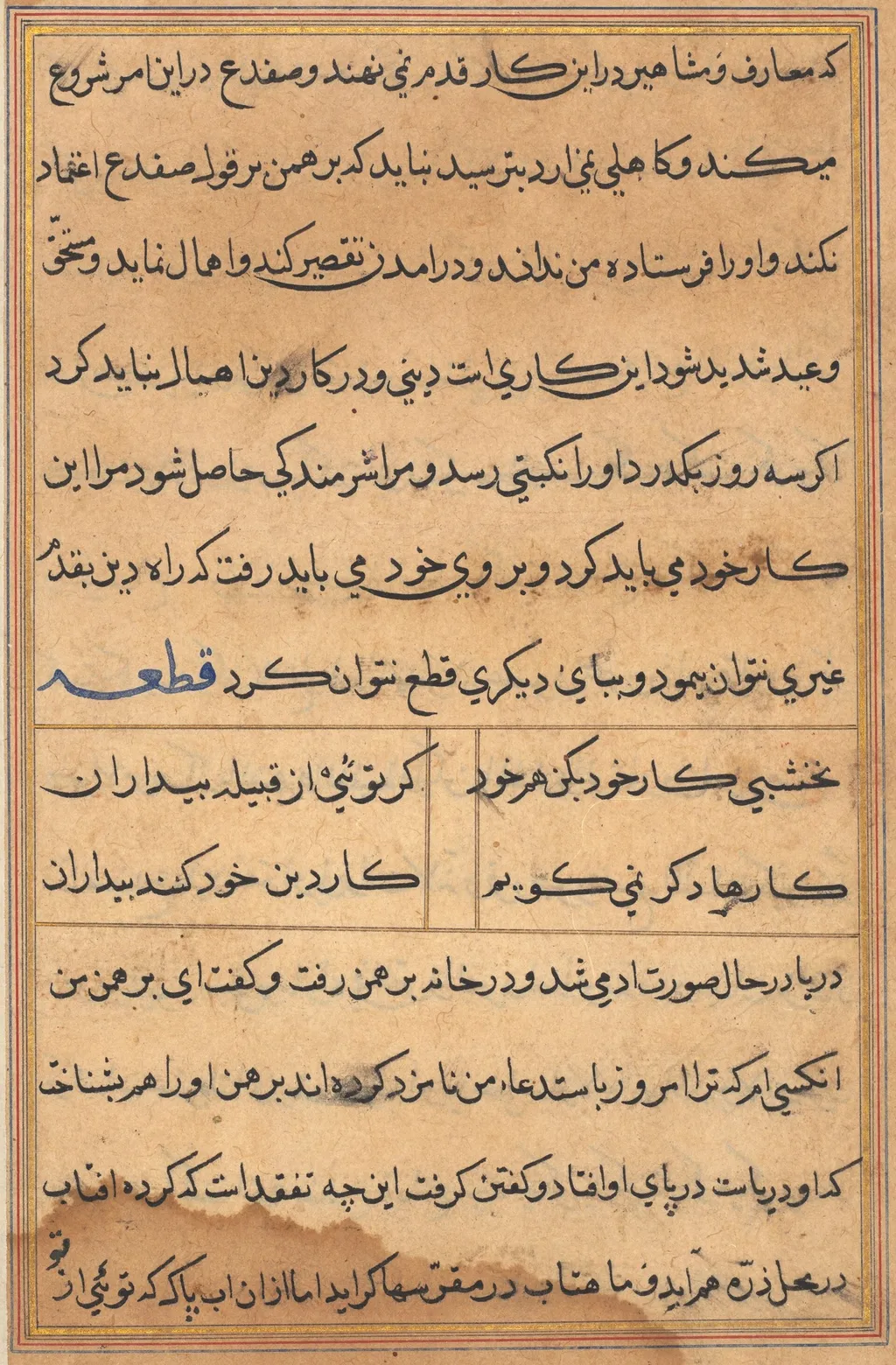
Page from Tales of a Parrot (Tuti-nama): text page is an unspecified painting. It dates from 1560 and is held in the collection of the Cleveland Museum of Art. This object is a painted page from the Persian manuscript known as Tales of a Parrot (Tuti‑nama).
About this work
History & Provenance
This painting was created in 1560 within the Mughal Empire, likely as part of a manuscript production. It belongs to the Cleveland Museum of Art collection, identified through archival records as item 1962.279.91.b, and is attributed to an unknown artist working in the Mughal artistic tradition.
Context
The miniature emerges from the Mughal imperial workshop in the mid-sixteenth century, reflecting a synthesis of Persian narrative illustration and indigenous Indian sensibility. Scholars view its compositional economy and flattened spatial rendering as markers of manuscript production under imperial patronage, situating it within broader debates on cross-cultural artistic exchange. Its attribution to an anonymous master underscores ongoing research into workshop practices, while its presence in the Cleveland Museum of Art highlights contemporary curatorial interest in pre-modern South Asian visual culture.
The work's stylistic economy and flattened space signal Mughal manuscript production under imperial patronage, reflecting Persian narrative traditions adapted to local visual idioms.
Overview
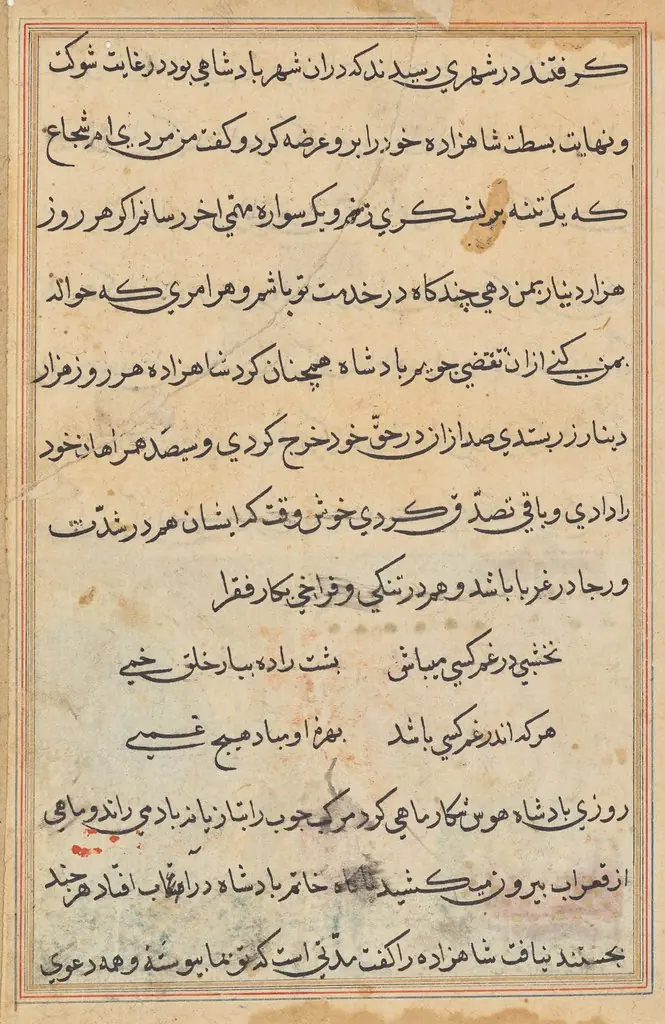
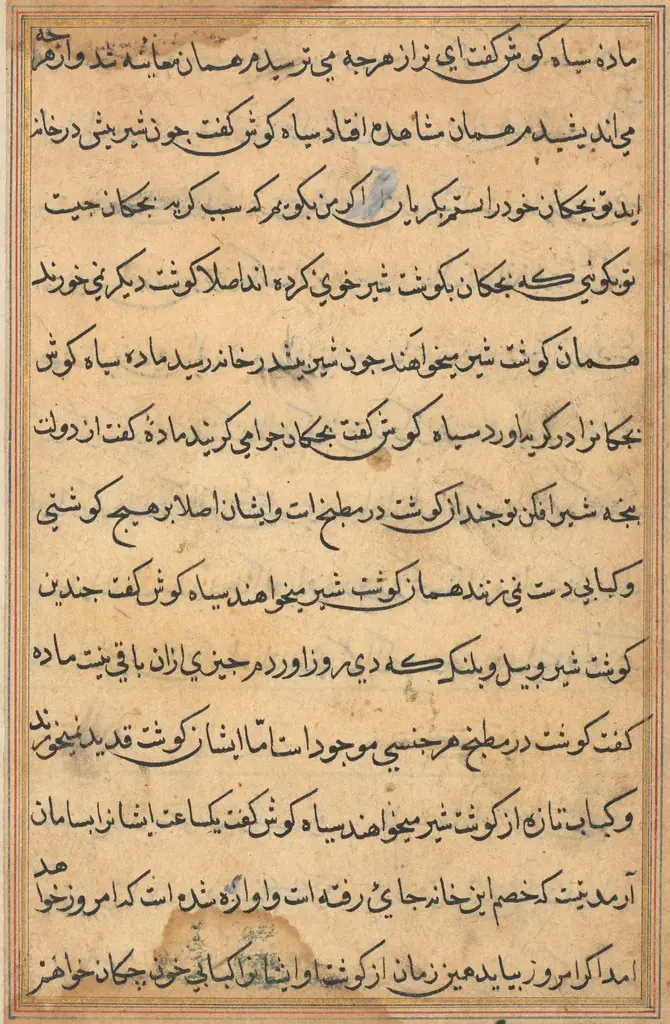
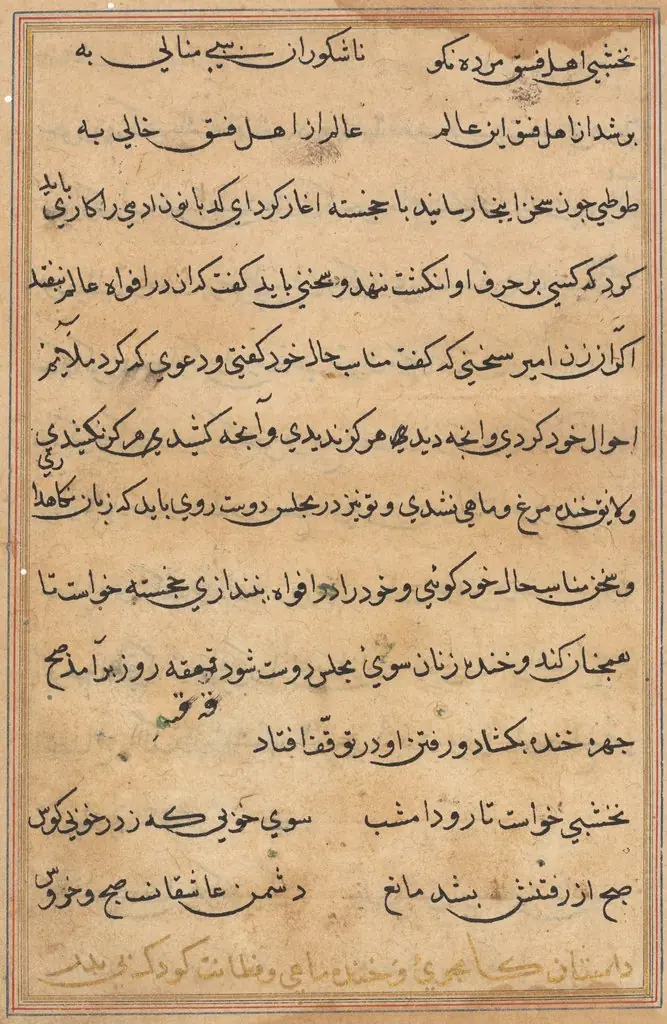
This object is a painted page from the Persian manuscript known as Tales of a Parrot (Tuti‑nama). Executed on a single sheet of aged, tan‑toned paper, the surface is covered entirely with calligraphic text, framed by a narrow red border that defines the page’s margins.
Subject & Meaning
The page contains a narrative segment of the Tuti‑nama, a collection of moral and didactic stories traditionally illustrated for courtly audiences. While the specific passage is not identified here, the text’s dense arrangement suggests a continuous prose passage rather than a decorative illustration.
Technique & Style
The calligraphy is rendered in flowing black ink, with occasional blue accents that highlight particular words or phrases. The script is organized in tight horizontal lines, demonstrating a disciplined hand typical of Persian manuscript production in the early modern period. The red border, painted with a thin brush, provides a subtle visual restraint.
Legacy
Pages such as this illustrate the enduring value placed on literary transmission in Persian culture. Even in the absence of elaborate imagery, the careful calligraphic execution underscores the manuscript’s role as both a literary and artistic object, informing contemporary understandings of manuscript production in the region.
Artist & collection

- Page from Tales of a Parrot (Tuti-nama): text page
 Page from Tales of a Parrot (Tuti-nama): text page
 Page from Tales of a Parrot (Tuti-nama): text page
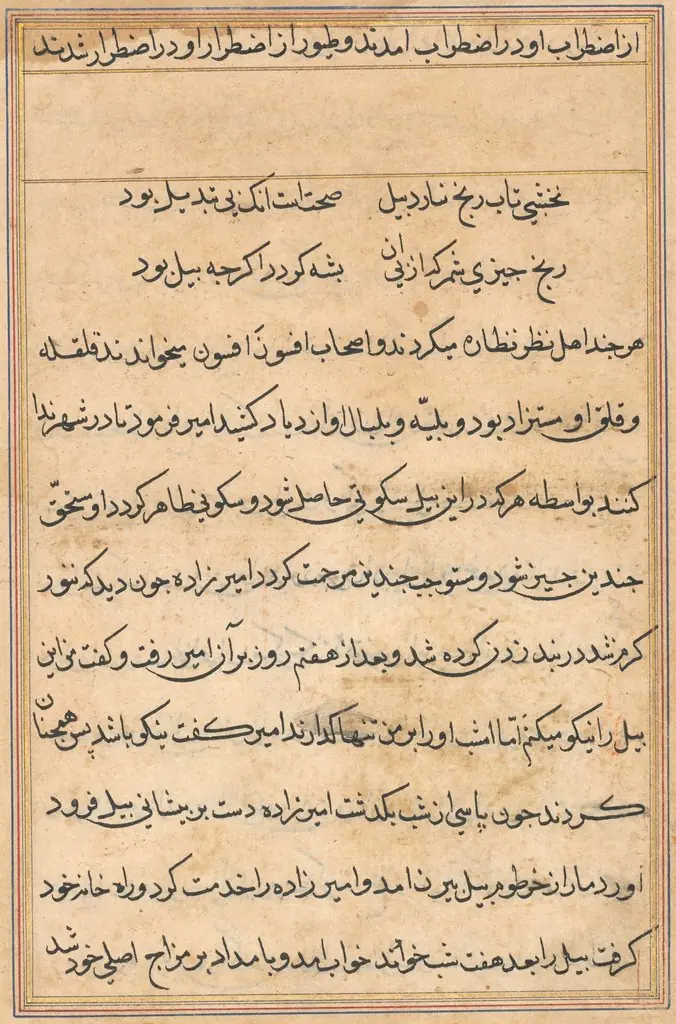 Page from Tales of a Parrot (Tuti-nama): text page
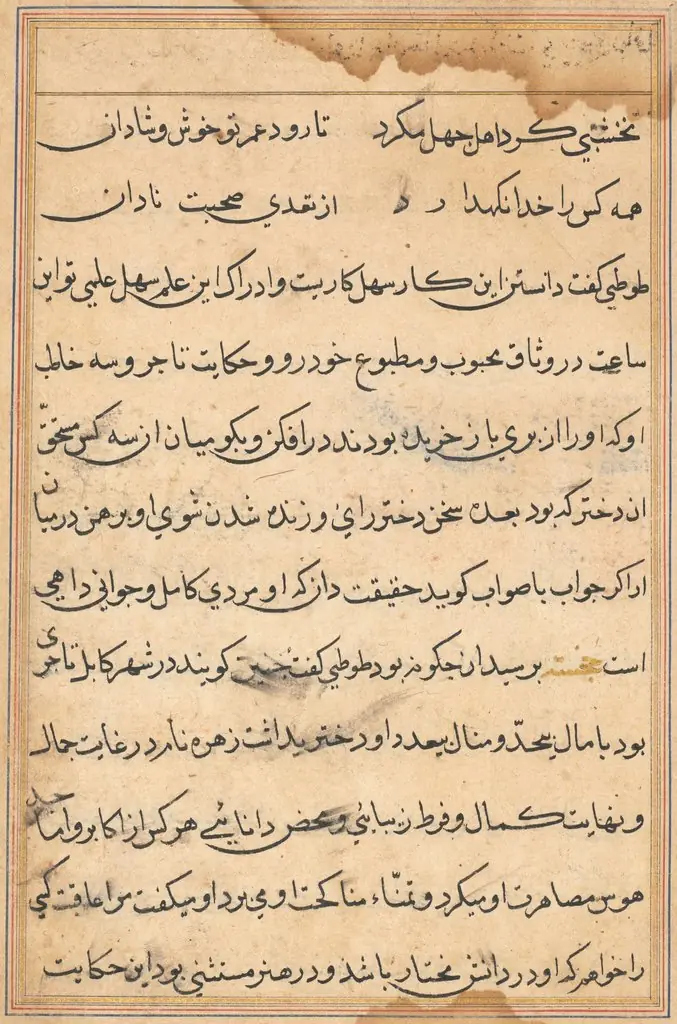 Page from Tales of a Parrot (Tuti-nama): text page
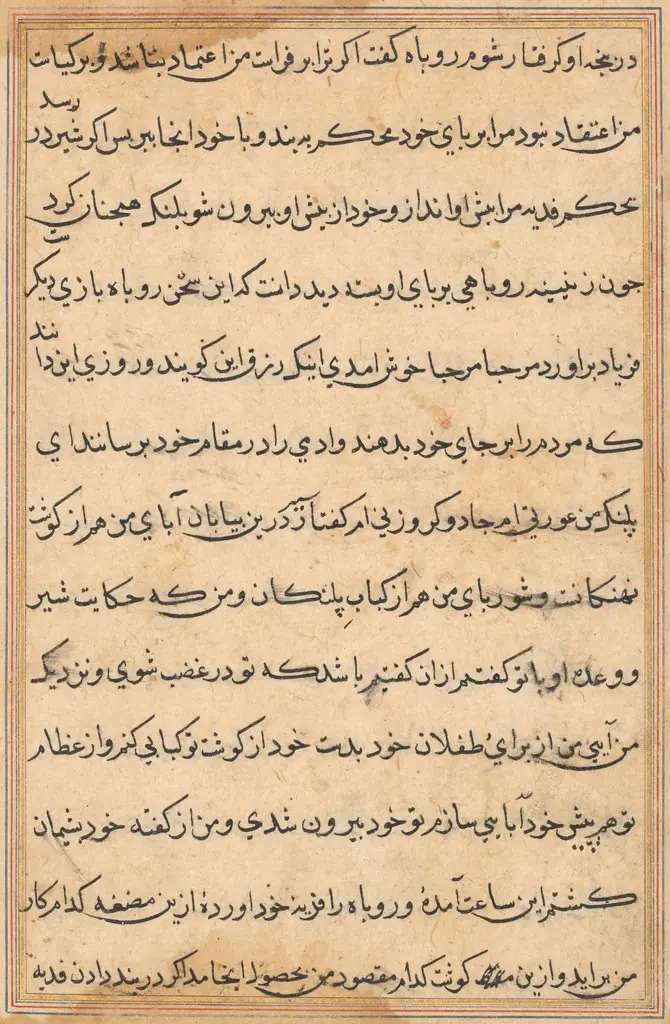 Page from Tales of a Parrot (Tuti-nama): text page
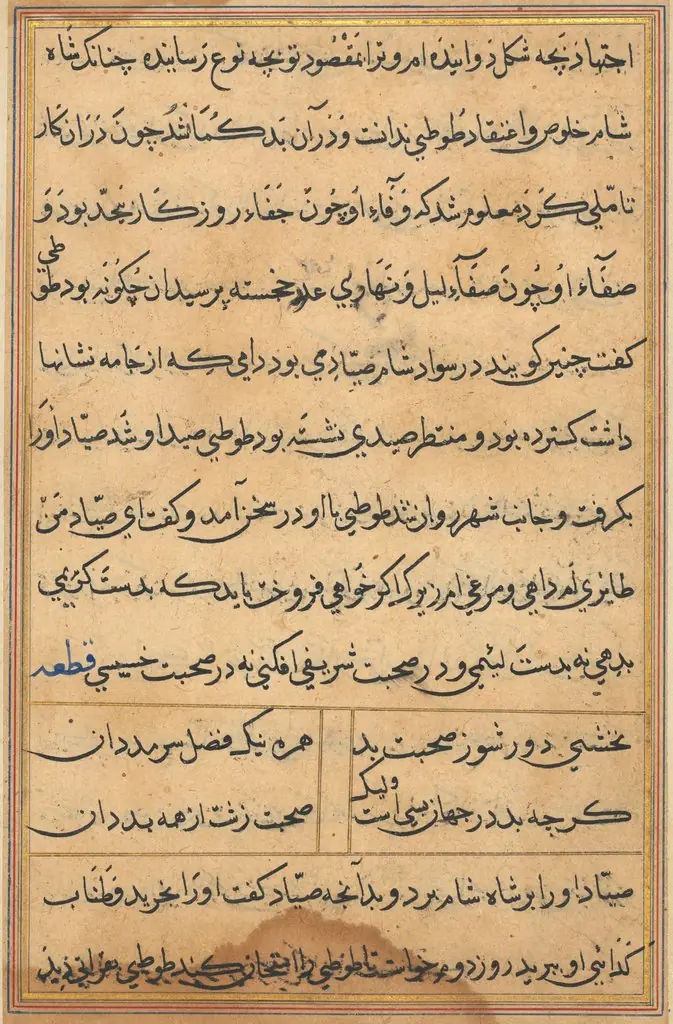 Page from Tales of a Parrot (Tuti-nama): text page
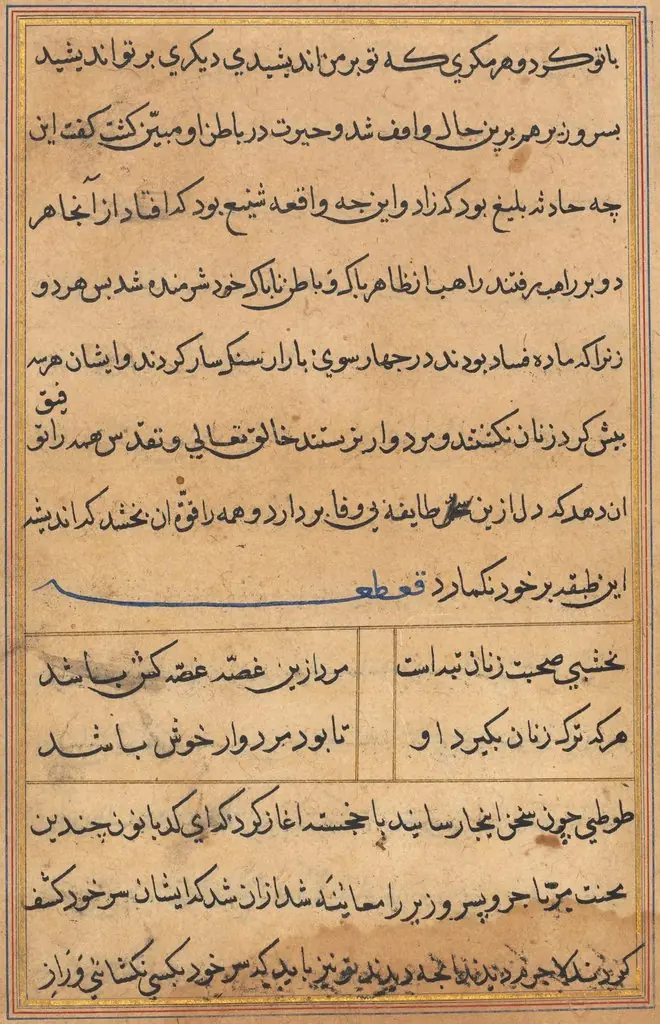 Page from Tales of a Parrot (Tuti-nama): text page
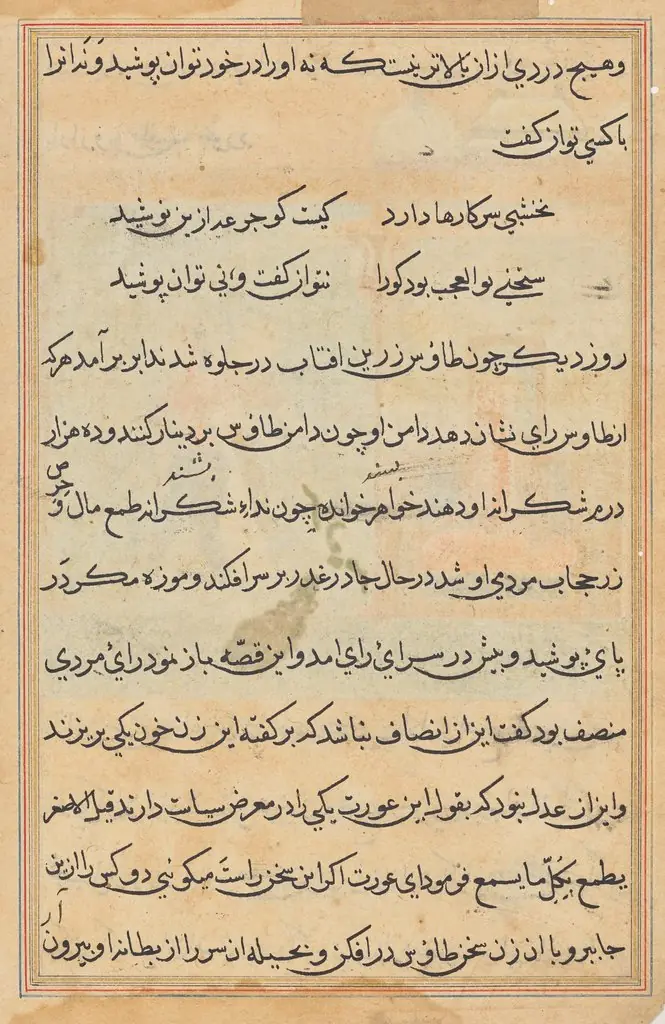 Page from Tales of a Parrot (Tuti-nama): text page
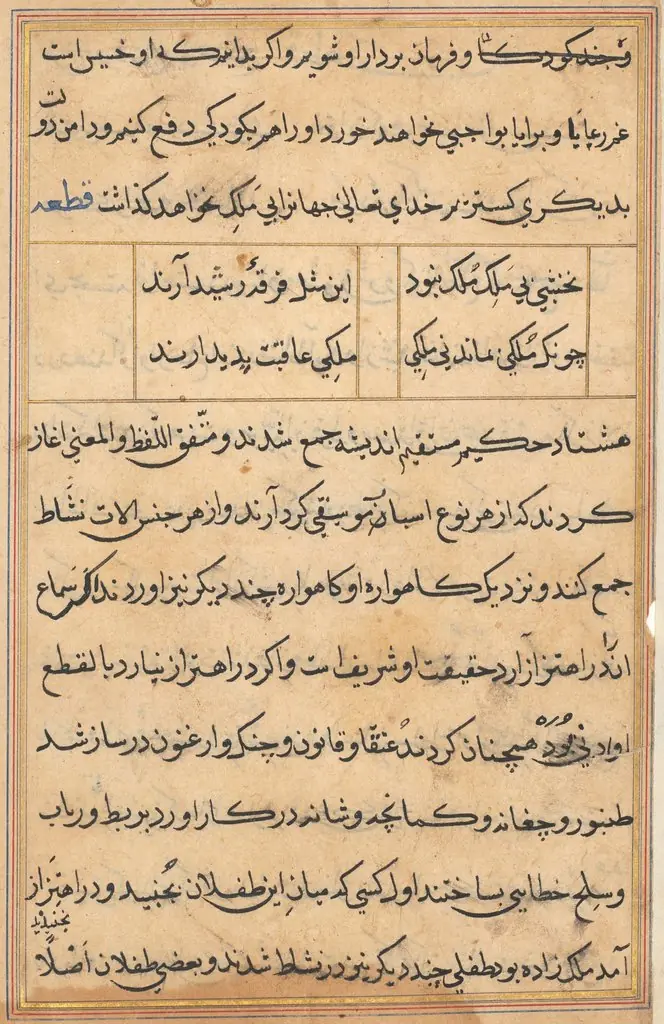 Page from Tales of a Parrot (Tuti-nama): text page
 Page from Tales of a Parrot (Tuti-nama): text page
 Page from Tales of a Parrot (Tuti-nama): text page