Artwork
Panel with the god Zeus/Serapis/Ohrmazd and worshiper
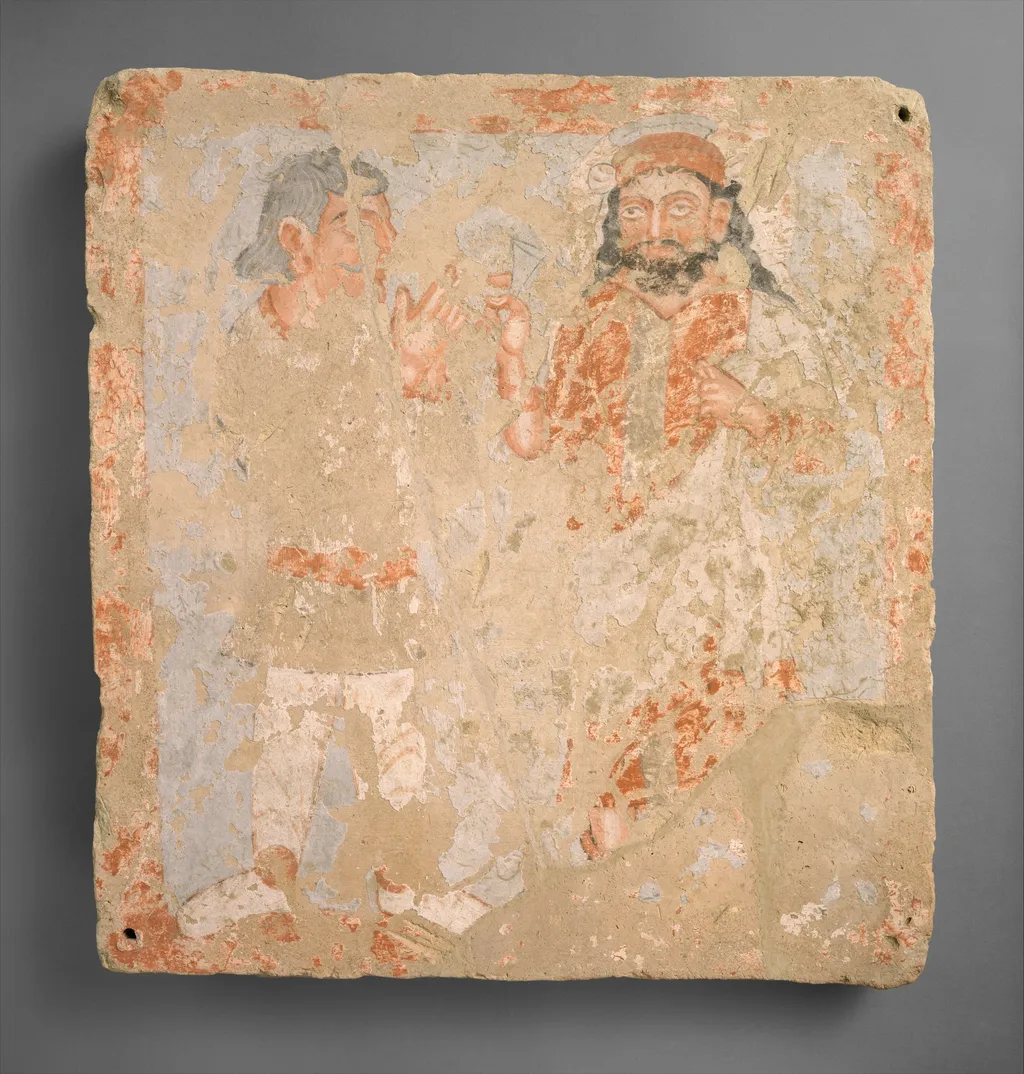
Panel with the god Zeus/Serapis/Ohrmazd and worshiper is an unspecified painting. It dates from 250 and is held in the collection of the Metropolitan Museum of Art. This painted wall fragment depicts two figures, one larger and one smaller, rendered with simple forms.
About this work
Subject & Meaning
The work’s classification as a religious painting and its presence in a major museum collection underscore its ritual significance as an object of worship.
The panel portrays a divine figure linked to Zeus, Serapis, or Ohrmazd standing beside a worshipper, combining elements of Greco‑Roman and Eastern traditions in a single image. This composition illustrates a syncretic religious milieu of the mid‑3rd century, where artistic programs merged deities from different pantheons to convey shared devotional themes. The work’s classification as a religious painting and its presence in a major museum collection underscore its ritual significance as an object of worship.
Technique & Style
The work is classified as a painting and described as a ceramics‑painting, indicating that pigment was applied to a ceramic support. The ceramic panel measures approximately 56.8 cm in height and 52.3 cm in width and dates to around 250 CE. Its religious genre shows a bearded figure identified as Zeus/Serapis/Ohrmazd facing a male worshiper, a composition that combines Greco‑Roman and Near Eastern divine attributes.
The paint likely consists of mineral pigments suited to a ceramic surface, though the sources do not detail the binding medium or current condition. No further technical handling or preservation notes are provided in the given references.
History & Provenance
The Panel with the god Zeus/Serapis/Ohrmazd and worshiper is held in the collection of the Metropolitan Museum of Art. While specific inventory or accession numbers are not detailed in the available records, the work is cataloged within the museum's holdings of ceramics and paintings. The piece, dated to approximately 250 CE, is recognized as a religious artwork depicting a worshiper and the deity Zeus.
No specific exhibition history or past display locations are recorded in the provided sources, though the work remains part of the institution's permanent collection. The panel measures 56.8 cm in height and 52.3 cm in width.
Context
The ceramic panel dated to around 250 CE depicts a syncretic deity identified as Zeus/Serapis/Ohrmazd alongside a worshipper, reflecting the religious pluralism of the late antique Mediterranean;. Classified as a religious painting, it is part of the Metropolitan Museum of Art's collection, where it is highlighted among ceramics-paintings. The work’s iconography and material context illustrate the broader production of sacred imagery on ceramic surfaces in this period, situating the artist within a corpus of late antique religious art that merged diverse theological traditions. Its preservation and study contribute to scholarly understanding of cross‑cultural artistic exchange in the Roman East.
Legacy
The panel’s inclusion in the Metropolitan Museum of Art’s collection has positioned it as a key example of syncretic religious imagery from the mid‑3rd century, influencing subsequent scholarship on the blending of Greco‑Roman and Eastern deities. Its display alongside related ceramic paintings has drawn attention to the artistic exchange between Hellenistic and Persian traditions, reinforcing the work’s reputation as a benchmark for studying hybrid iconography. The museum’s curatorial focus on such objects has contributed to renewed academic interest and broader public awareness of the period’s multicultural artistic dialogue.
Overview
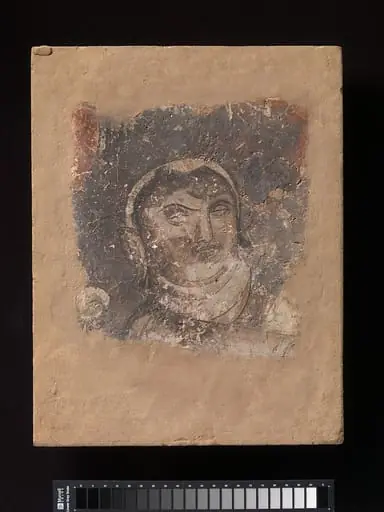
This painted wall fragment depicts two figures, one larger and one smaller, rendered with simple forms. The artwork's surface is damaged, and its colors have significantly faded over time. The composition features a prominent, bearded figure, likely a deity, alongside a smaller individual who appears to be reaching towards them, indicating a scene of reverence or interaction.
Artist & collection

- Untitled
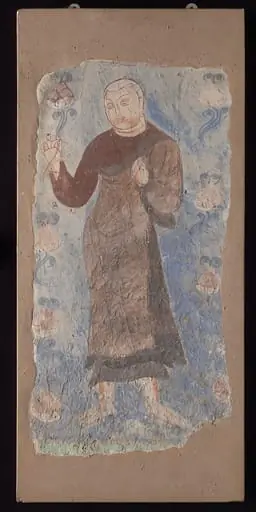 Untitled
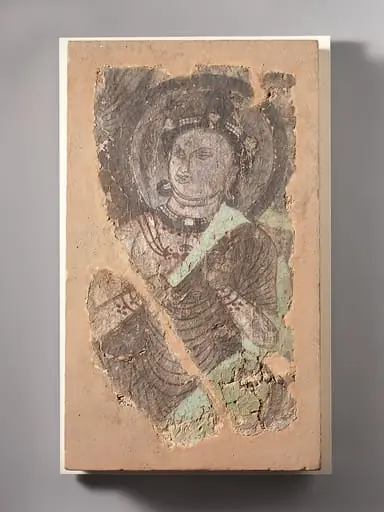 Untitled
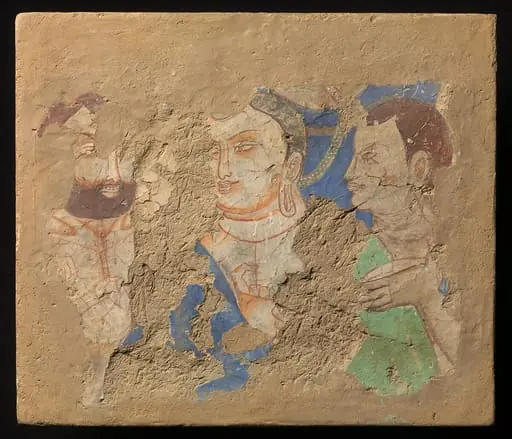
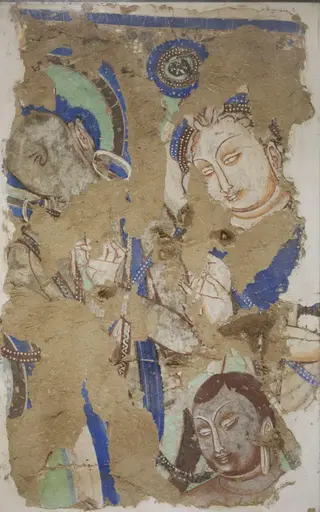 Three Heads (fragment of a wall painting)
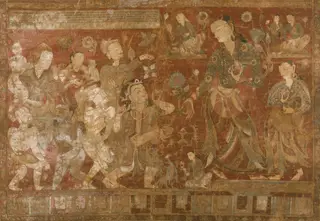 The Mahasiddha (Great Adept) Vanaratna (1384-1468) Receiving Abhishekha (Initiation) from Sita Tara (White Tara)
 Untitled
 Sarcophagus of Ammonios
 Bas-relief portion of frieze with three comic figures in terra cotta
 Fragment with a Head of Bodhisattva
 Bodhisattva Samantabhadra purifies the path to enlightenment, with Manjushri, folio 348 (verso) from a Gandavyuha-sutra (Scripture of the Supreme Array)
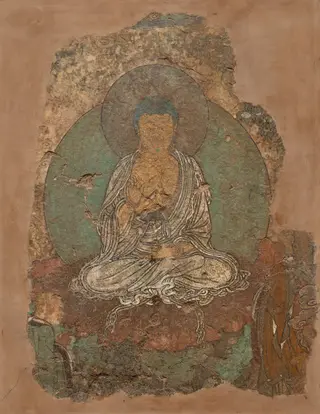 Buddha in the Preaching Attitude
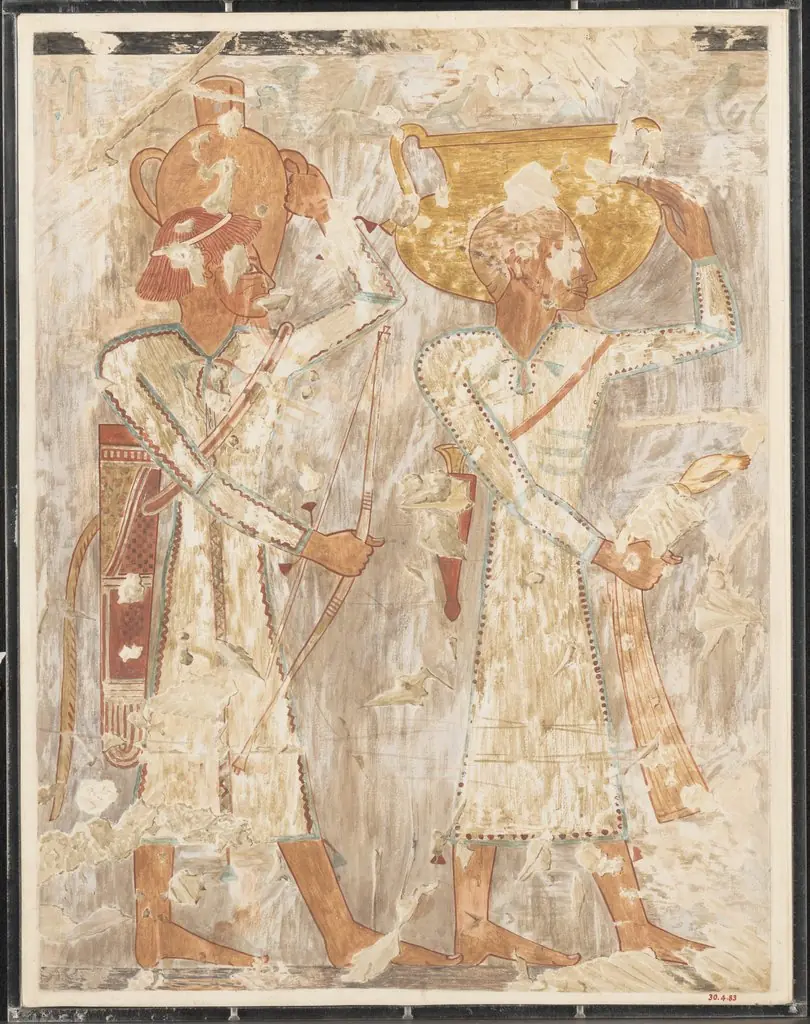 Syrians Bringing Vessels and Weapons, Tomb of Rekhmire