Artwork
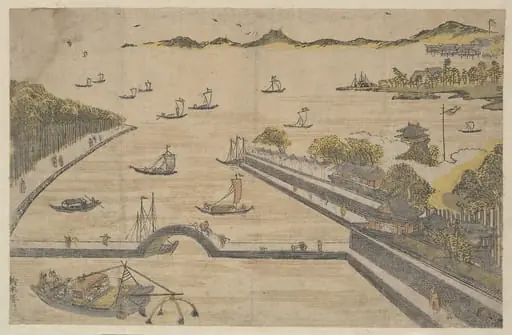
Perspective Print Depicting a Canal
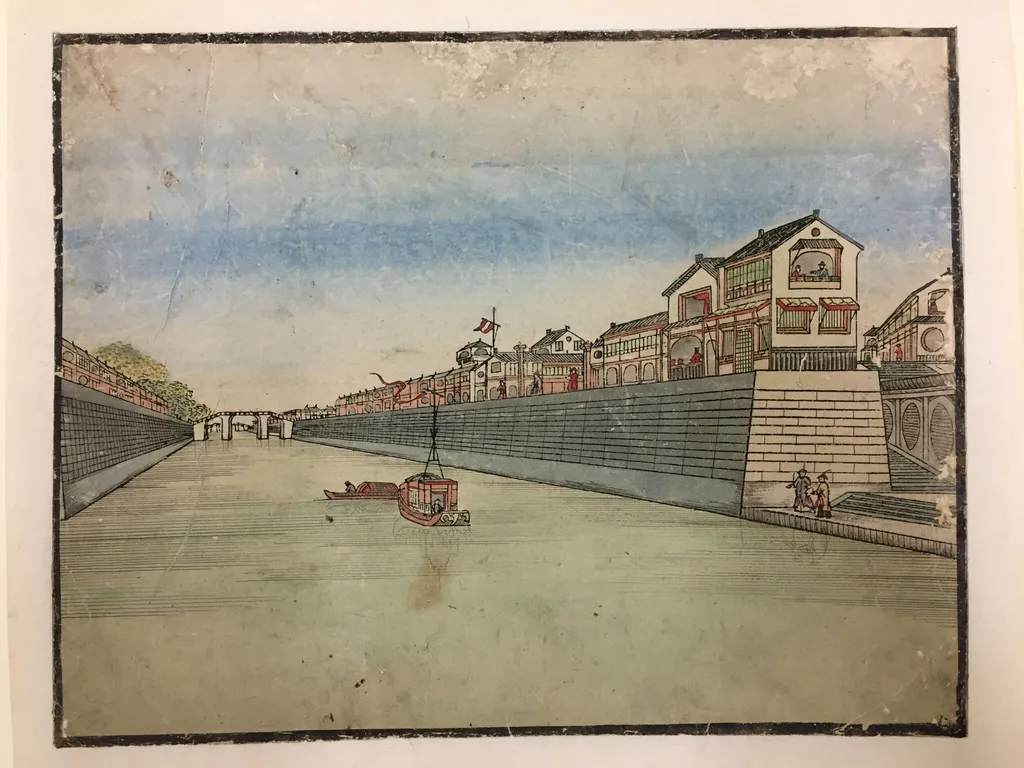
Perspective Print Depicting a Canal is a print by the Romanticist artist Unknown. It dates from 1750 and is held in the collection of the Victoria and Albert Museum.
About this work
Overview
Executed in a single color or limited palette, it reflects the conventions of Japanese woodblock printing, emphasizing spatial depth and everyday observation.
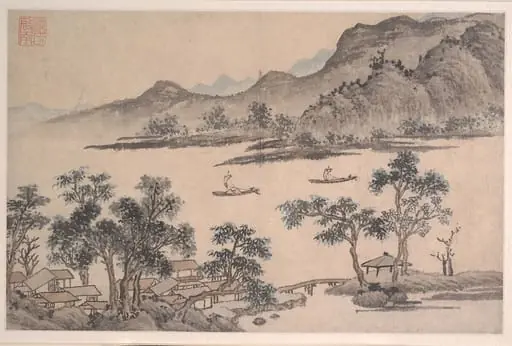
This print, dated approximately 1750, captures a quiet canal scene with boats gliding beneath a bridge and modest dwellings lining the banks. Executed in a single color or limited palette, it reflects the conventions of Japanese woodblock printing, emphasizing spatial depth and everyday observation. The composition balances horizontal lines of architecture with the verticality of flagpoles and the gentle curve of water, creating a calm, measured rhythm.
Subject & Meaning
The scene depicts a routine moment in a waterway community, where daily life unfolds along the canal. Boats suggest commerce or transport, while the fluttering flags on buildings may indicate household identity or local custom. The absence of human figures invites contemplation rather than narrative, focusing attention on the quiet interplay between architecture, water, and sky as markers of place and routine.
Technique & Style
The print employs subtle tonal gradations and careful line work to suggest depth, using controlled contrasts rather than dramatic chiaroscuro. Water is rendered with soft, horizontal strokes, while buildings are defined by clean, angular contours. The reflection of the boat in the canal is indicated with faint, parallel lines, enhancing stillness. The style aligns with ukiyo-e traditions, prioritizing clarity and atmospheric suggestion over realism.
History & Provenance
The print entered the collection in 1912, acquired from Mr. Hogitaro Inada. Its documentation was confirmed during a 2022 provenance review conducted by the Asia Department, which verified the acquisition record in institutional registers. No earlier ownership history is recorded in available sources, and the print’s origin within Japan remains unspecified, though its style suggests a regional urban center active in print production during the mid-18th century.
Context
Produced during the Edo period, this print reflects the growing popularity of landscape and genre scenes in Japanese printmaking. Canals and waterways were common subjects, tied to urban development and commercial activity in cities like Edo and Osaka. Such prints were affordable and widely circulated, serving both as decorative art and as visual records of everyday environments for a broad audience.
Legacy
This print contributes to a broader corpus of Edo-period works that document the visual culture of Japan’s waterways. While not attributed to a known artist, its preservation and study offer insight into regional print practices and the aesthetic values of ordinary life. It remains a quiet example of how printmaking captured the rhythms of daily existence beyond grand historical or theatrical themes.
Artist & collection









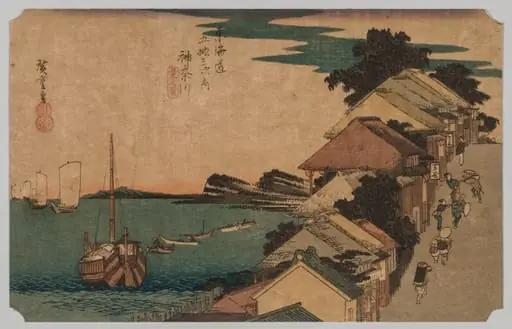
- Kanagawa, Inland Sea: Top of the Street
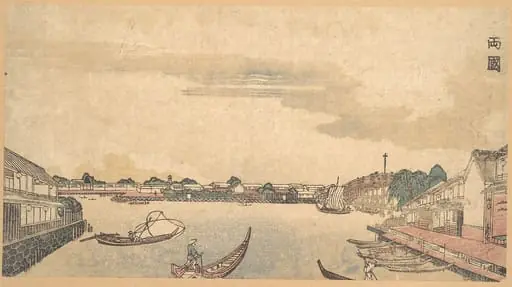 Untitled
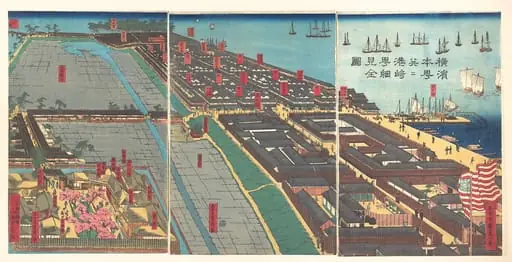 Yokohama Hon-chō...ni Miyozaki...kenkin zu|Detailed Print of Yokohama Hon-chō and the Miyozaki Pleasure Quarter
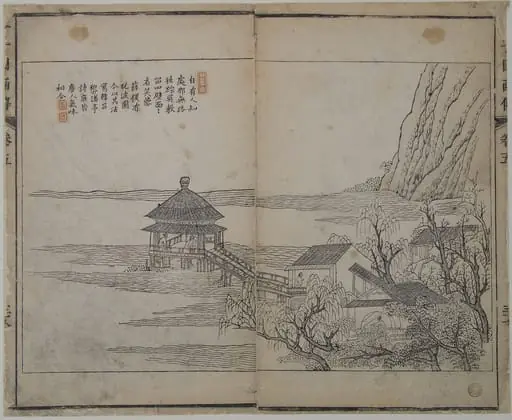 Untitled
 Untitled
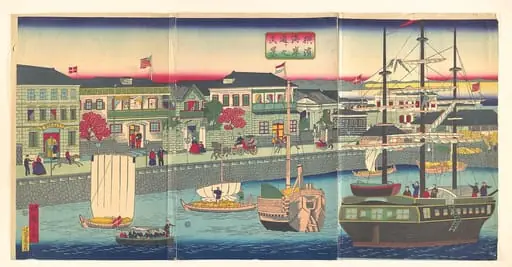 横浜海岸通り之風景|View of the Seafront in Yokohama (Yokohama Kagandori no fūkei)
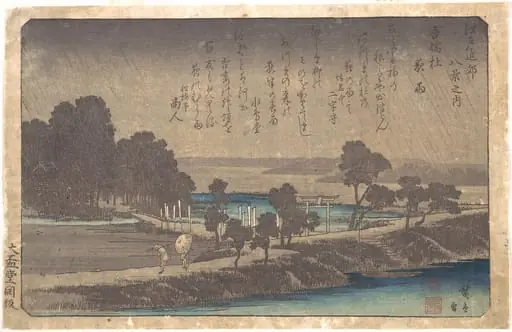 Azuma Mori Yau|江戸近郊八景之内 吾嬬杜夜雨|Evening Rain in Azuma Wood
 Untitled
 神奈川横浜港崎町遊女屋光景|View of the Miyozaki Brothel District in Yokohama, Kanagawa (Kanagwa Yokohama Miyozaki machi yūjoya kōkei)
 The Dragon Boat Festival
 Garden Scene
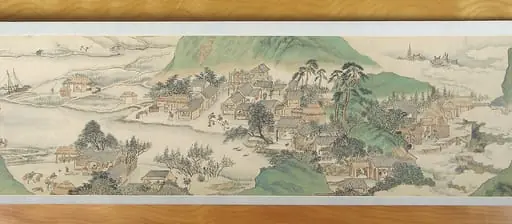 明/清 張宏 桃源勝概圖 卷|Peach Blossom Spring