Artwork
Portrait of a man
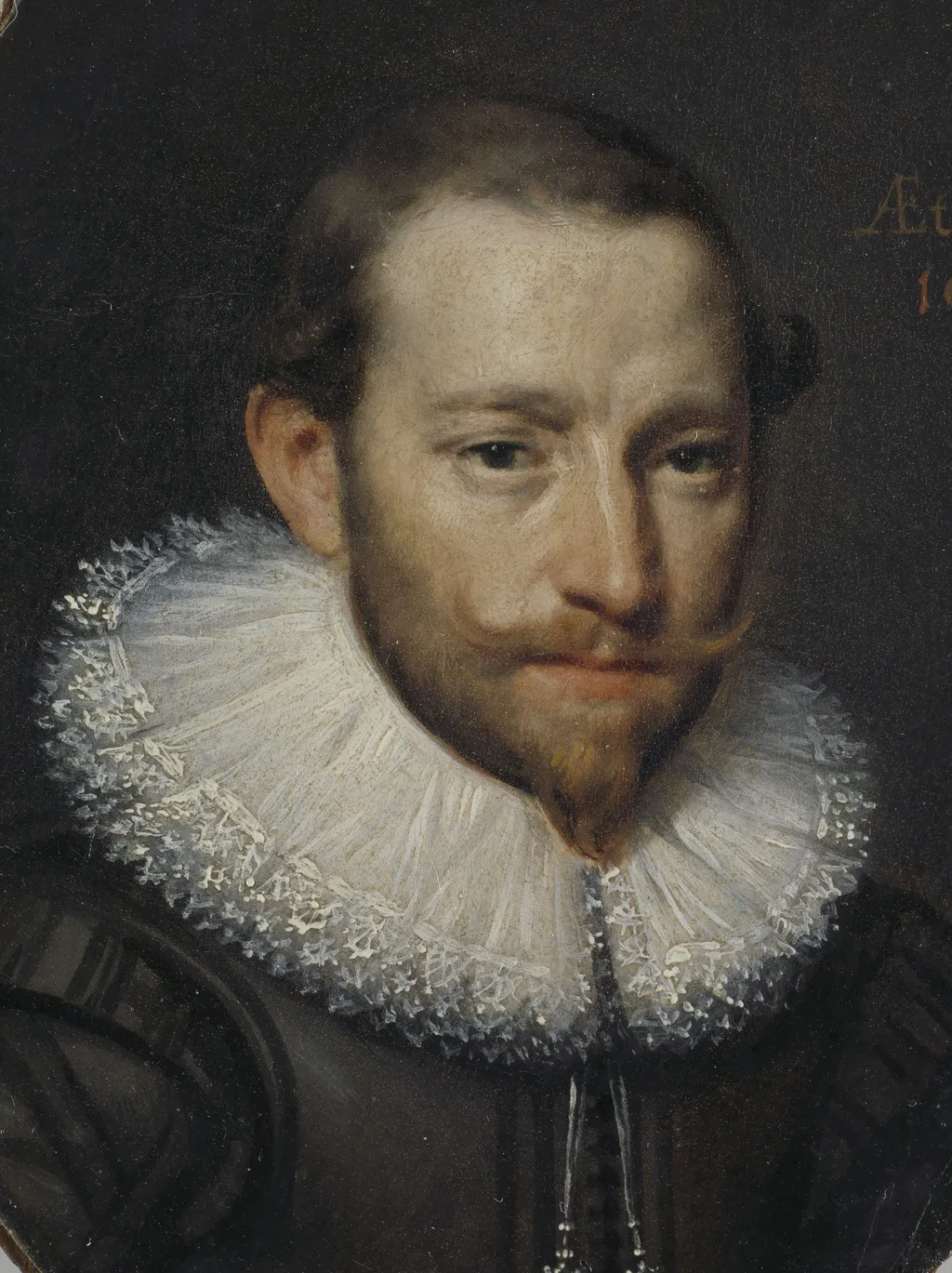
Portrait of a man is an oil painting. It dates from 1627 and is held in the collection of the Rijksmuseum. The work is an oil painting that depicts a solitary male figure rendered against a predominantly dark backdrop.
About this work
Subject & Meaning
The painting presents an unnamed sitter rendered in oil on panel, a format typical of 17th-century Dutch portraiture.
The painting presents an unnamed sitter rendered in oil on panel, a format typical of 17th-century Dutch portraiture. The work shows a man whose identity remains unspecified, allowing the likeness to function as a study of individual presence rather than a narrative scene tied to a known figure. Its composition and material echo the conventions of Northern Low Countries portraiture of the 1620s, emphasizing realistic rendering and modest display of status.
Technique & Style
This oil painting on panel measures 13 by 10 centimeters and depicts a solitary male sitter. It was executed in 1627 in the Northern Low Countries and retains its original panel support, though the surface shows typical craquelure from age. The formal composition emphasizes a three-quarter view with restrained chiaroscuro, characteristic of early Dutch portraiture, while the brushwork remains relatively smooth and descriptive.
History & Provenance
The work titled Portrait of a man was created in 1627 as an oil painting on panel. It depicts an anonymous man and was made in the Northern Low Countries. The painting entered the collection of Jacob de Witte van Citters before being acquired by the Rijksmuseum Amsterdam, where it remains on display.
Its dimensions measure 13 cm in height by 10 cm in width, and it is classified as a portrait from the 17th century.
The work was likely commissioned or painted for an unknown patron, reflecting the portraiture trends of the Dutch Golden Age. The artist is identified only through attribution to the circle of the anonymous painter recorded in the Rijksmuseum collection.
The painting’s provenance traces a clear ownership chain from de Witte van Citters to the national museum, establishing its continued preservation and public access.
The painting is held in the collection of the Rijksmuseum in Amsterdam, where it is catalogued under inventory number SK-A-2079. It is executed in oil paint on panel and dates to 1627. According to the work's documented provenance, the panel was formerly owned by Jacob de Witte van Citters before entering the museum's holdings. No exhibition history is recorded in the available sources.
Overview
The work is an oil painting that depicts a solitary male figure rendered against a predominantly dark backdrop. The sitter’s expression is solemn, his short dark hair and neatly trimmed beard are clearly defined, and he wears a stark white lace collar that draws immediate attention. Light falls on his face, isolating it from the surrounding shadows and creating a focused, intimate portrait.
Context
While specific details about the artist or date are absent, the painting’s use of chiaroscuro and emphasis on a single, illuminated figure align it with traditions dating back to the Baroque period, when such lighting techniques were popularized to convey psychological depth. The restrained composition and focus on material detail suggest an interest in realistic representation common among portraitists seeking to capture individual character.
Artist & collection

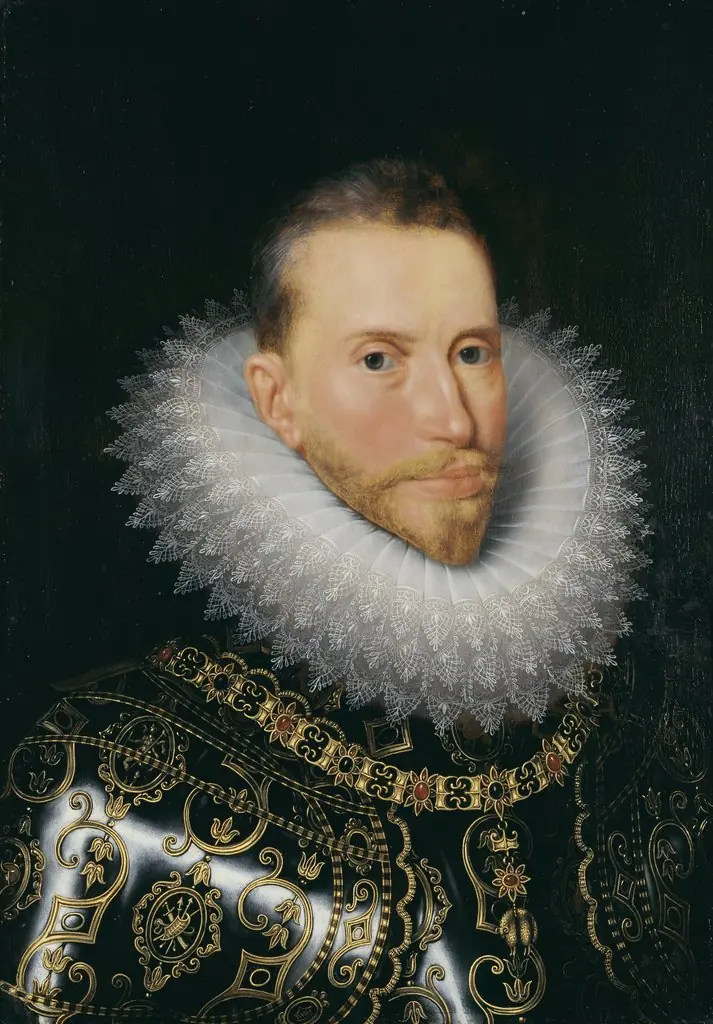 Portrait of the Archduke Albert
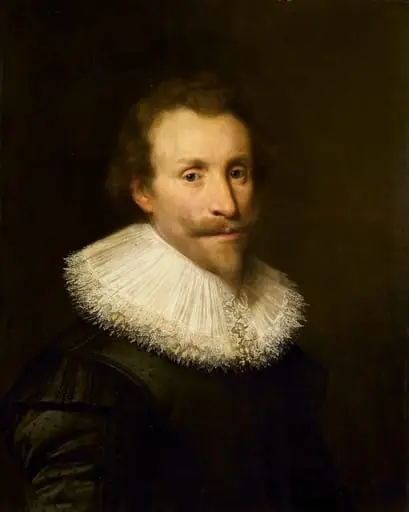 Untitled
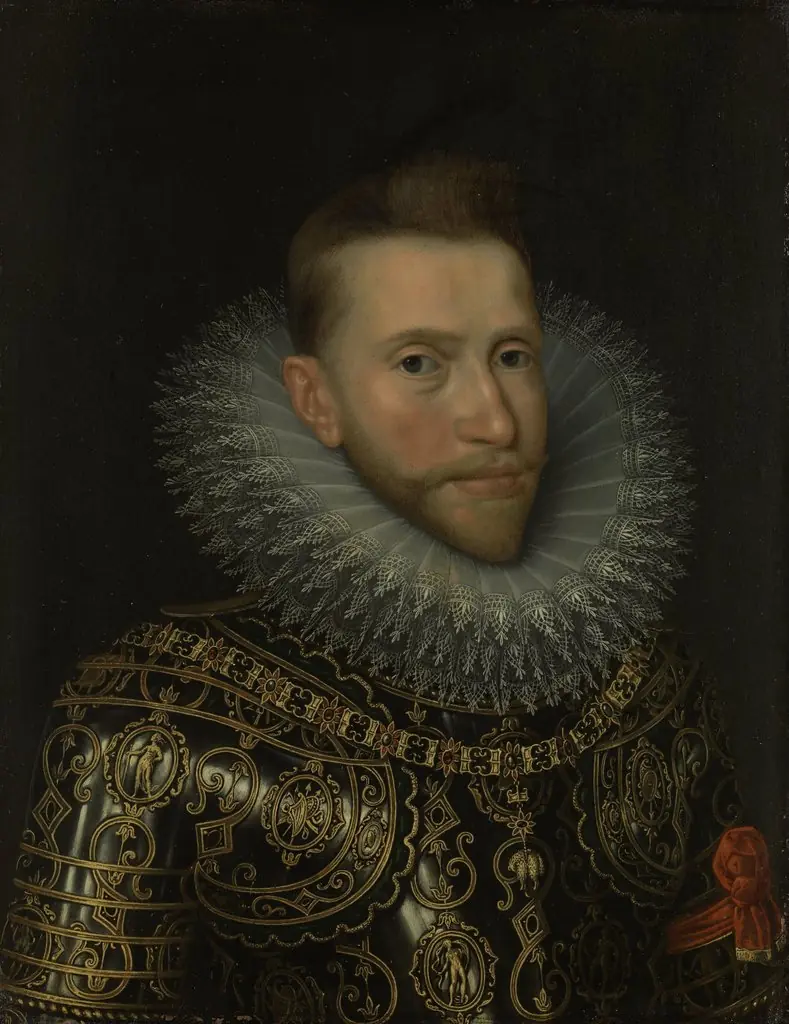 Albert VII, Archduke of Austria
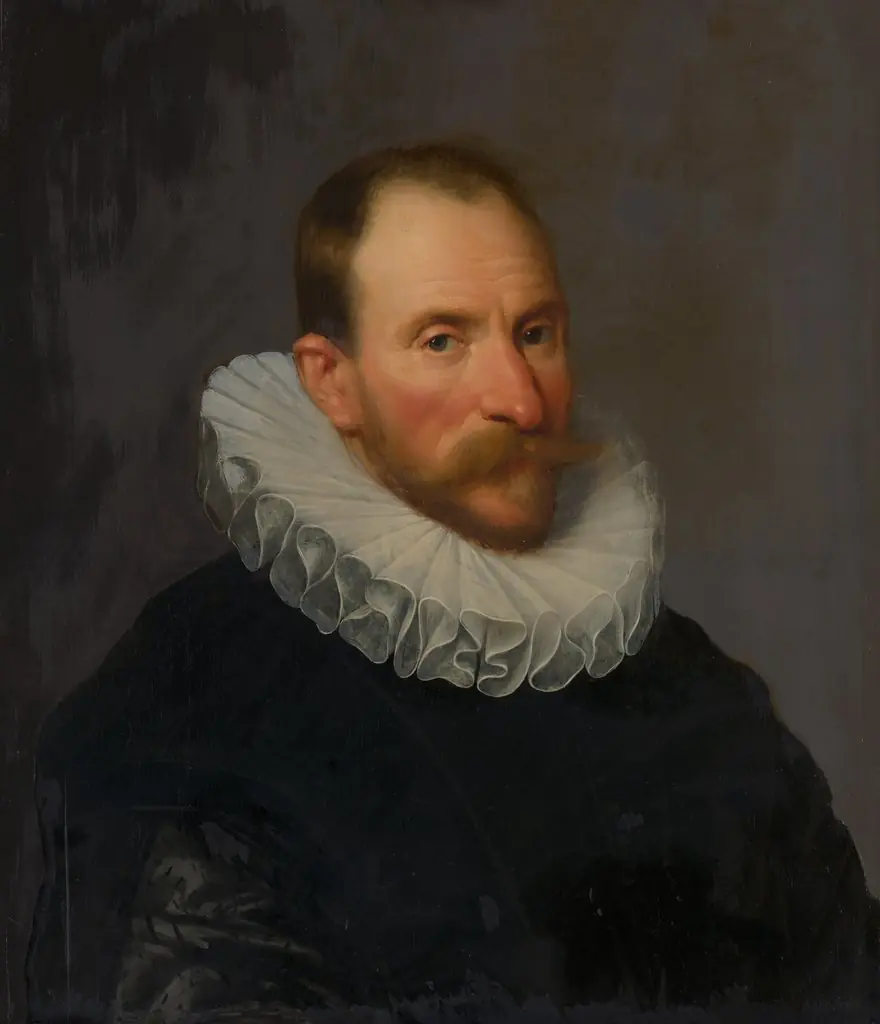 Portrait of Cornelis van Aerssen (1545-1627)
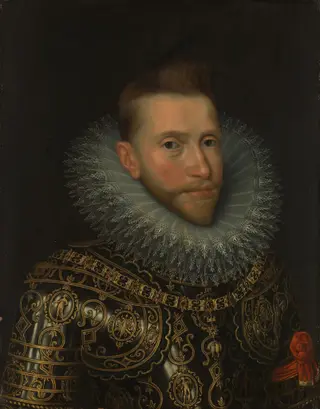 Untitled
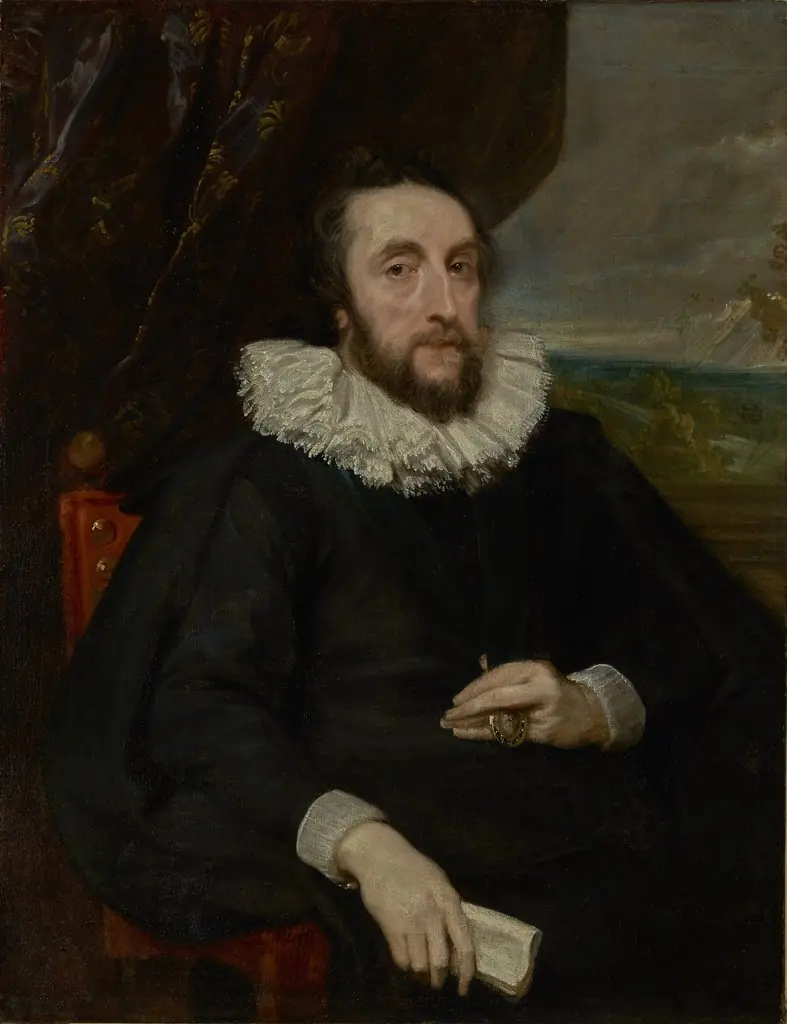 Portrait of Thomas Howard, 21st Earl of Arundel
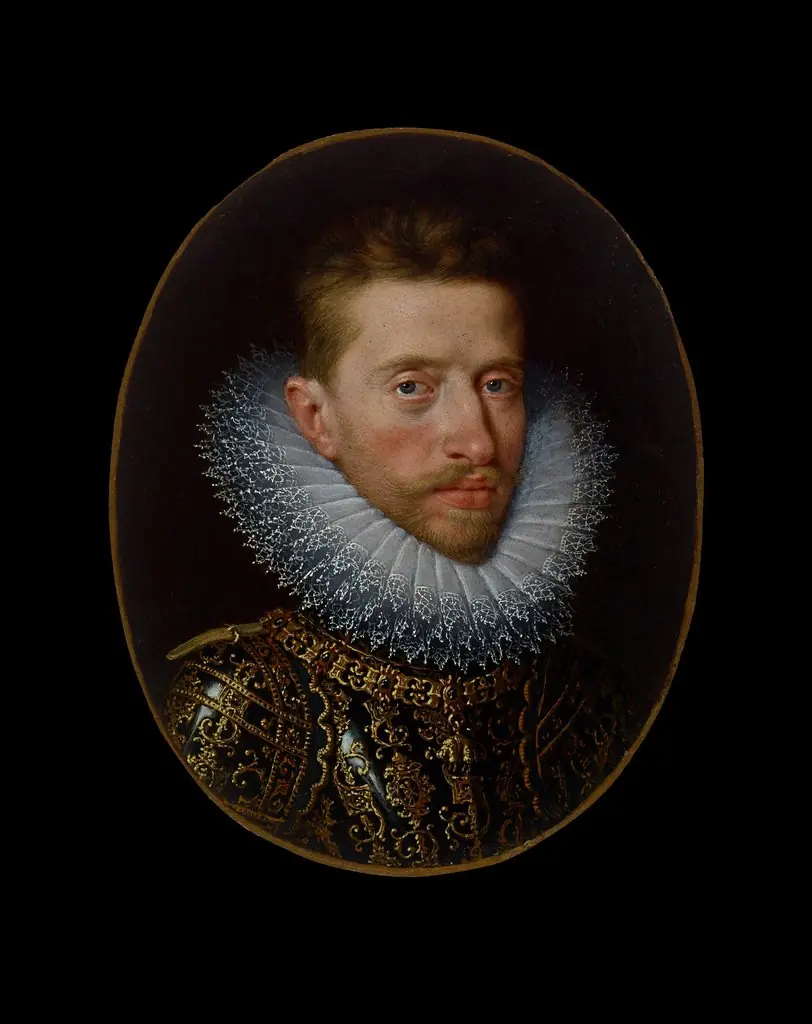 Archduke Albert VII of Austria (1559–1621), Wearing the Order of the Golden Fleece
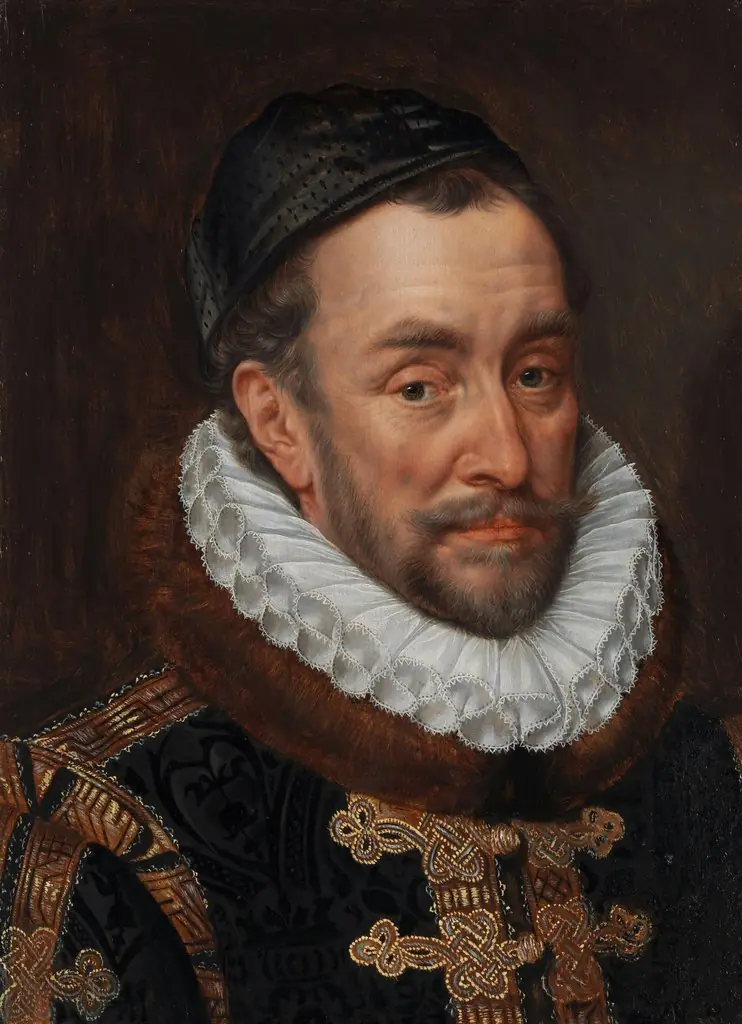 William I, Prince of Orange
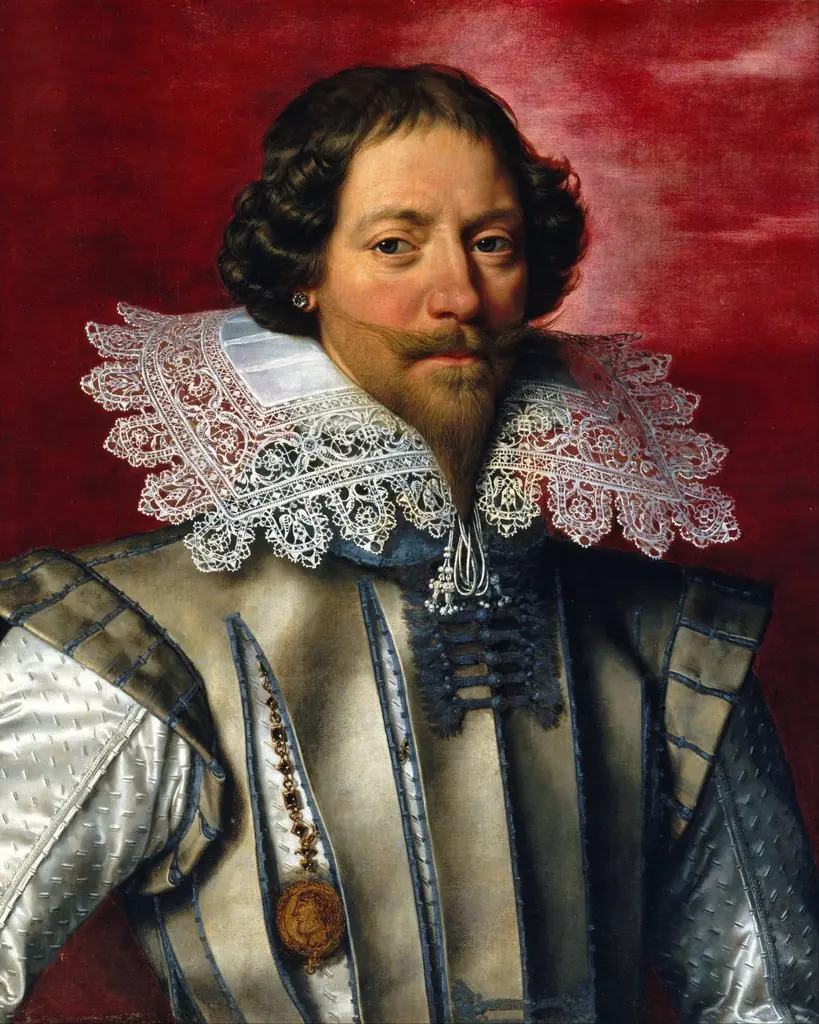 Portrait of a man
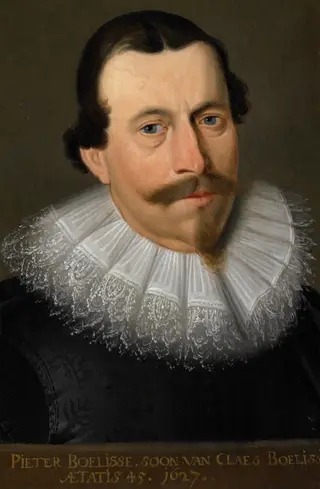 Portrait of Pieter Claesz Boelens (1582-1627)
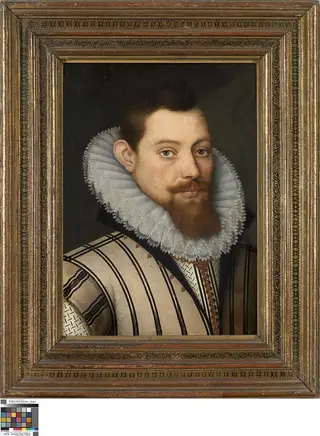 Portrait of a Man
- Portrait of a man