Artwork
Portrait of a Man on a Horse
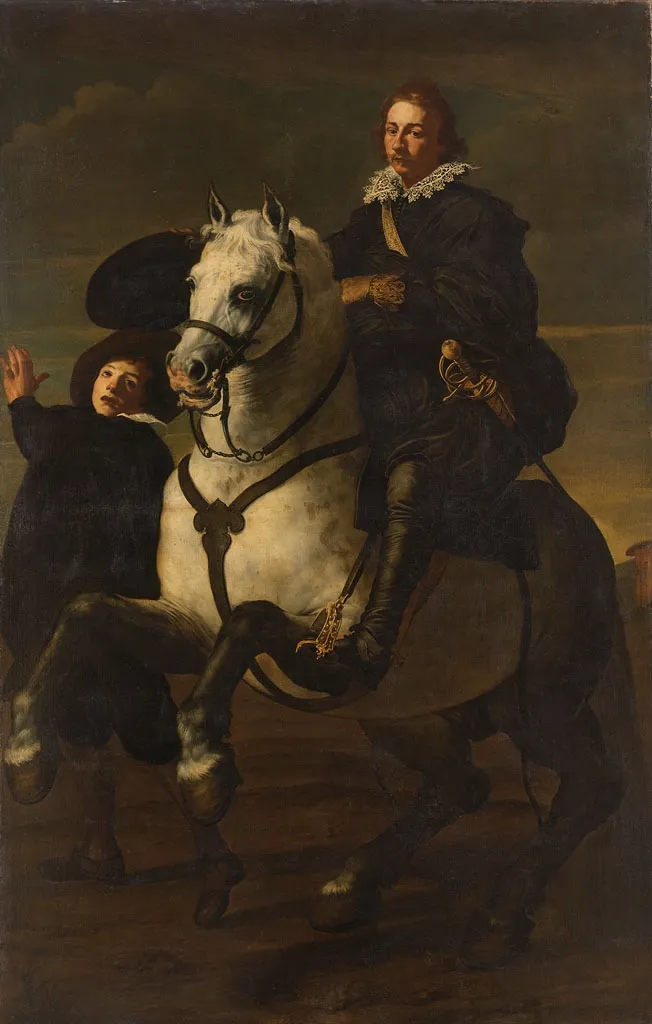
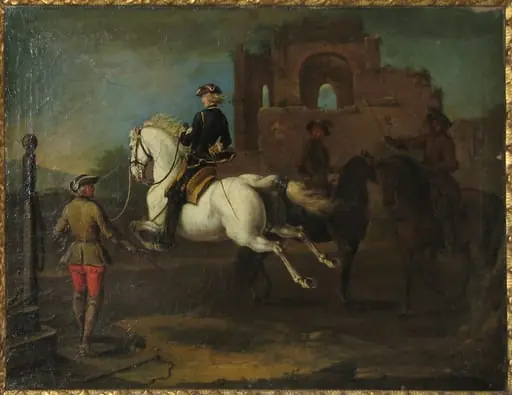
Portrait of a Man on a Horse is an oil painting. It dates from 1615 and is held in the collection of the Rijksmuseum. The work is an oil painting that depicts a rider on a white horse.
About this work
Subject & Meaning
The combination of the rider's hat and the mounted pose reinforces these associations, signaling the sitter's elevated social position.
The painting is an equestrian portrait depicting a man wearing a hat, mounted on a horse. The 1615 work presents its subject in the formal conventions of the equestrian genre, a format historically reserved for figures of rank, military command, or aristocratic standing, where the horse functions as a symbol of status, authority, and command.
The combination of the rider's hat and the mounted pose reinforces these associations, signaling the sitter's elevated social position. As an anonymous portrait, the work emphasizes the symbolic language of the genre rather than personal identification, presenting the subject as a representative figure of authority and prestige within early seventeenth-century portraiture.
Technique & Style
Executed in oil on canvas in 1615, the painting employs a restrained yet descriptive handling typical of early seventeenth-century Dutch portraiture. The artist builds form through thin, translucent glazes over a warm imprimatura, allowing the ground to show through in the shadows and creating a subtle luminosity across the sitter’s face and the horse’s flank. Brushwork remains smooth in flesh areas and the animal’s musculature, while the hat and costume details are rendered with finer, linear strokes that define texture without hardening the overall effect.
The composition’s stable pyramid, anchored by the horse’s head and the man’s steady gaze, contrasts with the animated yet controlled posture of the horse, whose raised foreleg is resolved with careful anatomical observation rather than dramatic tension.
The condition appears stable, with no major tears or losses reported; the canvas support shows normal aging but retains its original tension, and the paint layer remains intact with only minor abrasion in the darkest passages.
History & Provenance
The work titled Portrait of a Man on a Horse was created in 1615 by an anonymous Dutch hand, executed in oil on canvas and classified as an equestrian portrait. It entered the collection of Adriaan van der Hoop, who bequeathed it to the Rijksmuseum and the Amsterdam Museum, where it remains on view today. The painting measures 306 cm by 196.5 cm and was catalogued in the Rijksmuseum’s holdings as part of the van der Hoop collection.
The work was commissioned as a likeness of a rider, reflecting the sitter’s aristocratic status, and was painted during the Dutch Golden Age when portraiture frequently combined realism with symbolic display. Its provenance is documented through van der Hoop’s ownership, with the piece later becoming part of the museum’s permanent collection.
The painting is held by the Rijksmuseum, Amsterdam, where it entered the collection through the holdings of Adriaan van der Hoop. It is inventoried as part of the museum’s permanent collection with accession details traceable to Van der Hoop’s bequest.
Its exhibition history includes display at the Rijksmuseum as part of the core presentation of Dutch portraits and equestrian subjects from the Golden Age.
Overview
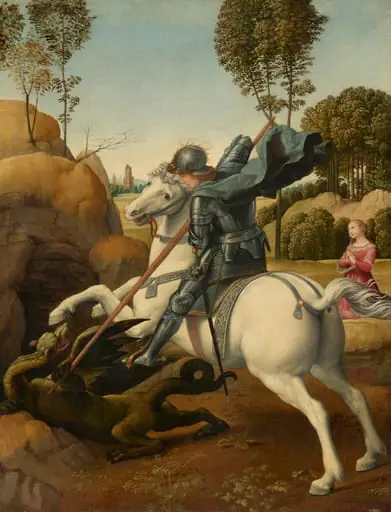
The work is an oil painting that depicts a rider on a white horse. The figure is dressed in a dark coat with a ruff collar, a black hat, and a sword at his side. A second, similarly clothed individual stands behind, reaching toward the animal. The composition is set against a dark, indistinct background that isolates the central figures.
Context
Although the precise date and artist are not specified, the attire, a dark coat with ruff, black hat, and sword, places the scene within a European tradition of equestrian portraiture common from the late Renaissance through the Baroque period. Such works often served to commemorate individuals of military or noble rank, aligning personal identity with the power symbolized by the horse.
Artist & collection

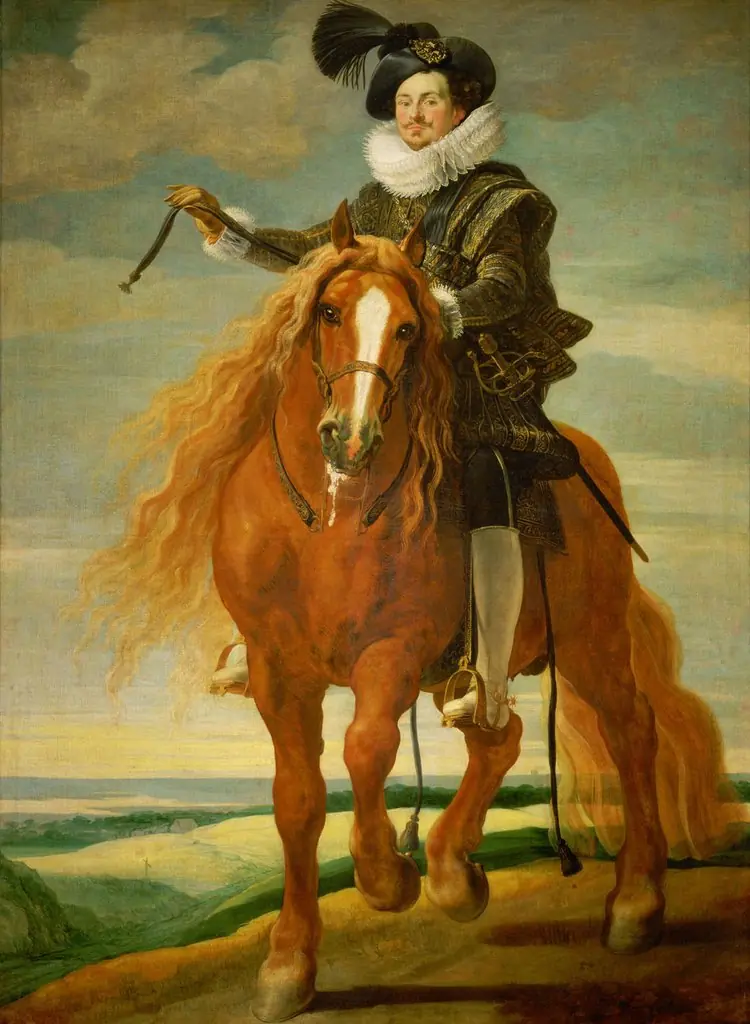
- Equestrian portrait of Don Diego Messia Felipe de Guzmán, Marquis of Leganés
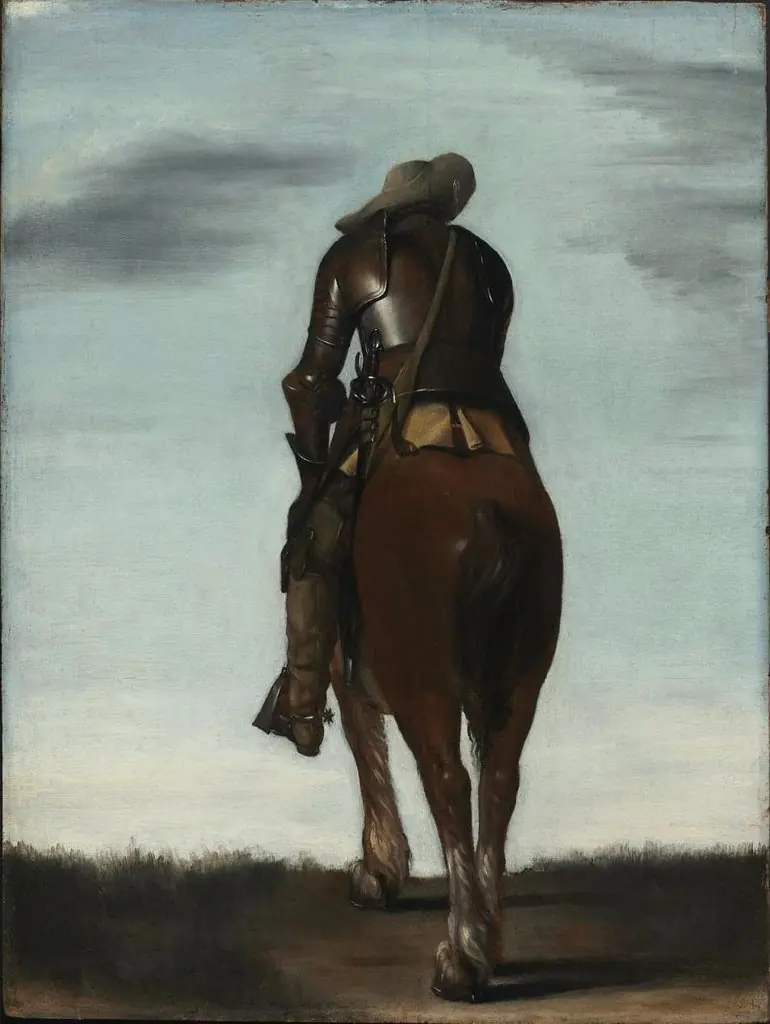 Man on Horseback
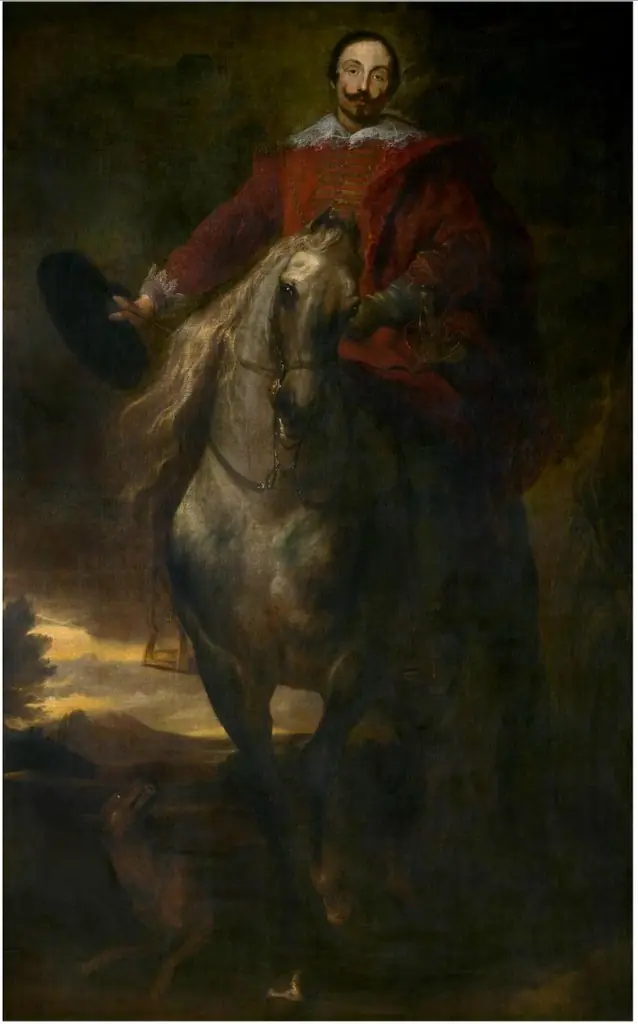 Equestrial Portrait of the Painter Cornelis de Wael
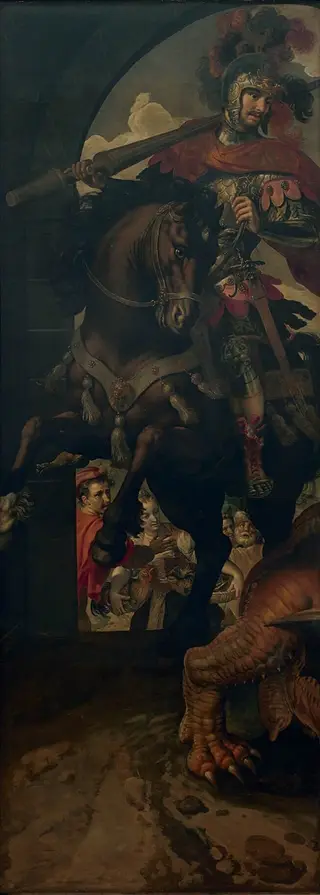 Saint Georges delivering Saint Margaret
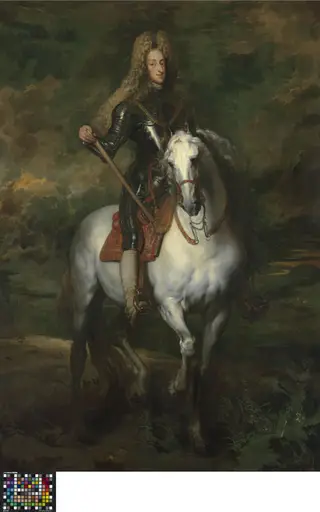 Ruiterportret van Maximiliaan Emmanuel van Beieren
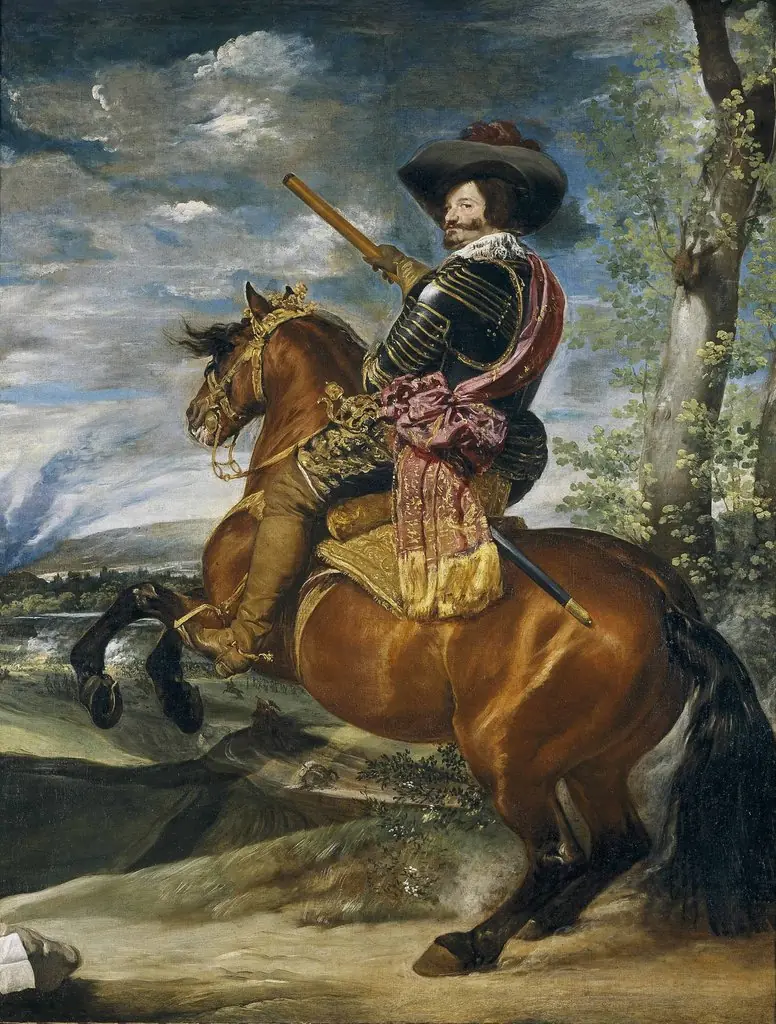 Equestrian Portrait of the Count-Duke of Olivares
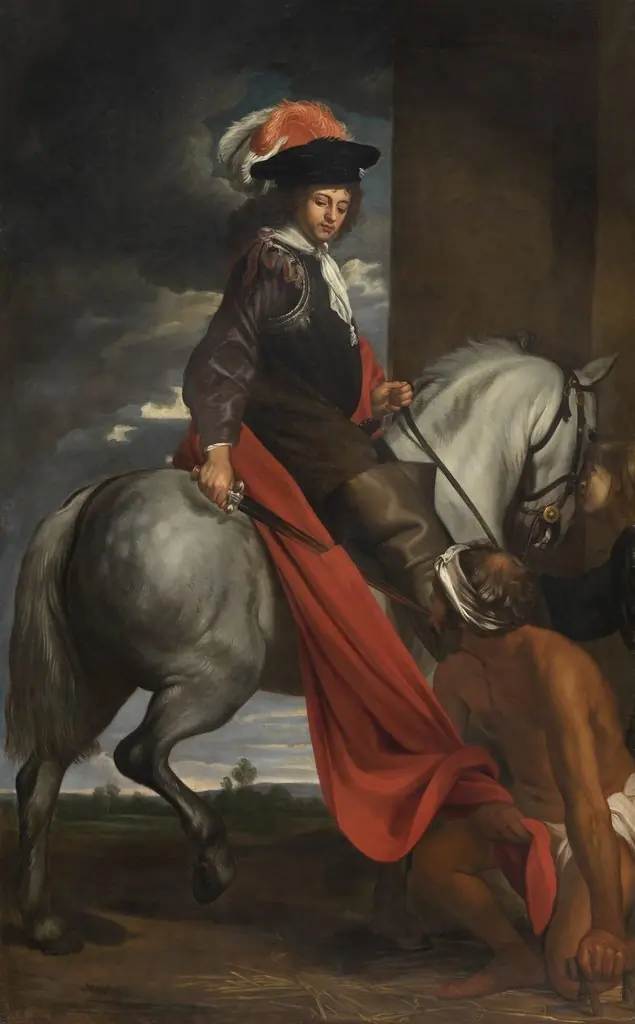 The Charity of Saint Martin
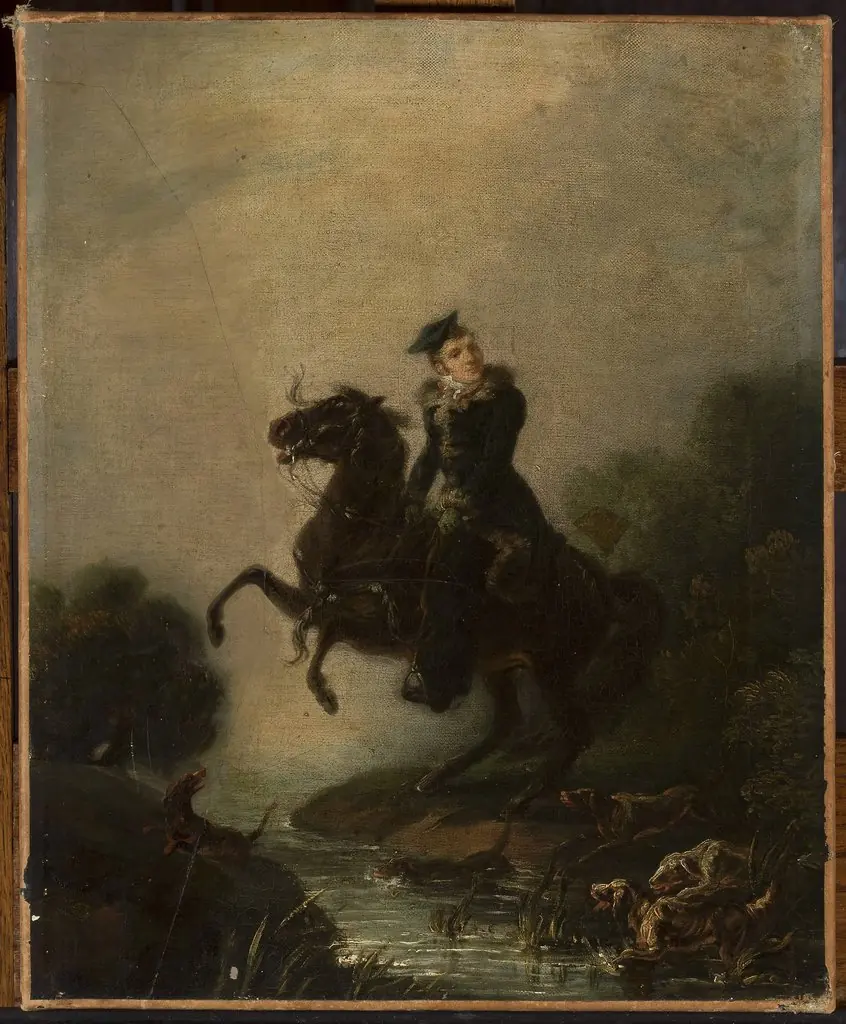 Portrait of Ignacy Konarski on horseback
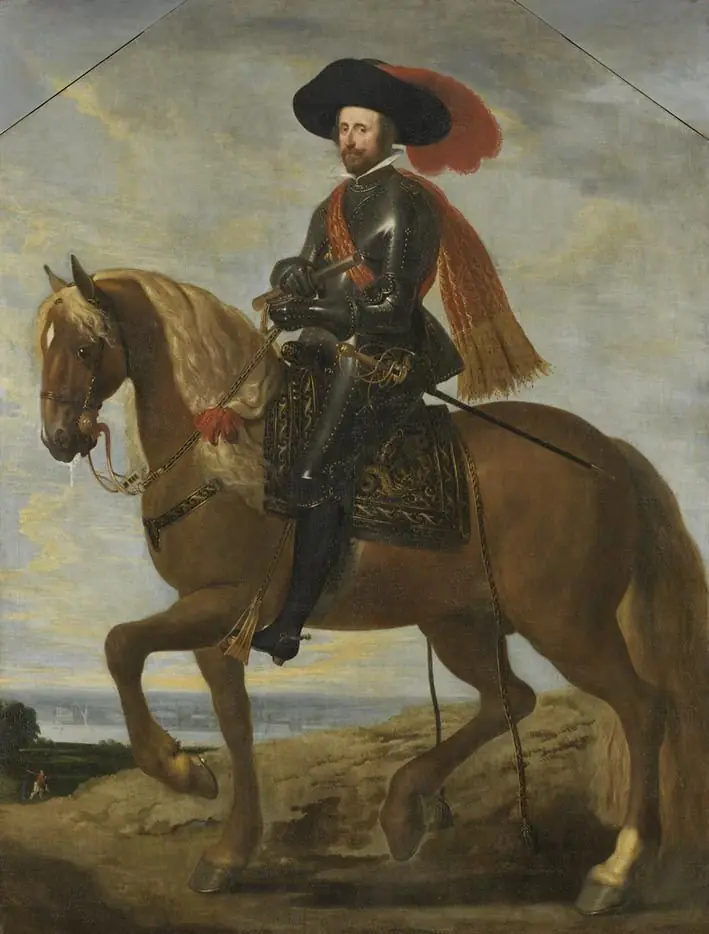 Equestrian portrait of Wolfgang Wilhelm von Pfalz-Neuburg
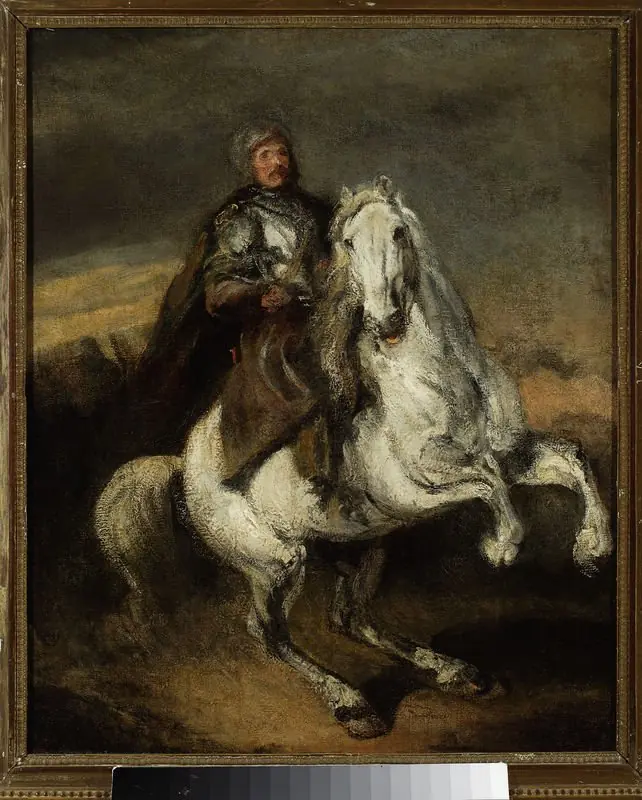 Knight on a grey horse
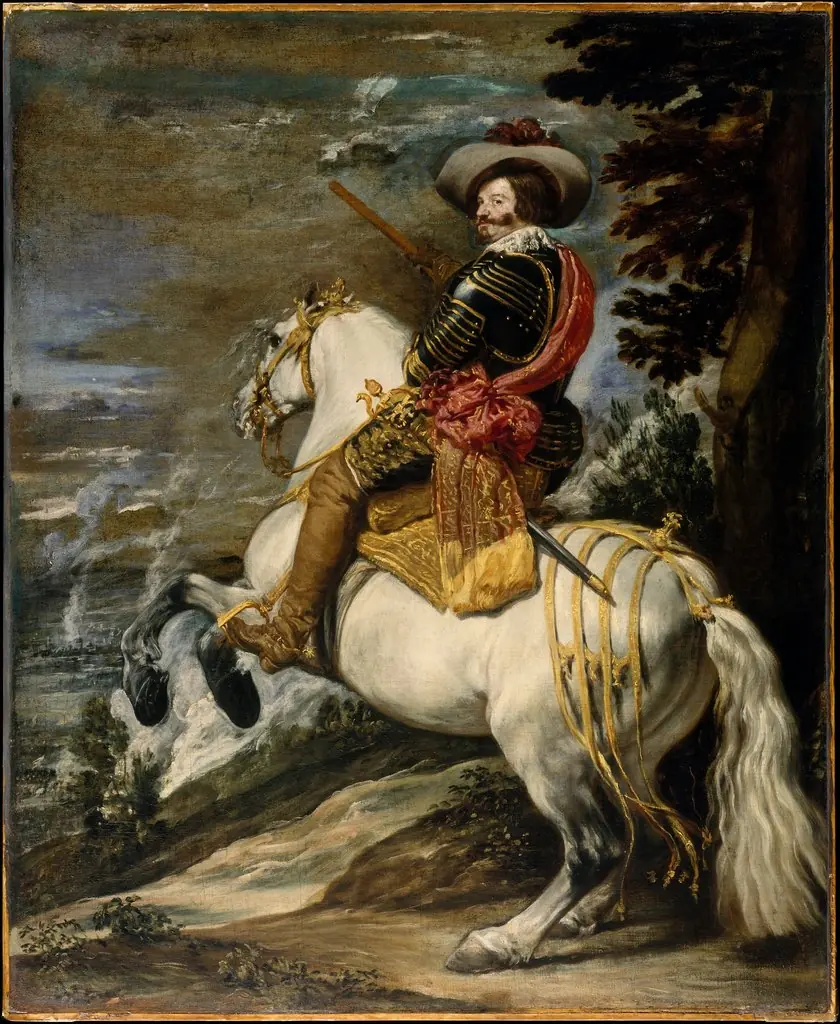 Don Gaspar de Guzmán (1587–1645), Count-Duke of Olivares
 Manej
Manej