Artwork
Portrait of Emanuel Władysław Tyszkiewicz, Leliwa coat of arms (?–1704), lord high steward of Brest
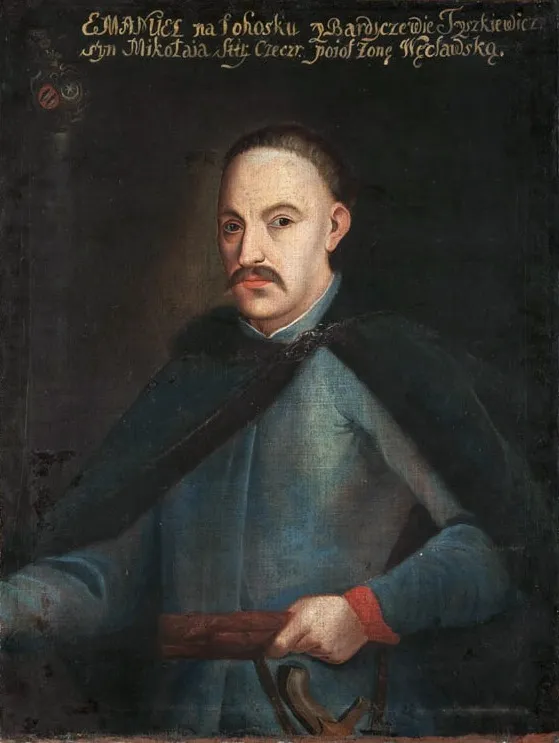
Portrait of Emanuel Władysław Tyszkiewicz, Leliwa coat of arms (?–1704), lord high steward of Brest is an oil painting by the Neoclassicist artist Unknown. It dates from 1797 and is held in the collection of the National Museum in Warsaw. The oil portrait depicts Emanuel Władysław Tyszkiewicz, a noble bearing the Leliwa coat of arms and serving as lord high steward of Brest.
About this work
Overview
The oil portrait depicts Emanuel Władysław Tyszkiewicz, a noble bearing the Leliwa coat of arms and serving as lord high steward of Brest. Rendered in a dark blue coat edged with red, the sitter holds a folded document in his right hand while his left rests against a muted background. A neatly trimmed mustache and goatee frame his solemn expression, emphasizing his status and composure.
Subject & Meaning
Emanuel Władysław Tyszkiewicz (d. 1704) was a prominent member of the Polish‑Lithuanian aristocracy, entrusted with overseeing the administration of Brest. The inclusion of a sealed paper suggests his role in official correspondence or legal matters, reinforcing the portrait’s function as a visual record of authority and personal dignity.
Technique & Style
Executed in oil on canvas, the work employs a chiaroscuro scheme that models the figure through strong contrasts of light and shadow. The dark backdrop recedes, allowing the illuminated fabrics and facial features to command attention. Fine brushwork renders the texture of the coat’s silk trim and the subtle sheen of the subject’s hair.
History & Provenance
The painting originates from the late 17th or early 18th century, contemporaneous with Tyszkiewicz’s lifetime. It has remained within collections associated with the Tyszkiewicz family before entering a public museum inventory, where it is catalogued under the title “Portrait of Emanuel Władysław Tyszkiewicz, Leliwa coat of arms.”
Context
Portraiture of Polish‑Lithuanian magnates in this period often combined heraldic symbols with personal attributes to assert lineage and office. The Leliwa emblem, subtly indicated in the coat of arms, situates Tyszkiewicz within a broader network of noble families that shaped the political landscape of the Commonwealth.
Artist & collection









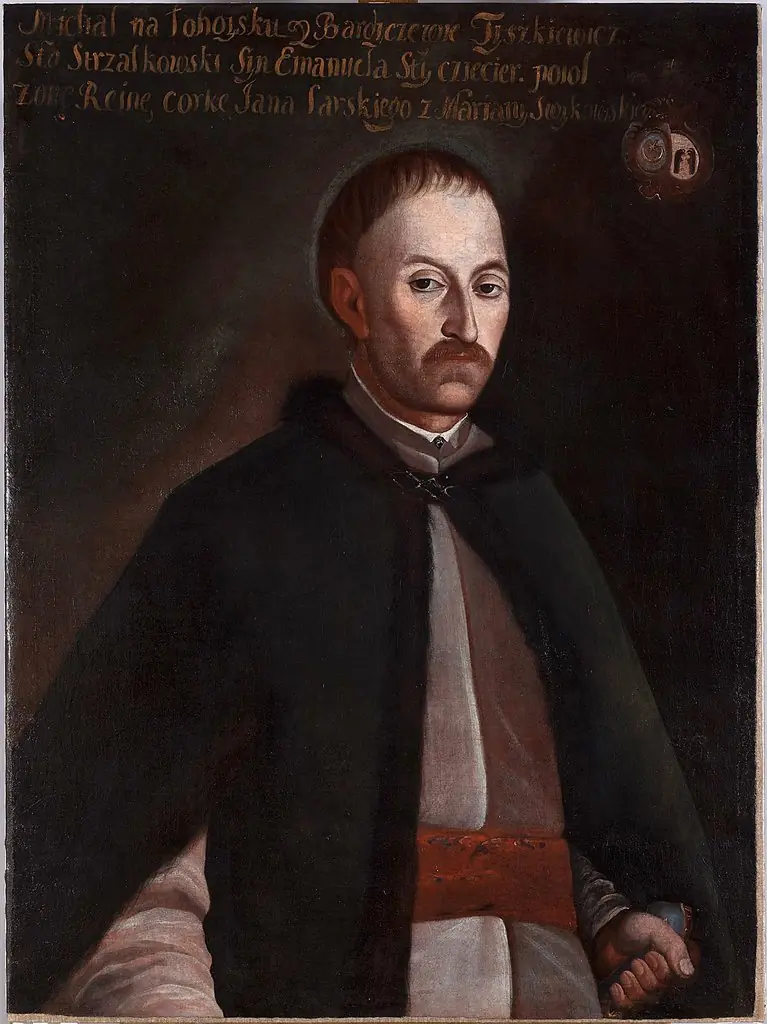
- Portrait of Michał Tyszkiewicz, Leliwa coat of arms (?–after 1762), starosta of Strzałków
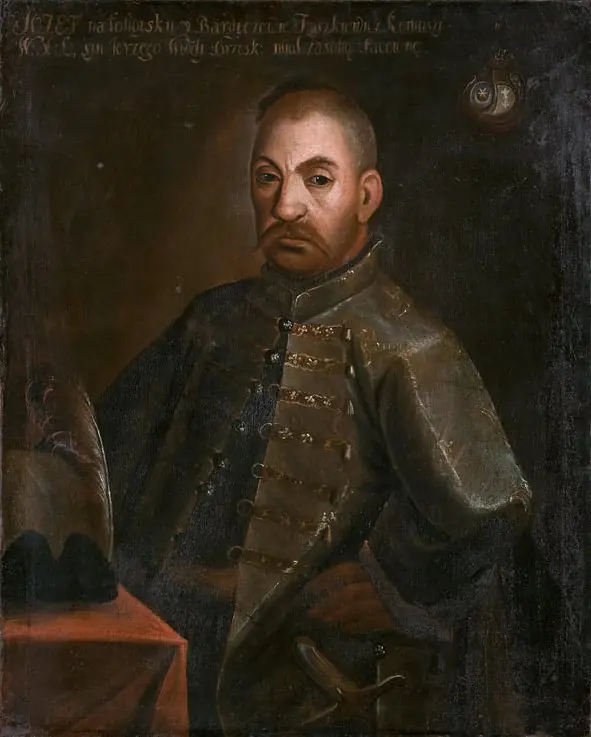 Portrait of Józef Tyszkiewicz (fl. 16th/17th c.), Leliwa coat of arms (?–1652), equerry of the Grand Duchy of Lithuania
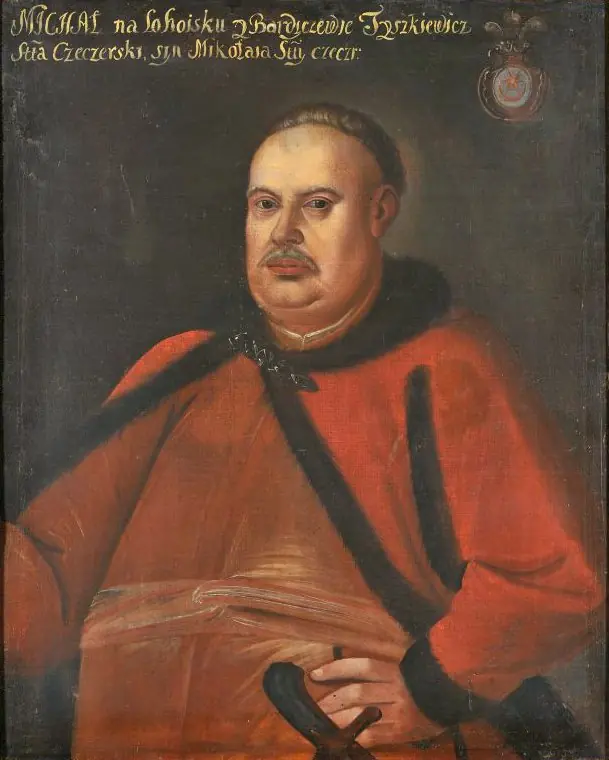 Portrait of Michał Tyszkiewicz, Leliwa coat of arms (?–before 1703), starosta of Chachersk
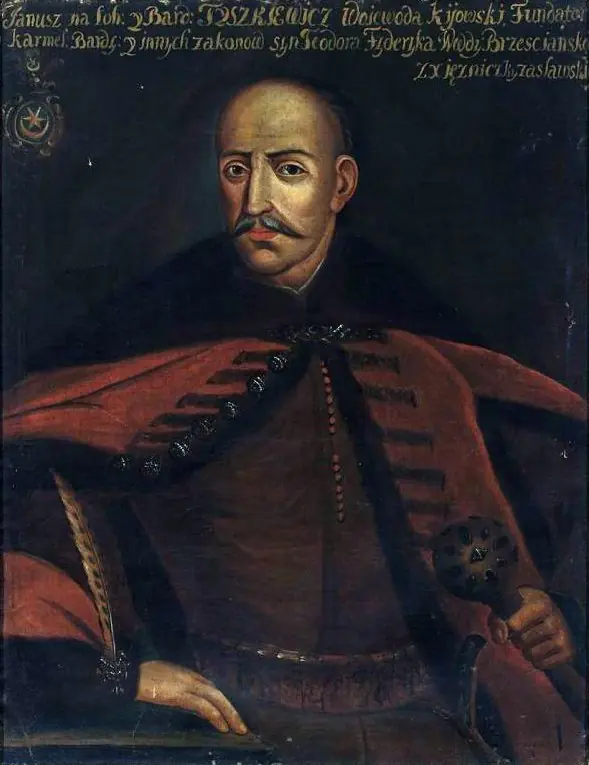 Portrait of Janusz Tyszkiewicz (1570–1649), Leliwa coat of arms, voivode of Kiev
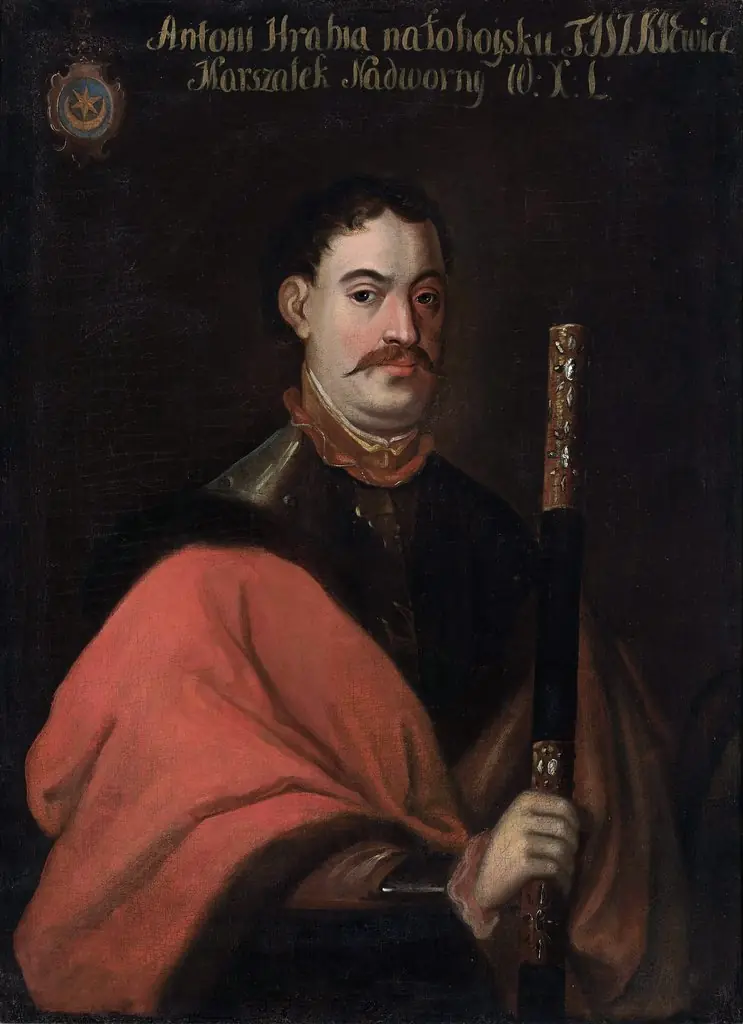 Portrait of Antoni Jan Tyszkiewicz (1609–1649), Leliwa coat of arms, court marshal of the Grand Duchy of Lithuania
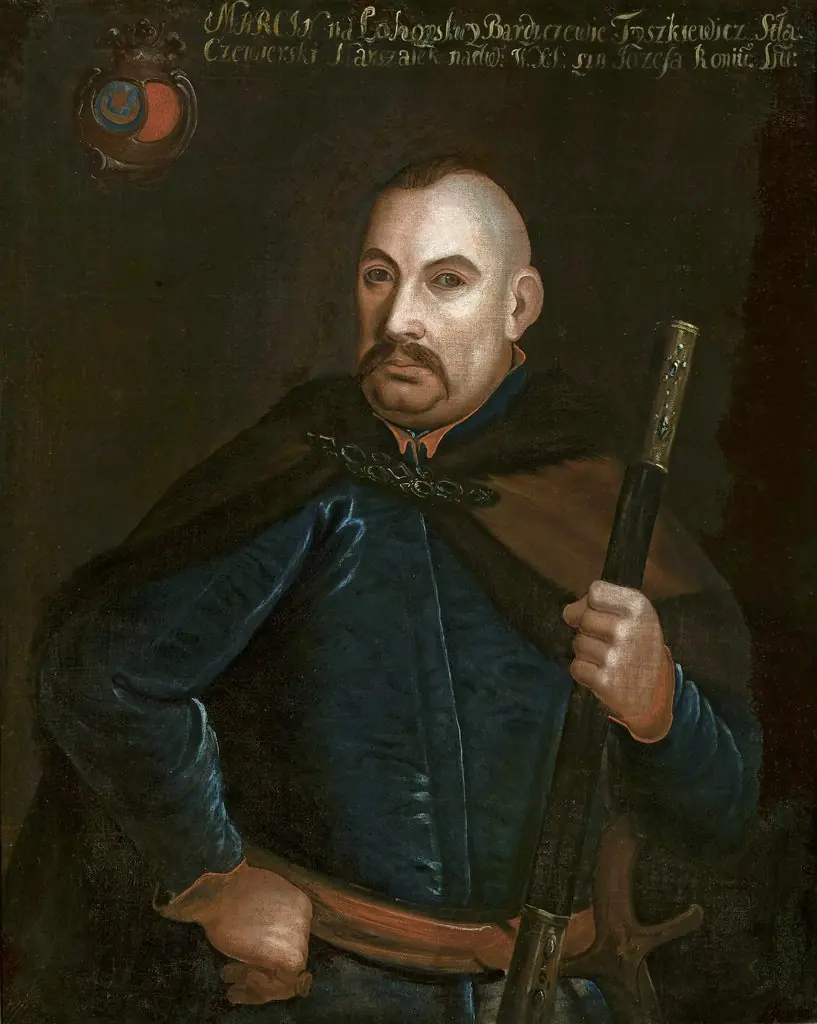 Portrait of Marcin Tyszkiewicz, Leliwa coat of arms (?–after 1631), court marshal of the Grand Duchy of Lithuania
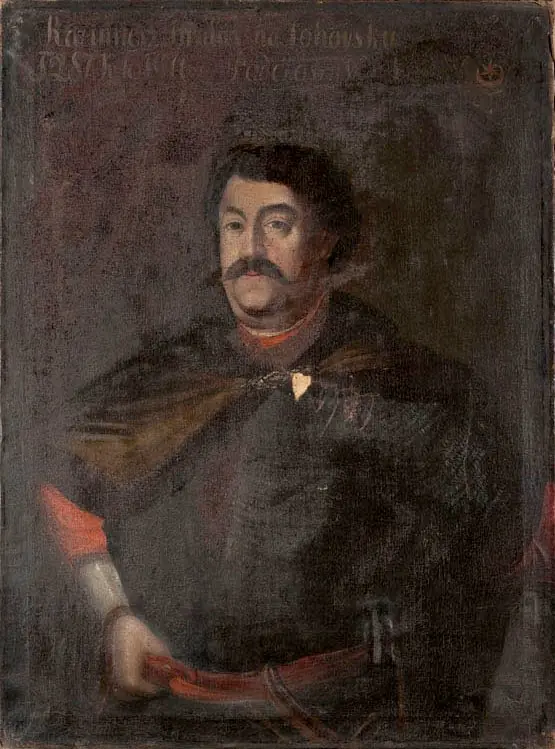 Portrait of Kazimierz Tyszkiewicz, Leliwa coat of arms (?–1652), cup-bearer of the Grand Duchy of Lithuania
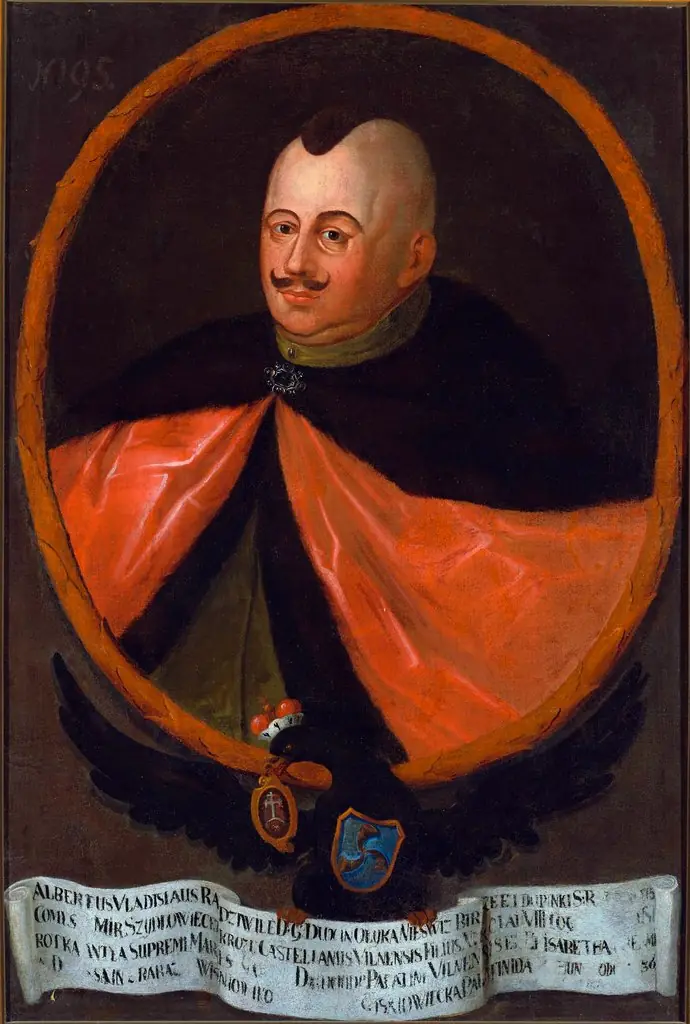 Portrait of Albert III Władysław Radziwiłł (1589–1636)
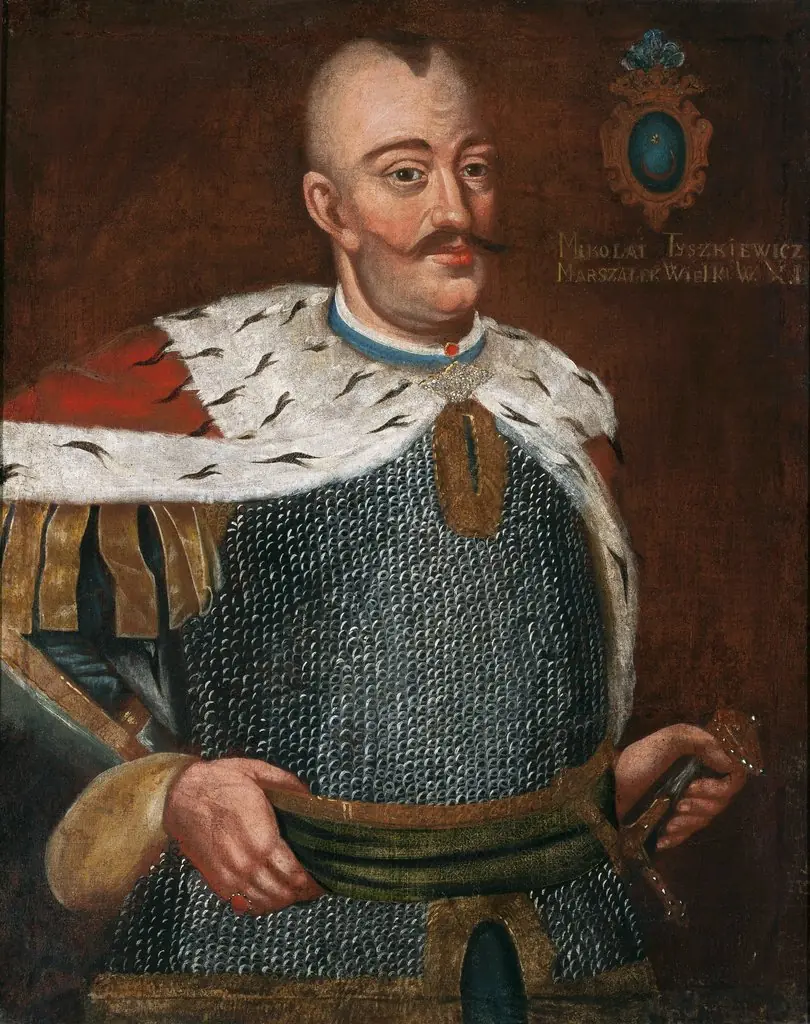 Portrait of Mikołaj Tyszkiewicz, Leliwa coat of arms, marshal of the Grand Duchy of Lithuania
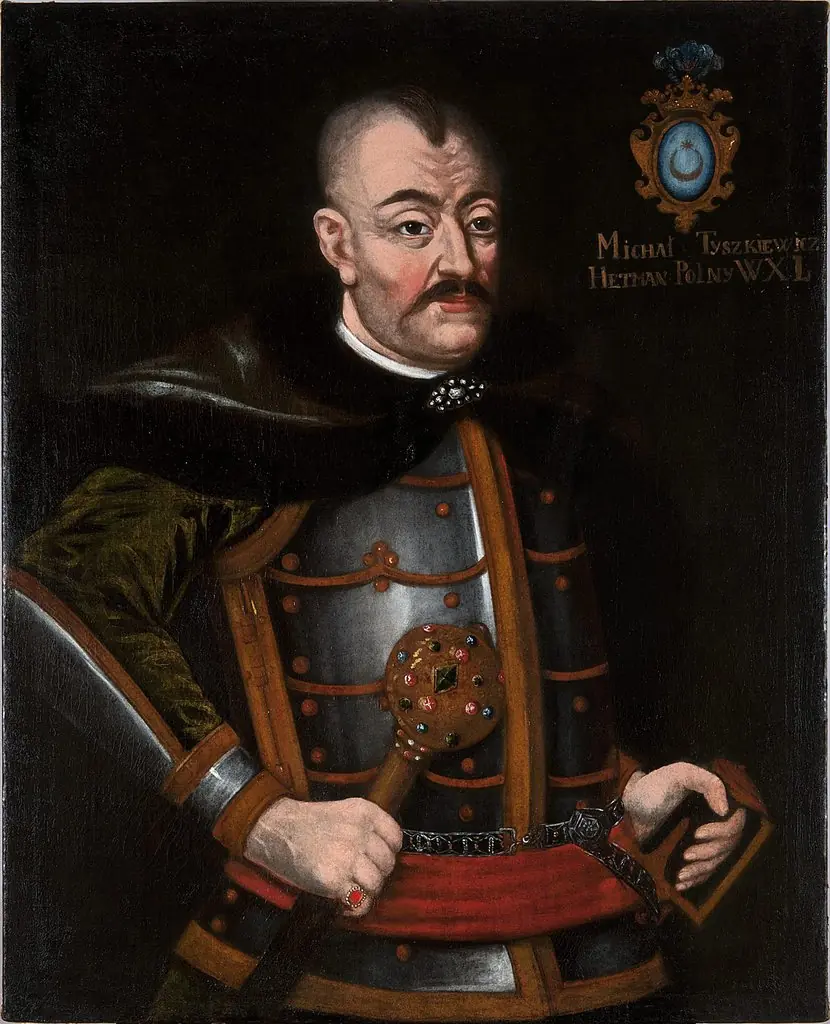 Portrait of Michał Tyszkiewicz, Leliwa coat of arms (?–after 1549), field hetman of the Grand Duchy of Lithuania
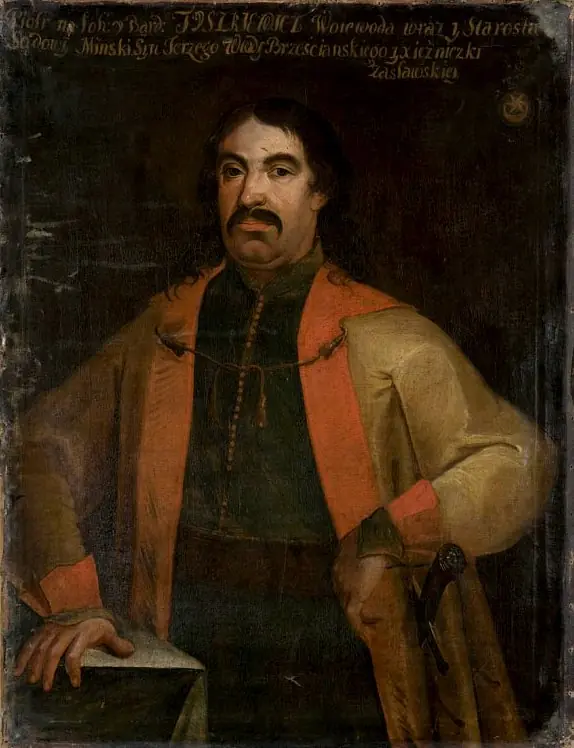 Portrait of Piotr Tyszkiewicz (?–1631?), voivode and starosta of Minsk