Artwork
Portrait of Antoni Jan Tyszkiewicz (1609–1649), Leliwa coat of arms, court marshal of the Grand Duchy of Lithuania
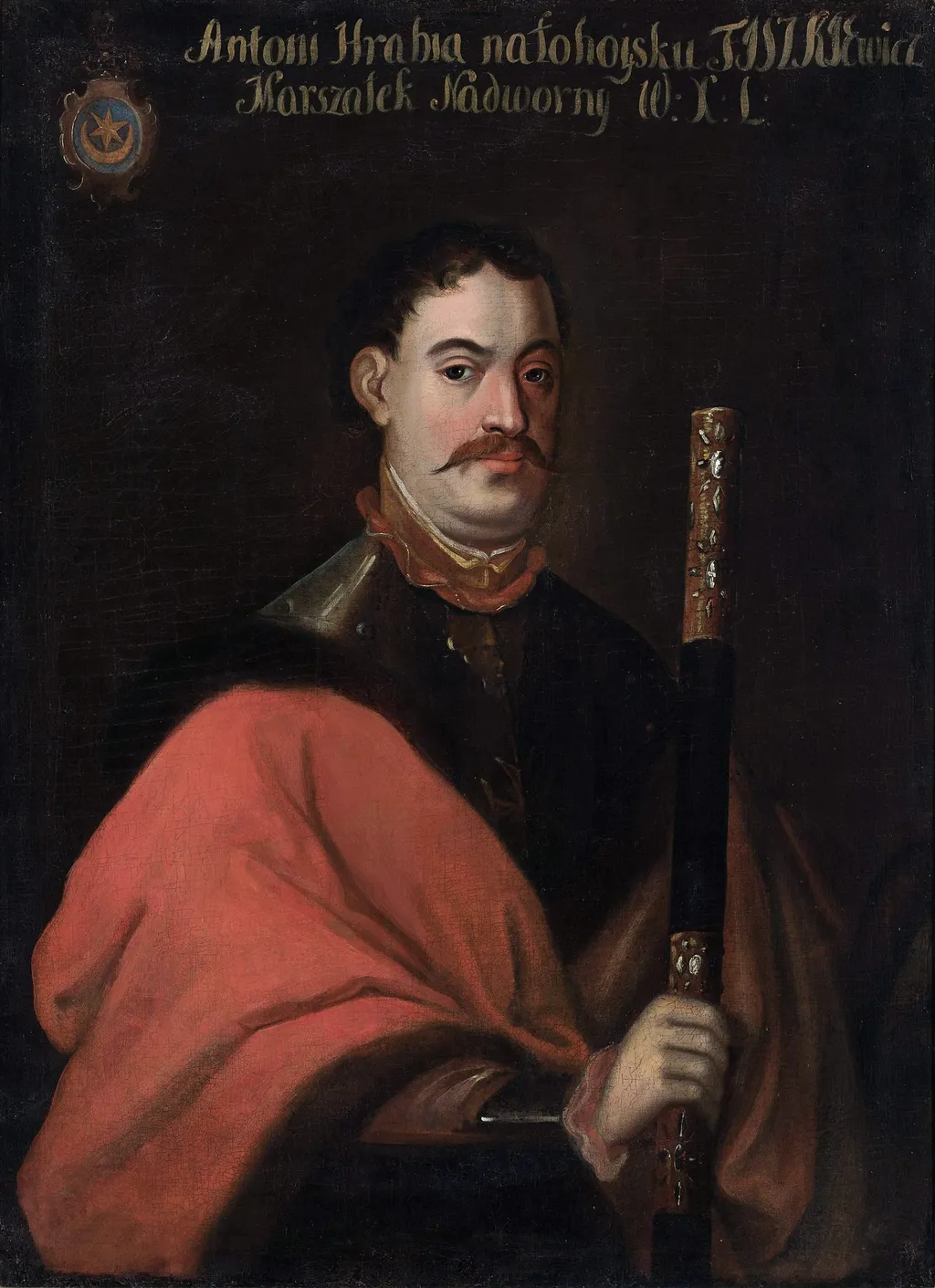
Portrait of Antoni Jan Tyszkiewicz (1609–1649), Leliwa coat of arms, court marshal of the Grand Duchy of Lithuania is an oil painting by the Neoclassicist artist Unknown. It dates from 1797 and is held in the collection of the National Museum in Warsaw.
About this work
Overview
5 by 74 centimeters, the painting is held in the collection of the National Museum in Warsaw, where it is cataloged with the inventory number MP 4976 MNW.
Portrait of Antoni Jan Tyszkiewicz (1609-1649), Leliwa coat of arms, court marshal of the Grand Duchy of Lithuania is an oil on canvas painting by an unknown artist, dated to 1793. The artwork is a half-length portrayal of the prominent Polish-Lithuanian Commonwealth diplomat and official. Measuring 85.5 by 74 centimeters, the painting is held in the collection of the National Museum in Warsaw, where it is cataloged with the inventory number MP 4976 MNW. As a historical portrait created over a century after the subject's death, it serves as a later visual commemoration of a significant political figure in the Grand Duchy of Lithuania.
Subject & Meaning
The painting depicts Antoni Jan Tyszkiewicz, a nobleman of the Leliwa coat of arms who served as court marshal, treasurer, and cupbearer of the Grand Duchy of Lithuania. He is shown facing slightly right, dressed in a dark coat with a red collar and a voluminous red cloak draped across his body, with a white collar at his neck. In his right hand, he holds an ornate staff with decorative metal mounts, a symbol of his high office and authority. At the upper left, a small circular heraldic emblem displays the Leliwa coat of arms, featuring a gold crescent and star on a blue field. Gold script inscriptions above his head further identify the subject and his lineage, anchoring his identity and noble status within the historical traditions of the Commonwealth.
Technique & Style
Executed in oil on canvas, the painting employs a dramatic chiaroscuro to emphasize the subject. The lighting concentrates on the man's face, his hand, and the vivid red drapery, leaving the surroundings in deep shadow. The artist handled the brushwork smoothly on the flesh tones, while applying more textured strokes to render the heavy fabrics. The overall palette is composed of deep browns, blacks, vivid red, and pale flesh tones, accented by the gold of the inscriptions and heraldic elements. The paint surface exhibits fine craquelure throughout, indicating its age and material history.
History & Provenance
The portrait was created in 1793, more than a century after Antoni Jan Tyszkiewicz died in 1649 at the age of forty. This late date suggests the work was likely a commemorative reconstruction commissioned by later descendants, possibly coinciding with the activities of his family members around that time, such as his relative Mikalojus Tyszkiewicz, a canon of the Vilnius Cathedral. The painting eventually entered the collection of the National Museum in Warsaw, where it remains today under the inventory number MP 4976 MNV.
Context
The Tyszkiewicz family held the Leliwa coat of arms and were famous for their extensive participation in the military and political life of the Polish-Lithuanian Commonwealth. Antoni Jan Tyszkiewicz, the brother of Bishop Jurgis Tiskevicius, was a significant figure who acquired the Liubavas manor and was described by Kasper Niesiecki as a man of simple oratory but with a strong fist. The 1793 creation date of the portrait places it during the final years of the Commonwealth, a period of intense political upheaval, and aligns with the family's continued prominence, as evidenced by relatives like Mikalojus Tyszkiewicz who managed substantial estates and maintained private orchestras at their manors.
Artist & collection









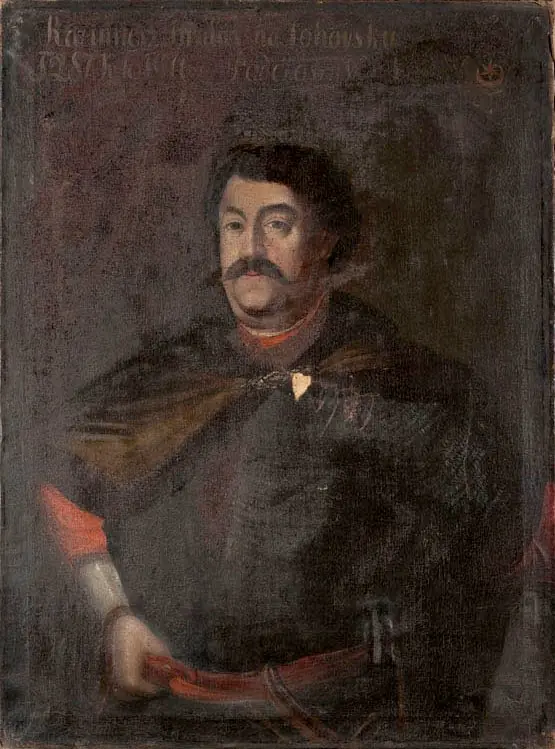
- Portrait of Kazimierz Tyszkiewicz, Leliwa coat of arms (?–1652), cup-bearer of the Grand Duchy of Lithuania
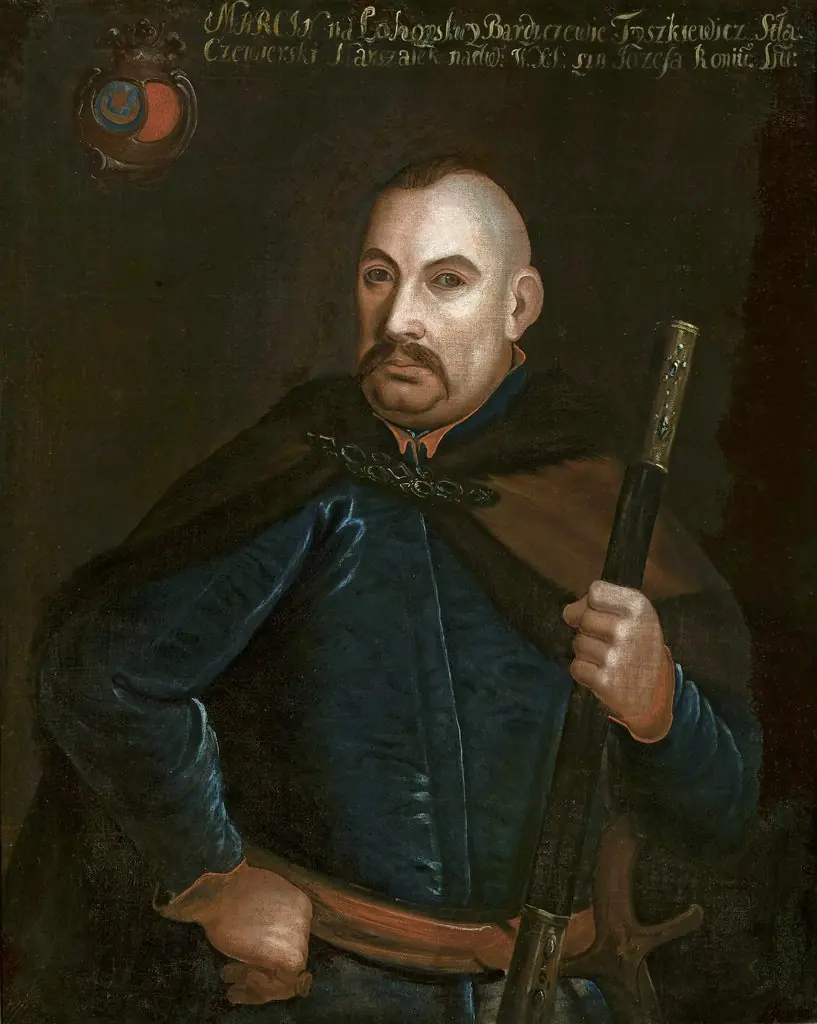 Portrait of Marcin Tyszkiewicz, Leliwa coat of arms (?–after 1631), court marshal of the Grand Duchy of Lithuania
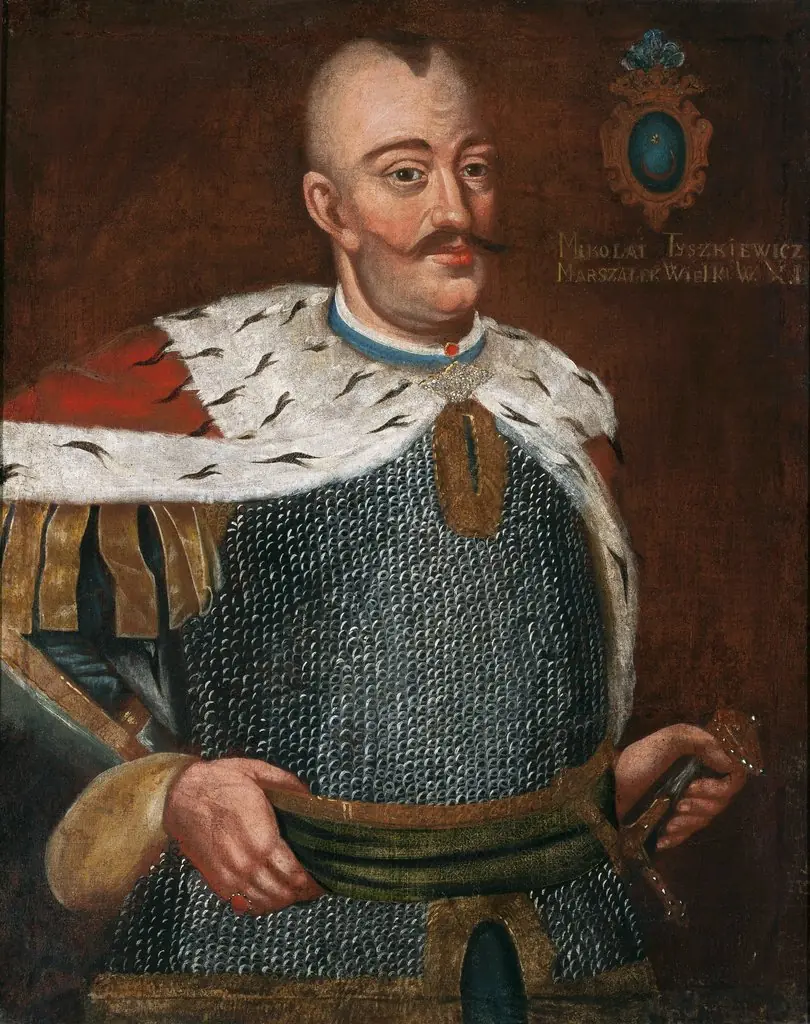 Portrait of Mikołaj Tyszkiewicz, Leliwa coat of arms, marshal of the Grand Duchy of Lithuania
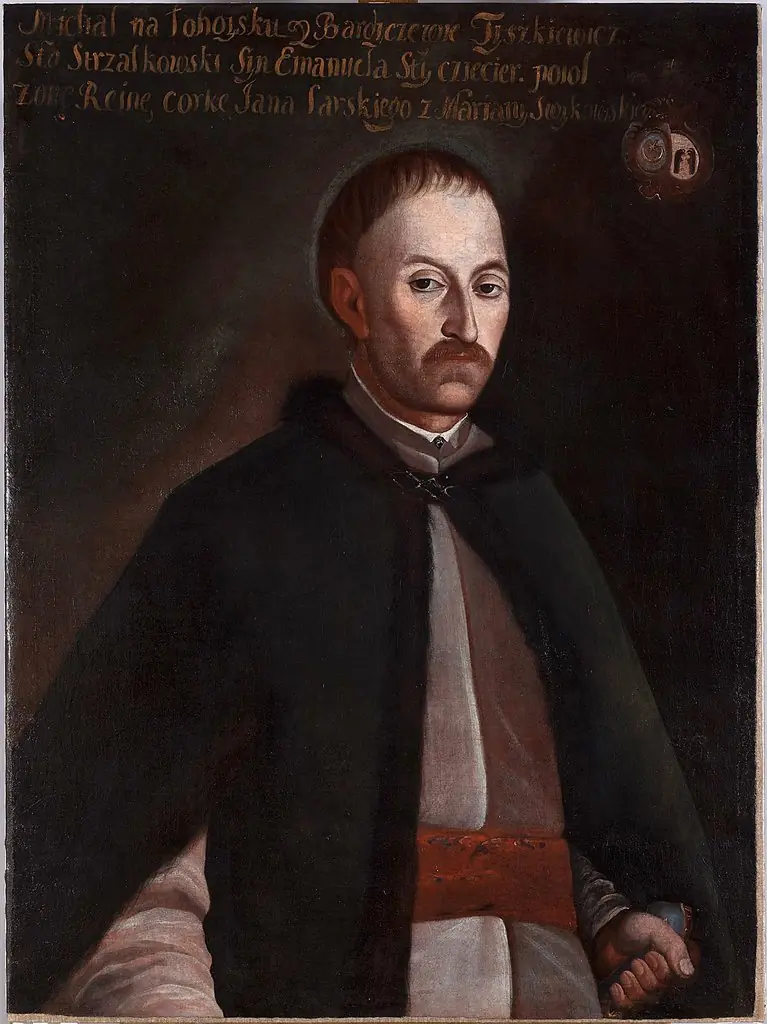 Portrait of Michał Tyszkiewicz, Leliwa coat of arms (?–after 1762), starosta of Strzałków
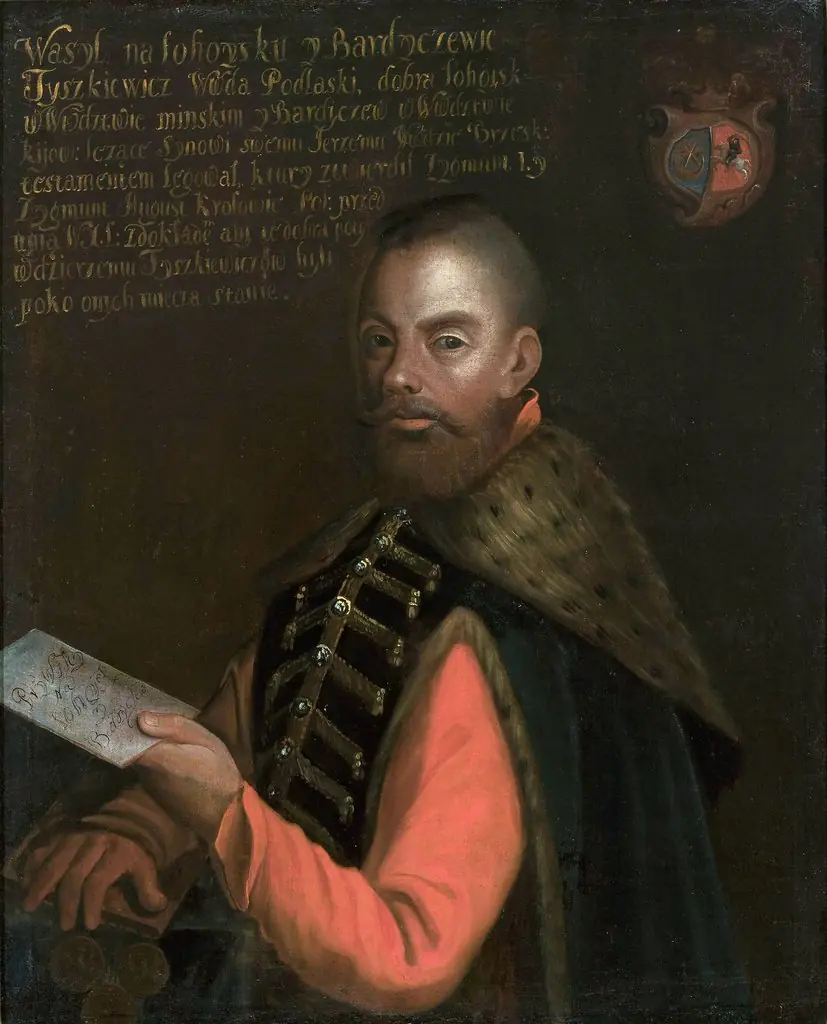 Portrait of Wasyl Tyszkiewicz, Leliwa coat of arms (?–1571), voivode of Podlasie
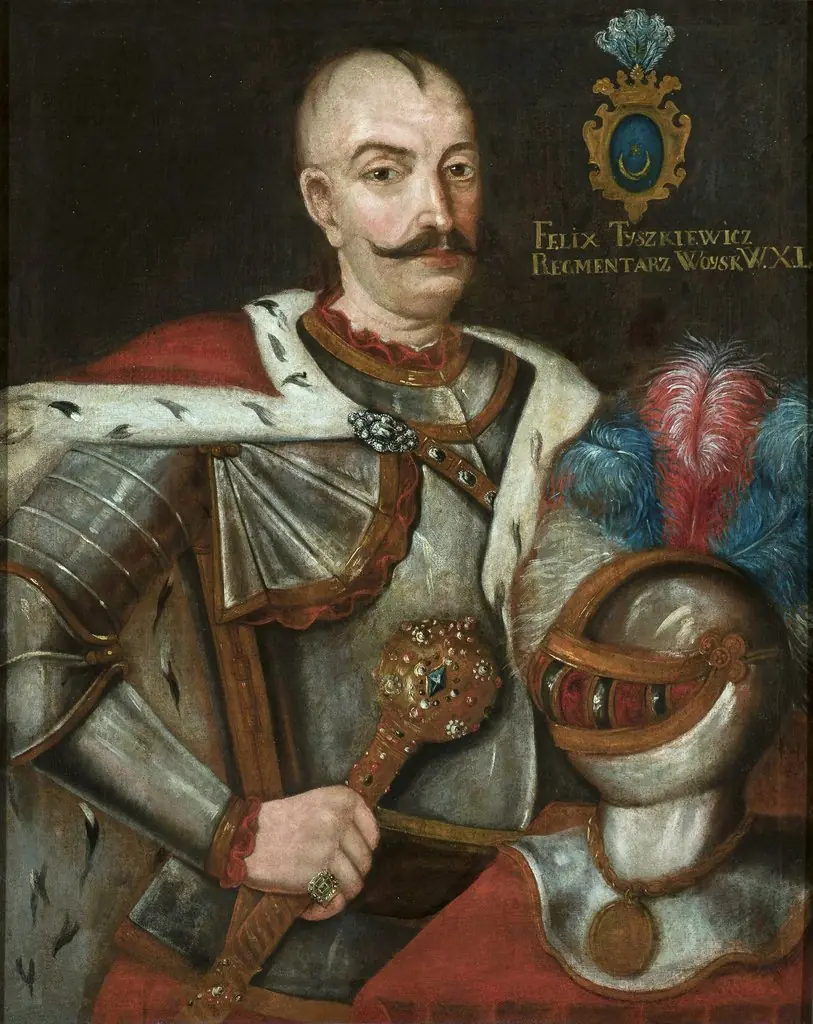 Portrait of Felix Tyszkiewicz (?–1649), Leliwa coat of arms, regimentarius (deputy hetman) of the Grand Duchy of Lithuania
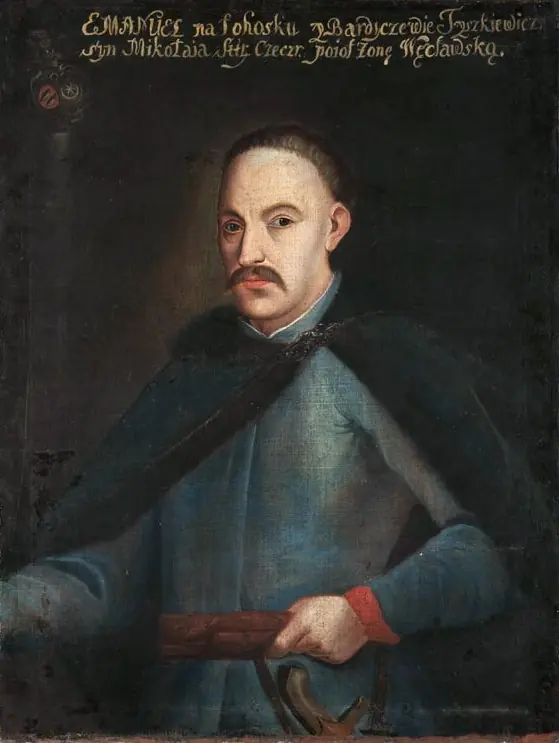 Portrait of Emanuel Władysław Tyszkiewicz, Leliwa coat of arms (?–1704), lord high steward of Brest
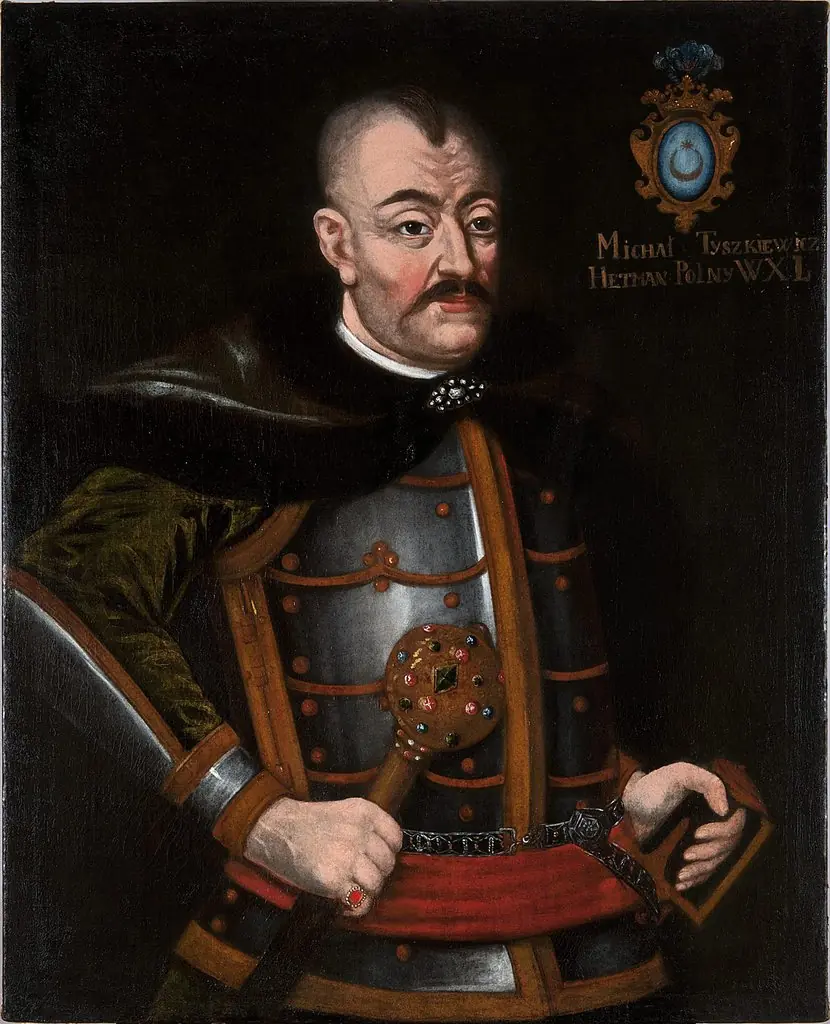 Portrait of Michał Tyszkiewicz, Leliwa coat of arms (?–after 1549), field hetman of the Grand Duchy of Lithuania
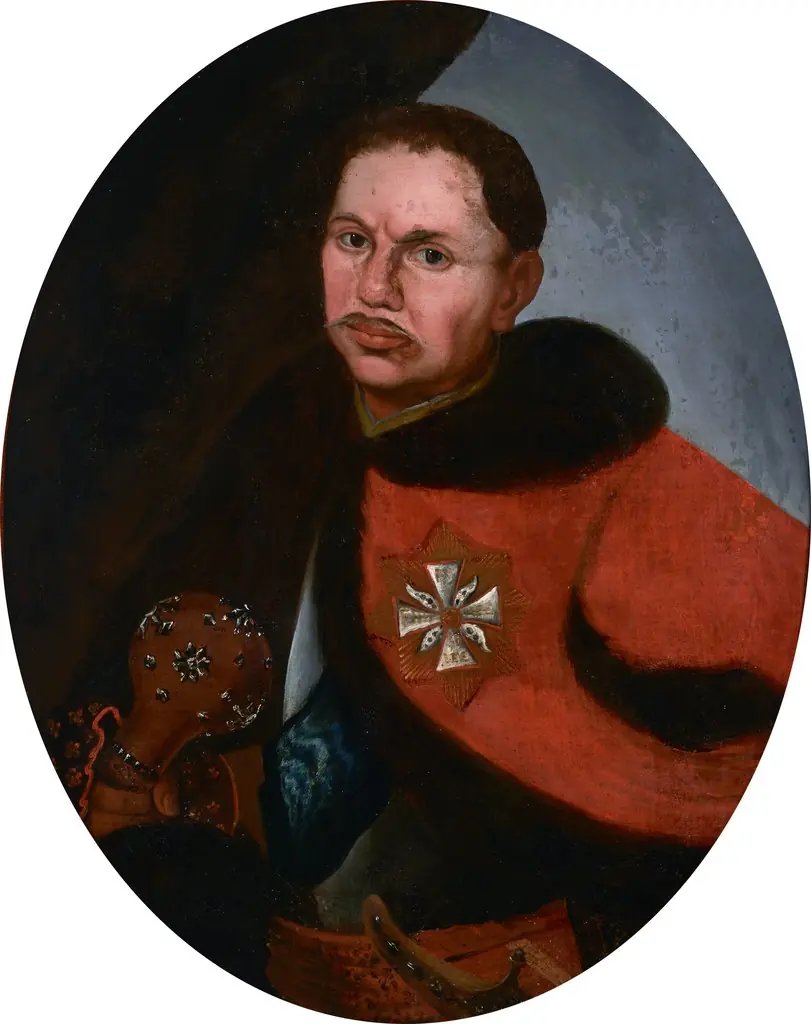 Portrait of Ludwik Konstanty Pociej (1664–1730), Grand Hetman of Lithuania
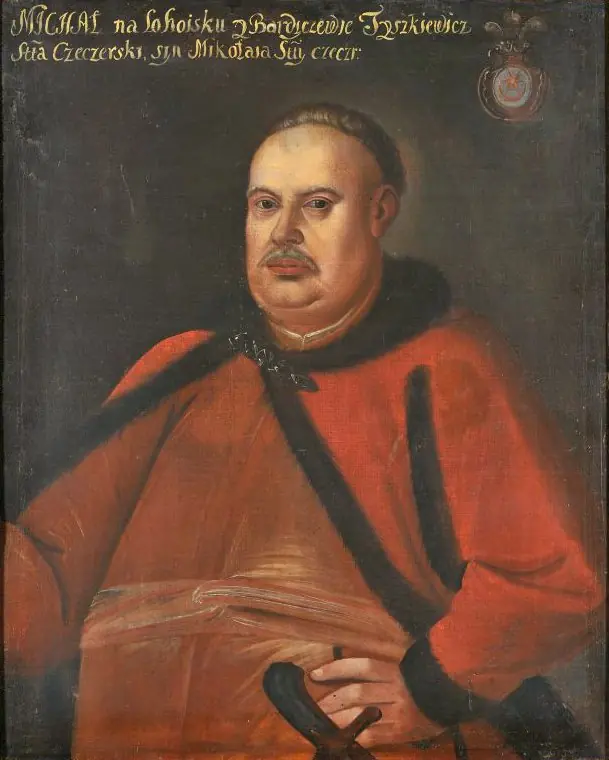 Portrait of Michał Tyszkiewicz, Leliwa coat of arms (?–before 1703), starosta of Chachersk