Artwork
Portrait of Jerzy Tyszkiewicz, Leliwa coat of arms (?–1576), voivode of Brest
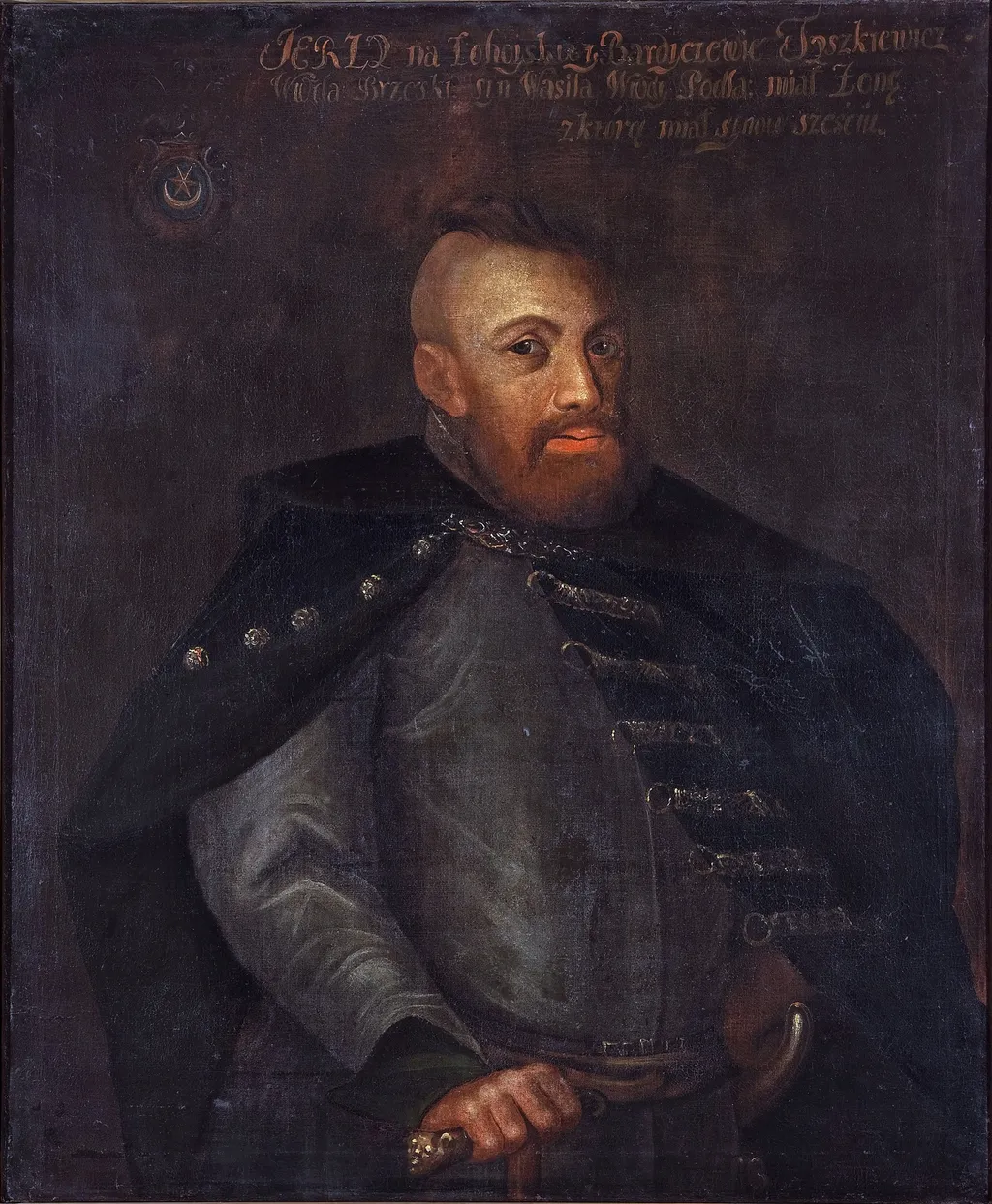
Portrait of Jerzy Tyszkiewicz, Leliwa coat of arms (?–1576), voivode of Brest is an oil painting by the Neoclassicist artist Unknown. It dates from 1797 and is held in the collection of the National Museum in Warsaw. The work is an oil portrait of Jerzy Tyszkiewicz, a 16th‑century noble who held the office of voivode of Brest.
About this work
Overview
, AV-1576), voivode of Brest, is an oil-on-canvas painting dated 1793, depicting a sixteenth-century Polish-Lithuanian nobleman.
The Portrait of Jerzy Tyszkiewicz, Leliwa coat of arms (?, AV-1576), voivode of Brest, is an oil-on-canvas painting dated 1793, depicting a sixteenth-century Polish-Lithuanian nobleman. The work is attributed to an unknown painter and measures 94 by 78 centimeters. It is held in the collection of the National Museum in Warsaw. The portrait is significant as an example of late-eighteenth-century Polish portraiture that engages with the Sarmatian tradition, representing a historical figure through the lens of contemporary patriotic and antiquarian interests in the Polish-Lithuanian Commonwealth's noble heritage.
Subject & Meaning
The painting portrays Jerzy Tyszkiewicz, a member of the Leliwa coat of arms who died in 1576 and held the office of voivode of Brest. The portrait presents him in three-quarter length, standing and facing slightly right with his head turned toward the viewer. His identity is affirmed by golden cursive script spanning the upper edge of the composition and by a small circular heraldic emblem bearing a crescent in the upper left, identifying the Leliwa arms. The subject wears a dark fur-lined coat with ornamental clasps over a gray garment, with a chain collar at his neck, and grips a sword hilt at his waist. These elements of Sarmatian attire, the palace background, and the sword together construct an image of noble authority and martial virtue that aligns with the ideological conventions of the Sarmatian portrait tradition, which celebrated the supposed ancient origins and distinctive culture of the Polish-Lithuanian szlachta.
Technique & Style
The painting is executed in oil on canvas. The palette is dominated by browns, blacks, and muted grays, with warm highlights on the face and hand. Light falls from the left, illuminating the face, collar, and knuckles to create a focused, dramatic effect. The surface shows fine craquelure throughout. The brushwork varies across the composition: smooth and layered in the flesh tones, broader in the costume, with a matte finish overall. Some areas of thinness appear in the darks. The uniformly dark brown background and the formal, frontal presentation of the subject are characteristic of commemorative portraiture from the period, blending Baroque conventions with the emerging Neoclassical interest in historical reconstruction.
History & Provenance
The painting is dated 1793, though one source indicates it ome sources indicate it was painted after 1793, suggesting possible uncertainty about its precise completion or a period of execution extending beyond that year. The work was formerly in the collection of the Society for the Care of the Monuments of the Past in Warsaw, an organization active from 1906 Staten to 1944 that was dedicated to the preservation and promotion of Polish historical heritage. It was subsequently transferred to the National Museum in Warsaw, where it remains today. The painting has been exhibited and reproduced as part of the museum's holdings of Polish portrait painting.
Context
The portrait belongs to a broader category of Sarmatian portraits, a genre that flourished in Polish-Lithuanian art from the sixteenth through eighteenth centuries and experienced renewed interest during the period of the Partitions. The date of 1793 places its creation in a moment of acute political crisis: the Second Partition of Poland had occurred in 1793, and the final partition would follow in 1795. In this context, images of historical noble figures served to sustain national identity and cultural memory. The painting's attribution to an unknown artist is typical of much Polish portrait production of the era, when workshop practices and the demands of a broad noble clientele often precluded the emergence of individual artistic reputations. The work has been catalogued in museum records and appears in stock photography archives, indicating its continued use as a document of Polish visual culture, though detailed scholarly analysis of its specific authorship and circumstances of commission remains limited.
Legacy
The portrait functions as a material witness to the afterlife of Sarmatian visual culture in the era of the Partitions, when the iconography of the Polish-Lithuanian Commonwealth's noble past was mobilized to sustain collective memory under foreign rule. Its preservation by the Society for the Care of the Monuments of the Past and subsequent placement in the National Museum in Warsaw reflect the institutionalization of Polish heritage conservation in the early twentieth century. The painting continues to circulate in digital reproductions and stock image databases, where it serves as a readily accessible visual reference for the Sarmatian portrait tradition and for the historical figure of Jerzy Tyszkiewicz. Its value lies less in any attributed artistic innovation than in its documentary and symbolic function as a carrier of noble and national identity across centuries of political transformation.
Artist & collection









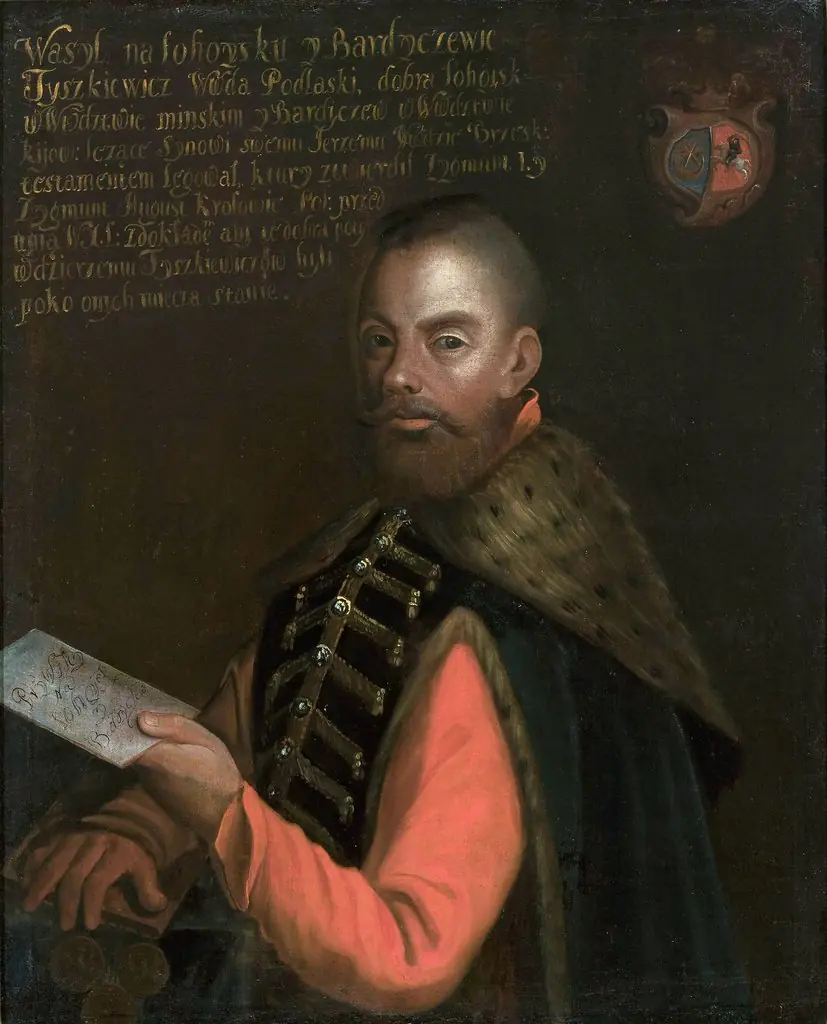
- Portrait of Wasyl Tyszkiewicz, Leliwa coat of arms (?–1571), voivode of Podlasie
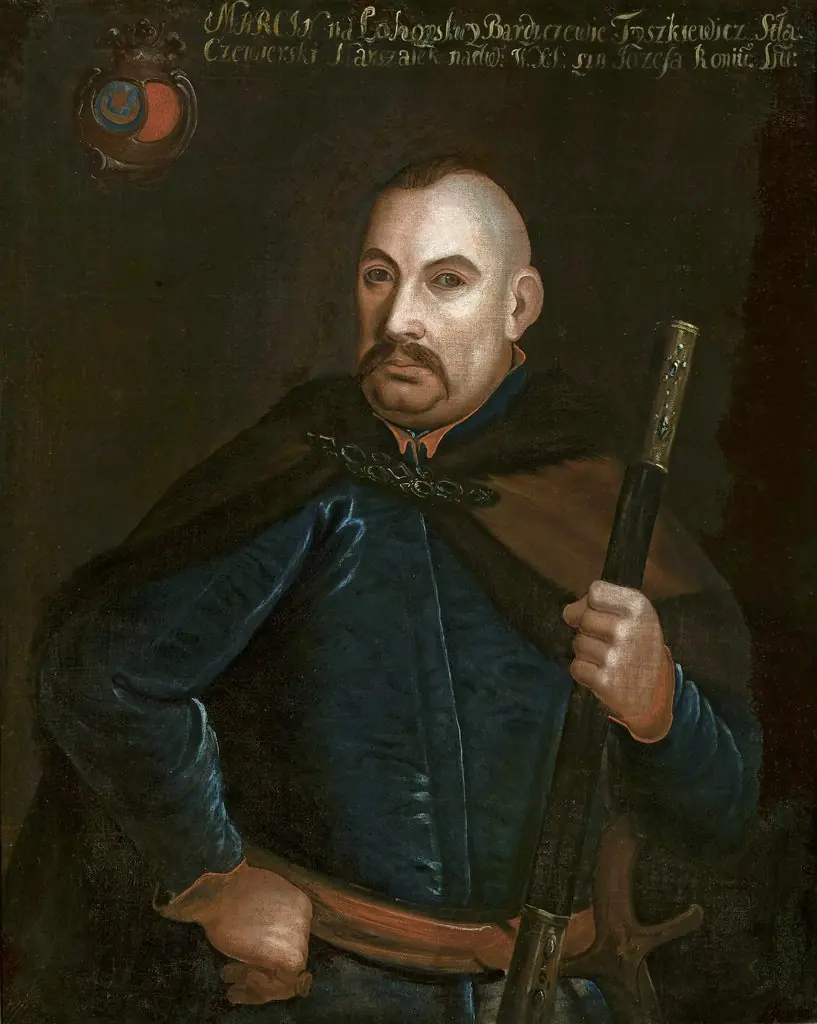 Portrait of Marcin Tyszkiewicz, Leliwa coat of arms (?–after 1631), court marshal of the Grand Duchy of Lithuania
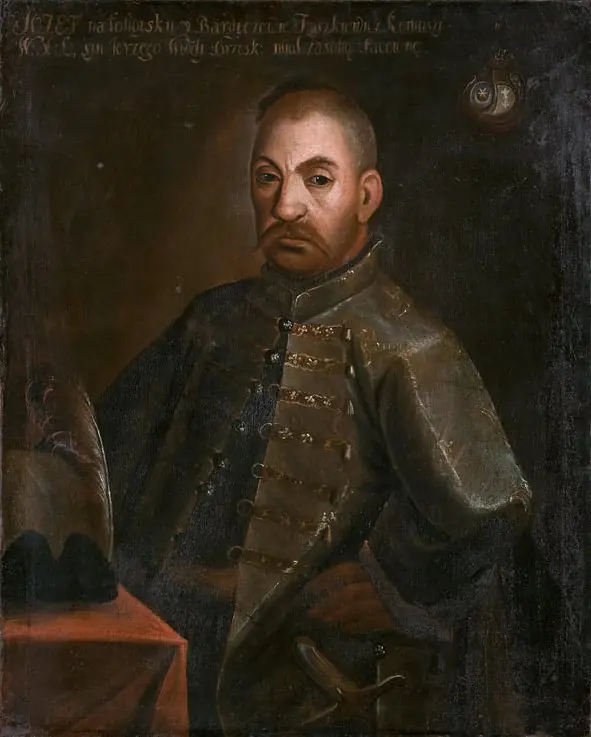 Portrait of Józef Tyszkiewicz (fl. 16th/17th c.), Leliwa coat of arms (?–1652), equerry of the Grand Duchy of Lithuania
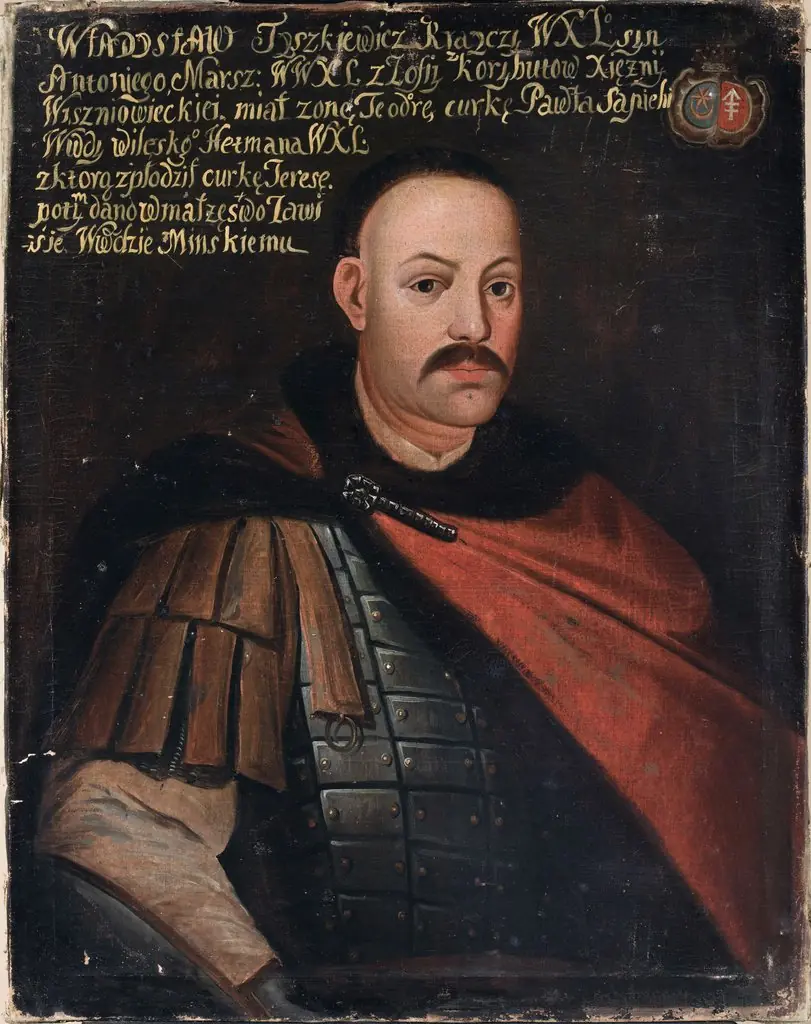 Portrait of Władysław Tyszkiewicz, Leliwa coat of arms (1644–1684), carver of the Grand Duchy of Lithuania
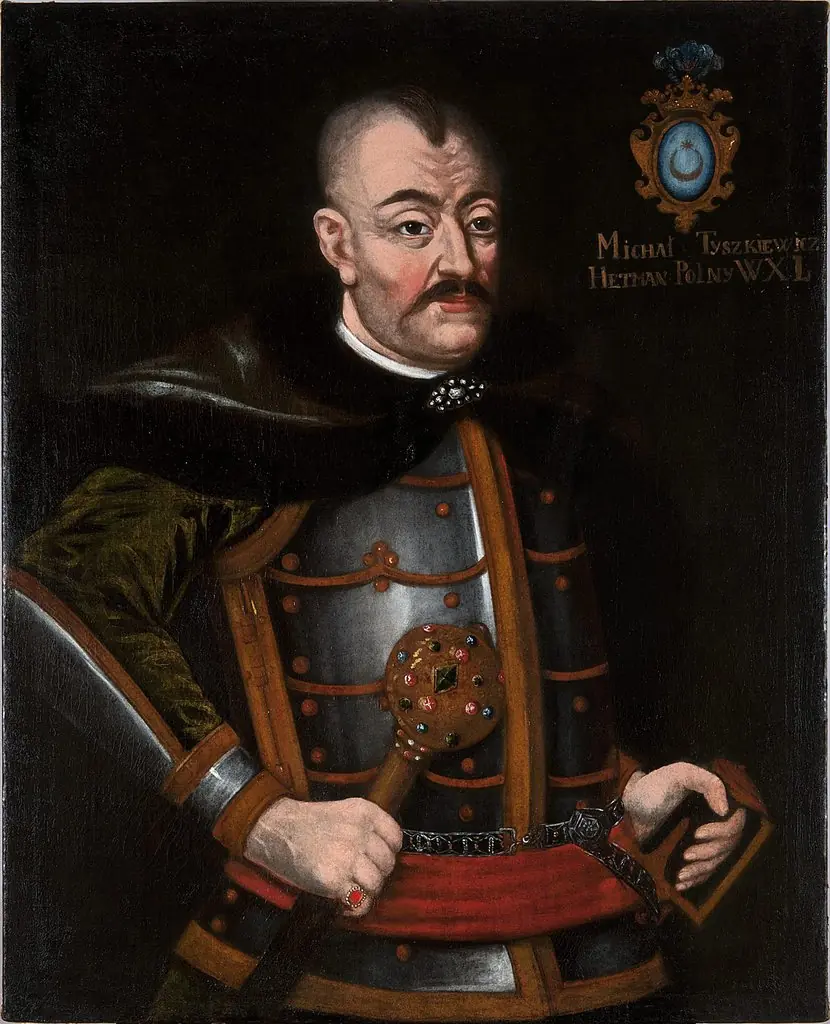 Portrait of Michał Tyszkiewicz, Leliwa coat of arms (?–after 1549), field hetman of the Grand Duchy of Lithuania
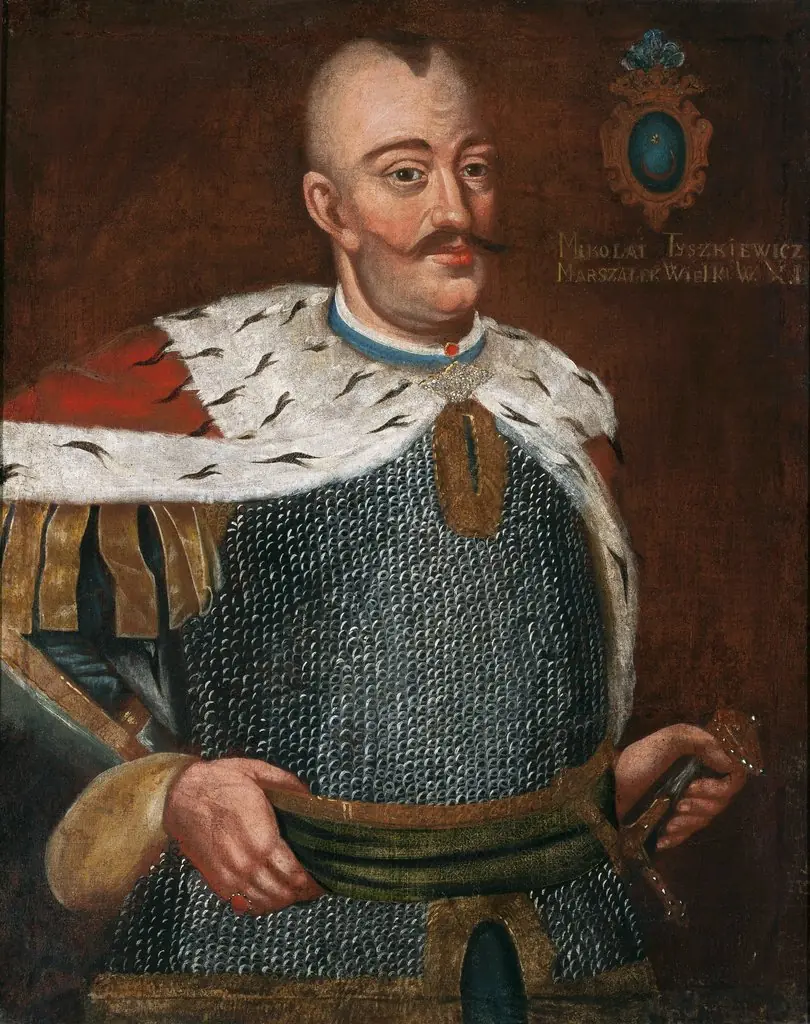 Portrait of Mikołaj Tyszkiewicz, Leliwa coat of arms, marshal of the Grand Duchy of Lithuania
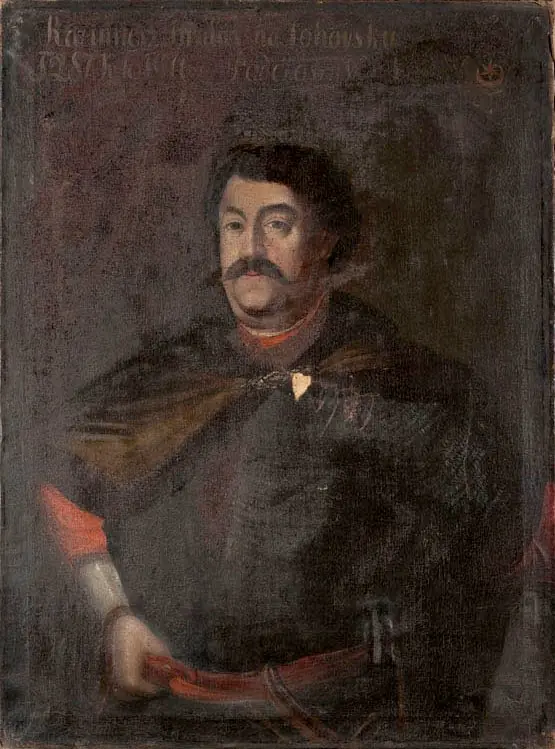 Portrait of Kazimierz Tyszkiewicz, Leliwa coat of arms (?–1652), cup-bearer of the Grand Duchy of Lithuania
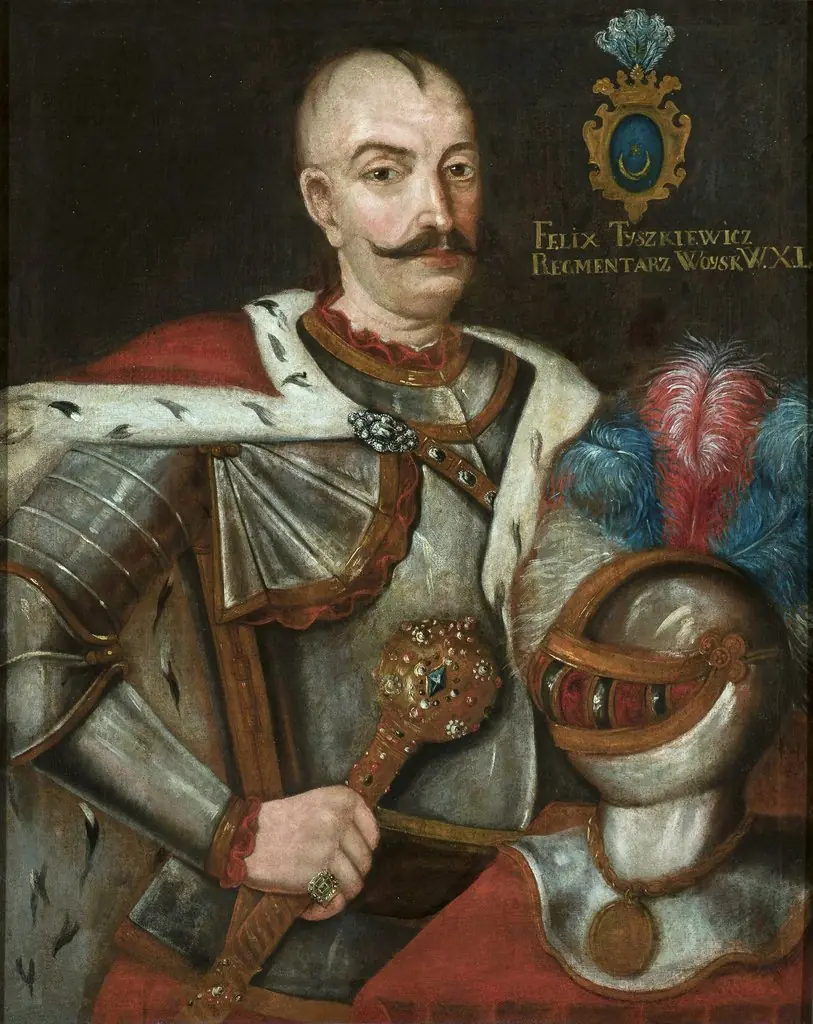 Portrait of Felix Tyszkiewicz (?–1649), Leliwa coat of arms, regimentarius (deputy hetman) of the Grand Duchy of Lithuania