Artwork
Portrait of Madame Geoffrin
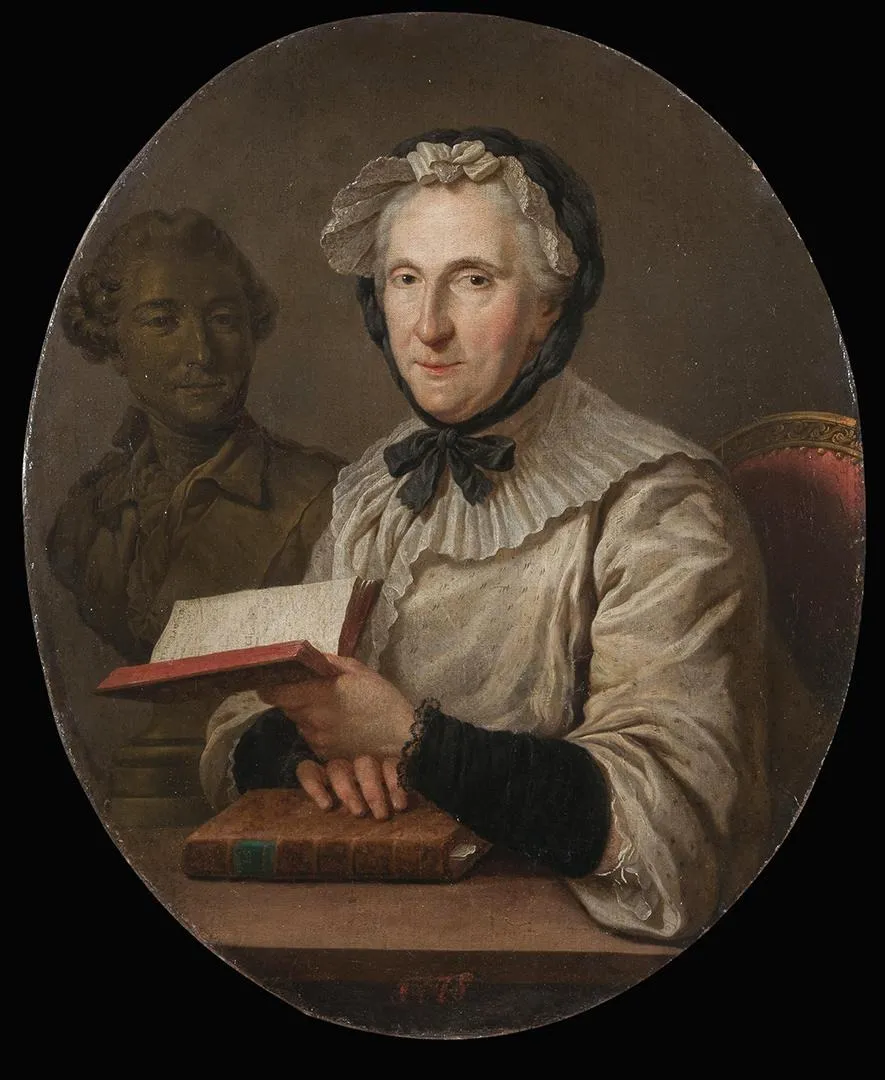
Portrait of Madame Geoffrin is an oil painting by the Rococo painting artist Unknown. It dates from 1750 and is held in the collection of the Hermitage Museum.
About this work
Overview
The work is attributed to an unknown artist and is held in the collection of the Hermitage Museum in Saint Petersburg, where it entered in 1933.
The Portrait of Madame Geoffrin is an oil on canvas painting dated to 1750, depicting the celebrated Parisian salon hostess Marie Thérèse Rodet Geoffrin (1699-1777). The work is attributed to an unknown artist and is held in the collection of the Hermitage Museum in Saint Petersburg, where it entered in 1933. The painting matters as a visual record of one of the most influential women of the French Enlightenment, whose salons brought together leading artists, writers, and philosophers of eighteenth-century France.
Subject & Meaning
The portrait depicts Marie Thérèse Rodet Geoffrin, a central figure in Parisian intellectual life who hosted weekly salons attended by luminaries including Voltaire, Diderot, Montesquieu, François Boucher, and Jacques-Germain Soufflot. In the painting, she is shown seated at a table, holding an open book with a red cover in her right hand while her left hand rests resting on a closed brown book below. Behind her to the left stands a bust of a man with curled hair, rendered in muted brown tones. The presence of books and the bust signals her engagement with learning and her role as a patron of arts and letters. Her costume, a white dress with ruffled collar, black ribbon at the neck, black lace cuffs, and a dark cap with white ruffled trim, conveys respectable status without ostentation. The direct gaze and composed posture suggest the confidence and authority she exercised in intellectual circles.
Technique & Style
The painting is executed in oil on canvas and presented in an oval format. The palette is restrained, dominated by browns, whites, and blacks with touches of red in the book and the upholstered chair back. Light falls evenly across the figure from the left, modeling her face and hands with soft shadows. The brushwork is smooth and finely blended, particularly in the face and fabrics, producing a polished, finished surface. A small inscription in red appears at the bottom center of the oval. The background is a plain, dark brown, focusing attention on the sitter. The overall effect is one of dignified restraint, characteristic of mid-eighteenth-century French portraiture.
History & Provenance
The painting was created in France around 1750. It entered the Hermitage Museum in 1933, having been handed over from the Antikvariat All-Union Association, the Soviet state organization responsible for the sale and distribution of artworks. The Hermitage accession number for the work is 38095. The painting's provenance before its acquisition by the Hermitage remains undocumented in the available sources. No exhibition history is recorded in the provided materials.
Context
Marie Thérèse Rodet Geoffrin was famous in Parisian society for holding weekly salons where notable artists, writers, and politicians gathered. Her Monday artistic salon welcomed figures such as architect Jacques-Germain Soufflot and painter François Boucher, while her Wednesday literary salons included leading minds of the French Enlightenment. The portrait thus emerges from a cultural milieu in which women of intellect and means shaped public discourse through private gatherings. The work's attribution to an unknown artist, rather than to a major portraitist, may reflect the broader pattern of Enlightenment portraiture in which the sitter's significance sometimes outweighed the artist's fame. The painting's presence in the Hermitage, rather than in a French national collection, illustrates the dispersal of French cultural patrimony during the Soviet period.
Legacy
The portrait has gained renewed attention through its association with Marianne Loir, to whom it has sometimes been attributed as a presumed portrait. Sources from the National Museum of Women in the Arts and Google Arts & Culture describe a version attributed to Loir that emphasizes Geoffrin's costume and unidealized features, suggesting that the Hermitage painting may be part of a broader iconographic tradition surrounding this notable salonnière. A related print after the presumed portrait, executed by Gilles Demarteau and Charles Nicolas Cochin around 1770 and executed in etching and crayon manner, is held in the Musée Carnavalet, indicating the subject's continued cultural currency in the later eighteenth century. The painting's legacy resides in its value as a document of female intellectual authority during the Enlightenment, even as questions of attribution and the existence of multiple versions complicate its firm placement within a single artist's oeuvre.
Artist & collection









- An Elderly Lady in a Mauve Silk Dress
 Anna de Peyster (?)
 Portrait of a Woman
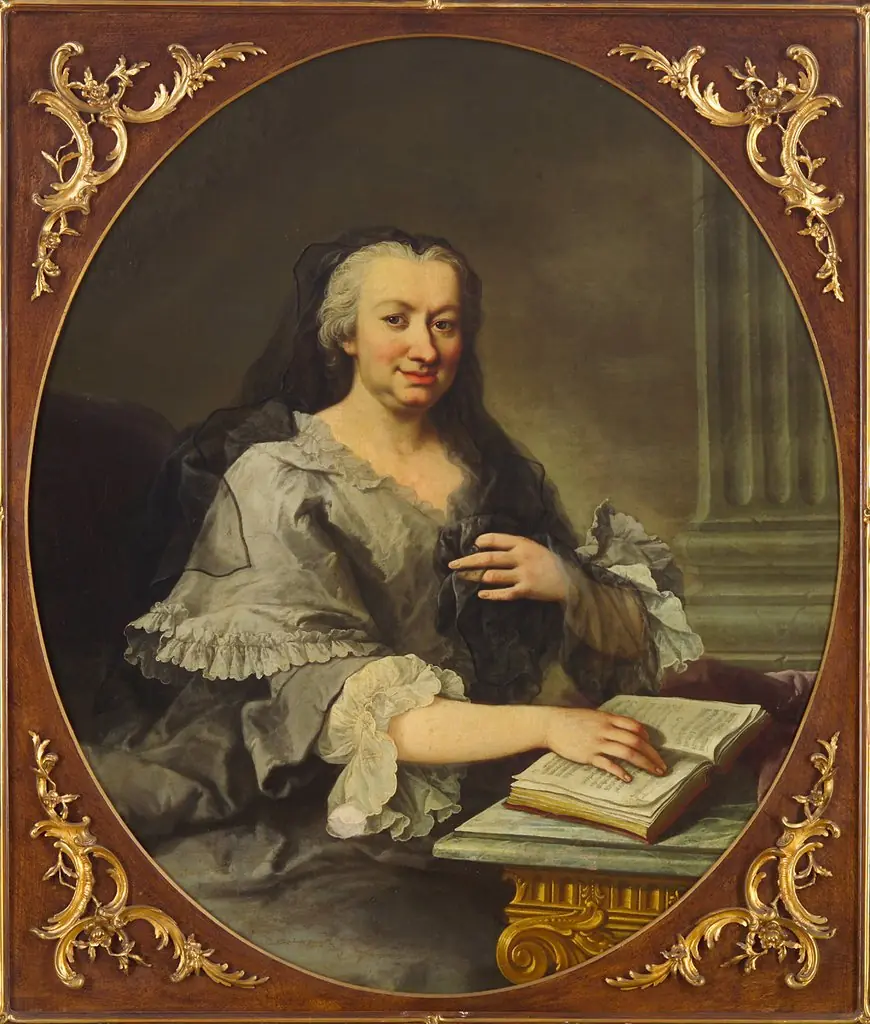 Portrait of Maria Karolina Gräfin Fuchs (1681-1754)
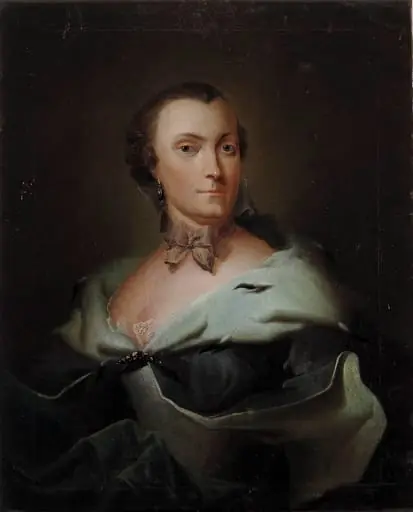 Laihian kirkkoherra Samuel Wacklinin rouva Elisabeth Björman
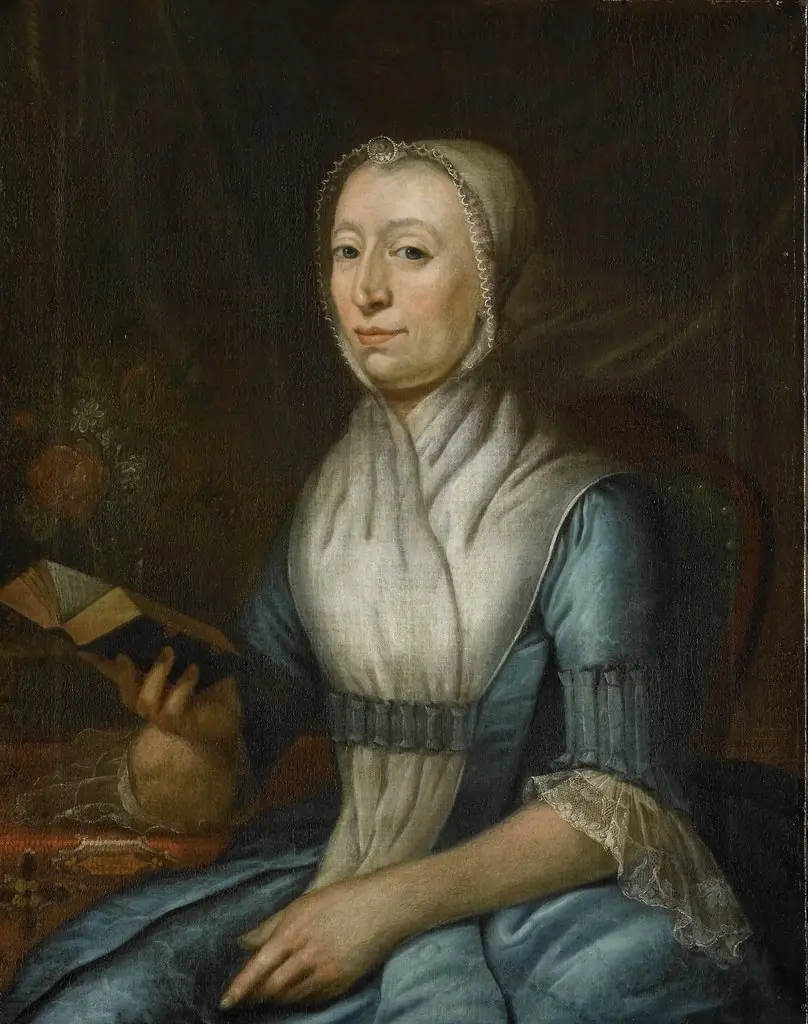 Portrait of Eva Goudriaan-de Veer
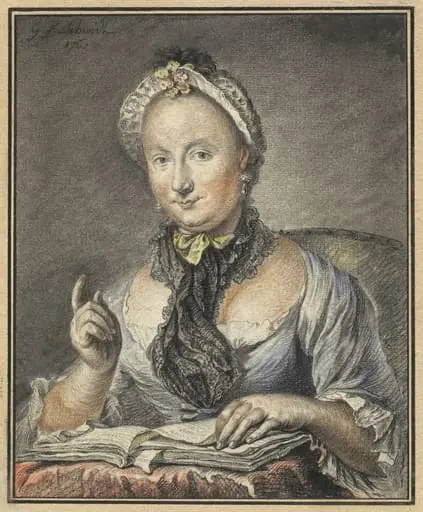 The Artist's Wife with a Book
 Portrait of Countess Yekaterina P. Stroganova (1744-1815) (copy)
 Mrs. Heckford
 Portrait of a Lady
 Portret van een vrouw
 The Professor’s Wife Elisabeth Christine Sophie Horrebow, née Manthey