Artwork
King Siddhartha and Queen Trishala with the Dream Interpreters, Folio 25 (verso), from a Kalpa-sutra
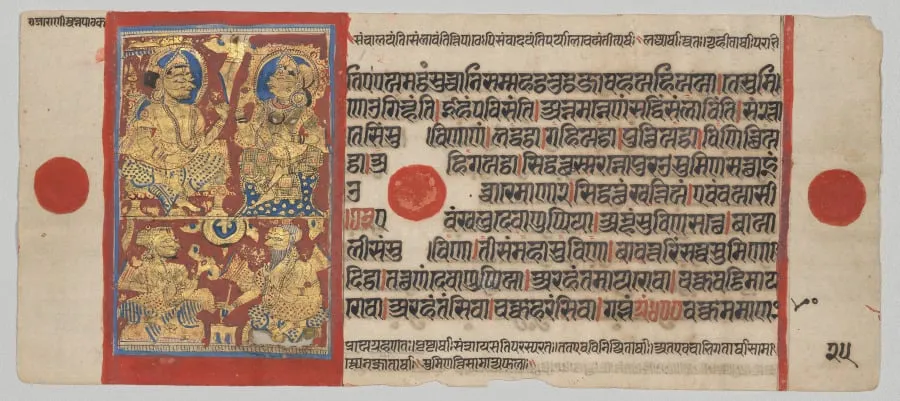
King Siddhartha and Queen Trishala with the Dream Interpreters, Folio 25 (verso), from a Kalpa-sutra is an unspecified painting by the Mughal Painting artist Unknown. It dates from 1488 and is held in the collection of the Cleveland Museum of Art. This 15th-century Indian painting, Folio 25 (verso) from a Kalpa-sutra, depicts a pivotal scene from Jain religious lore.
- Accession no.
- 1932.119.25.b
- Credit line
- Edward L. Whittemore Fund
About this work
You see a king and queen sitting on a throne while two bearded men below them read and write.
You see a king and queen sitting on a throne while two bearded men below them read and write. The queen has just shared her dreams, and the men are figuring out what they mean.
This painting comes from a Jain religious book made in Gujarat, India, around 1500. The dreams predict the birth of Mahavira, the founder of Jainism. The bright colors and flat shapes are typical of art from this region and time.
To see more like this, look up western india, gujarat.
Overview
This 15th-century Indian painting, Folio 25 (verso) from a Kalpa-sutra, depicts a pivotal scene from Jain religious lore. Executed in the characteristic style of Gujarat, circa 1500, it features King Siddhartha, Queen Trishala, and two dream interpreters.
Subject & Meaning
The scene portrays King Siddhartha and Queen Trishala seeking interpretation of her auspicious dreams from two learned scholars. The dreams foretell the birth of their son, who will either become a mighty king or a world religious leader, referencing the future Mahavira, founder of Jainism.
Technique & Style
The painting exhibits the distinctive visual language of 15th-century Gujarat art, marked by vibrant colors and flattened forms, typical of the region's manuscript illustrations during this period.
History & Provenance
Originating from a Kalpa-sutra, a Jain religious text, this folio is dated to around 1500, highlighting its role within the religious and artistic traditions of western India.
Context
As part of a Kalpa-sutra, this work was likely used in religious practices or teachings, illustrating key narratives of Jainism, including the prophesied birth of Mahavira.
Artist & collection









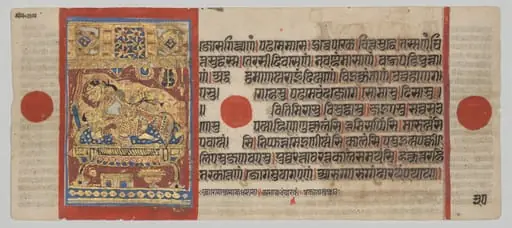
- Birth of Mahavira, folio 30 (verso), from a Kalpa-sutra
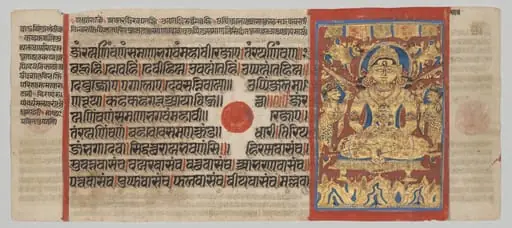 Ritual Bath of Mahavira, Folio 31 (recto), from a Kalpa-sutra
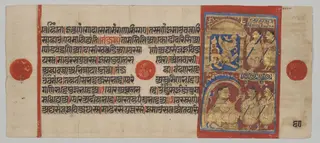 The Lion's Cave with Sthulabhadra and His Sisters, Folio 60 (verso), from a Kalpa-sutra
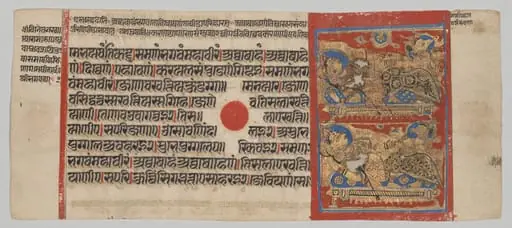 Transfer of the Embryo of Mahavira, Folio 12 (recto), from a Kalpa-sutra
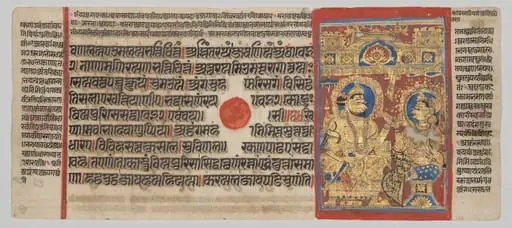 King Siddhartha and Queen Trishala Sit Alone to Discuss Her Dreams, Folio 24 (recto), from a Kalpa-sutra
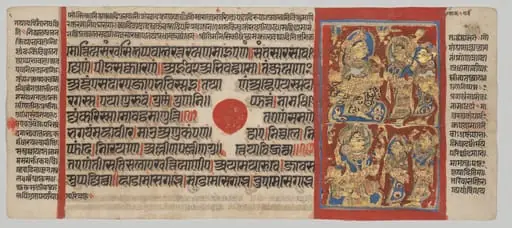 Queen Trishala's Grief and Happiness, Folio 29 (recto), from a Kalpa-sutra
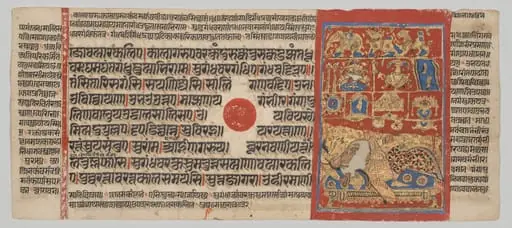 The Fourteen Dreams of Queen Trishala, folio 14 (recto), from a Kalpa-sutra
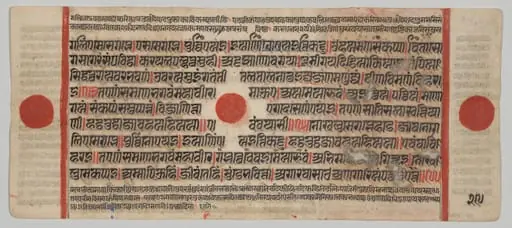 Text, Folio 29 (verso), from a Kalpa-sutra
 Text, Folio 31 (verso), from a Kalpa-sutra