Artwork
Birth of Mahavira, folio 30 (verso), from a Kalpa-sutra
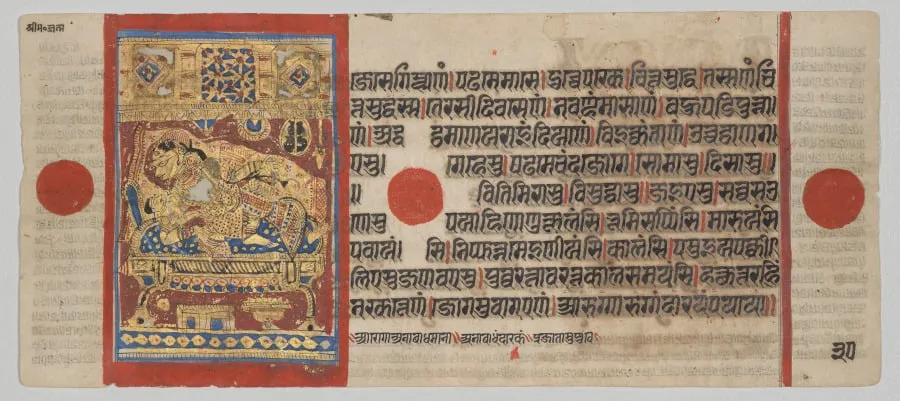
Birth of Mahavira, folio 30 (verso), from a Kalpa-sutra is an unspecified painting by the Indian Miniature artist Unknown. It dates from 1488 and is held in the collection of the Cleveland Museum of Art. This folio comes from a lavishly illustrated manuscript of the Kalpa-sutra, a sacred Jain text detailing the lives of the Tirthankaras.
- Accession no.
- 1932.119.30.b
- Credit line
- Edward L. Whittemore Fund
About this work
Overview
Created in western India, likely Gujarat, during the 15th century, it depicts the divine conception of Mahavira, the 24th and last Tirthankara.
This folio comes from a lavishly illustrated manuscript of the Kalpa-sutra, a sacred Jain text detailing the lives of the Tirthankaras. Created in western India, likely Gujarat, during the 15th century, it depicts the divine conception of Mahavira, the 24th and last Tirthankara. The scene is part of a larger sequence illustrating miraculous events surrounding the birth of enlightened beings, rendered with meticulous detail and a restrained, symbolic palette.
Subject & Meaning
The painting illustrates the moment when a divine being implants Mahavira’s embryo into Queen Trishala’s womb, as foretold in Jain scripture. Above her, fourteen auspicious symbols, elephants, lions, and other emblems, float in the air, representing the future greatness of the child. These omens confirm his spiritual destiny, reinforcing the Jain belief in the purity and preordained nature of Tirthankaras, who attain liberation and are free from rebirth.
Technique & Style
The artist employed a flat, two-dimensional style with no modeling or shadow, relying instead on strong outlines and unmodulated pigments. Colors, mineral-based and richly saturated, were applied in pure, unblended fields, enhancing the ethereal tone. The composition is tightly framed, with figures and symbols arranged hierarchically rather than spatially, reflecting devotional conventions of western Indian manuscript painting and prioritizing symbolic clarity over naturalism.
History & Provenance
This folio originates from a 15th-century Jain manuscript commissioned by a wealthy lay patron, likely for use in ritual recitation or private devotion. Such manuscripts were produced in Gujarat’s artisan workshops, where scribes and painters collaborated under monastic guidance. The work’s preservation suggests it was carefully maintained within a Jain community, possibly in a temple library or monastic collection, passed down through generations.
Context
Jain manuscripts like this one served both liturgical and didactic functions, visually reinforcing core doctrines for communities with varying literacy levels. The emphasis on miraculous birth narratives underscored the sacred lineage of Tirthankaras, distinguishing them from ordinary beings. Similar iconographic motifs appear across regional Jain art, particularly in Gujarat and Rajasthan, where manuscript painting flourished between the 14th and 17th centuries.
Legacy
The aesthetic of this folio influenced later Jain and regional Indian painting traditions, preserving a visual language rooted in spiritual symbolism rather than realism. Its enduring presence in museum and private collections reflects its role as a key artifact of Jain devotional culture. Scholars continue to study its iconography to understand how religious narratives were encoded in visual form across centuries of manuscript production.
Artist & collection









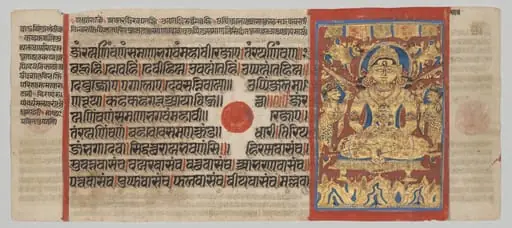 Ritual Bath of Mahavira, Folio 31 (recto), from a Kalpa-sutra
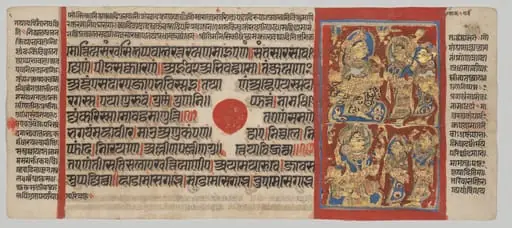 Queen Trishala's Grief and Happiness, Folio 29 (recto), from a Kalpa-sutra
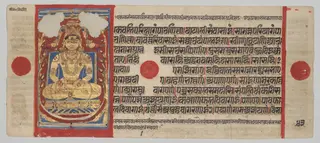 Mahavira in the Realm of Liberation (Nirvana), Folio 43 (verso), from a Kalpa-sutra
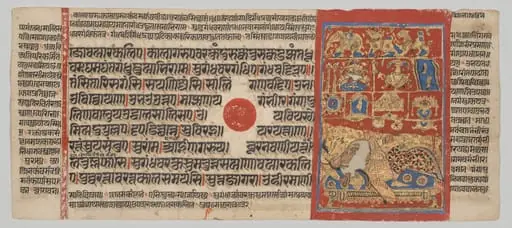 The Fourteen Dreams of Queen Trishala, folio 14 (recto), from a Kalpa-sutra
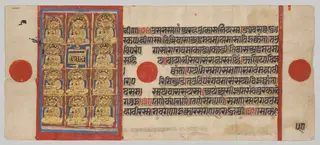 The Eleven Principal Disciples (Ganadharas) of Mahavira, Folio 57 (verso), from a Kalpa-sutra
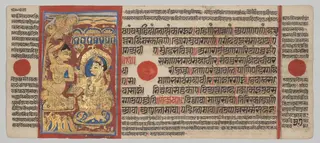 Mahavira's Initiation Tonsure, Folio 37 (verso), from a Kalpa-sutra
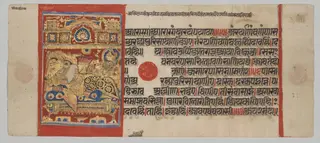 Birth of Parshva, Folio 45 (recto), from a Kalpa-sutra
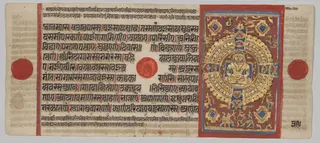 Mahavira's Omniscience and First Teaching (Samavasarana), Folio 39 (verso), from a Kalpa-sutra
 Text, Folio 29 (verso), from a Kalpa-sutra