Artwork
Qur'an Manuscript Folio
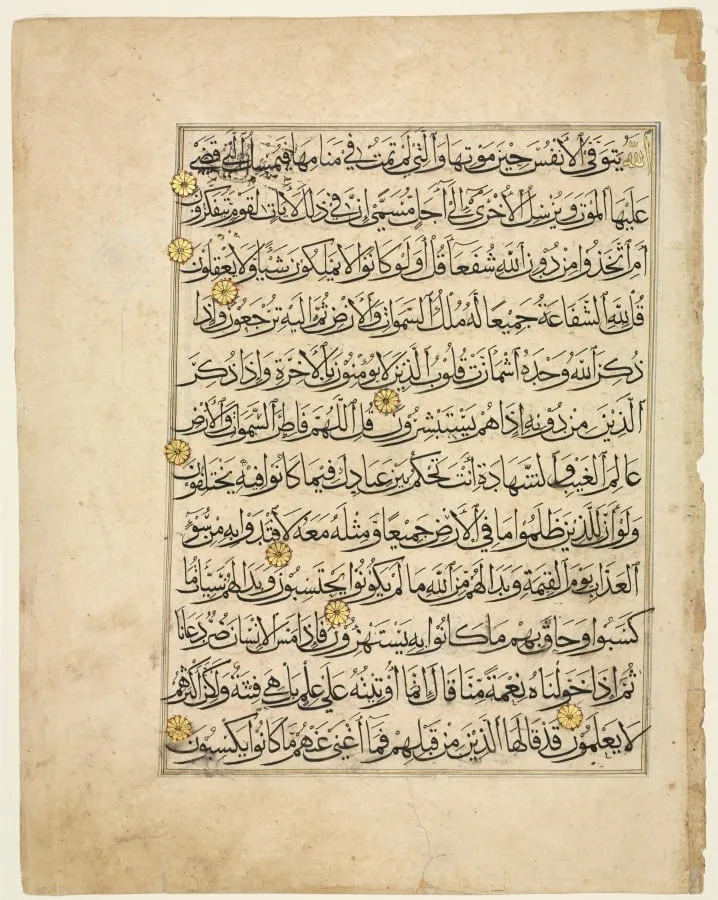
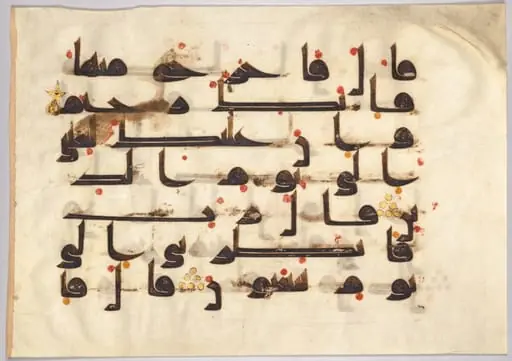
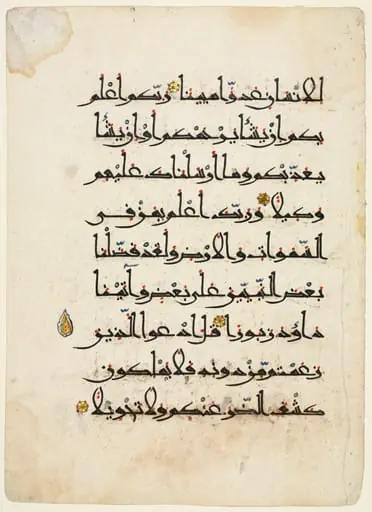
Qur'an Manuscript Folio is a drawing by Unknown. It dates from 1304 and is held in the collection of the Cleveland Museum of Art. This folio is a single page from a Qur’an manuscript, produced during the Mamluk period in Egypt.
- Accession no.
- 1933.480
- Credit line
- Edward L. Whittemore Fund
About this work
The colors and gold leaf show it was made for someone wealthy, likely in the Mamluk Sultanate when Cairo was a center of book arts.
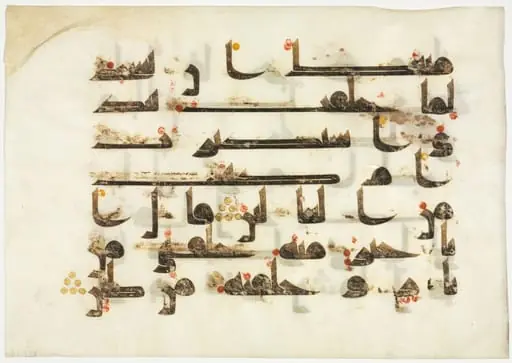
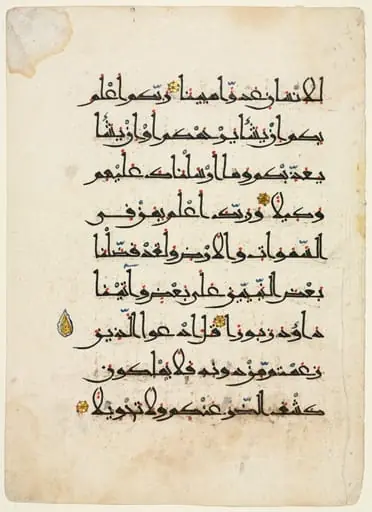
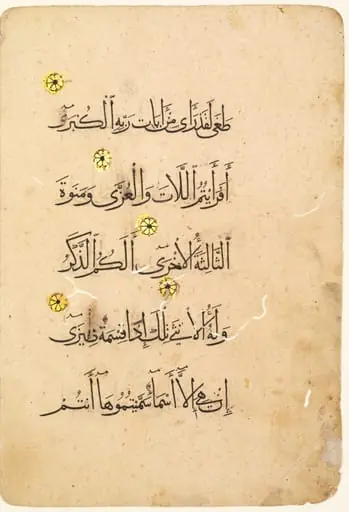
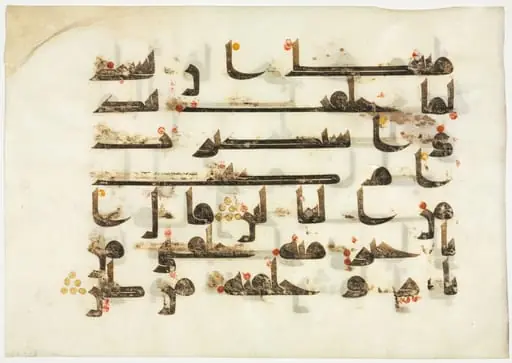
This is a single page from a Qur’an, written in black ink with red, blue, and gold decorations. Tiny rosettes mark the ends of verses, and a round medallion sits in the border.
The script is Rayhani, a style that was neat and formal, used for important texts. The colors and gold leaf show it was made for someone wealthy, likely in the Mamluk Sultanate when Cairo was a center of book arts.
Look up the Mamluk Sultanate (1250–1517) to see more of these richly decorated manuscripts.
Overview
This folio is a single page from a Qur’an manuscript, produced during the Mamluk period in Egypt. It contains verses from Surah al-Zumar, written in Rayhani script, a refined, legible style favored for religious texts. Decorative elements in red, blue, and gold leaf adorn the margins and verse endings, indicating the manuscript’s high status and the resources invested in its creation.
Subject & Meaning
The text preserves sacred verses from the 39th chapter of the Qur’an, emphasizing divine sovereignty and human accountability. The careful layout and ornamental markers, such as rosettes at verse endings, serve both functional and reverential purposes: they aid recitation and visually honor the sanctity of the words. The presence of gold and vivid pigments reflects the belief that beauty enhances spiritual experience.
Technique & Style
The script is executed in black ink using Rayhani, a formal cursive known for its clarity and even spacing. Gold leaf and mineral pigments were applied sparingly to create rosettes and a central roundel in the border. These embellishments were likely added after the text was completed, using fine brushes and precision tools, showcasing the skill of specialized artisans in a collaborative production process.
History & Provenance
Created in Cairo during the Mamluk Sultanate (1250–1517), this folio reflects the era’s flourishing manuscript culture. Cairo was a hub for calligraphy and book production, where royal and elite patrons commissioned luxurious Qur’ans. The use of expensive materials suggests the manuscript was made for a high-status individual or institution, possibly a mosque or madrasa.
Context
During the Mamluk period, Qur’an production was a highly organized craft involving scribes, illuminators, and binders. The Rayhani script was preferred for its readability in liturgical settings, while gold and color symbolized divine light and authority. Such manuscripts were not merely religious objects but also expressions of political and cultural prestige, reinforcing the patron’s piety and power.
Legacy
This folio exemplifies the enduring tradition of Islamic book arts, where textual accuracy and aesthetic refinement coexisted. Surviving Mamluk Qur’an fragments like this one inform modern scholarship on calligraphic evolution and the material culture of devotion. Their preservation underscores the value placed on the Qur’an as both scripture and artistic heritage across centuries.
Artist & collection









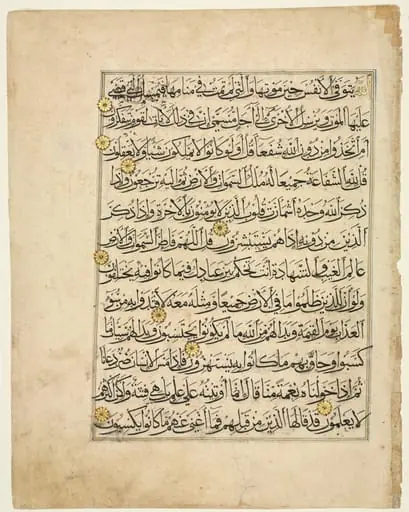
- Qur'an Manuscript Folio (recto)
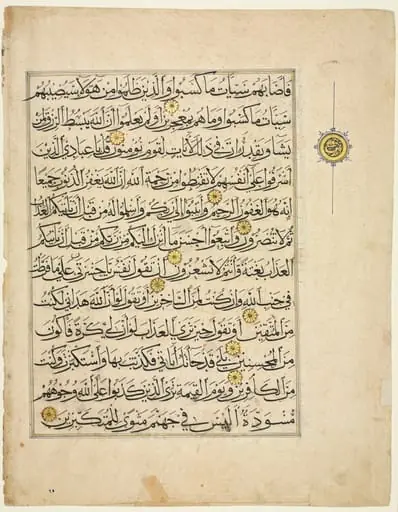 Qur'an Manuscript Folio (verso)
![Qur'an Manuscript Folio (recto; verso) [Right side of Bifolio], by Unknown](https://artifactworldgallery.com/img/unknown--qur-an-manuscript-folio-recto-verso-right-side-of-bifolio--0873974e1864806f-w320.webp) Qur'an Manuscript Folio (recto; verso) [Right side of Bifolio]
Qur'an Manuscript Folio (recto; verso) [Right side of Bifolio]![Qur'an Manuscript Folio (recto; verso) [Left side of Bifolio], by Unknown](https://artifactworldgallery.com/img/unknown--qur-an-manuscript-folio-recto-verso-left-side-of-bifolio--7b560e06b8af0905-w320.webp) Qur'an Manuscript Folio (recto; verso) [Left side of Bifolio]
Qur'an Manuscript Folio (recto; verso) [Left side of Bifolio]![Qur'an Manuscript Folio (recto) [Right side of Bifolio], by Unknown](https://artifactworldgallery.com/img/unknown--qur-an-manuscript-folio-recto-right-side-of-bifolio--c1fa5781f1fa5bcd-w320.webp) Qur'an Manuscript Folio (recto) [Right side of Bifolio]
Qur'an Manuscript Folio (recto) [Right side of Bifolio]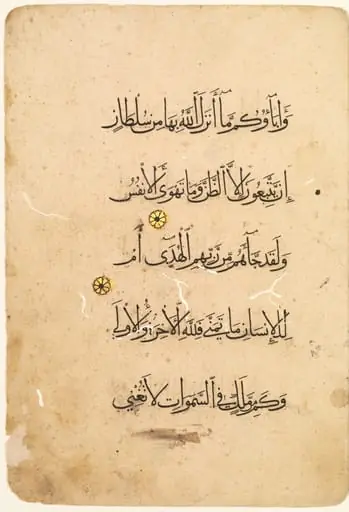 Qur'an Manuscript Folio (recto) (left side of bifolio)
 Folio from a Qur'an
 Leaf from a Qur'an
 Qur'an Manuscript Folio (verso) (right side of bifolio)
 Folio from a Qur'an (recto)
 Folio from a Qur'an (verso)
 Leaf from a Qur'an (recto)