Artwork
Rama
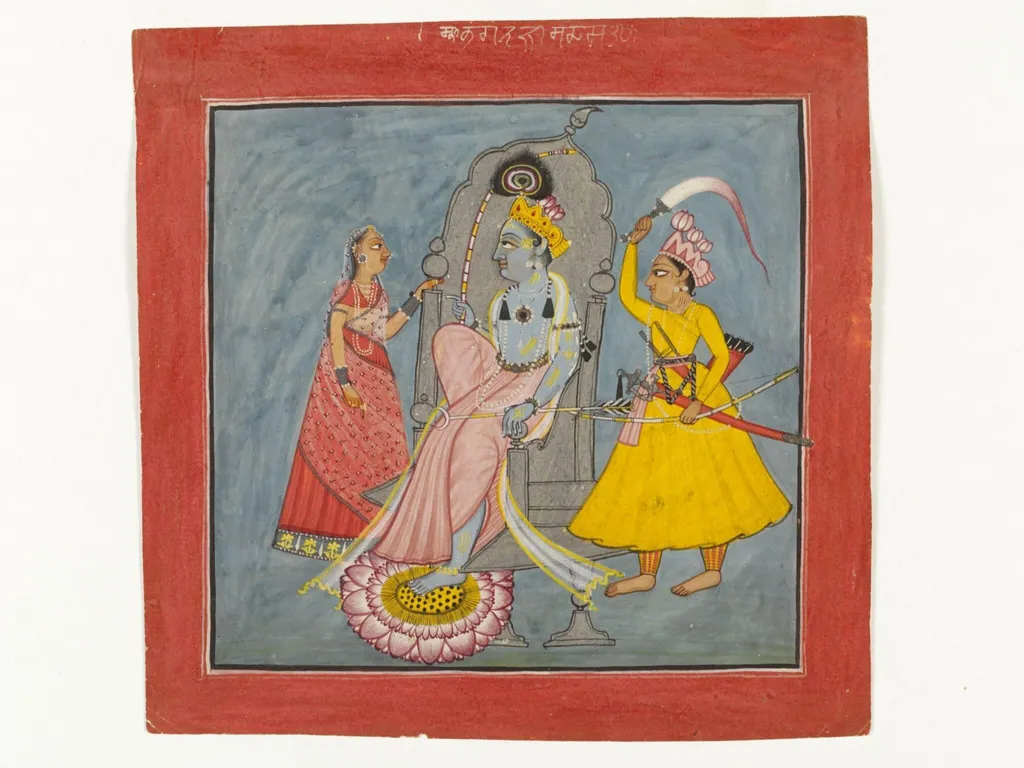
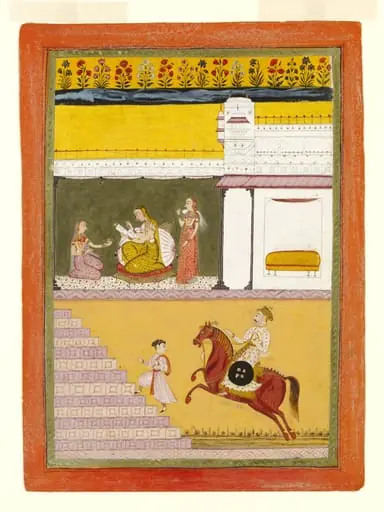
Rama is a paint painting by the Baroque artist Unknown. It dates from 1720 and is held in the collection of the Victoria and Albert Museum.
About this work
Overview
This early eighteenth‑century work, executed in opaque watercolour on paper, presents a central figure seated upon a throne with two companions positioned on either side. The composition is rendered in bright, flat hues set against a muted blue‑gray backdrop, giving the scene a stylised, ceremonial quality.
Subject & Meaning
The seated individual is identified as Rama, a principal hero of the Hindu epic Ramayana, distinguished by his blue‑toned skin, golden crown, and staff. To his left stands Sita, depicted in a red garment with gold ornaments, while Lakshman appears on the right in yellow attire, bearing a sword and bow, suggesting roles as consort and loyal brother‑warrior respectively.
Technique & Style
The painting employs opaque watercolour, a medium that allows for vivid, uniform colour fields without the translucency typical of traditional washes. Figures are outlined with minimal shading, emphasizing decorative patterning and flat planes of colour, a stylistic choice common in South Asian courtly art of the period.
History & Provenance
Created around 1720, the work reflects artistic conventions of the Indian subcontinent during the early modern era. It is presently part of the collection of the Victoria and Albert Museum, where it contributes to the institution’s representation of South Asian painting traditions.
Artist & collection









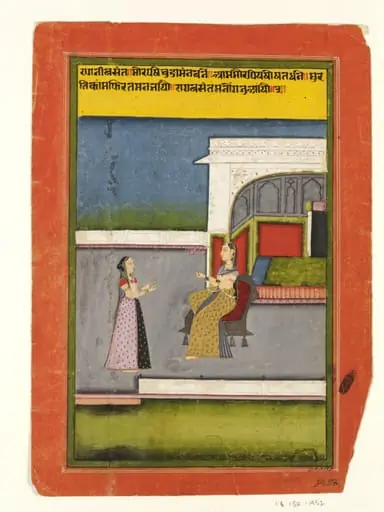
- Malasri Ragini
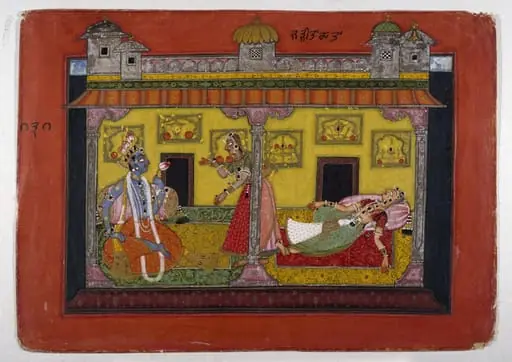 Radha
Radha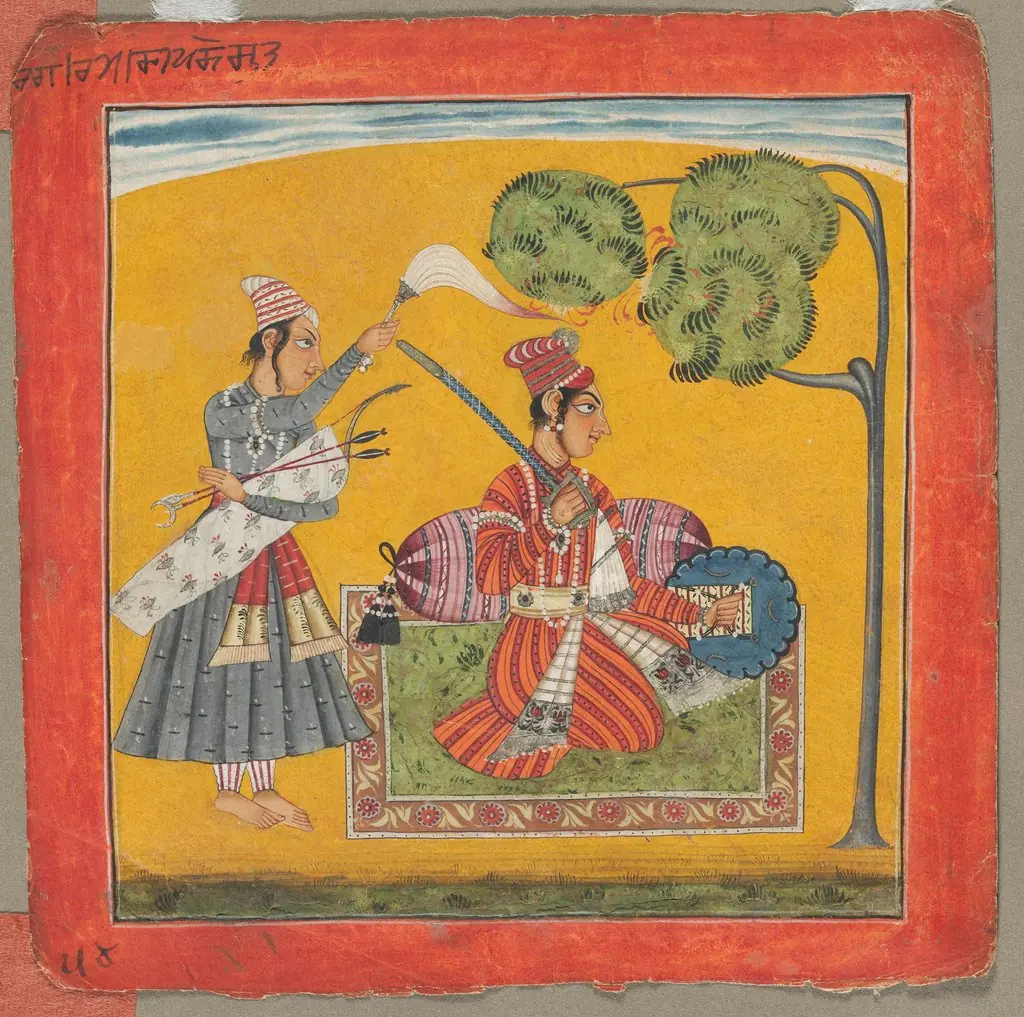 Dipak Raga, One of the Thirty-Six Melodies (Ragamala): Personifying Love
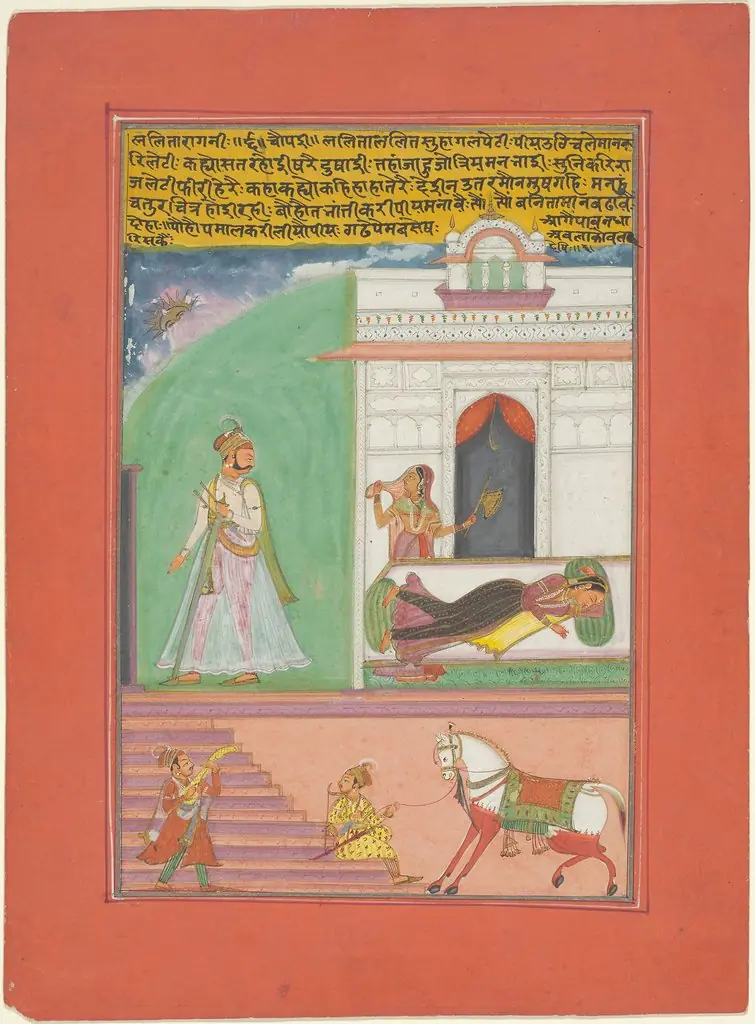 Lalita Ragini, Page from a Jaipur Ragamala Set
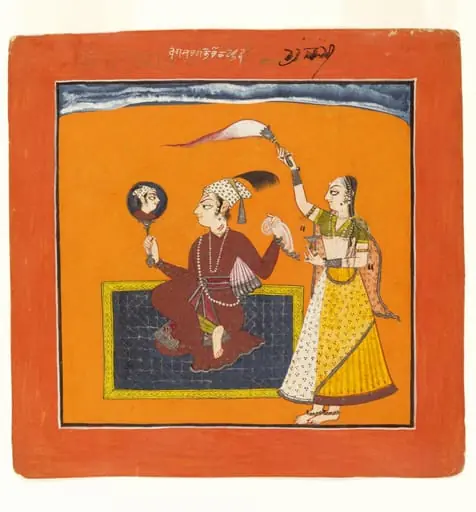 Vangala Raga
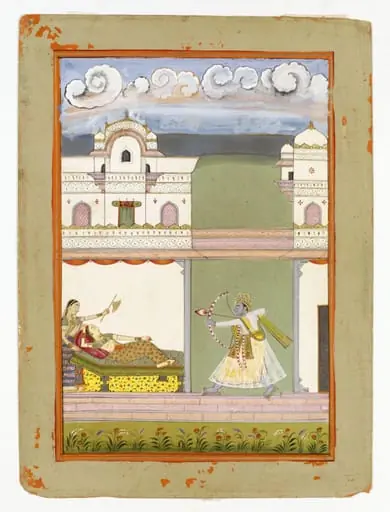 Vibhasa Ragini
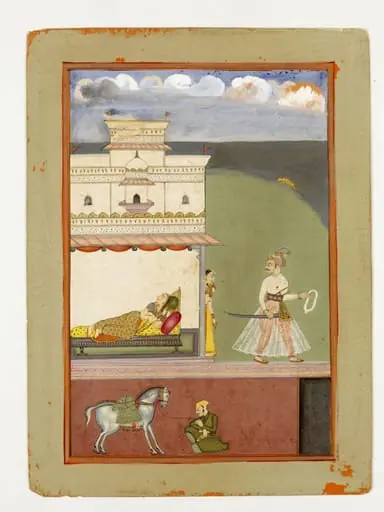 Lalita Ragini
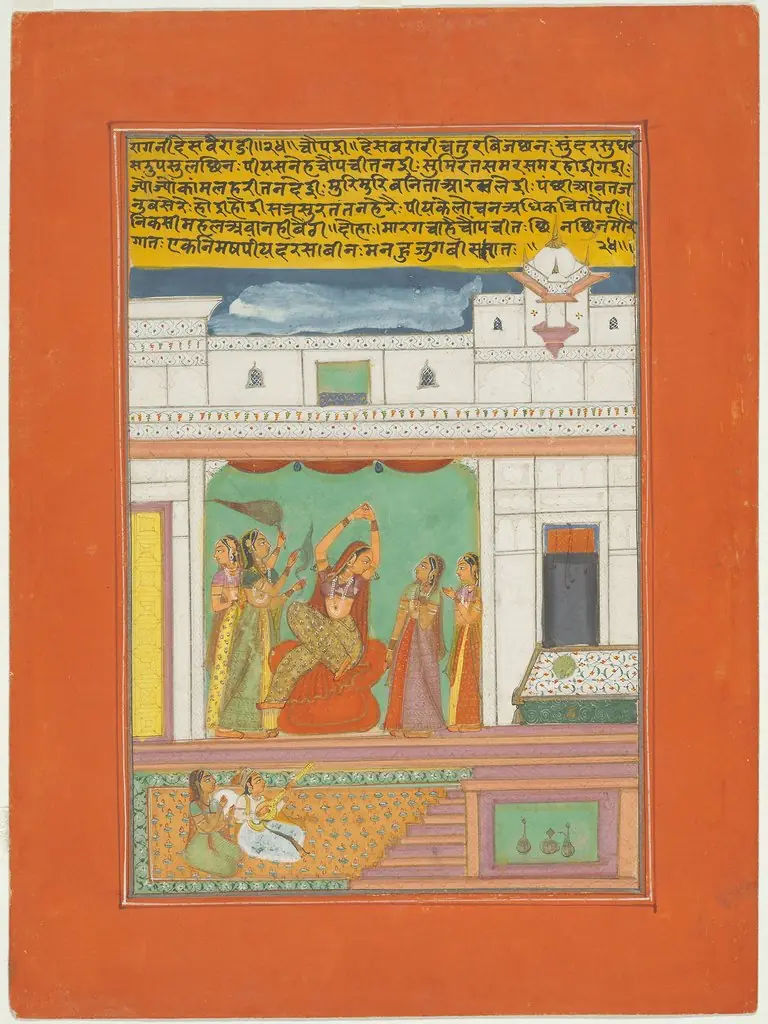 Ragini Desavaradi, Page from a Jaipur Ragamala Set
 Krishna's Fifth and Sixth Avatars, page from a copy of the Gitagovinda of Jayaveda
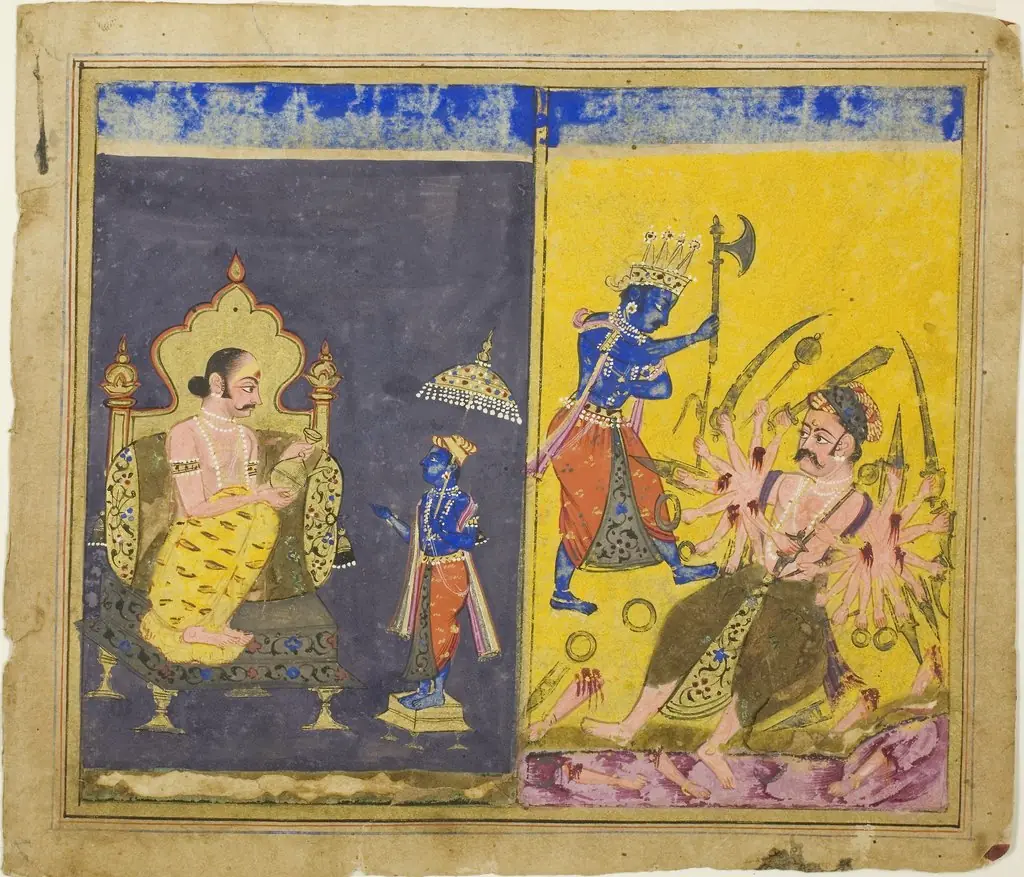 Krishna's Fifth and Sixth Avatars, page from a copy of the Gitagovinda of Jayaveda
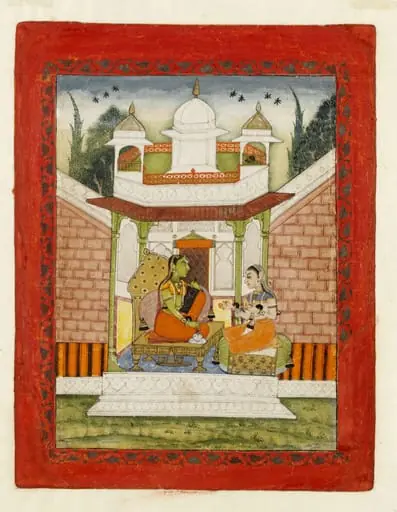 Dhanasri Ragini
 Dhanasri Ragini