Artwork
Radha
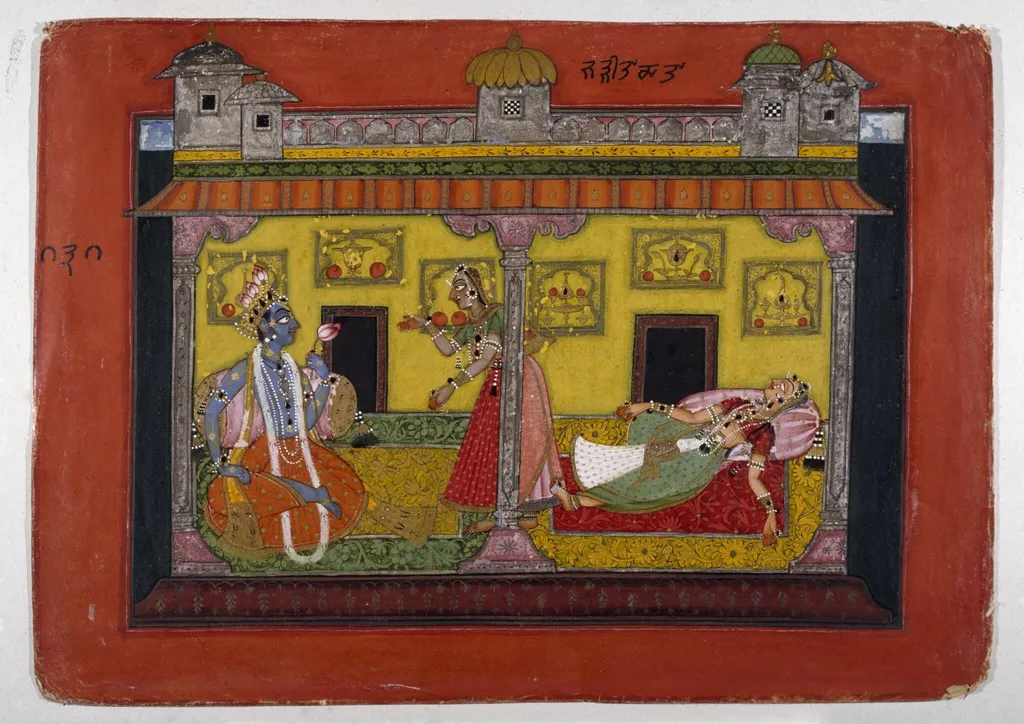
Radha is a paint painting by the Baroque artist Unknown. It dates from 1660 and is held in the collection of the Victoria and Albert Museum.
About this work
Overview
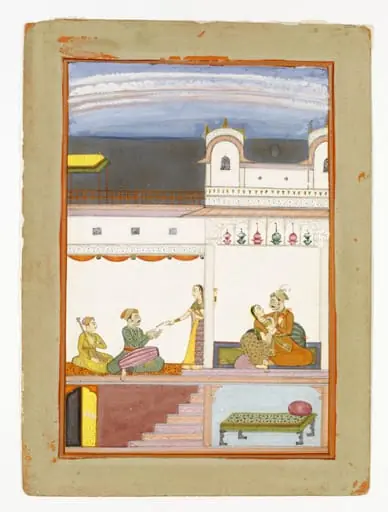
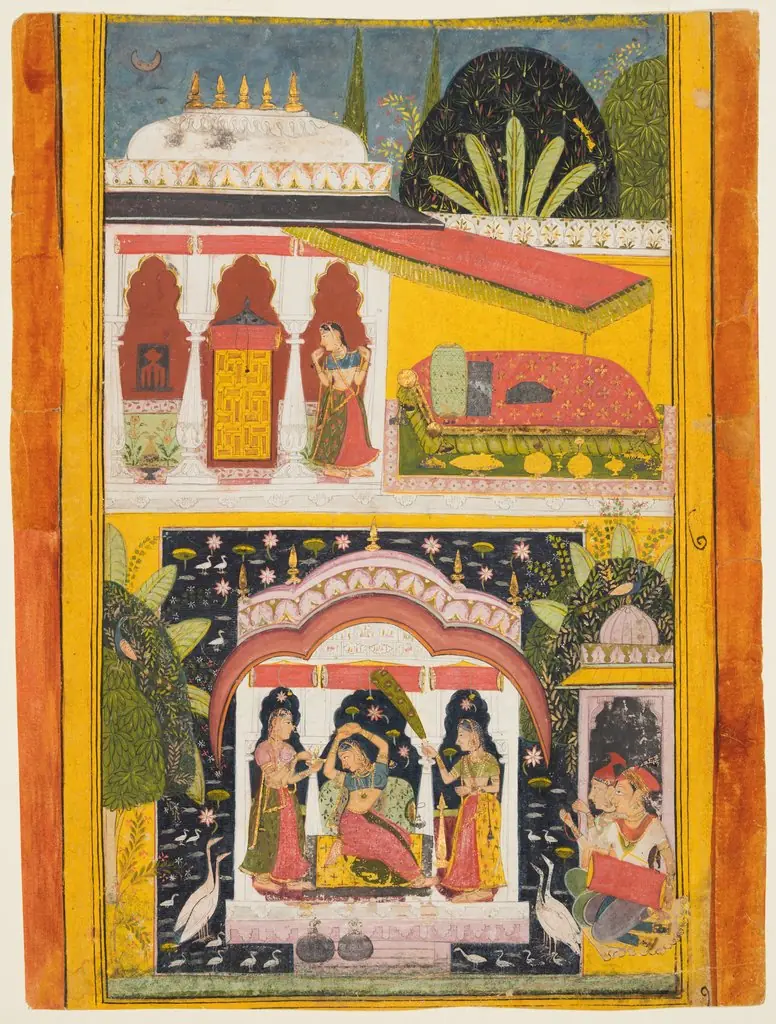
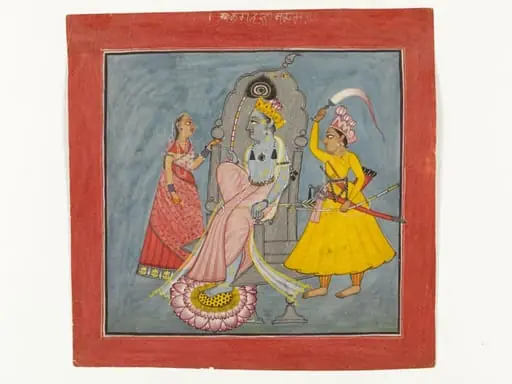
This painting belongs to a series inspired by Bhanudatta’s Rasamanjari, a Sanskrit poetic text that categorizes emotional states in romantic relationships.
This painting belongs to a series inspired by Bhanudatta’s Rasamanjari, a Sanskrit poetic text that categorizes emotional states in romantic relationships. Executed in the early Pahari style, it reflects the artistic traditions of the Punjab Hills. The work is distinguished by its delicate composition and the use of natural materials, including iridescent beetle wing cases for decorative detail, underscoring its connection to both literary and material culture of the region.
Subject & Meaning
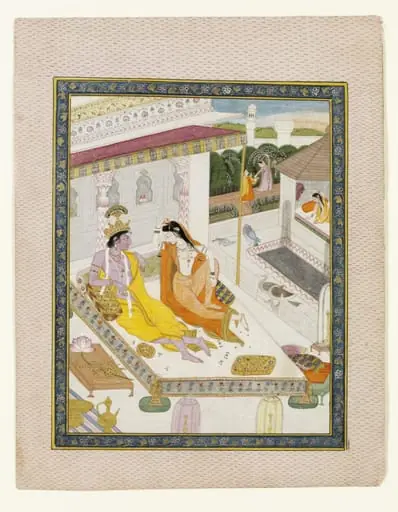
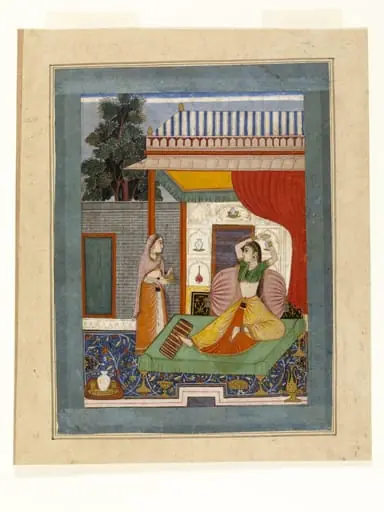
The figure is identified as Radha, depicted in a state of suspended emotion, motionless, eyes closed, arm beneath her head, matching the Takri inscription describing her as 'she who lies dazed or stupefied.' The accompanying Sanskrit verses liken her stillness to a painted image, suggesting that only the utterance of a beloved’s name might stir her. The scene captures a moment of internal longing, where physical stillness conveys profound emotional resonance.
Technique & Style
The artist employs a restrained palette of bold reds and blues against pale, luminous grounds, creating a serene visual rhythm. Fine brushwork defines the sheer fabric of Radha’s garments and the intricate carpet beneath her. Beetle wing cases, carefully inset, shimmer as jewelry, adding texture and light without overt ornamentation.
The background screen frames a distant landscape, enhancing the intimacy of the foreground while suggesting a broader world beyond.
History & Provenance
This painting is among the earliest known examples of the Pahari style, emerging in the hill kingdoms of northern India during the late 17th or early 18th century. Its inscription in Takri script and Sanskrit verses indicate a local, literate patronage network. The work entered the Victoria and Albert Museum’s collection through documented acquisitions of Pahari miniatures, preserving its cultural context and material integrity.
Context
The Rasamanjari was widely illustrated in regional courts, where poetry and painting intertwined as expressions of refined taste. Artists in the Punjab Hills adapted these literary themes into intimate visual narratives, often emphasizing emotional nuance over grandeur. This work reflects a broader trend of courtly patronage that valued subtlety, poetic allusion, and the sensory richness of materials like beetle wings as symbols of luxury and artistry.
Legacy
The painting’s influence lies in its role as a foundational example of Pahari miniature painting, setting stylistic precedents for later regional schools. Its fusion of literary reference, emotional restraint, and material innovation became a model for subsequent artists. Today, it remains a key reference in studies of Indian court art, illustrating how poetic texts were translated into visual language with quiet precision.
Artist & collection