Artwork
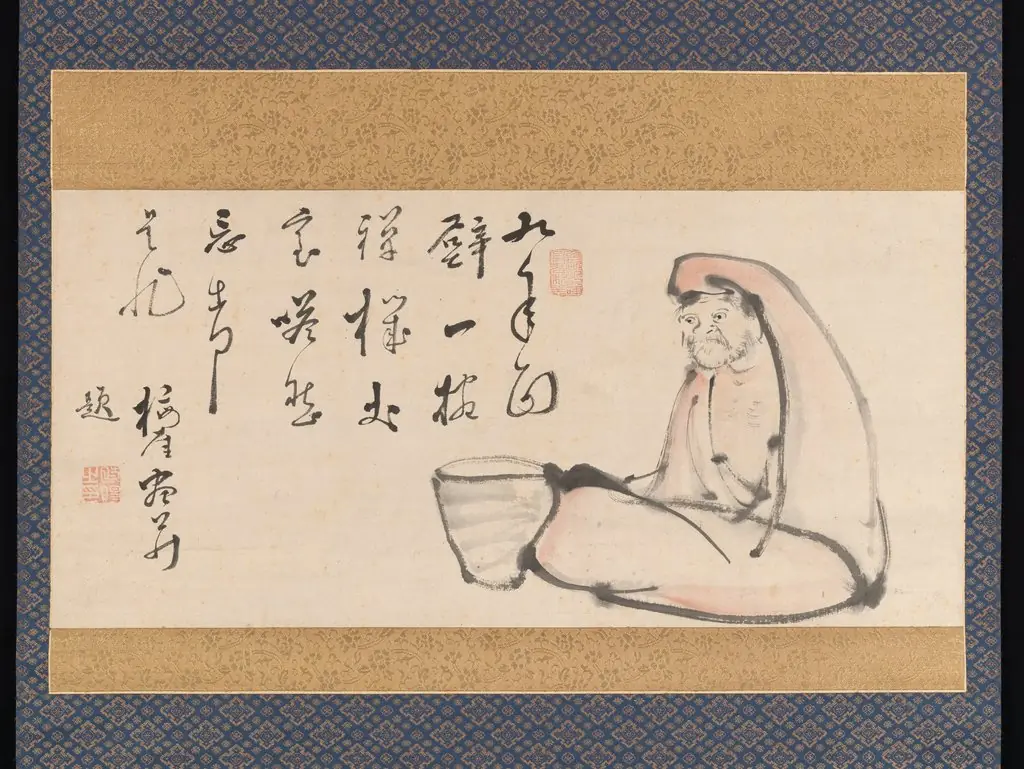
風外慧薫筆 指月布袋図|Hotei Pointing at the Moon
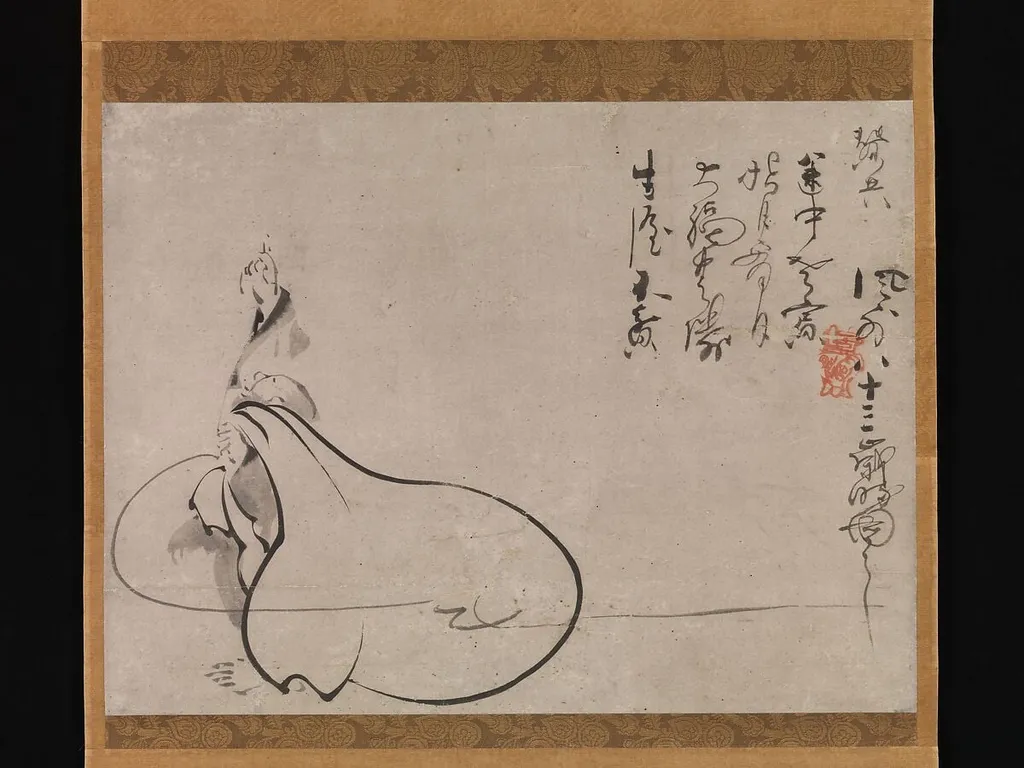
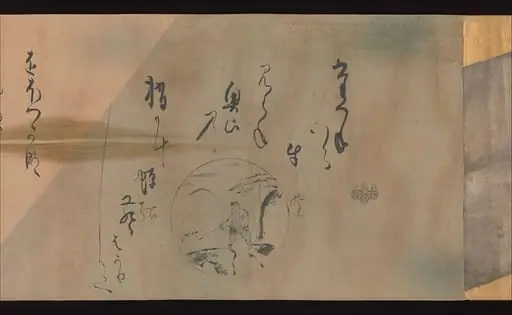
風外慧薫筆 指月布袋図|Hotei Pointing at the Moon is an ink painting by the Baroque artist Fūgai Ekun. It dates from 1650 and is held in the collection of the Metropolitan Museum of Art.
About this work
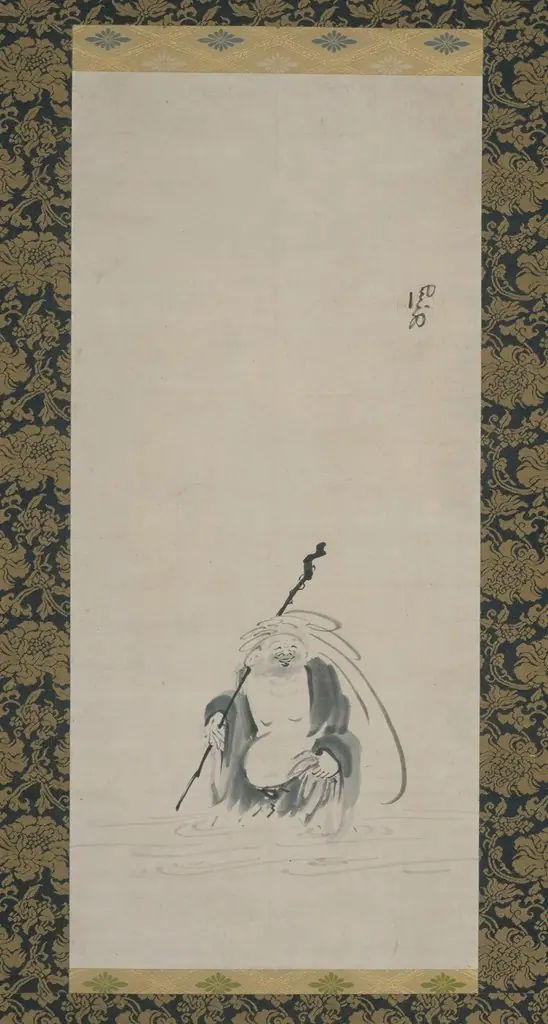
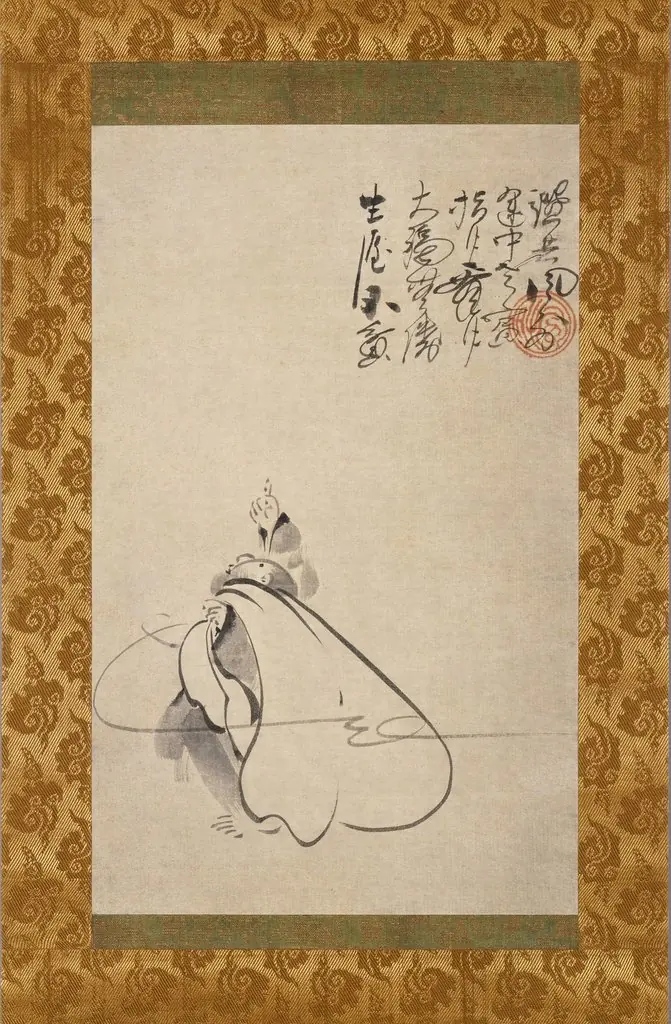
A plump, laughing monk points one finger at the moon, his other hand on a cloth sack. The moon stays out of frame, just his gesture toward it. The figure is Budai, a Japanese folk symbol of contentment, caught in loose, quick strokes with open space around him. Fugai Ekun, ink on paper, 1650.
Subject & Meaning
As a religious genre work, the piece visually encapsulates this core Zen principle, using the familiar figure of Budai to convey the ineffability of awakening.
Created in 1650 by the Japanese monk-artist Fūgai Ekun, this ink painting depicts Budai, the eccentric Zen figure often known as the Laughing Buddha. The composition features the monk pointing upward, a gesture central to the work's title and iconography. In Zen Buddhist tradition, the act of pointing at the moon serves as a metaphor for spiritual instruction: the finger represents the teaching or scripture, while the moon symbolizes enlightenment or ultimate truth.
The image warns viewers against mistaking the means (the finger) for the end (the moon), emphasizing that direct experience supersedes doctrinal study. As a religious genre work, the piece visually encapsulates this core Zen principle, using the familiar figure of Budai to convey the ineffability of awakening.
Technique & Style
Created in 1650, this work is a hanging scroll executed in ink on paper. The piece depicts the monk Budai, a figure central to religious painting traditions in Japan. As a hanging scroll, the support consists of paper mounted for vertical display, a standard format for such devotional images.
The medium is monochromatic ink, characteristic of the artist Fūgai Ekun's approach to religious subjects. The formal qualities focus on the depiction of the Budai figure pointing at the moon, rendered without color. The work remains part of the collection at the Metropolitan Museum of Art, preserving its original material composition and stylistic execution from the mid-seventeenth century.
History & Provenance
The hanging scroll titled 風外慧薫筆 指月布袋図 (Hotei Pointing at the Moon) was created in 1650 by Fūgai Ekun in Japan. Executed in ink on paper, the work depicts the monk Budai (Hotei) pointing at the moon and falls within the religious genre of painting. It is held in the collection of the Metropolitan Museum of Art in New York under accession number 2013.1133.1.
While the specific commission details and the chain of ownership prior to the museum's acquisition are not recorded, the work is dated to the mid-seventeenth century and serves as a significant example of Fūgai Ekun's artistic output. No exhibition history has been identified in the available documentation.
Overview
Created in 1650 by the Japanese monk-painter Fūgai Ekun, 'Hotei Pointing at the Moon' is a hanging scroll executed in ink on paper. The work depicts Budai, the folkloric figure of contentment, characterized by his portly form and laughing expression. He is shown pointing a single finger upward, a gesture that alludes to the moon, which remains absent from the pictorial space itself.
This compositional choice emphasizes the Zen concept of pointing directly to the truth rather than depicting it literally. Fūgai employs rapid, loose brushstrokes to capture the figure's vitality and spiritual joy, prioritizing expressive energy over meticulous detail. The painting reflects the artist's mature style, blending Chan Buddhist iconography with the spontaneous aesthetic of ink wash painting.
As a religious work from the mid-Edo period, it serves as a visual koan, inviting the viewer to contemplate the nature of enlightenment through the simple, direct action of the monk.
Context
As a subject, Budai frequently appeared in Zen Buddhist painting, particularly among eccentric monks known for their unconventional artistic expressions. His image served as an accessible symbol of enlightenment and spiritual freedom. The "pointing at the moon" motif, common in Zen teachings, encourages seekers to look beyond the finger (the teaching) to the moon itself (the truth), reflecting a core principle of direct experience.
Artist & collection