Artwork
十牛頌図巻|Ten Verses on Oxherding
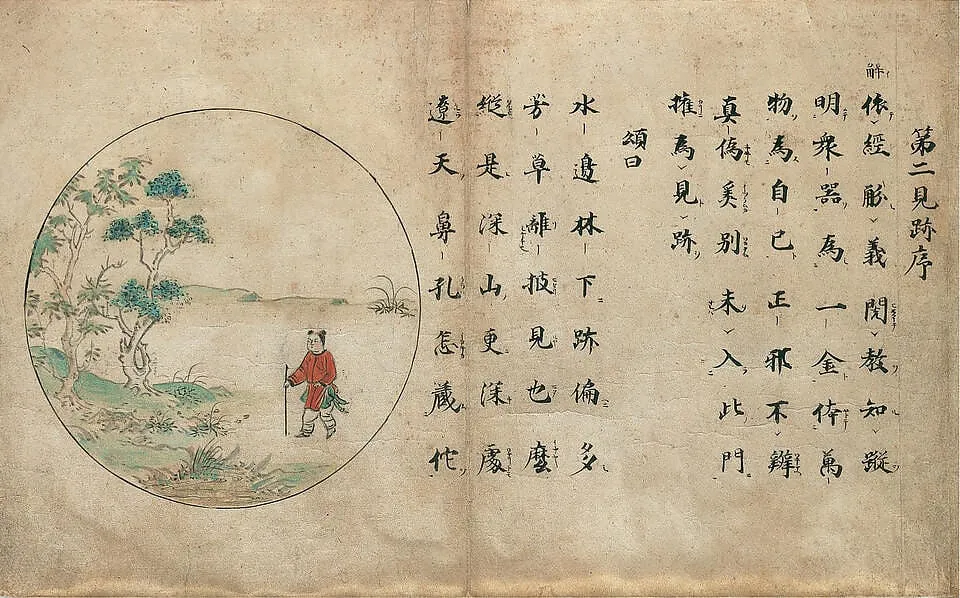
十牛頌図巻|Ten Verses on Oxherding is an ink painting. It dates from 1278 and is held in the collection of the Metropolitan Museum of Art. The handscroll titled "Ten Verses on Oxherding" (十牛頌図巻) is an ink and color painting on paper.
- Accession no.
- 2015.300.10
- Credit line
- Mary Griggs Burke Collection, Gift of the Mary and Jackson Burke Foundation, 2015
About this work
Subject & Meaning
In this iconographic tradition, the ox represents the mind or true nature, while the herder signifies the seeker attempting to tame and realize it.
Created in Japan in 1278, this handscroll visually interprets the Ten Verses on Oxherding, a well-known Buddhist parable. The work functions as an allegory, depicting a man and oxen to symbolize the spiritual journey of the practitioner. In this iconographic tradition, the ox represents the mind or true nature, while the herder signifies the seeker attempting to tame and realize it.
Through a sequence of scenes involving these figures, the scroll illustrates the progressive stages of meditation and enlightenment, moving from the initial search to ultimate unity. The narrative structure serves as a didactic tool, guiding the viewer through the philosophical meaning of overcoming dualistic thinking to achieve spiritual awakening.
Technique & Style
Created in 1278 by an anonymous Japanese artist, this work takes the form of a handscroll. The piece is executed using ink and color applied directly onto a paper support. As a painted allegory, the composition visually narrates a parable through the depiction of men and oxen.
The combination of monochromatic ink with colored pigments on paper represents the specific material choices for this late thirteenth-century object. The handscroll format dictates a horizontal viewing experience, guiding the observer through the sequential stages of the story. While the specific condition or detailed handling history is not outlined in the available records, the fundamental technical identity remains defined by its ink-and-color-on-paper construction within the Japanese painting tradition.
History & Provenance
The Ten Verses on Oxherding is a handscroll executed in ink and color on paper, dated to 1278. Created in Japan by an anonymous artist, the work serves as an allegorical depiction of a man and oxen illustrating a spiritual parable. While the specific commissioning patron and the immediate chain of custody prior to its arrival in the United States are not detailed in the available records, the scroll's provenance is currently anchored by its inclusion in the collection of the Metropolitan Museum of Art.
The work remains attributed to an unknown painter from the thirteenth century, reflecting the tradition of anonymous religious art production in Japan during that period.
Overview
The handscroll titled "Ten Verses on Oxherding" (十牛頌図巻) is an ink and color painting on paper. It presents a sequence of ten distinct scenes, illustrating a man's journey as he pursues, apprehends, domesticates, and ultimately rides an ox. This visual narrative unfolds across the scroll, guiding the viewer through a progression of events central to its underlying philosophical theme.
Context
The "Ten Verses on Oxherding" belongs to a long-standing tradition within East Asian art, where the oxherding narrative served as a popular subject for visual interpretation. Artists frequently depicted this allegorical tale to convey principles of Zen Buddhism. Comparing this scroll with other renditions reveals varied artistic approaches to the same profound spiritual journey.
Artist & collection

 Gathering among the Members of Office Censor-General
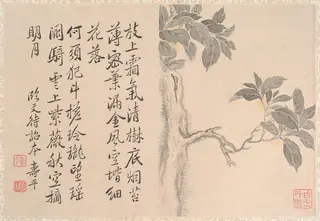 清 仿惲壽平 桂花圖 冊頁|Cassia Tree
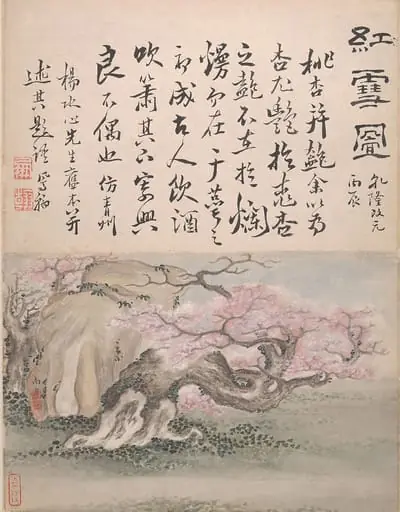 清 傳高鳳翰 書畫合璧 冊|Landscapes and Calligraphy
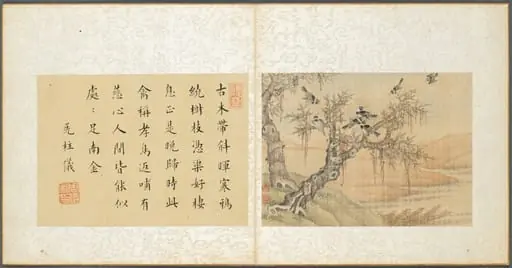 Album of Miscellaneous Subjects, Leaf 9
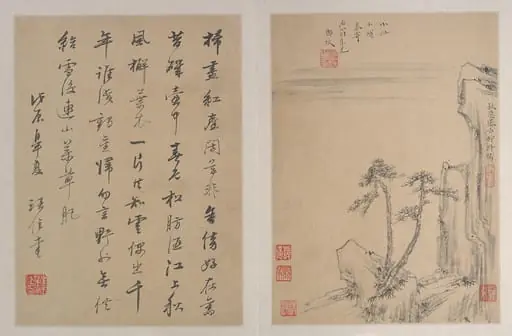 Untitled
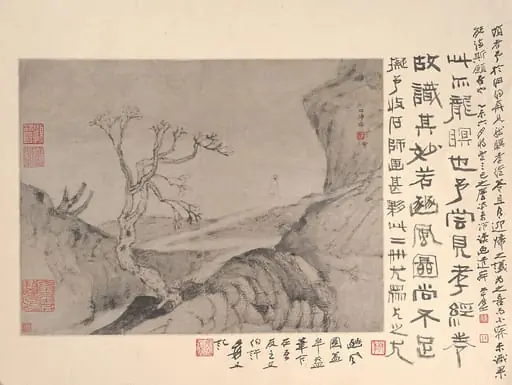 清 石濤 (朱若極) 山水人物圖 冊頁|Landscape with solitary figure
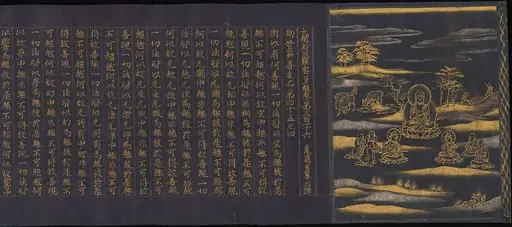 大般若経(中尊寺経)|Great Wisdom Sutra (Daihannya-kyō), from the Chūsonji Temple Sutra Collection (Chūsonji-kyō)
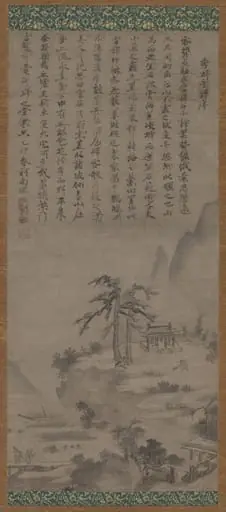 Shuyadō (Studio of Lofty Rusticity)
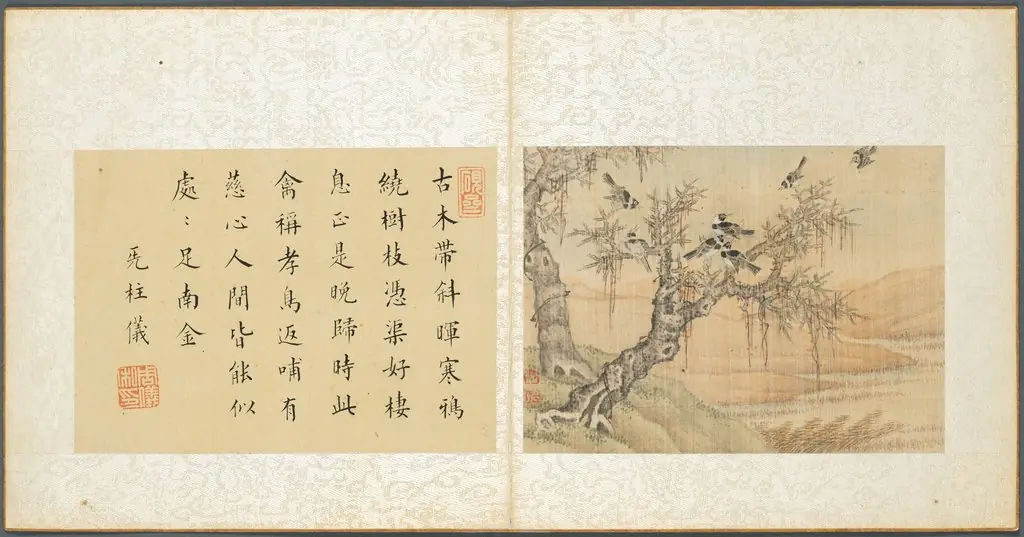 Album of Miscellaneous Subjects, Leaf 9
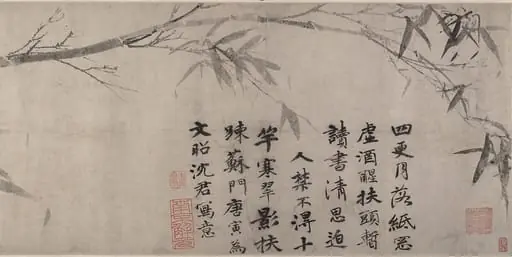 明 唐寅 墨竹圖 卷|Ink bamboo
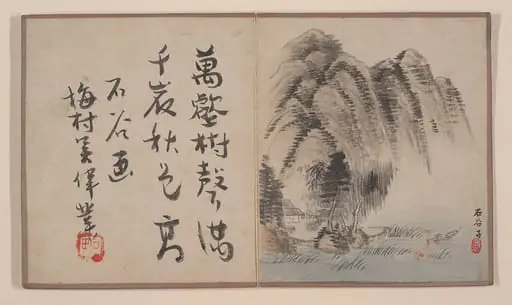 Untitled
- 清 詩午閑人 瀟湘八景詩畫 冊|Eight Landscape Scenes and Calligraphy